
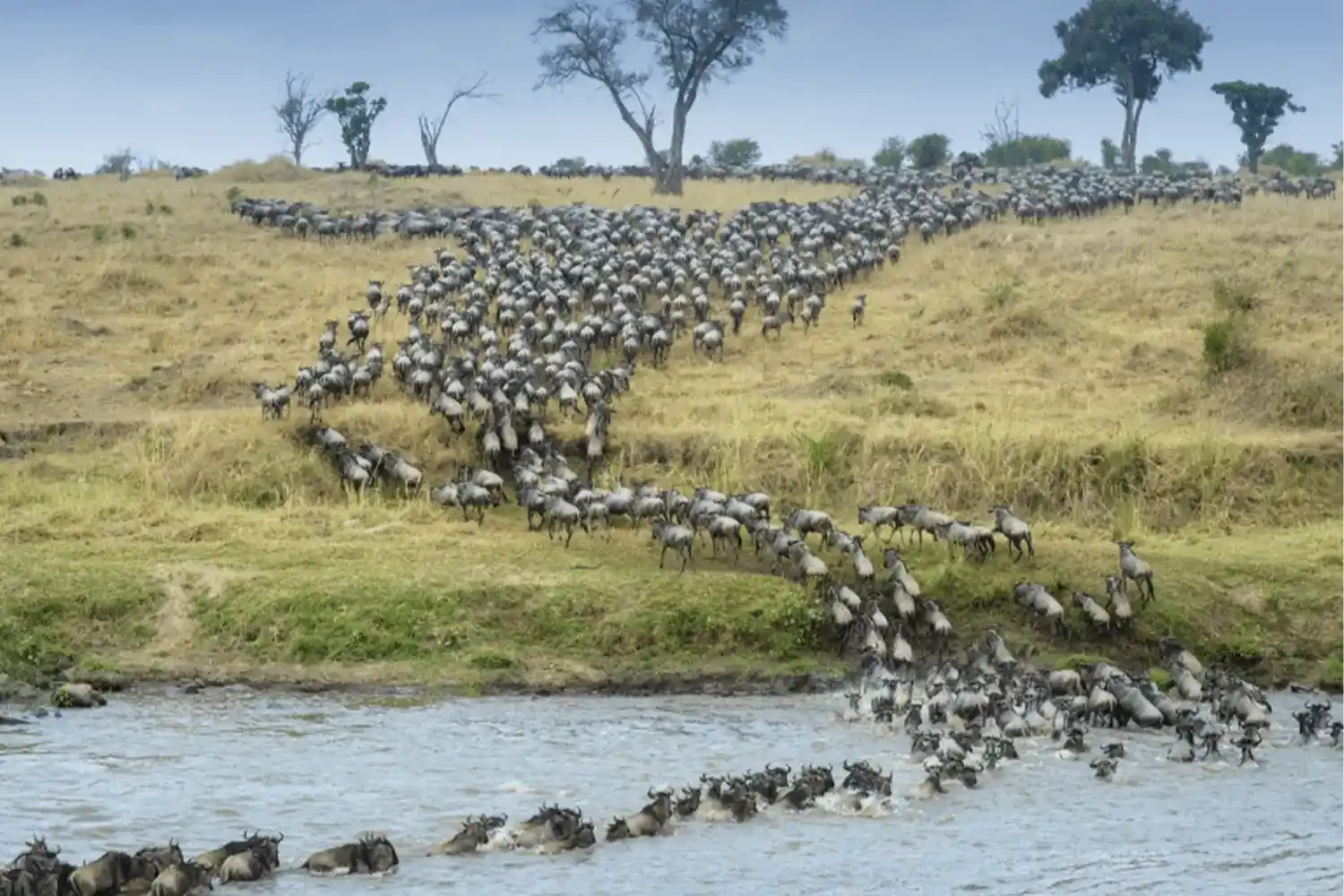
Why Timing Is Everything for the Serengeti Wildebeest Migration
The Great Migration is not a single event but a year-round 500-mile circle. About 1.5 million wildebeest, 250,000 zebra and half a million gazelle follow the rains in search of fresh grass. If you visit at the wrong time you might see only scattered herds instead of the massive river crossings or calving drama that most people dream about. Knowing which sector of the Serengeti is active each month lets you choose the right camp and get the best possible sightings without wasting time or money.
January to March – Calving Season in the Southern Serengeti
Over 250,000 wildebeest calves are born in a six-week window, usually late January to mid-March. The southern plains turn into one giant nursery. Predators are everywhere, creating constant action and dramatic hunt scenes. The grass is short after the rains, so visibility is excellent and the light is soft. This is the quietest time of year with very few vehicles, perfect for intimate photography and relaxed game drives.
April to May – The Long Rains and Movement North
The herds start moving north as the southern plains dry out. April and May bring heavy rains, so roads can be muddy and some camps close. Sightings are still good in the central Serengeti but the big drama is yet to come. Many travellers avoid these months, which means lower prices and more space if you don’t mind occasional afternoon showers.
June to July – The Start of the River Crossings
By early June the migration reaches the Grumeti River and the first crossings begin. July is when the herds hit the Mara River in the far north. This is the most famous and dramatic part of the migration — thousands of animals plunging into crocodile-filled water. Morning and late-afternoon light is stunning and the short grass makes every animal stand out.
August to October – Peak Migration and Mara River Crossings
This is the classic “migration season” most people picture. The herds are concentrated along the Mara River with almost daily crossings. August and September offer the highest chance of seeing the chaos of the river crossing — one of the greatest wildlife spectacles on earth. October still has excellent action but the herds begin moving south again as the short rains start.
November to December – Return South and Green Season
The migration heads back to the southern plains for the next calving cycle. November brings the short rains, lush green landscapes and dramatic skies. Fewer visitors mean better value and very personal experiences. The herds are more spread out but the light and newborn calves make it a favourite month for many photographers.
Real Insider Tips for Seeing the Migration at Its Best
Book a private vehicle if possible — it lets you stay at a crossing until the light fades instead of leaving when the group wants to go back to camp. Stay in mobile camps or lodges that move with the herds rather than fixed lodges far away. Early morning and late-afternoon drives give you the best light and most active animals. Tell your guide you want to follow the migration — good operators track daily movements with spotter planes and adjust routes instantly.
Northern Serengeti vs Central Serengeti for the Migration
The northern sector (near the Mara River) is best from July to October for river crossings. The central Serengeti is excellent in June and November when the herds are passing through on their way north or south. If your dates are fixed, the north gives the highest drama but the central area offers more flexibility and lower prices in shoulder months.
Cost Breakdown – Best Time vs Shoulder Months in 2026-2027
| Month | 7-Day Safari (per person) | Migration Highlight |
|---|---|---|
| July–September (Peak) | $3,200 – $6,500 | Mara River crossings |
| June & October (Shoulder) | $2,600 – $4,800 | Excellent action + lower crowds |
| Jan–Feb (Calving) | $2,400 – $4,200 | Newborn calves & predator action |
Recommended Destinations for Your First Safari in Tanzania
Tanzania offers an incredible variety of experiences for first-time safari travelers. From the endless plains of the Serengeti to the majestic peak of Kilimanjaro and the pristine beaches of Zanzibar, these iconic destinations will make your first safari unforgettable.
Serengeti National Park
Home to the largest mammal migration on Earth and one of the best places to see the Big Five
Mount Kilimanjaro
East Africa ’s highest mountain and a bucket-list adventure that many combine with their first safari in Tanzania Southern Safari.
Ngorongoro Conservation Area
A UNESCO World Heritage Site famous for its volcanic Ngorongoro Crater teeming with wildlife
Lake Manyara National Park
Famous for tree-climbing Lions , flamingos, and beautiful landscapes..
Frequently Asked Questions About the Best Time to Visit Serengeti for Wildebeest Migration
When is the best time to see the wildebeest migration in Serengeti?
July to September for the dramatic Mara River crossings in the north. January–February for the calving season in the South Africa . June and October are excellent shoulder months with fewer crowds.
How many wildebeest take part in the Great Migration?
Around 1.5 million wildebeest, together with 250,000 zebra and 500,000 gazelle, move in a 500-mile circle every year.
Is the migration easy to see on a 7-day safari?
Yes if you choose the right sector and month. A well-planned 7-day trip focused on the Northern Circuit Route or central Serengeti in July–September gives you very high chances of river crossings.
Does the migration happen every year on the same dates?
The general pattern is predictable but exact river-crossing dates vary by 2–3 weeks each year depending on rainfall. Lodges track daily movements and adjust Kilimanjaro Routes .
Is it more expensive to visit during peak migration months?
Yes — July to September rates are 25–40% higher than shoulder months. Many couples and photographers choose June or October for excellent sightings and Lower Zambezi prices.
The Serengeti wildebeest migration is one of nature’s greatest shows, and getting the timing right makes all the difference between an ordinary safari and a trip you’ll remember forever. With the month-by-month details above you can now plan confidently and be in the right place at the right time. If you’d like help building an itinerary that matches your exact travel dates and budget while focusing on the migration, the team at Jaynevy Tours is always happy to put something together that feels perfect for you — honest advice and no pressure at all.