
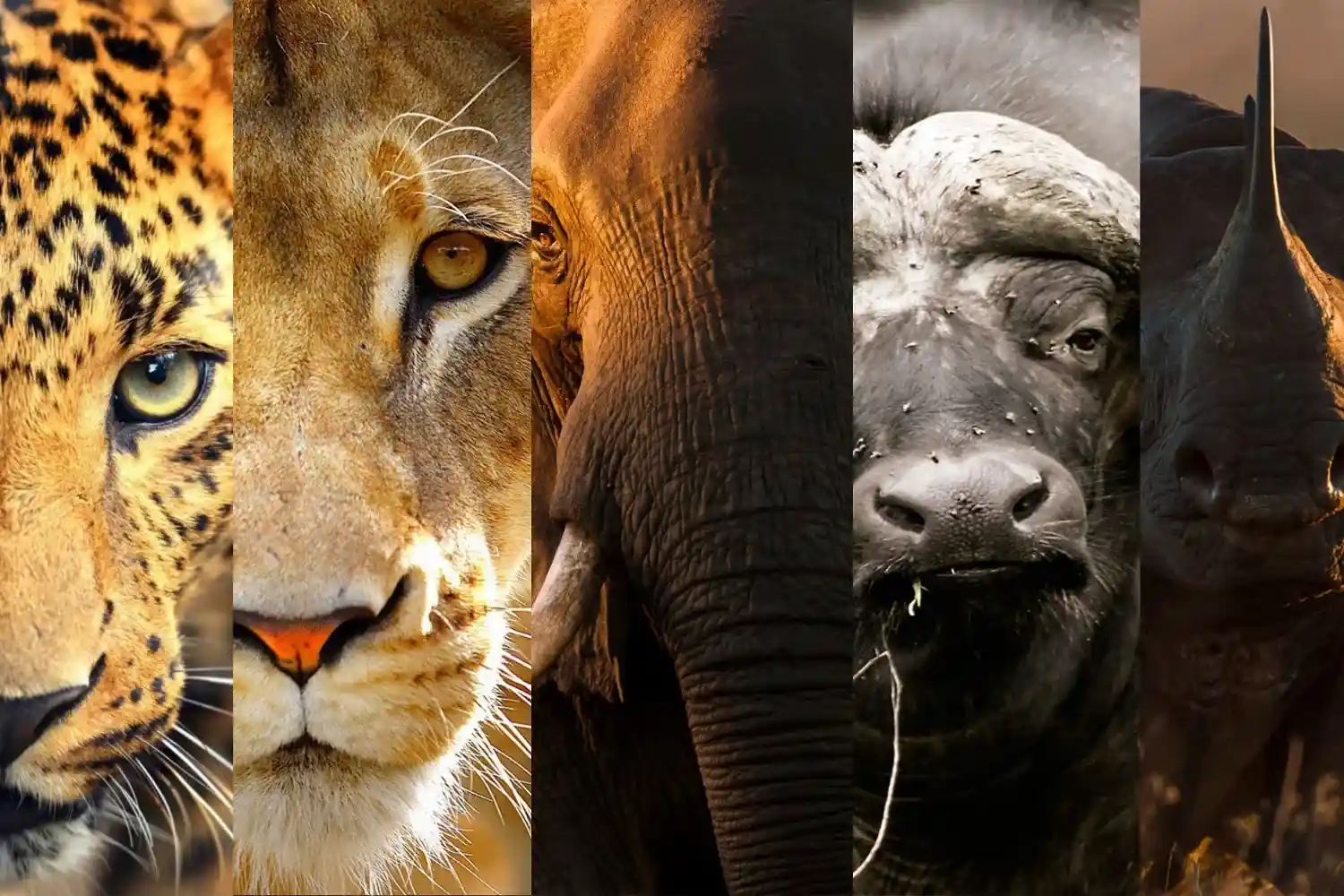
What Are the Big Five Animals?
The Big Five—lion, leopard, elephant, buffalo, and rhinoceros—originate from big-game hunting terminology but now symbolize the pinnacle of wildlife viewing on a Tanzania safari. These majestic creatures captivate visitors with their power, rarity, and behaviors. Lions , known as the kings of the savannah, live in prides of up to 30 members and are apex predators. Leopards are elusive climbers, often spotted in trees. Elephants , the largest land mammals, form tight-knit herds and display remarkable intelligence. Buffaloes are formidable in groups, while rhinos, especially the black rhino, are critically endangered, adding urgency to sightings.
Why Choose Tanzania for a Big Five Safari?
Tanzania boasts over 22 national parks covering 30% of its land, hosting 40-50% of the world's lions and diverse ecosystems. With 25,000+ wildlife species and the Great Migration involving millions of animals, it's a premier destination. Qualitative experiences include the thrill of close encounters and cultural immersion with over 120 tribes like the Maasai. Quantitatively, Tanzania welcomes nearly 2 million tourists annually, contributing to conservation through park fees.
Best National Parks for Big Five Sightings
Tanzania's northern circuit offers the highest success rates for Big Five safaris, with parks like Serengeti and Ngorongoro providing 90%+ sighting probabilities during peak seasons.
Serengeti National Park
Spanning 14,763 km², Serengeti is home to 3,000 lions, 1,000+ leopards, and massive elephant herds. It's famous for the Great Migration , where 2 million wildebeest and zebras attract predators. Tree-climbing lions are a unique sight here.
Ngorongoro Crater
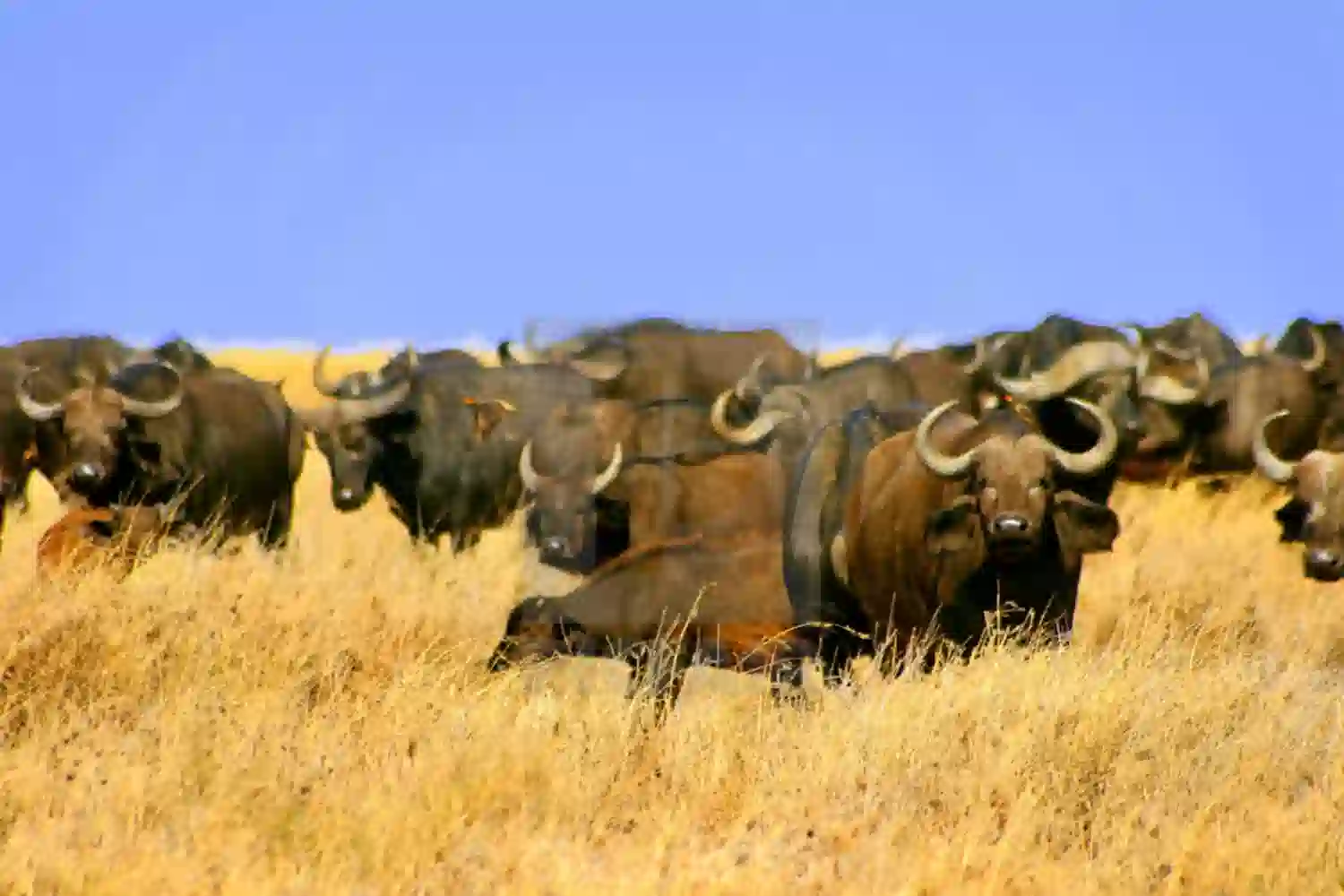
This 600m-deep caldera (264 km²) hosts 30,000 animals, including 80 black rhinos. It's the best spot for all Big Five in one day, with dense populations of buffalo (thousands) and hippos.
Tarangire National Park
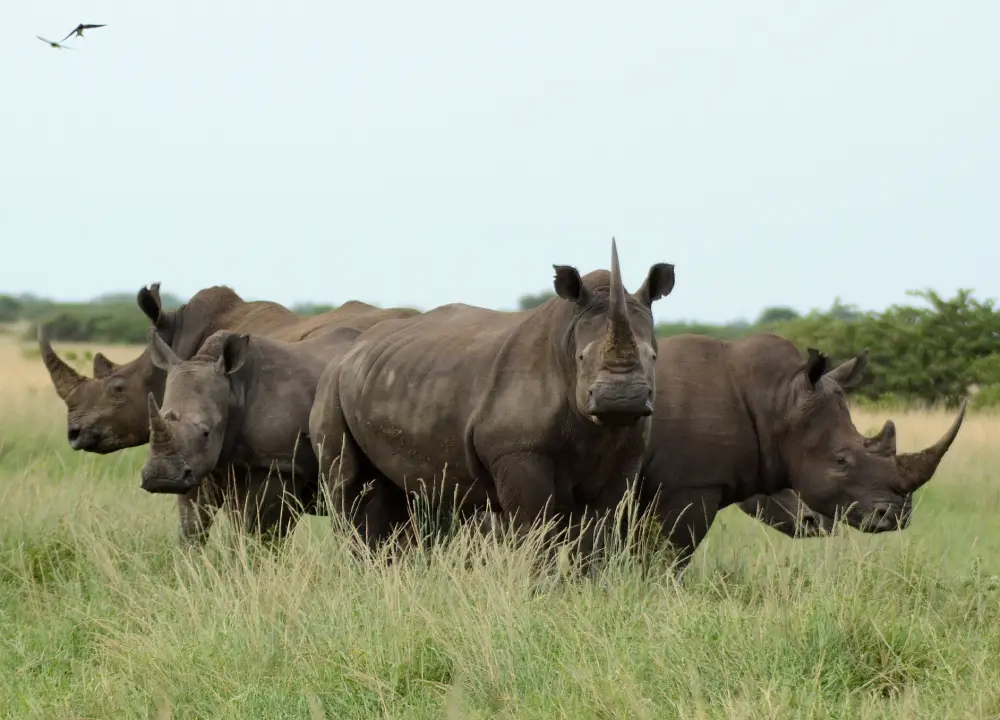
At 2,850 km², Tarangire features 5,000 elephants during dry season migrations and 700+ lions. It's ideal for birdwatching with 550+ species.
Ruaha National Park
Tanzania's largest park (20,226 km²) offers remote wilderness with strong leopard and lion populations, plus wild dogs.
Nyerere (Selous) National Park
Covering 50,000 km², it's uncrowded with boat safaris for spotting buffalo and elephants along the Rufiji River.
Park Comparison Table
| Park | Size (km²) | Big Five | Best For |
|---|---|---|---|
| Serengeti | 14,763 | All except rhino (rare) | Migration, predators |
| Ngorongoro | 264 | All five | Dense wildlife |
| Tarangire | 2,850 | All except rhino | Elephants , birds |
| Ruaha | 20,226 | All five | Remote safaris |
| Nyerere | 50,000 | All except rhino | Boat safaris |
Best Time to Visit for Big Five Safari in 2026
The dry season (June-October) is prime, with 80-90% sighting success as animals gather at waterholes. January-February offers calving season spectacles. Wet season (March-May, November) brings lush scenery and fewer crowds but muddier roads.
Safari Costs and Budgeting
Costs depend on luxury level and group size. Park fees contribute to conservation, supporting anti-poaching for endangered species like rhinos.
| Level | Per Day (USD) | Inclusions |
|---|---|---|
| Budget | 200-300 | Camping, shared drives |
| Mid-range | 350-600 | Lodges, meals |
| Luxury | 700-1,500+ | Tented camps, balloons |
Total for 7 days: Economy $2,100+, Mid-range $2,800+, Luxury $4,550+ per person.
Sample Itineraries for Big Five Safari
7-Day Classic Itinerary
- Day 1: Arrive Arusha, relax.
- Day 2: Tarangire for elephants.
- Day 3: Cultural visit to Maasai/Hadzabe.
- Day 4: Ngorongoro Crater game drive.
- Days 5-6: Serengeti safaris.
- Day 7: Return to Arusha.
10-Day Extended Itinerary
- Days 1-6: As above, plus Northern Serengeti for migration.
- Days 7-10: Zanzibar beaches and cultural tours.
Accommodation Options
From budget campsites to luxury lodges like Four Seasons Serengeti. Mid-range: Serena Lodges. Expect en-suite tents with views.
What to Expect on a Big Five Safari
Early game drives reveal predators hunting. Qualitative thrills: Heart-pounding leopard sightings or elephant herds crossing paths. Quantitative: Serengeti has 3,000 lions in 300 prides.
Wildlife Beyond the Big Five
Cheetahs (80-98 mph), giraffes, hippos, wildebeest (2 million in migration), 1,100+ bird species.
Conservation and Responsible Tourism
Tanzania protects 80 black rhinos in Ngorongoro. Choose operators supporting anti-poaching; park fees fund 25% of wildlife protection.
Packing List for Tanzania Safari
- Neutral clothing layers
- Binoculars and camera
- Sunscreen, hat, sunglasses
- Insect repellent
- Medications, malaria prophylaxis
- Comfortable shoes
Health and Safety Tips
Vaccinations: Yellow fever required. Malaria prevention advised. Safaris are safe with guides; avoid walking alone at night.
How to Book Your Big Five Safari
Contact Jaynevy Tours for customized packages. Visas: $50 online. Flights to JRO or DAR.
Explore Tanzania with Jaynevy Tours
From Big Five safaris to Kilimanjaro climbs and Zanzibar beaches, Jaynevy Tours offers expert-guided adventures. Book now for your 2026 trip!
Frequently Asked Questions
What are the Big Five animals in Tanzania?
The Big Five are lion, leopard, elephant, buffalo, and rhinoceros, iconic species sought after on Tanzania safaris.
What is the best time for a Big Five safari in Tanzania in 2026?
The dry season from June to October offers optimal wildlife viewing, with animals congregating around water sources.
Which national parks in Tanzania are best for seeing the Big Five?
Serengeti, Ngorongoro Crater, Tarangire, Ruaha, and Nyerere National Park provide the highest chances for Big Five sightings.
How much does a Big Five safari in Tanzania cost?
Costs range from $200-$300 per day for budget options to $700-$1,500+ for luxury, depending on duration and accommodations.
What should I pack for a Tanzania Big Five safari?
Neutral-colored clothing, binoculars, sunscreen, insect repellent, comfortable shoes, and a good camera are essential.
Are Big Five safaris in Tanzania safe?
Yes, with experienced guides and proper precautions, safaris are safe; follow health advice like malaria prevention.
Can I see all Big Five in one park in Tanzania?
Ngorongoro Crater offers the best chance to spot all five in a single day due to its dense wildlife population.
What conservation efforts support Big Five in Tanzania?
Anti-poaching initiatives, community involvement, and park fees fund protection for species like the endangered black rhino.
How long should a Big Five safari itinerary be?
A 7-10 day itinerary allows time to explore multiple parks and maximize wildlife sightings.
What other activities complement a Big Five safari?
Hot air balloon rides, cultural visits to Maasai villages, and beach extensions to Zanzibar enhance the experience.