
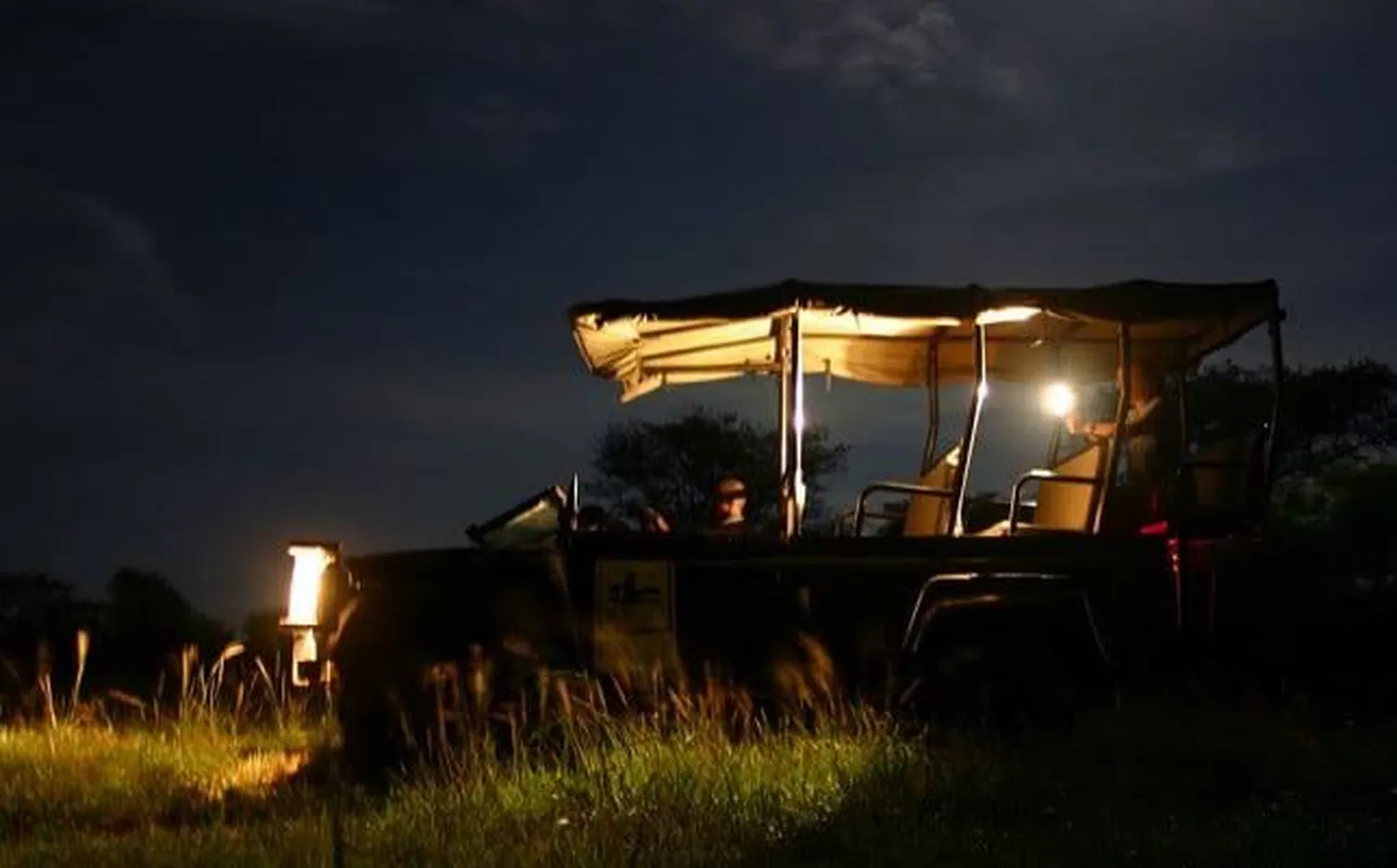
Quick Answer: Where Should You Do a Night Game Drive on a 6-Day Tanzania Safari?
For a classic Northern Circuit safari, choose Tarangire or Lake Manyara. TANAPA’s current Northern Zone quick reference lists both parks for night game drives under specific operating guidelines. A strong six-day route is Day 1 Tarangire day drive, Day 2 Tarangire daytime safari plus night drive, Day 3 Lake Manyara, Days 4–5 Serengeti, and Day 6 Ngorongoro Crater.
Lake Manyara is the better alternative when your accommodation and route place you near Mto wa Mbu or inside/close to the park. Do not schedule a standard Serengeti night drive simply because the itinerary says “Serengeti after dark”; current Northern Circuit documentation should be checked before selling or confirming any after-hours activity.
- Confirmed Northern Circuit parks: Tarangire and Lake Manyara.
- TANAPA guideline window: 19:00–23:00.
- Adult activity fee reference: USD 50 for non-EA visitors aged 16+.
- Child activity fee reference: USD 25 for ages 5–15.
- Vehicle: open 4x4, maximum 16 persons.
- Route limit: maximum 3 vehicles per route under the guideline.
- Lighting: maximum 2 filtered spotlights per vehicle.
- Staffing: professional Tanzanian guide/tracker plus armed ranger.
What Is a Night Game Drive in Tanzania?
A night game drive is a regulated after-dark wildlife drive using an open safari vehicle and filtered spotlights to observe nocturnal animals and behavior. TANAPA’s own guideline defines the activity around night-time wildlife viewing rather than simply extending a normal sunset drive beyond gate hours.
The difference matters. A standard daytime safari vehicle may leave a park by the normal closing time, while a night-drive vehicle operates under specific activity permission, routes, staffing and equipment rules. This is why a tour operator should arrange the night drive in advance instead of telling guests that the regular driver can “just stay inside after dark.”
Which Northern Tanzania Parks Allow Night Game Drives?
Tarangire and Lake Manyara are the clearest current TANAPA-confirmed choices on the classic Northern Circuit. The Northern Zone quick reference lists these two parks by name and says specific guidelines apply.
| Destination | Night-drive status for this itinerary | Why it works | Planning note |
|---|---|---|---|
| Tarangire National Park | Confirmed in TANAPA Northern Zone tariff | Open savanna, riverine habitat, elephants, predators and smaller nocturnal mammals. | Excellent choice when you sleep inside or very near the park after a moderate daytime drive. |
| Lake Manyara National Park | Confirmed in TANAPA Northern Zone tariff | Compact mix of forest, woodland, floodplain and wetland-edge habitat. | TANAPA’s current attractions page explicitly lists night game drives “where permitted.” |
| Serengeti National Park | Do not treat as a standard Northern Circuit inclusion | Outstanding daytime wildlife, but after-dark access requires separate verification rather than assumption. | Protect Serengeti for dawn, full-day and late-afternoon game drives instead. |
| Ngorongoro Crater | Do not substitute a crater night drive into this route | The crater is best used for an early daytime descent and concentrated wildlife viewing. | NCAA has its own permit system; verify any special activity directly rather than applying TANAPA rules. |
Current TANAPA Rules: The Numbers That Matter
TANAPA’s night-game-drive guideline says the activity runs between 19:00 and 23:00. It specifies an open four-wheel-drive vehicle with a maximum capacity of 16 people, with no more than three vehicles on a route. Each vehicle may use a maximum of two spotlights, with a stated range of 200,000–800,000 candle power and filters intended to reduce light intensity.
The organizer must hold a valid tourism license and use a professional Tanzanian guide and tracker. TANAPA also requires an armed ranger to accompany visitors and a first-aid kit to be carried. Visitors must sign indemnity forms before the activity.
How Much Does a Night Game Drive Cost?
The official TANAPA activity fee reference is USD 50 per adult and USD 25 per child for non-East African visitors in Tarangire and Lake Manyara. The Northern Zone quick reference defines adults as age 16+ and children as 5–15 for this activity.
This is not necessarily the final retail price. Your total can also reflect conservation fees, vehicle/operator charges, ranger arrangements, lodge transfer, taxes and whether the activity is sold privately or shared. Because TANAPA tariffs can be revised, Jaynevy should reconfirm the fee at the time of quotation.
| Cost element | Reference | How to present it |
|---|---|---|
| TANAPA night-drive fee, adult 16+ | USD 50 pp for non-EA visitor | Official activity-fee reference, subject to tariff revision. |
| TANAPA night-drive fee, child 5–15 | USD 25 pp for non-EA visitor | Official activity-fee reference, subject to tariff revision. |
| Park/conservation fees | Separate where applicable | Confirm whether already covered by the safari package. |
| Operator/vehicle/ranger logistics | Varies | Quote the complete final add-on instead of advertising only the government activity fee. |
What Animals Can You See on a Tanzania Night Game Drive?
The best reason to go is not “more Big Five”; it is access to a different community of animals and different behavior. Some large mammals remain active after dark, while several smaller species are much easier to encounter at night than during a standard midday game drive.
| Wildlife group | Possible sightings | Why night helps |
|---|---|---|
| Predators | Lion, leopard, spotted hyena, serval | Cooler temperatures can increase movement and hunting behavior. |
| Small carnivores | Genets, civets, mongooses | Several species are mainly crepuscular or nocturnal and easily missed by day. |
| Primates | Bushbabies / galagos | Eye-shine and night activity can make them easier to detect in suitable woodland. |
| Other mammals | Porcupine, hare, hippo moving away from water | Some emerge to forage after dark. |
| Birds | Owls, nightjars and other night-active birds | Calls and spotlighting can reveal species rarely noticed on daytime drives. |
Tarangire vs Lake Manyara: Which Is Better for the Night Drive?
Tarangire is the stronger choice for a wildlife-heavy six-day route, while Lake Manyara is ideal when you want a compact forest-and-wetland night experience. Neither is automatically “better” every month.
| Factor | Tarangire | Lake Manyara |
|---|---|---|
| Landscape | Baobab savanna, river corridor, woodland and seasonal swamp | Groundwater forest, acacia woodland, floodplain and lake-edge habitat |
| Best fit | Travelers prioritizing mammals, elephants and predator context | Travelers interested in forest edge, compact habitat changes and birds |
| Six-day pacing | Excellent on Day 2 after sleeping near Tarangire | Excellent on Day 2 or 3 when based near Mto wa Mbu/Manyara |
| Main caution | A long full-day drive plus night drive can cause fatigue | Dusk insects and local road conditions can affect comfort |
For daytime context, see Jaynevy’s Tarangire National Park guide and Lake Manyara National Park guide.
Best 6-Day Tanzania Safari Itinerary with a Night Game Drive
The most balanced route puts the night drive in Tarangire on Day 2. That gives you a daytime baseline first, lets you compare the same ecosystem after dark, and avoids sacrificing Serengeti or Ngorongoro time.
Day 1: Arusha to Tarangire — Afternoon Day Game Drive
Drive from Arusha to Tarangire and use the afternoon for elephants, baobabs, riverine wildlife and predators. Overnight inside or close to the park. This is intentionally a moderate first day rather than a dawn-to-dark marathon.
Day 2: Tarangire Day Safari + Night Game Drive
Begin with an early morning game drive, return for a proper lunch and rest, then make a shorter late-afternoon drive or remain at the lodge before the regulated night-drive program. The night activity must be pre-arranged with the permitted operator, route, ranger and equipment. After the drive, return directly to accommodation rather than planning a long road transfer.
Day 3: Tarangire to Lake Manyara and Karatu
Start slightly later if needed after the night drive. Continue to Lake Manyara for forest, elephants, primates, birds and the park’s tree-climbing-lion reputation. Overnight around Karatu. This pacing protects sleep while keeping the day productive.
Day 4: Karatu to Serengeti National Park
Travel through the Ngorongoro highlands and enter Serengeti for an afternoon game drive. Focus on resident predators and plains wildlife. Do not try to recreate the night-drive experience here unless a separately authorized product has been confirmed.
Day 5: Full-Day Serengeti Game Drive
Use the full day for Central Serengeti or the most appropriate seasonal sector. Early morning and late afternoon already reveal different predator behavior, so the itinerary remains diverse even without an after-dark drive.
Day 6: Ngorongoro Crater Game Drive and Return to Arusha
Leave early for Ngorongoro, descend for a daytime crater safari, then return to Arusha. This keeps the six-day route realistic: one properly regulated night drive, rather than forcing an after-dark activity into every destination.
Alternative: Put the Night Drive in Lake Manyara
If your preferred lodge and operator logistics are better around Lake Manyara, move the night drive to Day 3 and keep Day 2 as a Tarangire day safari. The principle remains the same: sleep close to the activity, reduce the daytime workload, and avoid a very early transfer the following morning.
Why You Should Not Add Two or Three Night Drives to a Short Safari
More night drives do not automatically make a better six-day trip. Wildlife safaris already use early mornings and long road days. A late return followed by a 05:30 wake-up can reduce concentration, photography quality and enjoyment the next day.
- One well-placed night drive creates contrast without exhausting the itinerary.
- Serengeti needs uninterrupted daytime game-drive hours for big cats and migration ecology.
- Ngorongoro works best with an early crater descent.
- Children and older travelers may need a lighter day around the night activity.
- Wildlife sightings are not cumulative guarantees; a second night drive can still be quiet.
Night Drive vs Day Game Drive: What Changes?
| Factor | Day game drive | Night game drive |
|---|---|---|
| Light | Natural daylight | Controlled filtered spotlighting |
| Wildlife emphasis | Large mammals, birds, landscapes, behavior visible in daylight | Nocturnal/crepuscular species and after-dark behavior |
| Photography | Much easier for sharp natural-light images | Technically harder; low light and spotlight direction matter |
| Vehicle/guide setup | Standard permitted safari operation | Special TANAPA night-drive requirements apply |
| Best role in six days | Main wildlife-viewing method | One complementary experience |
Safety and Environmental Rules for Night Game Drives
The activity is tightly controlled because darkness changes both wildlife behavior and driving risk. TANAPA’s guideline is specific about staffing, vehicles, lighting and passenger conduct.
- Stay in the vehicle except where the guide/ranger explicitly permits otherwise.
- Follow the armed ranger and guide immediately if an animal changes direction or the route needs to move.
- Do not use your own powerful torch on wildlife without guide permission.
- Avoid camera flash unless the operator’s wildlife protocol specifically permits it; low-light settings are usually more ethical.
- Keep noise low. Night drives should reveal natural behavior, not provoke a reaction.
- Do not pressure the guide to leave the permitted route.
- Carry a warm layer. An open vehicle can feel much colder after sunset.
Important Permit Note
A normal park-entry ticket does not automatically authorize a night game drive. The night activity has its own operational framework. Confirm the park, route, operator, ranger, fee and accommodation logistics before issuing a final client itinerary.
Night Wildlife Photography: What Actually Works?
- Expect fewer technically perfect photographs. The experience is often stronger than the image file.
- Use a fast lens if available. Wide apertures help in limited light.
- Raise ISO rather than demanding stronger spotlighting.
- Use image stabilization and support the camera.
- Focus on animals already illuminated by the guide’s approved spotlight.
- Do not use flash repeatedly on nocturnal animals.
- Keep a wider focal length available. A close elephant in an open vehicle may be too large for a long telephoto lens.
Best Season for a Tanzania Night Game Drive
Night drives can be rewarding in both dry and green seasons, but the experience changes. The dry season often improves road conditions and concentrates larger mammals around persistent water, while the greener months bring insects, frogs, migrant birds and richer night soundscapes.
| Period | Strength | Trade-off |
|---|---|---|
| Jun–Oct | Drier roads, strong mammal concentrations, cooler evenings | Can be cold in an open vehicle; peak travel months can be busier |
| Nov–Feb | Green landscapes, active smaller wildlife, birds and insect life | Short rains can affect road conditions and visibility |
| Mar–May | Rich nocturnal soundscape and low visitor pressure | Long rains can limit routes or make some drives operationally impractical |
Who Should Add a Night Game Drive?
This add-on is especially valuable for:
- wildlife enthusiasts who want more than Big Five checklist viewing;
- repeat safari travelers interested in behavior after dark;
- photographers comfortable with challenging low-light conditions;
- families with older children who can handle a later evening;
- travelers staying inside or close to Tarangire or Lake Manyara, minimizing transfer time.
For the daytime vehicle experience, see Jaynevy’s Tanzania Open Vehicle Game Drive. You can also compare the 3-Day Tarangire & Lake Manyara Combo, Tanzania Northern Safari, Serengeti National Park and Ngorongoro Conservation Area.
Common Mistakes When Booking a Tanzania Night Game Drive
- Assuming every park allows standard after-dark drives.
- Advertising only the USD 50 government activity fee as the total retail price.
- Scheduling a full 10-hour day drive immediately before a 19:00–23:00 night activity.
- Promising leopard, aardvark or hunting behavior.
- Using a normal daytime vehicle without confirming night-drive compliance.
- Ignoring the next morning’s wake-up time.
- Allowing unfiltered or excessive light to disturb wildlife.
Frequently Asked Questions About Night Game Drives on a 6-Day Tanzania Safari
Can I do a night game drive on a 6-day Tanzania safari?
Yes. On Tanzania's Northern Circuit, Tarangire and Lake Manyara are the clearest TANAPA-confirmed options for regulated night game drives. The activity requires advance organization, the correct operator and park arrangements, and it should be built into the itinerary rather than added casually after arrival.
Are night game drives allowed in Serengeti National Park?
Do not assume a standard tourist night drive is available in Serengeti. TANAPA's current Northern Zone tariff specifically lists Tarangire and Lake Manyara for night game drives. For a six-day Northern Circuit safari, plan the night activity in one of those confirmed parks unless the relevant authority gives written approval for another location.
What time are TANAPA night game drives conducted?
TANAPA's current night-game-drive guidelines state that the activity is conducted between 19:00 and 23:00. Your actual departure and return time may be shorter within that window depending on the park, route, lodge logistics and operational plan.
How much does a night game drive cost in Tarangire or Lake Manyara?
TANAPA's Northern Zone quick reference lists a night-game-drive activity fee of USD 50 per person for non-East African adults aged 16 and above, and USD 25 for children aged 5 to 15, with specific guidelines applying. These activity charges may be additional to conservation, vehicle, accommodation or operator costs and should be reconfirmed before travel.
What animals can I see on a Tanzania night game drive?
Possible sightings include hyenas, genets, civets, bushbabies, porcupines, hippos out of water, owls, nightjars and predators such as lions or leopards when they are active. Nothing is guaranteed, and smaller nocturnal species are often the most distinctive part of the experience.
Is Tarangire or Lake Manyara better for a night drive?
Tarangire is a strong choice for open savanna, elephants, predators and broad wildlife context, while Lake Manyara combines woodland, forest edge and wetland habitats in a compact park. The better choice depends on your accommodation location, season and whether the rest of your six-day route already gives enough daytime coverage to each park.
Do night drives use special vehicles and lights?
Yes. TANAPA guidelines specify an open four-wheel-drive vehicle, a maximum capacity of 16 persons, and up to two filtered spotlights. The stated spotlight range is 200,000 to 800,000 candle power, with filters intended to reduce light intensity and wildlife disturbance.
Is an armed ranger required on a night game drive?
Yes. TANAPA's current guidelines state that an armed ranger must accompany visitors. The operator must also use a professional Tanzanian guide and tracker and carry a first-aid kit.
Can children join a night game drive?
TANAPA's tariff includes a fee category for children aged 5 to 15, showing that children in that age group can be accommodated under the activity framework. However, the tour operator and park may apply additional safety or practical restrictions, so parents should confirm suitability before booking.
Is a night game drive worth adding to a six-day safari?
Yes when you want behavior and species that a daytime drive may miss. It is especially worthwhile if you place it on a day with a lighter afternoon and sleep close to the permitted night-drive route. It is less worthwhile if it forces you to shorten a major Serengeti or Ngorongoro day or creates an exhausting next-morning departure.
Research Notes and Trusted Sources
This article uses current TANAPA material for the operating rules and fee references. Because park tariffs and activity zones can be revised, the final client quotation should always be checked against the active TANAPA system and the actual operator’s approval before payment.
- TANAPA Guidelines for Night Game Drives — operating areas, vehicles, spotlight limits, staffing, safety, 19:00–23:00 window and indemnity requirements.
- TANAPA Northern Zone Quick Reference — Tarangire and Lake Manyara night-drive listing and USD 50/25 activity-fee reference.
- TANAPA Tarangire National Park — current visitor activities and park facts.
- TANAPA Lake Manyara Attractions — night game drives listed where permitted.
- TANAPA Lake Manyara Visitor Guide — current visitor logistics and additional activity-fee note.
SEO/AEO implementation note: Visible FAQs remain useful for readers and answer engines. Google removed the FAQ rich-result feature in 2026, so this page does not depend on FAQ rich-result markup for search visibility; the main structured data is Article, BreadcrumbList and TravelAgency.