
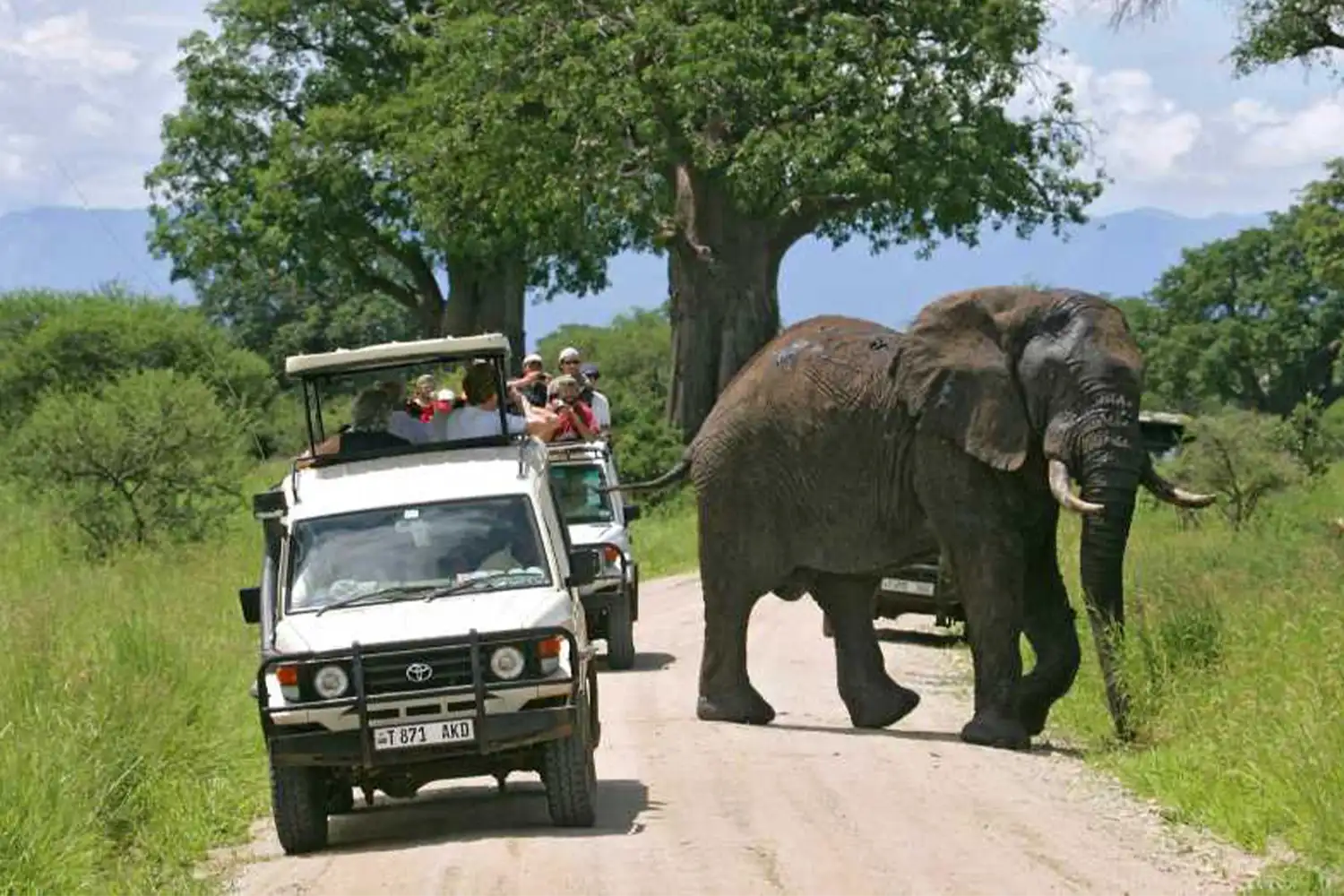
How Does a Tarangire Joining Safari Work?
A joining safari combines travelers with the same confirmed Tarangire departure into one safari vehicle. The guide, transport and park-day schedule are shared, while each traveler still gets the same access to the park and wildlife-viewing route used for the day.
The shared format is what usually makes a joining safari cheaper than booking the vehicle privately. In return, travelers need to be punctual and accept that decisions about when to move on, where to pause and how long to spend at a sighting must work for the whole group.
What Does the Day Usually Look Like from Arusha?
A Tarangire joining day trip normally starts early in Arusha, reaches the park after a morning road transfer, includes several hours of game driving with a picnic lunch, and returns to Arusha in the evening. Exact pickup and return times vary with the confirmed meeting point, traffic, park entry procedures and conditions on the day.
When Does the Group Leave Arusha?
Departure is normally early enough to make the road transfer worthwhile and leave a useful block of time for game viewing. Travelers should be ready before the confirmed pickup time because a shared vehicle cannot usually wait as freely as a private safari. If you are staying outside the standard pickup area, confirm whether a central meeting point is required.
What Happens During the Game Drive?
Once inside Tarangire, the guide chooses routes according to current wildlife activity, road conditions and the time available. The Tarangire River, woodland, open savannah and baobab-dotted areas can all produce sightings, but animals move freely and no specific species can be guaranteed on a one-day safari.
Where Do You Have Lunch?
A picnic lunch is normally taken at a designated area inside or around the park itinerary. Because this is a shared day, the lunch timing follows the group's overall schedule rather than an individual traveler's preferred time.
When Do You Return to Arusha?
The group leaves the park with enough time to comply with park operating hours and complete the drive back to Arusha. TANAPA currently lists Tarangire as open year-round with gates closing at 6:00 PM, but operational times should always be reconfirmed for the travel date.
What Wildlife Can You See in Tarangire?
Tarangire is particularly strong for elephant viewing and also supports zebra, wildebeest, buffalo, giraffe, impala, eland, waterbuck and many other species. Lions and leopards occur in the ecosystem, but predator sightings are never guaranteed on a single day.
TANAPA lists the park at about 2,850 km² and describes it as one of Tanzania's major elephant areas. The Tarangire River and seasonal water sources become especially important during the dry months, when wildlife can be more concentrated. Birdlife is also a major reason to visit, so binoculars are useful even for travelers whose main interest is mammals.
- Elephants and baobab-dominated scenery are among Tarangire's signature experiences.
- Plains game can include zebra, wildebeest, giraffe, buffalo and several antelope species.
- Lions, leopards and other predators are possible, not promised.
- Wildlife distribution changes with rainfall, water and seasonal movement.
When Is the Best Time for a Tarangire Joining Day Trip?
Tarangire can be visited throughout the year, but the dry season generally produces the strongest concentration of larger animals around permanent water. Wetter months bring greener scenery, active birdlife and often a different, less dusty park experience.
| Period | What to Expect | Best For |
|---|---|---|
| Roughly June–October | Drier conditions and stronger wildlife concentration around water sources | Travelers prioritizing large mammals and classic dry-season safari scenery |
| Roughly November–May | Greener landscapes, seasonal rain and strong birding | Birders, photographers who prefer green backgrounds and travelers comfortable with variable weather |
Seasonal labels are planning guides rather than guarantees. Rainfall patterns can shift, and wildlife moves in response to water and grazing conditions.
How Does a Joining Safari Compare with a Private Tarangire Day Trip?
A joining safari usually wins on shared cost, while a private safari wins on control and flexibility. Both can visit the same park; the practical difference is who controls the vehicle, timing and pace.
| Factor | Joining Safari | Private Safari |
|---|---|---|
| Vehicle | Shared with other confirmed travelers | Reserved for your party |
| Cost structure | Vehicle and guide costs are shared | Your party carries the private vehicle cost |
| Departure time | Usually fixed for the group | More flexible within operational limits |
| Game-drive pace | Shared decisions and group compromises | Easier to tailor to your interests |
| Best for | Solo travelers and budget-conscious visitors | Families, photographers and travelers wanting flexibility |
If flexibility matters more than sharing costs, compare this page with the private Tarangire day trip from Arusha.
What Is Typically Included and What Should You Confirm?
A Tarangire joining day trip commonly combines shared road transport, a driver-guide, the game drive, park entry arrangements, drinking water and a picnic lunch. Exact inclusions can vary by confirmed departure, so the written quotation should be treated as the final reference rather than assuming every joining safari is identical.
What Is Normally Included?
- Shared safari transportation for the confirmed departure.
- Game drive in Tarangire National Park.
- Driver-guide services.
- Picnic lunch and drinking water when stated in the confirmed arrangement.
- Park entry arrangements when listed in the written quotation.
What Is Normally Not Included?
- International flights and Tanzania visa costs.
- Travel insurance and personal medical expenses.
- Tips and personal purchases.
- Alcoholic drinks and meals not listed in the confirmed inclusions.
- Optional activities not included in the agreed day-trip plan.
What Should You Confirm Before Joining the Safari?
Before paying for a shared departure, confirm the date, pickup point, approximate return window, vehicle type, seat availability and exactly what the price includes. This matters more on a joining safari because the trip depends on coordinating several travelers.
- Confirmed departure date and whether the seat is guaranteed.
- Exact Arusha pickup point and meeting time.
- Maximum number of guests expected in the safari vehicle.
- Park fees, lunch, water and any taxes included in the quotation.
- Cancellation or change terms if the shared departure does not operate as planned.
- Any dietary requirements communicated before the safari day.
For travelers who want more than one park, a longer shared itinerary such as the 2-day Tanzania joining safari can make better use of the road travel than trying to fit several destinations into one day.
What Should You Bring for a Tarangire Day Safari?
Bring light, practical clothing, sun protection, a camera or phone, binoculars if available and any personal medication you need. Early mornings can feel cooler than midday, so a light layer is useful even when the afternoon forecast is warm.
- Hat, sunscreen and sunglasses.
- Light neutral-colored clothing and a light morning layer.
- Binoculars and a camera with spare battery or power bank.
- Personal medication and basic travel essentials.
- A small day bag that fits comfortably in a shared vehicle.
Is a One-Day Joining Safari Enough for Tarangire?
One day is enough for a useful introduction to Tarangire if your schedule is limited, especially when starting from Arusha. It is not the same as a multi-day safari: you have fewer game-drive hours, less flexibility to wait for difficult sightings and no second-day opportunity if conditions are quiet.
Choose the one-day joining option when budget and time are the main constraints. Choose a longer safari when wildlife photography, multiple parks or a slower pace matter more. Another shared day-trip alternative is the Ngorongoro day trip joining safari.
Frequently Asked Questions About Tarangire Joining Safaris
What is a Tarangire joining safari?
A Tarangire joining safari is a shared day trip in which travelers with the same confirmed departure use one safari vehicle and guide. Sharing the transport and guiding costs can make it more economical than reserving a private vehicle.
Where does the Tarangire joining day trip start?
This itinerary is designed around an Arusha departure. The exact hotel pickup or central meeting point should be confirmed before travel because shared departures may use a common pickup location.
Can solo travelers join the Tarangire day safari?
Yes. Joining safaris are particularly useful for solo travelers because they can share the vehicle with other confirmed guests instead of paying for a private safari vehicle alone.
Are wildlife sightings guaranteed?
No. Elephants and many plains animals are common in Tarangire, but all wildlife is free-ranging. Sightings of lions, leopards or any specific species depend on season, location, weather and chance.
Is Tarangire better in the dry season?
The dry season is generally strongest for concentrated large-mammal viewing because wildlife gathers around reliable water sources. Wetter months remain worthwhile for greener scenery, birdlife and a different seasonal atmosphere.
Is a joining safari better than a private safari?
Neither is automatically better. A joining safari is usually better for travelers prioritizing shared costs, while a private safari is better for families, photographers and anyone who wants more control over timing and game-drive pace.
How Can Jaynevy Tours Help with a Shared Tarangire Departure?
Jaynevy Tours can help match travelers with available shared safari departures and confirm the practical details in writing. Before committing, ask for the confirmed date, pickup point, seat availability and final inclusions so the joining arrangement is clear before the safari day.