
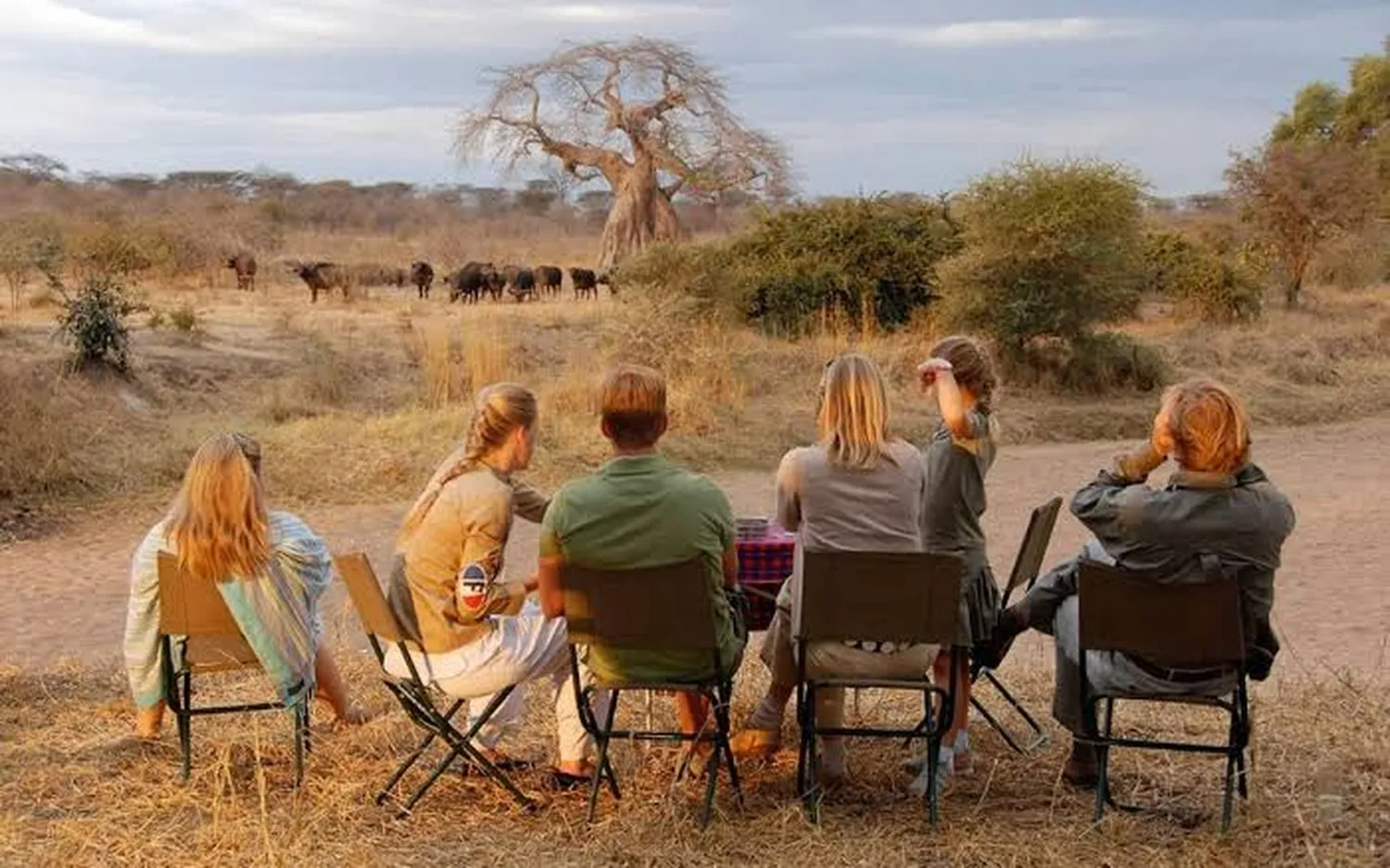
Quick Answer: What Is the Best Walking Safari Option on a 6-Day Tanzania Tour?
Arusha National Park is the easiest option; Tarangire is the strongest choice for a classic bush-walking feel; Lake Manyara is best for forest and Rift Valley variety. If this is your first six-day Northern Circuit safari, include one short ranger-guided walk of up to four hours and preserve the rest of the itinerary for Tarangire, Serengeti, Lake Manyara and Ngorongoro game viewing.
A practical route is Day 1 Arusha National Park walking safari and game drive, Day 2 Tarangire, Day 3 Lake Manyara, Days 4–5 Serengeti, and Day 6 Ngorongoro Crater. If you prefer a wilder walk, replace the Arusha walk with a pre-booked Tarangire walking safari.
- Minimum age: TANAPA restricts walking safaris to guests above 12.
- Short walk: maximum 4 hours.
- Long walk: any walk above 4 hours.
- Booking: prior booking is mandatory.
- Safety: designated trails, armed park ranger and professional guide.
- Arusha National Park: 552 km²; about 32 km from Arusha in TANAPA’s Northern Zone guide.
- Tarangire: 2,850 km²; about 121 km from Arusha.
- Lake Manyara: 648.7 km²; roughly 115–125 km from Arusha depending on reference/route.
What Does TANAPA Require for a Walking Safari?
A walking safari is not a self-guided hike through a wildlife park. TANAPA’s current walking-safari guideline says the activity is conducted on designated walking trails under the escort of armed park rangers and professional guides. Operators must hold the required tourism business credentials and arrange the activity under the park framework.
Current Walking-Safari Rules You Should Know
- Prior booking is mandatory.
- Guests must be above 12 years old.
- Short walking safari: up to 4 hours.
- Long walking safari: more than 4 hours.
- Mandatory briefing and debriefing for walking groups.
- Groups walk in a single line under the safety procedure.
- The operator must have reliable communication equipment and a first-aid kit.
- Walks take place on designated routes and under ranger control.
These numbers matter more than invented “wildlife encounter percentages.” A walking safari is governed by safety, terrain and park operations, not by a promise to get close to a lion or elephant.
Best Walking Safari Options for a 6-Day Northern Tanzania Tour
| Walking option | Best for | Why it works in 6 days | Main trade-off |
|---|---|---|---|
| Arusha National Park | First-time walkers, forest, giraffe, buffalo, Mount Meru scenery | Only about 32 km from Arusha in TANAPA’s Northern Zone reference; walking and game drive can fit in one day. | Adds another park, so the route must stay disciplined afterward. |
| Tarangire National Park | Classic bush atmosphere, tracks, baobab landscapes, elephant ecology | Walking can be paired with a Tarangire overnight and normal game drive. | Exact trail, ranger and route must be arranged in advance. |
| Lake Manyara | Forest, Rift Valley, birds, smaller-scale ecological interpretation | Fits naturally between Tarangire/Arusha and the Karatu–Ngorongoro corridor. | Walking availability and route should be reconfirmed for the travel date. |
| Nyerere National Park | Dedicated wilderness walking and southern Tanzania | Outstanding if the whole six-day trip is built as a southern fly-in safari. | Do not mix it casually with Serengeti/Ngorongoro in a six-day road itinerary. |
Option 1: Arusha National Park Walking Safari — Best for Time Efficiency
Arusha National Park is the cleanest walking-safari choice when your six-day tour starts in Arusha. TANAPA’s Northern Zone reference lists the park at 552 km² and about 32 km from Arusha. Older TANAPA visitor material describes it as an excellent walking park because of its cool forest, open glades and Mount Meru landscape, with walks arranged through park gates and accompanied by an armed ranger.
Jaynevy’s current 1-Day Arusha National Park Walking & Game Drive Safari combines a ranger-guided walk with a vehicle safari. That format is useful because the walk can focus on tracks, plants, birds and the feel of moving through habitat, while the vehicle covers more ground for giraffe, buffalo, zebra, waterbuck, monkeys and Momella Lakes scenery.
Option 2: Tarangire Walking Safari — Best for a Classic Bush-Walking Feel
Choose Tarangire when the walking experience itself is more important than convenience. TANAPA lists the park at 2,850 km² and currently promotes “guided bush walks” among its experiences. The landscape combines baobab savanna, riverine habitat, seasonal swamps and some of Tanzania’s most important elephant concentrations.
The strongest walking day does not try to track large animals closely. Instead, the ranger may interpret footprints, dung, browse signs, wind, termite mounds, plants, smaller animals and the way elephants and predators use the landscape. Jaynevy’s Tarangire Walking Safari Tour is the most relevant internal reference for this option.
Walking Near Elephants Is Not the Goal
Tarangire is famous for elephants, but walking safety depends on distance, wind, visibility and the animal’s behavior. The ranger may stop, retreat or change direction if elephants, buffalo or predators are positioned near the planned route. A safe change of plan is a sign of professional guiding—not a failed safari.
Option 3: Lake Manyara Walking Safari — Best for Habitat Variety
Lake Manyara gives a short tour a very different walking environment. TANAPA lists the park at 648.7 km², with groundwater forest, acacia woodland, floodplain, wetlands and the Rift Valley escarpment compressed into a relatively small area. Recent TANAPA park material lists walking safari among Lake Manyara activities.
Jaynevy’s Lake Manyara Walking Tour can be combined with the wider Lake Manyara National Park experience. If a formal bush walk is not operational on your date, Manyara’s canopy walkway and designated boardwalk/viewpoint experiences may still add a useful on-foot element without pretending they are the same as an armed-ranger wilderness walk.
Option 4: Nyerere Walking Safari — Best for a Separate Southern Tanzania Plan
Nyerere is the better choice when walking is the central purpose of the whole six-day trip. TANAPA’s current Nyerere page describes ranger-escorted guided walking safaris that reveal tracks, plants and miombo/riverine ecology, with pre-booking and permits required. The park is listed at more than 30,000 km², making it a very different wilderness proposition from compact Arusha or Lake Manyara.
However, Nyerere should usually be a separate southern itinerary. Trying to combine Nyerere with Tarangire, Serengeti and Ngorongoro in only six days creates expensive flights or excessive transit and weakens both halves of the safari.
Recommended 6-Day Tanzania Itinerary with One Walking Safari
For most travelers, one properly planned walk is enough. It adds a new way of experiencing wildlife without turning the entire six-day tour into a physical expedition.
Day 1: Arusha National Park — Walking Safari + Game Drive
Start with a ranger-guided short walk on an approved route, followed by a picnic and game drive around selected parts of Arusha National Park. This is the most efficient place to walk because you begin near Arusha and do not need to sacrifice a Serengeti day.
Day 2: Arusha to Tarangire National Park
Drive to Tarangire for a full game-drive experience focused on elephants, baobab landscapes and riverine wildlife. If you prefer Tarangire as your walking park, replace Day 1 with a direct Tarangire transfer and use a pre-booked ranger walk here instead.
Day 3: Tarangire to Lake Manyara and Karatu
Use Lake Manyara for forest, birds, primates, elephants and Rift Valley scenery. A Manyara walking option can replace some of the vehicle time if it has been confirmed in advance. Overnight near Karatu.
Day 4: Karatu to Serengeti National Park
Travel through the Ngorongoro highlands into Serengeti and spend the afternoon on a vehicle game drive. Keep Serengeti vehicle-based in this short itinerary so you can cover enough habitat for lions, leopards, cheetahs and plains wildlife.
Day 5: Full-Day Serengeti Game Drive
Use the full day for Central Serengeti or the most relevant seasonal sector. Do not remove this day simply to add a second short walk elsewhere; a six-day itinerary needs enough uninterrupted Serengeti time to remain a strong safari.
Day 6: Ngorongoro Crater Safari and Return to Arusha
Descend early into Ngorongoro Crater for concentrated wildlife viewing, then return to Arusha. This gives the tour four distinct ecosystems plus one authentic walking experience without excessive transfers.
Alternative 6-Day Route: Tarangire Walk Instead of Arusha
Use Day 1 for Arusha–Tarangire transfer and afternoon game drive, Day 2 for a morning Tarangire walking safari plus a second game drive, Day 3 Lake Manyara, Days 4–5 Serengeti, and Day 6 Ngorongoro. This is the better choice for travelers who want a stronger “bush” atmosphere and are comfortable with more remote walking conditions.
Walking Safari vs Game Drive: What Do You Gain and Lose?
| Factor | Walking safari | 4x4 game drive |
|---|---|---|
| Perspective | Tracks, smells, plants, insects, sounds and scale at ground level | Large-area wildlife search and broader landscape coverage |
| Distance covered | Low | High |
| Big-cat search | Not the main objective | Much stronger |
| Physical effort | Moderate to high depending on route | Low |
| Flexibility around dangerous wildlife | Ranger may stop or change route | Vehicle provides greater separation and mobility |
| Best role in 6 days | One complementary experience | Main safari-viewing method |
Short Walk or Long Walk: Which Is Better for a Six-Day Tour?
Choose a short walk for most six-day Northern Circuit itineraries. TANAPA defines short walks as up to four hours. That leaves time for breakfast, transfers, lunch, game drives and recovery without turning one activity into the entire day.
| Type | TANAPA definition | Best use | Six-day recommendation |
|---|---|---|---|
| Short walk | Maximum 4 hours | Nature interpretation, tracks, birds, plants and a lighter wilderness experience | Best choice for most travelers |
| Long walk | More than 4 hours | Travelers whose main interest is walking rather than covering many parks | Use only if the itinerary is specifically built around it |
How Fit Do You Need to Be?
You do not need trekking-level fitness for every short walking safari, but you must be comfortable on uneven natural ground. Trail difficulty varies with park, route, rain and terrain. There may be dust, mud, stones, roots, grass and exposure to sun.
- Tell the operator about mobility limitations before booking.
- Do not hide recent leg, knee, hip, back or balance problems from your guide.
- Choose a short walk if you are unsure about stamina.
- Expect the ranger to adjust pace or route when conditions change.
- Hydrate before the walk and carry only a light day bag.
What Should You Wear for a Walking Safari?
- Closed walking shoes with a reliable grip.
- Lightweight long trousers rather than shorts in long grass or thorny habitat.
- Neutral long-sleeved shirt for sun and vegetation protection.
- Hat, sunglasses and sunscreen.
- Light rain/wind layer in green-season or highland conditions.
- Small day bag with water and personal medication.
- Binoculars for birds and wildlife kept at a safe distance.
What Wildlife Can You See on Foot?
A good walking safari is about interpretation, not only large-animal sightings. You may encounter giraffe, zebra, antelope, warthog, buffalo at a safe distance, monkeys, birds and smaller wildlife depending on the park. More importantly, you can examine tracks, dung, feeding signs, bones, insects, medicinal plants and the relationship between landscape and animal movement.
Large predators and elephants are not “targets to approach.” Their presence may force the ranger to reroute the group. That is part of real wilderness decision-making.
Best Time of Year for a Tanzania Walking Safari
June to October usually offers the easiest walking conditions, while the green season can be beautiful but less predictable underfoot. This is a practical route-and-comfort comparison, not a claim that wildlife is always better in the dry season.
| Period | Advantages | Trade-offs |
|---|---|---|
| Jun–Oct | Drier trails, shorter grass in many areas, cooler mornings, easier logistics | Dust, stronger sun and peak-season visitor pressure |
| Nov–Feb | Green scenery, birds, fresh tracks after rain, dramatic landscapes | Short rains can change trail conditions quickly |
| Mar–May | Lushest landscapes and lower visitor numbers | Long rains can make trails muddy or lead rangers to change/cancel a route |
Safety Rules That Matter More Than Getting the Photo
- Follow the ranger's instruction immediately, without debating wildlife distance.
- Stay in the required single-line formation.
- Do not run unless the ranger specifically instructs it.
- Keep voices low and avoid sudden movements around wildlife.
- Never move ahead of the ranger to take a photograph.
- Do not feed, touch or approach animals.
- Carry only the gear you can manage quietly and comfortably.
- Accept route changes when wind, vegetation or wildlife position makes a trail unsuitable.
Useful Jaynevy Tours Internal Links for Walking-Safari Planning
- 1-Day Arusha National Park Walking & Game Drive Safari
- Tarangire Walking Safari Tour
- Lake Manyara Walking Tour
- Tanzania Northern Safari
- 6-Day Tarangire, Serengeti, Ngorongoro, Manyara & Eyasi Safari
- Tarangire National Park
- Lake Manyara National Park
Frequently Asked Questions About Walking Safari Options During a 6-Day Tanzania Tour
Can I add a walking safari to a 6-day Tanzania tour?
Yes. A six-day Northern Circuit tour can include a walking safari without sacrificing the main wildlife parks if the walk is placed carefully. Arusha National Park is the easiest add-on, while Tarangire and Lake Manyara can also offer walking experiences where the correct trail, ranger and operator arrangements are confirmed.
Which park is best for a walking safari on a short Tanzania tour?
Arusha National Park is the most practical option when time is tight because it is close to Arusha and can combine a ranger-guided walk with a game drive in one day. Tarangire is stronger for a bush-and-big-game atmosphere, while Lake Manyara offers forest, escarpment and Rift Valley habitat.
How old must you be for a TANAPA walking safari?
TANAPA's current walking-safari guideline states that walking safaris are restricted to persons above the age of 12. Families should still confirm the exact activity, trail difficulty and operator requirements before booking.
How long is a walking safari in Tanzania?
TANAPA defines a short walking safari as a walk with a maximum duration of four hours. Any walking safari longer than four hours is classified as a long walk. The actual route and duration depend on the park, trail, ranger, weather and guest fitness.
Is prior booking required for a walking safari?
Yes. TANAPA's current guideline says prior booking is mandatory. A walking safari should be confirmed before travel with the permitted operator, designated route and park ranger arrangements.
Do I need an armed ranger on a walking safari?
Yes. TANAPA states that walking safaris are conducted on designated trails under the escort of armed park rangers and professional guides. Guests should follow the ranger's instructions immediately and walk in the required formation.
Can I walk close to elephants, buffalo or lions?
No responsible walking safari is designed to approach dangerous wildlife closely. The ranger controls route, distance and safety decisions. Encounters are dictated by animal position, wind, terrain and park rules, and the group may change direction or wait rather than approach.
Is Tarangire good for walking safaris?
Yes. TANAPA currently promotes guided bush walks among Tarangire's experiences, and Jaynevy Tours has a dedicated Tarangire walking safari page. Tarangire's 2,850 km² landscape offers baobab savanna, riverine habitat and strong big-game context, but the exact walking area must be approved and pre-booked.
Can I do a walking safari in Lake Manyara?
Yes, subject to current park operations and trail arrangements. TANAPA's recent national-park material lists walking safari among Lake Manyara activities, and Jaynevy Tours publishes a Lake Manyara walking tour. The park covers 648.7 km² and combines groundwater forest, woodland, floodplain and Rift Valley scenery.
What should I wear for a Tanzania walking safari?
Wear closed walking shoes with grip, lightweight long trousers, a neutral long-sleeved shirt, sun protection and a light rain or wind layer. Carry water and only a small day bag, and tell the operator before booking about mobility limitations or recent injuries.
Research Notes and Trusted Sources
This page separates official walking-safari rules from itinerary recommendations. TANAPA provides the safety, age, duration and booking framework. Exact trail availability, ranger assignment and retail price must be reconfirmed for the travel date rather than copied from an old tariff or assumed from another park.
- TANAPA Guidelines for Walking Safaris — designated trails, armed-ranger escort, age restriction, short/long-walk definitions and mandatory prior booking.
- TANAPA Northern Zone Quick Reference — Arusha 552 km² / ~32 km from Arusha, Tarangire 2,850 km² / ~121 km, and Lake Manyara 648.7 km².
- TANAPA Tarangire National Park — current park facts and guided-bush-walk positioning.
- TANAPA Lake Manyara National Park — current park area and visitor context.
- Google Search Central: People-First Content — original analysis, comprehensive answers, clear sourcing, authorship and trust.
- Google Search Central: Generative AI Search Optimization — confirms that foundational SEO remains relevant for AI Overviews and AI Mode.
SEO/AEO implementation note: Google’s current guidance emphasizes original, substantial, people-first information and says core SEO practices remain the foundation for AI Overviews and AI Mode. This page therefore answers decisions directly, uses verified numbers only where the sources support them, and avoids manufactured wildlife probabilities or an arbitrary word-count target.