
Reviewed for 2026/2027 planning: 27 August 2026. Wild animals are not staged and no ethical safari operator can guarantee a specific individual animal. The guide below separates realistic expectations from rarer possibilities and uses official conservation sources for numerical context.
Quick Answer: What Animals Will You See on a 6-Day Tanzania Safari?
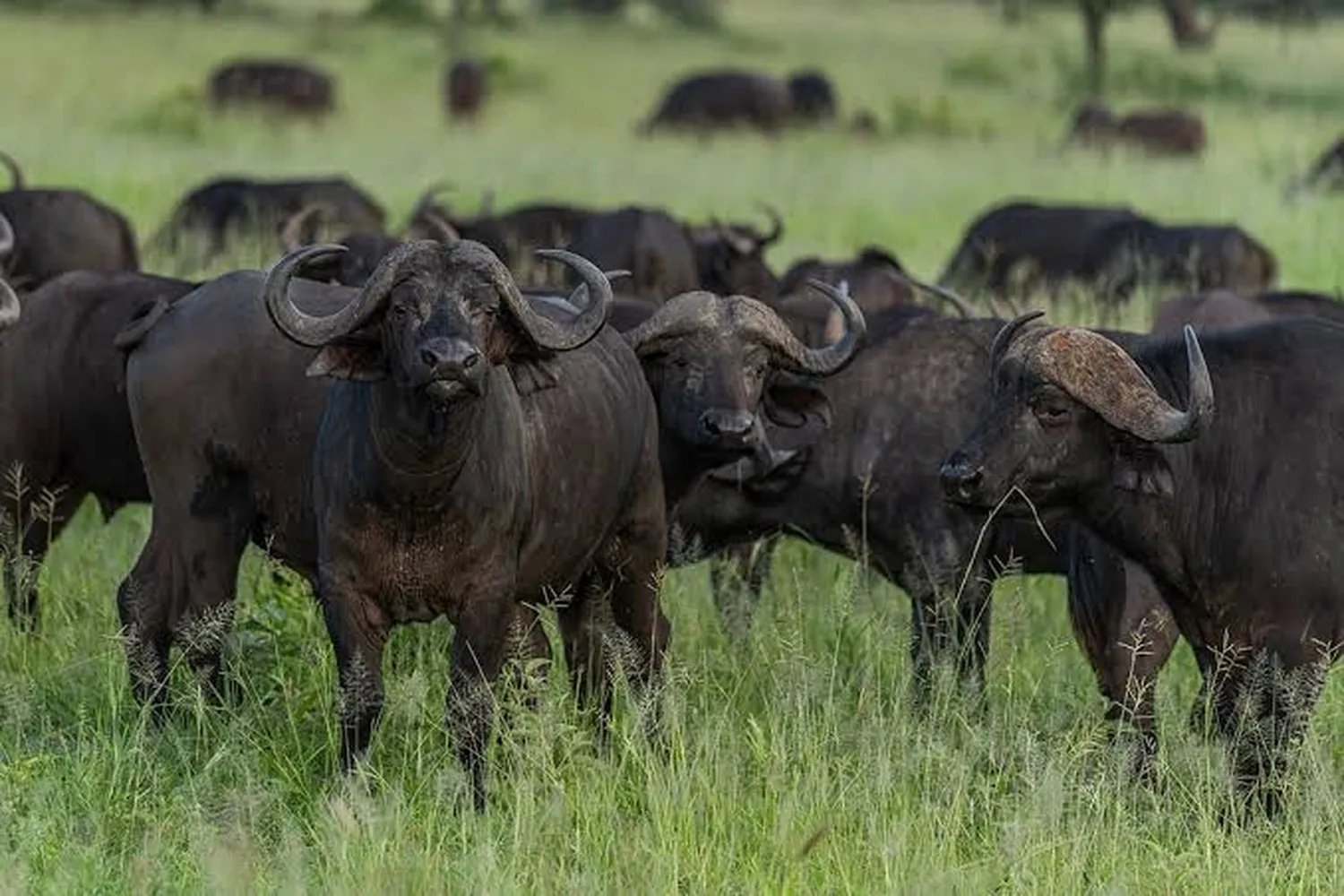
On a typical six-day northern-circuit safari, you have a strong chance of seeing lions, African elephants, Cape buffalo, giraffes, zebras, wildebeest, hippos, warthogs, spotted hyenas, baboons, vervet monkeys, impalas and several gazelle species. A route that combines Tarangire National Park, Serengeti National Park, Ngorongoro Crater and sometimes Lake Manyara National Park also gives you a realistic opportunity to look for cheetah, leopard and black rhino. Those three should be treated as sought-after sightings, not promises.
| Wildlife group | Realistic expectation on 6 days | Best places on a common northern route |
|---|---|---|
| Lions | Very likely on a well-routed safari | Serengeti, Ngorongoro; also Tarangire |
| Elephants | Very likely | Tarangire, Manyara; also Serengeti and Ngorongoro |
| Buffalo | Very likely | Ngorongoro, Tarangire, Serengeti |
| Zebra & wildebeest | Very likely | Serengeti and Ngorongoro |
| Giraffe | Very likely outside the crater floor | Tarangire, Serengeti, Manyara |
| Hippo | Likely if your game-drive route includes reliable pools | Ngorongoro and Serengeti |
| Cheetah | Possible to likely in the right Serengeti habitat | Serengeti plains |
| Leopard | Possible; never guaranteed | Serengeti riverine woodland, Tarangire |
| Black rhino | Possible; never guaranteed | Ngorongoro is the strongest standard-route opportunity |
For travellers comparing route formats, see the 6-day Serengeti Tanzania safari, a 6-day private Tanzania safari and the 6-day sharing safari. The parks and number of Serengeti nights matter more to wildlife variety than the label “six days” by itself.
Why Six Days Is a Strong Wildlife Length for Northern Tanzania
Six days is long enough to move beyond a one-park snapshot. Tarangire adds elephants, baobab woodland and dry-country species; Serengeti adds open-plains predators and huge herbivore systems; Ngorongoro concentrates many large mammals into a compact crater floor; and Lake Manyara, when included, adds groundwater forest, primates and waterbirds. That habitat contrast is the main reason a six-day trip can produce a much longer animal list than a short safari.
It also gives guides time to work with wildlife rather than merely race between gates. A lion sleeping at noon may become active late in the afternoon. A leopard that disappears into grass can reappear in a tree. Elephant families may move from woodland toward water. Predators often become easier to locate when other vehicles and guides share fresh information responsibly. Time in the ecosystem creates opportunity, but it still does not create guarantees.
Animals by Park: Where You Are Most Likely to See Each Species
| Park | Signature wildlife | What makes it different | Animals that need luck |
|---|---|---|---|
| Tarangire | Elephants, buffalo, giraffe, zebra, wildebeest, impala, warthog | River and swamp concentrate wildlife in the dry season; 550+ bird species are recorded by TANAPA | Leopard, cheetah, wild dog, python |
| Serengeti | Lion, zebra, wildebeest, gazelles, giraffe, buffalo, hyena | Huge open ecosystem, strong predator-prey interactions and the Great Migration | Leopard, cheetah, black rhino, serval, wild dog |
| Ngorongoro Crater | Wildebeest, zebra, buffalo, lion, hyena, hippo, gazelles | Dense year-round wildlife in a relatively compact caldera | Black rhino, leopard, cheetah |
| Lake Manyara | Elephant, buffalo, baboon, blue monkey, giraffe, hippo, waterbirds | Forest, lake, floodplain and escarpment habitats in one small park | Tree-climbing lion, leopard, large flamingo concentrations |
Serengeti Animals: Your Broadest Wildlife Day
The Serengeti is usually where the animal list expands fastest. On central Serengeti game drives you may encounter lions around kopjes and river valleys, spotted hyenas crossing open plains, giraffes browsing acacias, large buffalo herds, hippos in permanent pools, warthogs, topi, hartebeest, impala, Thomson’s gazelles and Grant’s gazelles. Zebra and wildebeest are common even when the main migration herds are elsewhere because not every individual animal migrates in one block.
UNESCO describes Serengeti National Park as 1.5 million hectares of savannah and highlights one of the world’s greatest predator-prey systems. Its World Heritage description also characterizes the migration on a scale of about two million wildebeest plus hundreds of thousands of gazelles and zebras. Those figures describe the wider Serengeti ecosystem and do not mean that every six-day itinerary will drive through the main herds. Migration location shifts with rainfall, grazing and water.
Big cats in the Serengeti
Lions are normally the most realistic big-cat target. Cheetahs favor more open terrain, so they can be excellent sightings when your route reaches suitable plains. Leopards often use riverine woodland and large trees; an experienced guide may know territories and preferred resting trees, but leopard sightings remain less predictable. For a deeper cat-focused guide, use our how to see big cats in Serengeti National Park resource.
Ngorongoro Crater Animals: Density Matters More Than Distance
Ngorongoro is often the day when first-time visitors realize how much wildlife can fit into a relatively small viewing area. The Ngorongoro Conservation Area Authority says the crater supports more than 25,000 animals, including large resident concentrations of wildebeest and zebra. NCAA information also cites over 10,000 wildebeest, approximately 5,000 Burchell’s zebra and more than 400 spotted hyenas in the crater.
Commonly watched species include lion, hyena, buffalo, wildebeest, zebra, Thomson’s gazelle, Grant’s gazelle, warthog, hippo and elephant. The elephants seen on the crater floor are often mature bulls. Giraffes are not a normal crater-floor sighting because the steep crater walls and habitat are not well suited to their movement into the caldera; you can see giraffes elsewhere in the conservation area and on other northern-circuit days.
Is Ngorongoro the best place to see black rhino?
For most standard northern itineraries, Ngorongoro offers the strongest practical opportunity to search for black rhino. NCAA describes the crater as one of Africa’s best places to see the endangered species. However, rhinos may be distant, partly hidden or outside the area you can view from the road. Bring binoculars and do not treat a Big Five checklist as a guarantee. Our Ngorongoro animal list gives a more detailed crater-specific breakdown.
Tarangire Animals: Elephants, Baobabs and Dry-Season Concentrations
Tarangire is the park to prioritize if elephants are high on your list. TANAPA calls its elephant herds and baobab galleries a signature attraction, and the Tarangire River becomes especially important in the dry season. Elephant families, buffalo, zebra, wildebeest and many antelopes move around river loops, swamps and woodland as water becomes less widely available.
You can also look for giraffe, impala, warthog, waterbuck, dik-dik, vervet monkey, baboon, mongoose and predators such as lion and spotted hyena. Leopard and cheetah occur but require more luck. Tarangire is also unusually strong for birding: TANAPA records 550+ bird species, so even travellers who arrive focused on mammals often leave with photographs of hornbills, raptors, ostriches, bee-eaters and large ground birds.
Lake Manyara Animals: Primates, Elephants and Seasonal Waterbirds
Lake Manyara is not included in every six-day itinerary, but it adds a different ecological feel when it is. TANAPA lists elephants, buffalo, zebra, wildebeest and giraffe on the floodplain, plus hippos along the shore. The groundwater forest supports blue monkeys, large baboon troops and bushbuck. The park covers 648.7 km² and has more than 400 recorded bird species.
Tree-climbing lions are part of Manyara’s identity, but they are not a sighting you should expect on demand. Flamingos are also seasonal; numbers respond to water chemistry, depth and food conditions. This is an important A-to-Z planning principle for Tanzania: a species can genuinely occur in a park without being predictably visible during your particular visit.
Can You See the Big Five on a 6-Day Tanzania Safari?
Yes, all five species occur on the northern circuit, but seeing all five in six days is possible rather than guaranteed. The term Big Five refers to lion, leopard, elephant, Cape buffalo and rhinoceros. On a standard route, lion, elephant and buffalo are usually much more straightforward targets than leopard and black rhino.
| Big Five animal | Six-day expectation | Best route focus | Why it can be missed |
|---|---|---|---|
| Lion | Strong chance | Serengeti + Ngorongoro | Resting cats can disappear in grass, gullies or woodland |
| Elephant | Strong chance | Tarangire | Movement changes with water and vegetation |
| Buffalo | Strong chance | Ngorongoro, Serengeti, Tarangire | Generally widespread but never literally guaranteed |
| Leopard | Possible | Serengeti river valleys; Tarangire woodland | Solitary, camouflaged and often inactive during hot hours |
| Black rhino | Possible | Ngorongoro | Low population, large viewing distances and restricted road network |
For realistic route planning rather than checklist marketing, read where to see the Big Five in Tanzania and the Big Five in Serengeti.
Animals You Should Put on Your “Likely” List
A useful safari expectation list is broader than the Big Five. These are the species that often create the best viewing because they are social, active, widespread or found in habitats your route naturally crosses.
- Zebra: widespread in Serengeti and Ngorongoro, often mixed with wildebeest.
- Wildebeest: resident animals plus migratory herds depending on season and route.
- Giraffe: common in Serengeti, Tarangire and Manyara; not normally on the Ngorongoro Crater floor.
- Warthog: frequently seen grazing or trotting with tails upright.
- Impala: widespread in woodland and savannah outside the crater floor.
- Thomson’s and Grant’s gazelles: especially characteristic of open Serengeti and Ngorongoro grasslands.
- Spotted hyena: particularly important in Ngorongoro and Serengeti; they are skilled hunters as well as scavengers.
- Hippo: likely where your route includes established pools or wetlands.
- Baboons and monkeys: especially noticeable in Manyara and forested areas.
Animals You Might See, but Should Never Be Promised
| Animal | Why people want to see it | Why it is harder | Best six-day strategy |
|---|---|---|---|
| Leopard | Iconic Big Five cat | Solitary and superbly camouflaged | Give Serengeti more time; scan riverine trees |
| Black rhino | Rare Big Five species | Small population and often distant | Prioritize a full Ngorongoro crater drive |
| Cheetah | Fast open-plains predator | Distribution varies with prey and habitat | Spend time in suitable Serengeti plains |
| Serval | Beautiful long-legged small cat | Low profile and often hidden in grass | Slow scanning in grassland and wetland edges |
| African wild dog | Highly social endangered predator | Wide-ranging and uncommon on standard routes | Treat as a major bonus, not a target promise |
| Caracal | Distinctive ear-tufted cat | Secretive and low-density | Pure luck on a normal six-day safari |
Will You See the Great Migration in Six Days?
You can, but only if the itinerary follows where the herds are likely to be during your travel month. The Great Migration is a moving ecosystem, not a permanent attraction in central Serengeti. January to March commonly emphasizes the southern Serengeti and Ndutu short-grass plains; the herds generally move west and north as conditions change, with northern Serengeti becoming important during the dry-season river-crossing period. Short rains later in the year influence the return south.
Weather can move the timing forward, backward or sideways. A six-day safari that spends all Serengeti time in the wrong region can still be excellent for resident wildlife but miss the main migration columns. If migration is your priority, use a season-specific route such as a 6-day Great Migration safari and check our guide to when to see the Serengeti Great Migration.
How the Animal List Changes by Season
| Period | Wildlife strengths | What changes | Planning note |
|---|---|---|---|
| Jan–Mar | Southern migration concentrations, calves, predator activity | Main herds may be far from central Serengeti | Route toward Ndutu/southern plains if migration matters |
| Apr–May | Green landscapes, active herbivores, strong birdlife | Rain and road conditions can slow drives | Excellent value for patient wildlife travellers |
| Jun–Oct | Dry-season visibility, Tarangire elephants, strong general game | Migration shifts west/north; popular parks are busier | Book camps and crater access early |
| Nov–Dec | Short-rain greenery, returning migratory herds, migratory birds | Rainfall timing varies | Flexible routing improves wildlife results |
A Realistic Day-by-Day Wildlife Pattern on a 6-Day Safari
The exact order varies, but this is a practical example of how different animals enter the trip. It is not a promise that every six-day package follows this route.
| Day | Typical area | Wildlife focus | Best expectation |
|---|---|---|---|
| 1 | Tarangire | Elephants, giraffe, buffalo, zebra, antelopes, birds | Start with large mammals and baobab-country wildlife |
| 2 | Drive to Serengeti + afternoon game drive | Lion, zebra, wildebeest, gazelles, giraffe, hyena | Animal variety increases as open plains begin |
| 3 | Full Serengeti | Big cats, herbivore herds, hippos, scavengers | Your strongest day for patient predator searching |
| 4 | Serengeti morning + Ngorongoro highlands | Another predator window, then highland wildlife | Useful second chance for missed Serengeti species |
| 5 | Ngorongoro Crater | Lion, hyena, buffalo, zebra, wildebeest, hippo, rhino search | High density in a compact game-drive area |
| 6 | Lake Manyara or route-specific final park | Elephants, primates, waterbirds, hippo | Add forest and wetland species before departure |
What Birds Can You See?
Even non-birders quickly notice how much birdlife improves a safari. Commonly photographed northern-circuit birds can include lilac-breasted rollers, superb starlings, hornbills, ostriches, secretary birds, kori bustards, crowned cranes, eagles, vultures, storks, herons and bee-eaters. Lake Manyara adds wetland specialists and seasonal flamingos; Tarangire is particularly rich, with TANAPA recording more than 550 bird species.
Bird numbers on a personal six-day checklist depend on how often you stop, whether you travel with a bird-focused guide and whether you count small species rather than only large showy birds. A driver-guide who understands your interests should know from the first day whether to stop for every raptor and roller or prioritize mammals.
Animals You Should Not Expect on This Route
Setting boundaries is part of useful safari planning. A northern Tanzania safari is not the right trip for mountain gorillas or chimpanzee trekking; those experiences require different destinations. You should also not expect tigers, jaguars or other non-African cats. White rhino is not the normal wild-rhino target on this circuit; when travellers talk about rhino in Ngorongoro, they mean the critically important black rhino population.
Similarly, “tree-climbing lions” should not be sold as a guaranteed Manyara performance. Lions can climb trees in more than one area, and whether you see one in a tree depends on the animals’ behavior that day.
How to Improve Your Wildlife Sightings Without Chasing Animals
- Choose enough Serengeti time. Two game-drive periods are better than a rushed transit if big cats matter.
- Start early. Cooler mornings often bring more movement before animals rest in heat.
- Keep one afternoon flexible. Your guide can revisit an area after fresh sightings are reported.
- Use binoculars. Rhino, cats and raptors may be far from the road.
- Do not pressure your guide to go off-road illegally. Responsible distance protects wildlife and your safari reputation.
- Tell the guide your priorities on day one. A bird photographer, first-time Big Five visitor and migration-focused traveller should not receive identical game-drive decisions.
- Allow animal behavior to unfold. Ten quiet minutes with elephants or lions can become more memorable than a checklist of rushed sightings.
Does a Private Safari Help You See More Animals Than a Shared Safari?
A private vehicle does not make more animals exist, but it gives you more control over where to stop, how long to wait and which species to prioritize. That can be valuable for photography, families and travellers who want to spend an hour with one predator rather than leave when the rest of a group is ready.
A well-run shared safari can still produce excellent wildlife sightings because the same parks, roads and guide networks are used. The trade-off is flexibility. When comparing options, focus on route, game-drive time, guide quality, vehicle seating and park nights rather than assuming a higher price automatically means more animals. For budgeting context, see how much a Tanzania safari costs.
Verified Wildlife Numbers: How to Read Safari Statistics Correctly
Wildlife statistics are useful when they describe ecosystem scale, but they should not be converted into personal sighting odds. The table below uses figures currently published by official or World Heritage sources and labels what they actually mean.
| Official figure | Source | What it tells you | What it does not tell you |
|---|---|---|---|
| Serengeti: 1.5 million ha of savannah | UNESCO World Heritage Centre | The scale of habitat animals can move through | Where a species will be on your exact game drive |
| Migration described as about 2 million wildebeest plus hundreds of thousands of zebra and gazelles | UNESCO | The extraordinary scale of the ecosystem | That the main herd will be near your lodge |
| Ngorongoro: 25,000+ large animals; 10,000+ wildebeest; ~5,000 zebra; 400+ spotted hyenas | NCAA | Why crater wildlife often feels dense | A guaranteed Big Five day |
| Tarangire: 550+ recorded bird species | TANAPA | Exceptional habitat and bird diversity | That a casual visitor will identify 550 species |
| Lake Manyara: 648.7 km² and 400+ recorded bird species | TANAPA | High habitat diversity in a compact park | That flamingos or tree-climbing lions appear every day |
Official Data Sources Used for This Wildlife Guide
For factual checks, this guide used the UNESCO Serengeti National Park World Heritage profile, Ngorongoro Conservation Area Authority wildlife information, TANAPA Tarangire attractions data and TANAPA Lake Manyara wildlife data. Population figures can be updated as surveys improve, so numbers should always be understood in the context and date of the source rather than repeated as permanent facts.
Frequently Asked Questions About Animals on a 6-Day Tanzania Safari
1. Will I definitely see lions on a six-day Tanzania safari?
Lions are one of the strongest big-cat targets on a northern-circuit itinerary that includes Serengeti and Ngorongoro, but wild-animal sightings are never guaranteed.
2. Can I see all of the Big Five in six days?
It is possible. Lion, elephant and buffalo are generally easier targets; leopard and black rhino are the two that most often require luck and patient guiding.
3. Where is my best chance to see a black rhino?
Ngorongoro Crater is normally the strongest practical black-rhino opportunity on a standard northern Tanzania route, but sightings may be distant or absent on a given day.
4. Is leopard common in Serengeti?
Leopards live in Serengeti and experienced guides know productive riverine and woodland areas, but the cats are solitary and camouflaged, so they should never be promised.
5. Will I see cheetahs?
You may, especially in suitable open Serengeti habitat. A longer Serengeti stay improves search time, but cheetah locations change with prey and conditions.
6. Will I see the Great Migration?
Only if your dates and Serengeti region align with the moving herds. A six-day safari can target the migration, but a generic central-Serengeti route cannot guarantee the main herds year-round.
7. Are elephants better in Tarangire or Serengeti?
Both parks have elephants, but Tarangire is the classic six-day route choice for elephant-focused viewing, particularly during the dry season when wildlife gathers around reliable water.
8. Can I see flamingos at Lake Manyara?
Flamingos occur at Lake Manyara, but concentrations vary with water depth, chemistry and food conditions. Treat large pink flocks as seasonal rather than guaranteed.
9. Are giraffes found inside Ngorongoro Crater?
Giraffes are not a normal crater-floor sighting. You are much more likely to see them in Serengeti, Tarangire, Manyara and other areas outside the steep caldera.
10. Which park has the most different animals?
Serengeti usually gives the broadest large-scale wildlife experience, while Ngorongoro often feels densest and Tarangire is especially strong for elephants and birds. Combining them is more useful than choosing a single “winner.”
11. Is six days enough for wildlife photography?
Yes for a first northern-circuit photography safari, especially if the itinerary gives Serengeti at least two meaningful game-drive periods. A private vehicle improves control over positioning and waiting time.
12. What is the most important thing to remember about animal sightings?
Habitat and season improve probabilities; they do not create guarantees. Choose a strong route, an experienced guide and enough time, then allow the wildlife to behave naturally.
Final Verdict: What Should You Realistically Expect to See?
A well-designed six-day Tanzania safari should deliver a rich wildlife list even if you miss one or two famous species. Expect strong opportunities for lion, elephant, buffalo, zebra, wildebeest, giraffe, hippo, hyena, warthog, gazelles, antelopes and primates. Treat leopard, black rhino, cheetah, wild dog, serval and a perfectly positioned Great Migration encounter as bonuses that depend on route, season and luck.
The best safari is not the one that promises every animal. It is the one that puts you in the right habitats for enough time, uses an experienced guide, respects wildlife and keeps the itinerary flexible when conditions change.