
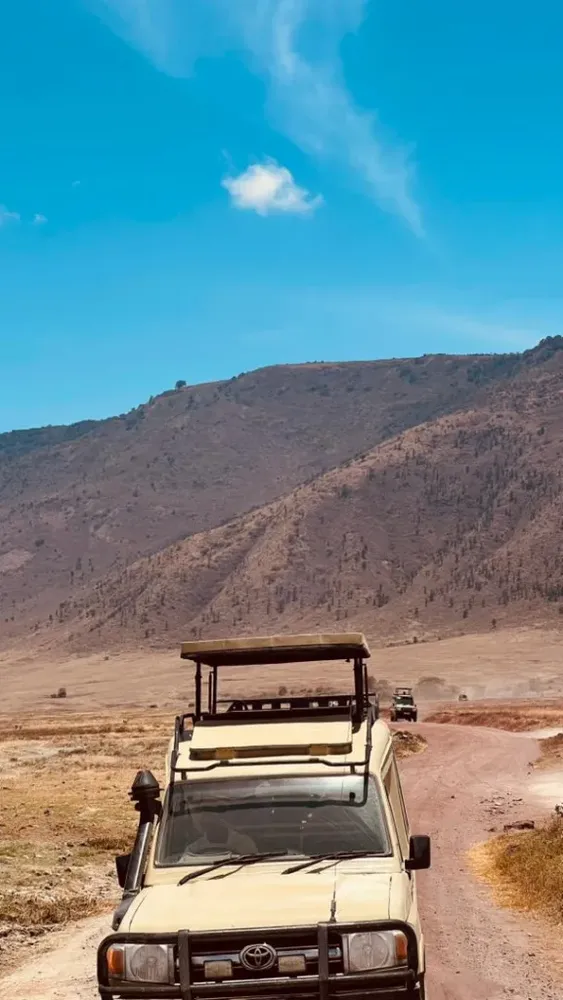
Quick Answer: How Much Should You Tip on a 6 Day Tanzania Safari?
A practical 6-day tipping budget for the main driver-guide is roughly USD 90–150 per person on a shared safari if you use Jaynevy’s detailed USD 15–25 pp/day range, or USD 120–180 per person on a private safari using the published USD 20–30 pp/day range. Those totals are guidance, not mandatory charges. If a group prefers to tip by vehicle rather than per person, Jaynevy’s summary guidance also lists about USD 40–60 per vehicle per day, equal to USD 240–360 for six days. Camps, lodge staff and cooks are separate only where those roles actually apply.
- Shared driver-guide: USD 15–25 per guest/day in Jaynevy’s detailed 2026 guide.
- Private safari guide: USD 20–30 per guest/day in that same detailed guide.
- Group vehicle alternative: USD 40–60 per vehicle/day appears in Jaynevy’s summary guidance.
- Camp/lodge team: guidance varies; communal tip boxes are usually the cleanest method.
- Camping cook: tip separately only when your itinerary actually has a dedicated safari cook.
6 Day Tanzania Safari Tipping Table for Drivers and Crew
Use this table as a cash-planning tool, then confirm how your specific safari is staffed before departure. The same six-day itinerary may have only one driver-guide on a lodge safari, while a public-camping safari can involve a driver-guide plus a cook and camp support.
| Role | Published / practical planning range | 6-day or 5-night planning total | How to give it |
|---|---|---|---|
| Shared safari driver-guide | USD 15–25 per guest/day | USD 90–150 per guest for 6 days | Directly at safari end, often pooled by the group |
| Private safari guide | USD 20–30 per guest/day | USD 120–180 per guest for 6 days | Directly at safari end |
| Group/vehicle method | USD 40–60 per vehicle/day | USD 240–360 per vehicle for 6 days | One group envelope |
| Dedicated camping cook | Around USD 10/day in Jaynevy guidance | About USD 60 for 6 days if the cook serves all 6 days | Directly or as operator instructs |
| Lodge/camp staff | Published guidance varies from roughly USD 5–20 per guest/night | For 5 nights: roughly USD 25–100 per guest depending on the guideline used | Communal tip box unless the property says otherwise |
| Porter / baggage assistant | About USD 1–3 per bag | Depends on number of handling occasions | Directly after assistance |
Why the ranges are wide: tipping guides differ by operator, lodge style, private versus shared travel and whether a figure is quoted per guest or per vehicle. Do not add every line automatically; only budget for roles that actually serve your trip.
Is Tipping Mandatory on a Tanzania Safari?
No. A tip is a discretionary thank-you for good service, not a government fee, park fee or mandatory surcharge. Jaynevy’s own tipping guidance says gratuities are voluntary and should reflect service quality. This distinction matters when comparing Tanzania safari costs: a quote should clearly separate included services and statutory charges from optional gratuities.
If an operator presents a tip as an undisclosed compulsory payment after booking, ask for the policy in writing. A professional pre-trip document should explain the expected crew structure, whether gratuities are included or excluded, and whether any lodge service charge already applies.
Why Do Tanzania Safari Tipping Recommendations Differ So Much?
They differ because there is no single regulated safari gratuity tariff, and different companies express tips per guest, per couple, per group or per vehicle. Jaynevy’s current page itself contains a broad summary of USD 10–25 pp/day for driver-guides and USD 40–60 per vehicle/day for groups, while its detailed section uses USD 15–25 pp/day for a shared driver-guide and USD 20–30 pp/day for a private guide.
Independent safari specialists also publish lower or overlapping bands. Asilia Africa currently suggests about USD 10–20 per guest/day for a safari guide and USD 5–15 per guest/day for camp and lodge staff. Expert Africa suggests around USD 8–10 per guest/day for a guide and a similar amount for the hotel or safari camp. These differences are useful evidence that gratuity is a judgment call rather than a fixed tariff.
How Much Should Two People Tip a Driver-Guide for 6 Days?
For two travellers using a per-person method, the group total can become substantial, so compare it with the per-vehicle guidance before deciding. At USD 15–25 pp/day, two guests would pool USD 30–50/day, or USD 180–300 over six days. At USD 20–30 pp/day for a private guide, two guests would pool USD 40–60/day, or USD 240–360 over six days.
How Much Should a Family or Group Tip for 6 Days?
Larger groups should avoid blindly multiplying a high per-person number when the operator recommends a vehicle-based pool. Jaynevy’s USD 40–60 per vehicle/day summary equals USD 240–360 for a six-day safari, regardless of whether four or six travellers share that vehicle, unless your pre-trip instructions say otherwise.
| Group example | Method | Daily group tip | 6-day group total |
|---|---|---|---|
| 2 guests, shared guide | USD 15–25 pp/day | USD 30–50 | USD 180–300 |
| 2 guests, private guide | USD 20–30 pp/day | USD 40–60 | USD 240–360 |
| 4–6 guests | Vehicle-based planning | USD 40–60 per vehicle | USD 240–360 |
The key is fairness and clarity. Group members can decide on a pooled envelope, then one person presents it on behalf of everyone. This avoids duplicated tipping and awkward calculations at the end of the trip.
Private Safari vs Group Safari: Does the Tip Change?
Often yes, because private travel gives one party more of the guide’s time and flexibility, while shared safaris divide that attention among unrelated travellers. Jaynevy’s detailed tipping page therefore lists USD 20–30 pp/day for a private guide and USD 15–25 pp/day for a shared driver-guide.
Before choosing a tipping level, compare how your safari is operated. A 6-day private Tanzania safari gives your party a dedicated guide and vehicle, while a group joining safari shares the vehicle and daily schedule. The gratuity should reflect the actual service model, not only the accommodation category.
Should the Driver and Safari Guide Be Tipped Separately?
Usually not when one person is your driver-guide, because that person performs both roles. Many Northern Tanzania road safaris use one professional driver-guide who drives, interprets wildlife, manages park logistics and coordinates the daily programme. Do not assume “driver” and “guide” are two separate people.
If your itinerary has a separate specialist guide, tracker, ranger or transfer driver, ask the operator how that role should be handled. This is especially important on walking activities, fly-in arrangements or specialist photography trips where staffing can differ from a normal road safari.
How Much Should You Tip a Safari Cook on a Camping Safari?
If your six-day trip uses public or mobile camping with a dedicated cook, Jaynevy’s published guide suggests around USD 10 per day for the cook. Six days of continuous service would therefore be about USD 60 as a planning figure. However, do not add a “cook tip” to a lodge safari where meals are prepared by lodge staff and covered through the property’s communal tipping arrangement.
Travellers considering camping can compare the staffing model on our Tanzania camping safari pages before setting aside crew cash.
How Should You Tip Lodge and Tented-Camp Staff?
Use the communal tip box when the lodge or camp provides one, because it is designed to share gratuities among housekeepers, waiters, kitchen teams and other staff who may not interact with you directly. Jaynevy publishes more than one camp/lodge band—USD 5–10 per guest/night in one summary and USD 10–20 per guest/night in the detailed section—while independent specialists also vary.
For a typical six-day/five-night road safari, this means the lodge component should be calculated over five nights, not six days. At USD 5–10 per guest/night, that is USD 25–50 per guest; at USD 10–20, it becomes USD 50–100 per guest. Choose a level that fits the property’s own guidance and the service you received.
Do Luxury Safari Guests Need to Tip More?
Not automatically. Luxury accommodation raises the trip price, but a tip should still reflect service, staffing and the property’s guidance rather than a percentage of the safari package. Some premium camps have larger service teams and may suggest higher staff-pool contributions, but paying more for your room does not by itself create a compulsory higher driver-guide tip.
If you are comparing upscale options, review 6-day luxury Tanzania safari packages separately from the gratuity budget. Tips and gratuities are commonly listed as exclusions even when accommodation, meals, park fees and private transport are included.
Should You Tip More for Exceptional Wildlife Sightings?
Reward the guide’s skill and service, not the animal’s behaviour. A guide can read tracks, position the vehicle responsibly, explain ecology and make excellent decisions, but cannot guarantee a lion hunt, rhino sighting or river crossing. Wildlife remains wild.
A better reason to move toward the upper end of your chosen range is consistently strong guiding: safe driving, accurate interpretation, patience with photography, punctuality, good communication, ethical wildlife positioning and thoughtful problem-solving throughout the six days.
What Service Quality Justifies the Upper End of the Tip Range?
The upper end makes most sense when service is consistently excellent rather than simply because the safari was expensive. Useful signals include:
- Safe, calm driving on highway, gravel and park roads.
- Strong wildlife knowledge without inventing facts.
- Responsible distance from animals and respect for park rules.
- Good positioning for photography without blocking other vehicles.
- Clear daily briefings and realistic departure times.
- Fast handling of lodge, vehicle or itinerary problems.
- Respectful treatment of travellers, staff and local communities.
- Keeping the vehicle clean, supplied with water and ready each morning.
When Is It Reasonable to Tip Less or Not Tip?
You can reduce or withhold a discretionary tip when service is genuinely poor, unsafe or unprofessional. Examples include dangerous driving, repeated lateness without explanation, harassment, intoxication, deliberate disregard for wildlife rules or serious failures that the guide could reasonably have prevented.
Do not punish a guide for rain, road conditions, a missed wildlife sighting or another factor outside their control. If a serious service problem occurs, report it to the operator during the safari so there is a chance to fix it rather than waiting until the final day.
When Should You Give the Driver-Guide the Tip?
The easiest time is at the end of the safari, after the final game drive and before you say goodbye to the guide. A group can pool the money into one envelope and give it directly with a short thank-you. This makes the recipient and amount clear.
For lodge teams, follow the property’s system—usually the tip box at reception at checkout. Avoid handing separate cash to every employee if the property asks guests to use a shared pool.
USD or Tanzanian Shillings: Which Currency Is Better for Tips?
Both USD and Tanzanian shillings can be practical, but cash should be clean, undamaged and easy to use. Jaynevy’s guide lists both currencies as suitable and notes that cash is usually preferred because not every lodge can process gratuities by card.
Carry a mix of small denominations before leaving Arusha or Moshi. Do not rely on finding an ATM inside a national park. Avoid foreign coins, and ask your operator or lodge if they have any restrictions on USD note condition or issue year.
Should You Tip by Card?
Cash is more predictable, while card tipping depends on the property’s accounting system. Expert Africa notes that some camps can process tips by card but that this is not the norm and can make it harder to direct money to a specific staff member. If you want your guide to receive a direct gratuity, cash at the end of the trip is generally clearer.
How Much Cash Should One Traveller Carry for a 6 Day Safari?
A sensible gratuity reserve for one traveller is often around USD 150–250 if you want enough flexibility for a guide plus modest lodge/porter tips, but the exact amount depends heavily on whether you are private or shared and whether your safari uses camping staff. This is a reserve, not a target you are required to spend.
| Scenario | Main guide | Other possible tips | Planning reserve |
|---|---|---|---|
| Shared lodge safari | USD 90–150 pp | Lodge pool + occasional porter | About USD 150–220 pp |
| Private lodge safari | USD 120–180 pp | Lodge pool + occasional porter | About USD 180–260 pp |
| Camping safari | Guide amount varies by format | Cook/crew may be separate | Confirm crew count before departure |
Always compare this reserve with your actual operator advice. The goal is to avoid arriving on Day 6 with only large notes or discovering that you budgeted for crew members who were never part of your trip.
Worked Example: Couple on a 6 Day Private Safari
Using the detailed private-guide band of USD 20–30 per guest/day, two travellers would pool USD 240–360 for the guide across six days. If they also choose a modest USD 5–10 pp/night lodge-pool budget for five nights, that adds USD 50–100 for the couple. Their combined guide + lodge-staff planning total would therefore be about USD 290–460, before any porter or transfer gratuity.
This is an example, not a rule. If the operator instead recommends USD 40–60 per vehicle/day, the six-day guide portion is USD 240–360 for the whole vehicle—which happens to overlap the two-person private calculation.
Worked Example: Four Travellers Sharing One Safari Vehicle
For four travellers, a vehicle-based method can prevent an unexpectedly large total. USD 40–60 per vehicle/day produces USD 240–360 for the guide after six days. Divided equally, that is USD 60–90 per traveller for the guide portion.
If all four instead independently use USD 15–25 pp/day, the pooled guide total becomes USD 360–600. Neither method is automatically “correct”; the important step is to confirm which convention your operator recommends for your group size before travel.
6 Day Safari Tipping Budget by Day
You do not have to physically tip every day, but calculating the budget day-by-day makes the total easier to understand.
| Day | Typical service | Tip action |
|---|---|---|
| Day 1 | Meet driver-guide, first park/game drive | No need to tip yet; assess service |
| Day 2 | Full guiding + driving | Continue setting aside planned amount |
| Day 3 | Long transfer / Serengeti guiding | Do not pay extra simply because mileage is longer |
| Day 4 | Full Serengeti game drive | Evaluate knowledge, safety and wildlife etiquette |
| Day 5 | Game drive + Ngorongoro/transfer | Prepare guide envelope and lodge tip-box amounts |
| Day 6 | Final game drive / return | Give guide/driver gratuity at farewell |
What Should Be Included in the Safari Price Before You Think About Tips?
First separate the safari price from gratuities. A professionally organised road safari commonly includes the 4x4, driver-guide, fuel, stated accommodation, meals, drinking water and park/conservation charges listed in the itinerary. Jaynevy’s current safari cost guide explains these cost components, and the 6-day private safari explicitly lists tips and gratuities under exclusions.
This distinction protects both traveller and crew: the guide’s gratuity should not be used to cover fuel, park fees, meals or another operating expense that belongs in the tour price.
Tipping Red Flags to Clarify Before Booking
Ask questions whenever the tipping policy is vague, compulsory-sounding or inconsistent with the quoted crew.
- A “mandatory tip” appears only after deposit payment.
- The operator cannot tell you whether the driver and guide are one person or two.
- You are told to tip a cook even though the safari uses lodges throughout.
- A group tip is quoted per person and per vehicle at the same time.
- The lodge already has a service charge but staff gratuity is presented as compulsory again.
- Card gratuities have unclear distribution or large unexplained processing fees.
For broader budgeting, see our guide to Tanzania safari costs and compare Tanzania safari packages on the same inclusion basis.
How to Ask Your Operator About Tipping Before the Safari
Ask for a crew-specific written guideline, not just “tips are appreciated.” A useful question is: “For our six-day itinerary and group size, how many guides, drivers, cooks or camp crew will serve us, and what gratuity range do you recommend for the whole group?”
That one question prevents most confusion. It also tells you whether you should use a per-person or per-vehicle method and how much small cash to prepare before leaving town.
Does the Starting City Change Tipping?
No—the core guide tip is based on service, not whether the safari starts in Arusha or Moshi. What can change is the number of separate transfer drivers involved before or after the main safari. If your main driver-guide collects you and stays with you for all six days, there is usually no need to invent a second “transfer driver” tip for the same person.
For route logistics, compare our Tanzania safaris from Arusha and Tanzania safaris from Moshi.
Does Safari Season Change the Tip?
Not automatically. Peak season can raise accommodation and package rates, but gratuity should still depend mainly on service and the operator’s guideline. A guide working in July or October does not require a percentage-based tip simply because lodge prices are higher.
Season does affect road conditions, crowding, wildlife movements and daily workload, so exceptional handling of difficult conditions may influence what you personally choose to give. Review the best time for a Tanzania safari separately from tipping expectations.
Should Children Be Counted in Per-Person Tipping?
Do not assume every child should be multiplied at the full adult rate. Operators handle family tipping differently, especially for young children. Ask whether their suggested amount is per paying adult, per traveller, per family or per vehicle. For families, a vehicle-based group amount can be much clearer.
Can You Give a Non-Cash Thank-You Instead?
A sincere thank-you, review or personal note is appreciated, but it is not the same thing as a cash gratuity if you intended to reward the team financially. Small gifts can be meaningful when appropriate, but avoid giving unwanted items or assuming they replace the operator’s normal tipping practice.
If a guide delivered exceptional service, a specific review that mentions professionalism, wildlife knowledge and safety can also help their career—provided the review is truthful and based on your own experience.
Frequently Asked Questions About Tipping Drivers and Crew
How much should I tip my Tanzania safari driver for 6 days?
If your driver is also your guide, treat them as the driver-guide rather than tipping two imaginary roles. Jaynevy’s detailed guidance lists USD 15–25 pp/day for shared tours and USD 20–30 pp/day for private guides; its summary also provides USD 40–60 per vehicle/day for groups.
Is USD 100 enough to tip a guide for a 6 day safari?
For one traveller on a shared safari, USD 100 falls within Jaynevy’s six-day shared-guide planning range of USD 90–150. For a private guide or a whole group, it may be below the published ranges, so use your group size and operator guidance.
Should I tip the guide every day?
No. It is usually easier to tip once at the end of the safari. You can still calculate a daily budget and hold the total in an envelope until the final day.
Do I tip lodge staff separately from my safari guide?
Yes, if you choose to tip both, because the lodge team and safari guide are normally different recipients. Use the lodge’s communal tip box when available.
Do I tip a cook on a lodge safari?
Usually no separate safari-cook tip is needed if your meals are provided by lodges or tented camps. A dedicated cook is more relevant to camping itineraries.
Can I tip in Tanzanian shillings?
Yes. Tanzanian shillings and usable USD cash are both commonly practical. Carry clean notes and avoid relying on foreign coins.
Are tips included in Jaynevy Tours safari prices?
Do not assume so. Current Jaynevy safari pages commonly list tips and gratuities as exclusions, so check the written quotation for your specific package.
What if the service is poor?
Tipping is discretionary. Report serious problems during the trip, and adjust or withhold the tip if the service genuinely does not merit it.
Sources and Data Notes
The numerical ranges in this guide are planning references, not statutory rates. Jaynevy’s current tipping page was used for its published private/shared guide, vehicle, cook, lodge and porter figures. Independent ranges were cross-checked against Asilia Africa and Expert Africa to show the real variation in safari tipping practice. Safari inclusions and exclusions were checked against Jaynevy’s current six-day private safari and Tanzania safari cost pages. Google Search guidance was reviewed on 18 August 2026.
- Jaynevy Tours — How Much to Tip Safari Guide in Tanzania 2026
- Jaynevy Tours — 6-Day Tanzania Private Safari
- Jaynevy Tours — Tanzania Safari Cost 2026/2027
- Asilia Africa — Safari Tipping Guide
- Expert Africa — Tipping in Tanzania
- Google Search Central — Generative AI Search Guidance
Get a Crew-Specific Tipping Guide for Your 6 Day Safari
Send your dates, group size and safari style, and we can explain how many driver-guides, cooks or other crew members are expected on your exact itinerary so you can prepare a realistic gratuity budget. You can also compare our 6-day private safari, group joining safaris, 6-day luxury safari options and Tanzania safari packages.