
Quick Answer: Is a 6-Day Tanzania Safari Good in the Dry Season?
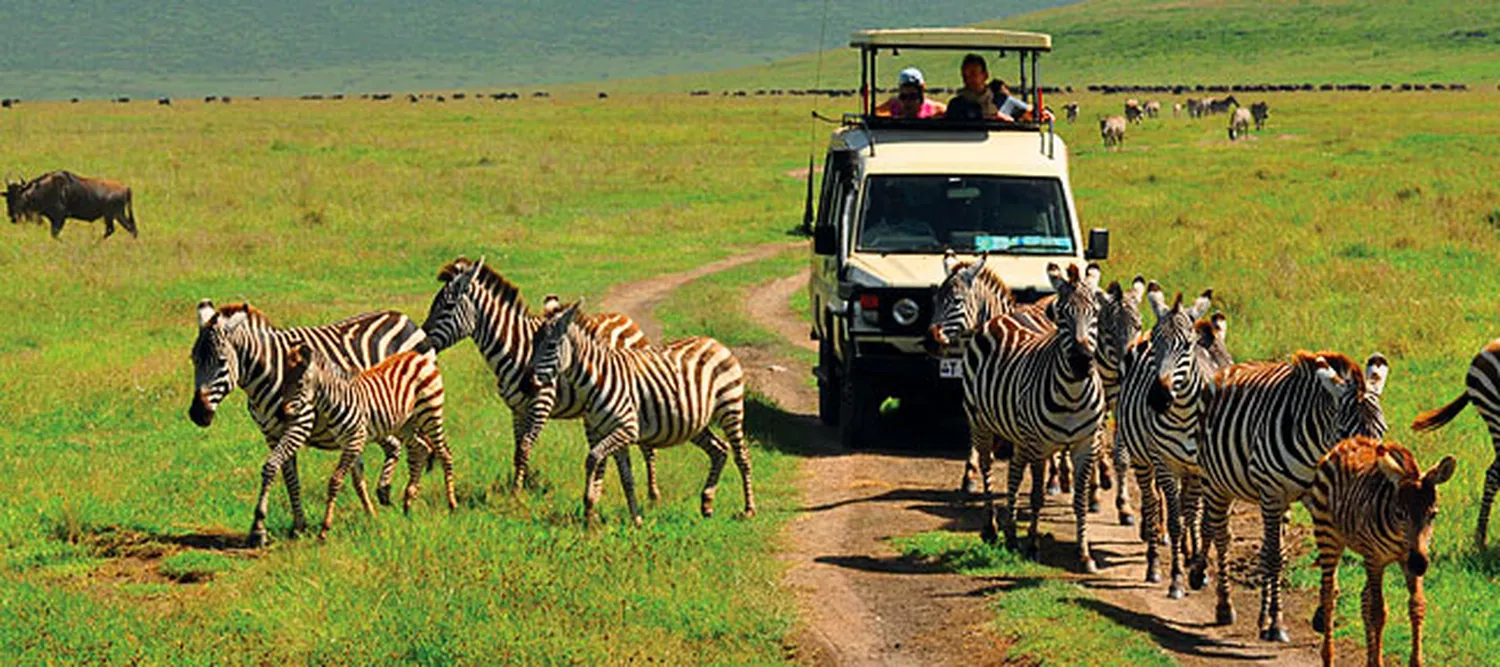
Yes. Six days is enough for a high-quality northern Tanzania wildlife safari when the route is focused. The dry season, generally June to October, often improves visibility because grass is shorter, bush cover is thinner and animals increasingly depend on permanent water. TANAPA specifically notes that dry seasons are generally best for wildlife viewing because animals are easier to spot around water sources.
For the best balance, spend one day in Tarangire, one day around Lake Manyara or the Rift Valley, two full game-drive periods in Serengeti, one Serengeti-to-Ngorongoro transit day with game viewing, and one Ngorongoro Crater day. If the Serengeti is your main priority, replace Lake Manyara with more Serengeti time.
- Main dry season: generally June–October.
- Best all-round months: July–September.
- Strong Tarangire period: July–November.
- Serengeti size: about 14,763 km².
- Tarangire size: about 2,850 km².
- Lake Manyara size: about 648.7 km².
- Ngorongoro: UNESCO records about 25,000 large animals across the conservation area.
- Migration reality: herd location follows rainfall and grazing, not fixed dates.
6-Day Dry-Season Tanzania Safari at a Glance
The best six-day plan concentrates driving around four connected northern-circuit ecosystems rather than adding distant parks. This keeps more of each day available for actual wildlife viewing.
| Day | Route | Main wildlife goal | Why it works in the dry season |
|---|---|---|---|
| 1 | Arusha → Tarangire | Elephants, buffalo, giraffe, zebra, wildebeest, predators | Wildlife gathers around the Tarangire River, swamps and remaining water. |
| 2 | Tarangire → Lake Manyara / Karatu | Elephants, baboons, monkeys, buffalo, hippos, birdlife | Compact habitats add species variety before the longer Serengeti section. |
| 3 | Karatu → Central Serengeti | Lion, cheetah, leopard, elephant, plains game | Afternoon game drive begins as soon as you enter productive Serengeti habitats. |
| 4 | Full day Serengeti | Predators, plains game, migration herds where seasonally present | Your longest uninterrupted wildlife-viewing day. |
| 5 | Serengeti → Ngorongoro highlands | Morning predators and plains game; scenic transition | Early Serengeti game drive preserves wildlife time before the transfer. |
| 6 | Ngorongoro Crater → Arusha | Buffalo, zebra, wildebeest, lion, hippo; possible black rhino | Compact crater habitats can produce varied sightings in a single game drive. |
Why Is the Dry Season So Good for Wildlife Viewing?
The dry season makes wildlife easier to find, not more abundant. As seasonal pools shrink and grasses dry, many herbivores move toward permanent rivers, springs, swamps and waterholes. Predators follow prey concentrations. Thinner vegetation also improves visibility from a safari vehicle, especially in woodland parks such as Tarangire.
TANAPA’s trip-planning guidance describes June to October as the dry season and notes that wildlife spotting is easier around water sources. Serengeti’s own TANAPA material describes a dry season from roughly May to October, while Tarangire’s official material highlights extraordinary wildlife concentrations from July to November. These ranges overlap but are not identical because each ecosystem responds differently to rainfall.
What the Dry Season Does Not Guarantee
Dry weather does not guarantee the Big Five, a hunt, a river crossing or a particular predator. Animals move freely and daily conditions change. A good itinerary improves your odds by giving your guide enough time in productive habitats; it cannot turn wildlife into a timetable.
Which Dry-Season Month Is Best for a 6-Day Tanzania Safari?
July, August and September are the strongest all-round choices for classic dry-season wildlife viewing, while June and October offer useful trade-offs. Your best month depends on whether your priority is general wildlife, Tarangire elephants, Great Migration positioning, lower crowds or availability.
| Month | Wildlife conditions | Serengeti migration context | Travel trade-off |
|---|---|---|---|
| June | Landscape is drying; visibility improves as the long rains finish. | Herds often move through western or central-northern areas, depending on rain. | Good shoulder-season balance before peak July–August demand. |
| July | Strong dry-season viewing; Tarangire concentrations build. | Migration may be in the west or north; northern movement can accelerate. | High demand begins; early booking matters. |
| August | Very strong general wildlife viewing around dependable water. | Northern Serengeti river-crossing opportunities may occur. | One of the busiest and most competitive months for camps. |
| September | Dry, open conditions remain excellent for mammals and predators. | Northern herds and possible Mara River crossings can continue. | Excellent wildlife, but popular sightings can attract many vehicles. |
| October | Still productive; Tarangire can remain especially strong. | Herds may begin responding to new rains and move southward. | Late-month weather can become less predictable as short rains approach. |
Migration positions are deliberately described as “may” or “often.” Rainfall can move the herds earlier, later or through different corridors in any given year.
What Wildlife Can You See in Each Park?
The four parks complement one another. Tarangire is strongest for dry-season concentrations and elephants; Serengeti gives you the greatest range and time with predators and plains game; Ngorongoro adds a compact high-density ecosystem; Lake Manyara adds forest, wetland and birdlife diversity.
| Destination | Verified reference point | Dry-season strengths | Species to watch for |
|---|---|---|---|
| Tarangire National Park | About 2,850 km²; TANAPA describes July–November wildlife as extraordinary. | Elephant herds, water-dependent wildlife, open baobab country. | Elephant, buffalo, zebra, wildebeest, giraffe, lion, leopard, kudu, oryx. |
| Serengeti National Park | About 14,763 km²; TANAPA identifies it as the core of the wider Serengeti-Mara ecosystem. | Predators, plains game, broad habitat choice and seasonal migration movement. | Lion, cheetah, leopard, elephant, buffalo, wildebeest, zebra, giraffe, hyena. |
| Ngorongoro Conservation Area | UNESCO records about 25,000 large animals across the conservation area. | Compact crater-floor viewing and one of the northern circuit’s key black-rhino habitats. | Buffalo, zebra, wildebeest, lion, hyena, hippo, elephant; possible black rhino. |
| Lake Manyara National Park | TANAPA lists an area of about 648.7 km² and more than 400 bird species recorded. | Groundwater forest, floodplain, wetland and escarpment habitats in a compact stop. | Elephant, buffalo, giraffe, baboon, blue monkey, hippo, waterbirds and seasonal flamingos. |
The Numbers Behind the Wildlife Experience
Use statistics to understand ecosystem scale—not to promise individual sightings. Several reliable figures help explain why the northern circuit works well for a six-day trip:
- 14,763 km²: the size of Serengeti National Park in TANAPA’s official brochure.
- About 30,000 km²: the wider Serengeti-Mara ecosystem described in TANAPA material.
- Over 1 million wildebeest: part of the great migration described by TANAPA and UNESCO sources.
- 25,000 large animals: UNESCO’s reference figure for the wider Ngorongoro Conservation Area.
- 2,850 km²: Tarangire National Park’s official area.
- 648.7 km²: Lake Manyara National Park’s official area.
These numbers show why a six-day safari should not try to “cover everything.” Serengeti alone is larger than many complete holiday destinations. Quality comes from selecting productive zones and allowing time for patient observation.
Best 6-Day Tanzania Safari Itinerary for Dry-Season Wildlife Viewing
For a drive-in, drive-out northern safari, this route gives the best balance of ecosystem variety and actual time watching animals. It starts with Tarangire, uses Lake Manyara as a compact contrast, gives Serengeti the largest share of the trip, and finishes in Ngorongoro.
Day 1: Arusha to Tarangire National Park
Leave Arusha early and drive to Tarangire for a full game-drive day. During the dry season, concentrate on the Tarangire River, Silale Swamp and other water-linked habitats. TANAPA describes the river as a major dry-season refuge and notes very high concentrations of large animals in the later dry season. Elephants are the headline species, but buffalo, zebra, wildebeest, giraffe and predators are also important.
Day 2: Tarangire to Lake Manyara and Karatu
Use Lake Manyara as a habitat-change day rather than expecting it to compete with Serengeti for open-plains game. Its groundwater forest, floodplain, alkaline lake and escarpment create a different wildlife experience. Look for baboons, blue monkeys, elephants, buffalo, hippos and waterbirds. Continue to Karatu or the Ngorongoro highlands for the night.
Day 3: Karatu to Central Serengeti
Cross the Ngorongoro highlands toward Serengeti and begin game viewing after entering the park. Central Serengeti is useful year-round because permanent water and varied habitats support resident wildlife even when migration herds are elsewhere. Focus on kopjes, river systems and open plains for lion, cheetah, leopard, elephant, giraffe, hyena and plains game.
Day 4: Full-Day Serengeti Wildlife Viewing
This is the day not to over-schedule. Start early and let the guide choose the route based on current animal movements rather than following a rigid list of landmarks. A long, patient game drive creates time for behavioral sightings—predators resting or hunting, elephants moving between feeding areas, or large herbivore groups gathering around water.
Day 5: Morning Serengeti Game Drive to Ngorongoro
Use the cooler morning for one final Serengeti game drive before transferring toward the Ngorongoro highlands. If your trip is specifically designed around northern Serengeti river crossings, this classic road itinerary should be modified because northern Serengeti adds substantial distance. In that case, consider a northern Serengeti-focused plan or a fly-in/fly-out component rather than forcing the same route.
Day 6: Ngorongoro Crater Game Drive and Return to Arusha
Descend early for a crater-floor game drive. The broader Ngorongoro Conservation Area is recognized by UNESCO for exceptional wildlife values and roughly 25,000 large animals. On the crater floor, common targets include buffalo, zebra, wildebeest, lion, hyena and hippo, with a possibility—not a guarantee—of black rhino. Return to Arusha after the game drive.
See the related 6-day Tarangire, Serengeti, Ngorongoro, Manyara and Eyasi safari if you want to compare how an additional cultural/wildlife stop changes the pacing.
Can a 6-Day Dry-Season Safari Include the Great Migration?
Yes, but a migration safari must follow current herd location rather than a fixed calendar promise. The annual movement is driven by rainfall, fresh grass and water availability. During the dry season, large herds can move through western and northern Serengeti, and Mara River crossings may occur in the north during parts of July through September.
If river crossings are your main objective, the itinerary should shift north and spend more nights near Kogatende/Lamai rather than trying to cover Tarangire, Lake Manyara, central Serengeti and Ngorongoro at the same pace. Read Jaynevy’s Great Wildebeest Migration guide and Serengeti river-crossing timing guide before choosing camps.
River Crossings Are Events, Not Appointments
Crossings can happen early, late, repeatedly or not at all on the day you are present. A herd may stand near a river for hours and then move away. Avoid itineraries that promise a guaranteed crossing on a specific date.
Can You See the Big Five on a 6-Day Dry-Season Safari?
You can look for all five, but you should not buy a safari based on a guaranteed Big Five claim. Elephant and buffalo are widespread on this route, while lion is regularly sought in Serengeti and Ngorongoro. Leopard is less predictable because it is solitary and often rests in cover or trees. Black rhino is the most limited of the five and is a key reason Ngorongoro remains important in a six-day route.
The better goal is a diverse wildlife experience: big cats, elephants, grazing herds, scavengers, birdlife and natural behavior across different habitats. A guide who spends an hour waiting for a leopard to appear may miss several other productive areas; good field judgment matters more than ticking boxes.
Dry Season vs Green Season: Which Is Better for a 6-Day Safari?
Choose the dry season for easier general mammal viewing; choose the green season for lush scenery, newborn animals in some areas, birding and usually lower peak-season pressure. Neither season is universally better.
| Factor | Dry season | Green season |
|---|---|---|
| Typical northern-circuit timing | June–October | Mainly November–May, with long rains usually March–May |
| Vegetation | Shorter, drier and generally easier for spotting mammals | Lush, green and visually dramatic |
| Water-source concentration | Often stronger, especially in Tarangire | Wildlife can spread more widely where water is available |
| Road conditions | Generally drier and more predictable | Some tracks can become muddy after heavy rain |
| Crowds | Higher in peak July–September areas | Often lower outside holiday peaks |
| Photography | Dusty golden tones, clear mammal visibility | Green backgrounds, dramatic clouds and fresh landscapes |
How to Get Better Wildlife Sightings During the Dry Season
The most useful strategy is simple: start early, stay flexible and spend more time in fewer productive areas. A dry-season safari becomes less effective when every day is dominated by hotel changes and long transfers.
- Start game drives early. Cooler mornings are often productive for predators and moving herbivores.
- Let the guide adapt the route. Fresh tracks, radio information and animal movement are more useful than a fixed sightseeing checklist.
- Protect full Serengeti time. Do not reduce your only full Serengeti day for optional stops unless they are a major priority.
- Carry binoculars. They improve distant predator, bird and behavioral viewing without pressuring animals.
- Use a proper safari vehicle. A pop-up roof, good window access and reliable 4x4 condition matter on long game-drive days. See Jaynevy’s safari vehicles in Tanzania guide.
- Respect viewing etiquette. Do not pressure the guide to block animals, leave roads where prohibited or crowd a sighting dangerously.
What Should You Pack for a Dry-Season Tanzania Safari?
Pack for warm, dusty afternoons and surprisingly cool early mornings. Neutral, breathable layers work better than one heavy outfit.
- Lightweight neutral shirts and trousers.
- Warm fleece or light insulated layer for dawn drives.
- Sun hat and sunglasses.
- High-SPF sunscreen and lip protection.
- Insect repellent.
- Closed, comfortable shoes.
- Binoculars, ideally one pair per couple.
- Camera batteries, memory cards and dust protection.
- Reusable water bottle.
- Soft-sided luggage for easier vehicle storage.
What Determines the Cost of a 6-Day Dry-Season Safari?
Season affects availability and accommodation pricing, but the total cost is mainly shaped by your group size, lodging standard, route, park and concession fees, vehicle arrangement and optional activities. July through September is high demand, so a lodge that is available in June or October may be sold out or priced differently in August.
Ask for an itemized written quotation that states whether it includes park fees, Ngorongoro crater service fees, accommodation, meals, drinking water, 4x4 vehicle, guide, airport transfers, taxes and any domestic flights. Balloon safaris, visas, tips, travel insurance and personal expenses are commonly separate unless your quotation says otherwise.
Who Is This 6-Day Dry-Season Safari Best For?
This itinerary is best for travelers who want a classic Tanzania wildlife experience without committing to a longer 8–10 day circuit. It works especially well for first-time safari travelers, couples, families comfortable with road travel, photographers who want two Serengeti game-drive periods, and travelers combining safari with Kilimanjaro or Zanzibar.
If your only goal is a northern Serengeti river crossing, a six-day general northern circuit can be too broad. If your goal is maximum park diversity, six days is workable. If your goal is slower photography, longer behavioral observation or remote areas, add days rather than adding more destinations.
Final Verdict: Is a 6-Day Tanzania Safari in the Dry Season Worth It?
Yes—when six days are used for depth rather than checklist tourism. The dry season offers consistently strong conditions for locating mammals, especially around permanent water. Tarangire gives you concentrated elephant and plains-game viewing, Serengeti delivers the broadest predator-and-prey experience, Ngorongoro adds a compact high-density ecosystem, and Lake Manyara adds habitat variety.
For most travelers, July through September offers the strongest classic dry-season experience, while June and October can provide excellent wildlife with different crowd and weather trade-offs. Before booking, compare your dates with Jaynevy’s best time to visit Tanzania guide and ask for a route matched to current wildlife conditions.
Frequently Asked Questions
Is the dry season good for a 6-day Tanzania safari?
Yes. June through October is generally the main northern-circuit dry season, when vegetation is less dense and animals are often easier to locate around permanent water. Sightings remain natural and cannot be guaranteed.
Which month is best for dry-season wildlife viewing in Tanzania?
July through September is the strongest all-round period for classic dry-season wildlife viewing. June is a good transition month, while October can still be excellent, especially in Tarangire, before or as short rains begin.
What parks should a 6-day dry-season Tanzania safari include?
A balanced route can include Tarangire, Lake Manyara, Serengeti and Ngorongoro. If maximizing wildlife time is more important than park count, remove Lake Manyara and add that time to Serengeti.
Can I see the Big Five in six days?
It is possible to encounter lion, leopard, elephant, buffalo and black rhino across this route, but no responsible safari can guarantee all five. Black rhino and leopard are usually the least predictable.
Will I see the Great Migration during the dry season?
Often, but the location changes with rainfall and grazing. During parts of the dry season the herds may be in western or northern Serengeti. River crossings can occur in the north, but exact crossing days are unpredictable.
Is six days enough for Serengeti and Ngorongoro?
Yes. Six days allows meaningful Serengeti game viewing and a Ngorongoro Crater visit if the route is planned efficiently. A northern Serengeti crossing-focused trip needs a different allocation because driving distances are longer.
What are the disadvantages of a dry-season safari?
Peak-season demand can mean higher accommodation pressure, more vehicles around famous sightings, dustier roads and cool early mornings. Booking well ahead is especially important for July, August and September.
What should I pack for a dry-season Tanzania safari?
Bring neutral lightweight clothing, a warm layer for dawn, sun protection, insect repellent, closed shoes, binoculars, camera dust protection, reusable water bottle and soft-sided luggage.
Are dry-season safari roads better?
They are generally drier and more predictable than during heavy rains, but rough surfaces and dust remain normal. Road conditions can still change, so a properly maintained 4x4 vehicle is important.
Should I choose a private or group safari for six days?
A private safari gives you more control over start times, photography stops and how long you remain at a sighting. A group safari can reduce cost, but the route and daily pace must work for everyone sharing the vehicle.
Research Notes and Trusted Sources
This guide uses official conservation and tourism references for park sizes, seasonal patterns and wildlife statistics. Figures describe ecosystems and planning conditions; they should not be interpreted as guarantees of what one traveler will see on one game drive.
- Tanzania National Parks (TANAPA): Plan a Trip — dry-season wildlife guidance
- TANAPA: Serengeti National Park official visitor information
- TANAPA: Tarangire National Park
- TANAPA: Lake Manyara National Park
- UNESCO World Heritage Centre: Ngorongoro Conservation Area
Editorial standard: herd movements, road conditions, park fees and accommodation availability can change. Reconfirm route logistics and current rates for your exact travel dates before payment.