
What You Need to Know: Tanzania has four seasons: the long dry season from June to October, the short rains in November and early December, a short dry season from mid-December to February, and the long rains from March to May, heaviest in April and May. June to October suits almost every trip; January and February are the time for the calving herds at Ndutu. Only in April and May do we steer you to the Ngorongoro Crater, Tarangire and Lake Manyara, avoid Kilimanjaro and check that Zanzibar hotels are open.
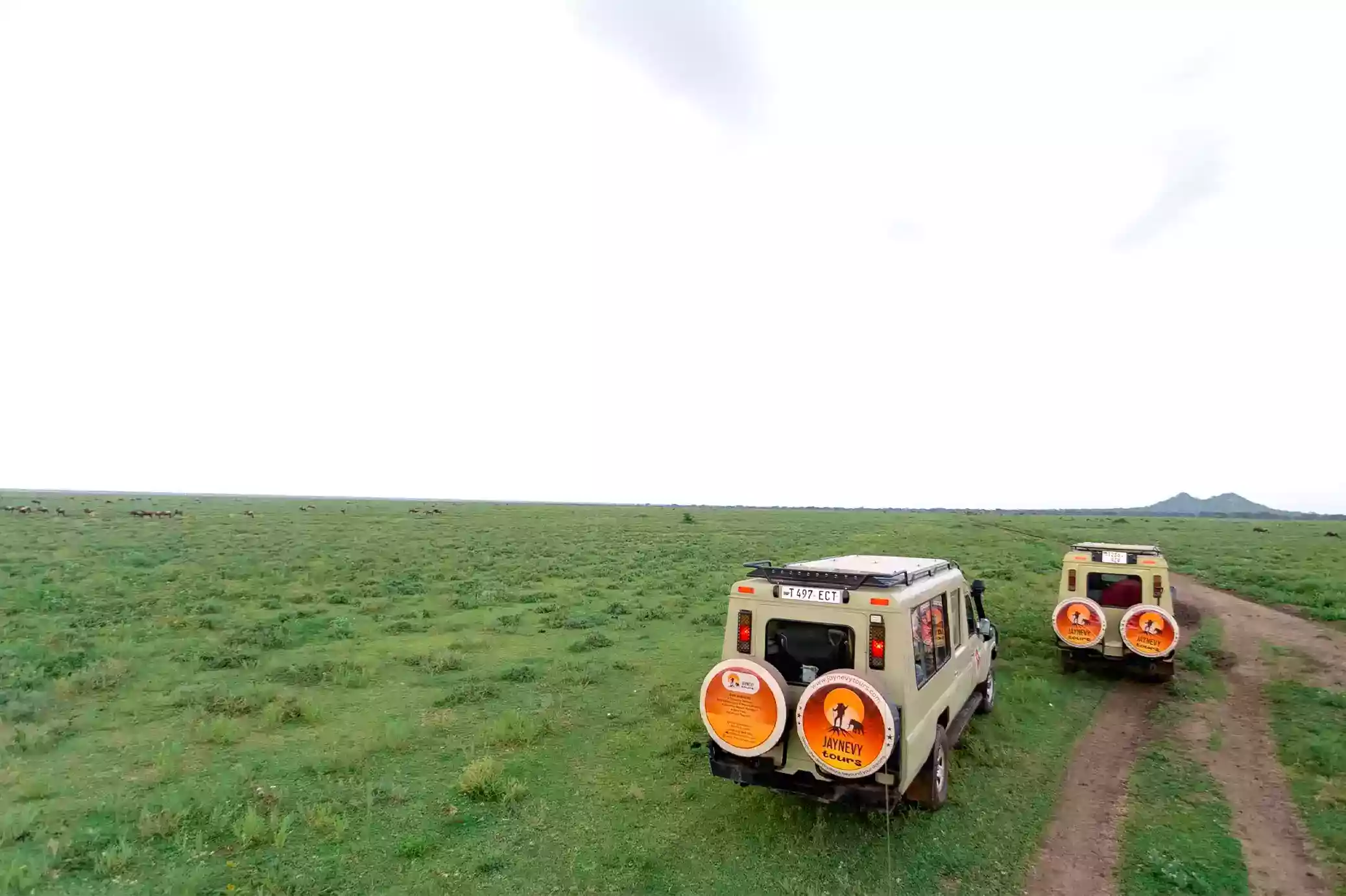
Tanzania's Seasons at a Glance
Tanzania lies just south of the equator, so days are warm all year and the seasons are set by rain, not by temperature. The pattern below holds for the northern parks, Kilimanjaro and Zanzibar; the far west stays wet for longer:
| Season | Months | Weather | Crowds and prices |
|---|---|---|---|
| Long dry season | June to October | Sunny and dry; cool mornings, cold nights on the crater rim and the mountain | Busiest in July and August; some lodges charge more |
| Short rains | November to mid-December | Short, sharp showers, usually in the afternoon, with plenty of sun | Quiet; lower lodge rates |
| Short dry season | Mid-December to February | Hot, mostly dry and green; the hottest months | Busy over Christmas and New Year, quieter after |
| Long rains | March to May | Rains begin in March; heavy, humid rain in April and May | Quietest and lowest prices; some camps and hotels close |
June to August are the coolest months, and January and February the hottest. Park fees are the same all year; what changes with the season is lodge rates, how full the parks are and how easy the roads are.
Which Destination Is Best in Which Season?
Find your destination, then read across. "Best" means its peak time, "Good" a fine time to go, "Possible" that it works with trade-offs, and "Avoid" that we would suggest other dates:
| Destination | June–October | November–mid-December | Mid-December–February | March–May |
|---|---|---|---|---|
| Southern Serengeti (Ndutu) | Possible: dry, the herds are in the north | Good: herds arrive from late November | Best: calving, peak in February | Good: March; wet in April–May |
| Central Serengeti | Good: resident big cats; herds in the west in June–July | Good: herds pass back south | Good | Possible: herds pass through; muddy roads |
| Northern Serengeti (Mara River) | Best: river crossings, July–October | Possible: herds leave in early November | Possible: quiet, herds in the south | Possible: quiet, herds in the south |
| Ngorongoro Crater | Good: cold mornings on the rim | Good | Good | Good: our first choice in the rains |
| Tarangire | Best: elephants gather at the river | Good | Good | Possible: close to Arusha, easier in the rains |
| Lake Manyara | Good | Best: migrant birds, November–March | Best: birds and green forest | Possible: close to Arusha |
| Lake Natron | Good | Possible | Good | Avoid: we don't run it in April–May |
| Kilimanjaro | Best: dry; August busiest | Avoid: November rains; early December is fine | Best: January–February | Possible: early March and late May only |
| Zanzibar | Best: dry; kitesurfing on the east coast | Good: short showers | Best: hot, calm sea; busy at Christmas | Possible: April–May: lowest prices, some hotels close |
| Mafia Island whale sharks | Possible: October only | Best: calm seas | Best | Possible: some sightings into March |
| Nyerere, Ruaha and Mikumi | Best: animals at the rivers | Possible: hot, rains starting | Possible: hot and green | Avoid: many camps close in April–May |
| Katavi, Mahale and Gombe | Best: dry trails, chimps lower down | Possible: wet, tougher trekking | Possible: wet, tougher trekking | Avoid: many camps close |
For the month-by-month detail behind this table, see the best time for a Tanzania safari, where the migration is each month, Kilimanjaro's climbing months and Zanzibar's weather, tides and winds.
The Long Dry Season: June to October
This is Tanzania's main travel season and the safest choice if you can only pick one. The grass is short, the bush thins and animals stay near water, so game drives are easy from the first morning. It is also the season when the most travelers come, especially in July and August.
Where to go in the long dry season
Almost everywhere is at its best, but a few places stand out:
- Northern Serengeti: the herds reach the Mara River from July, and crossings continue into October
- Western Serengeti: in June and July the herds move through the western corridor on their way north
- Tarangire: elephants gather along the Tarangire River, the only water left in the park
- Kilimanjaro: firm trails and clear summit views, with cold, dry nights; September is quieter than August
- Zanzibar: sunny and slightly cooler, with steady trade winds for kitesurfing on the east coast
- Southern and western parks: the dry season is the best time in Nyerere, Ruaha, Katavi and for chimp trekking in Mahale and Gombe
What to watch in the long dry season
Mornings and nights are cold, especially on the Ngorongoro crater rim at about 7,500 ft (2,300 m), so pack a warm layer. July, August and the busiest lodges fill early, and some lodges charge more, so book well ahead.
Our tours for June to October
These trips are built around the dry season, from the river crossings to a classic climb and a safari with a beach week:

7-Day Mara River Crossing Safari
Three nights in the northern Serengeti, July to October
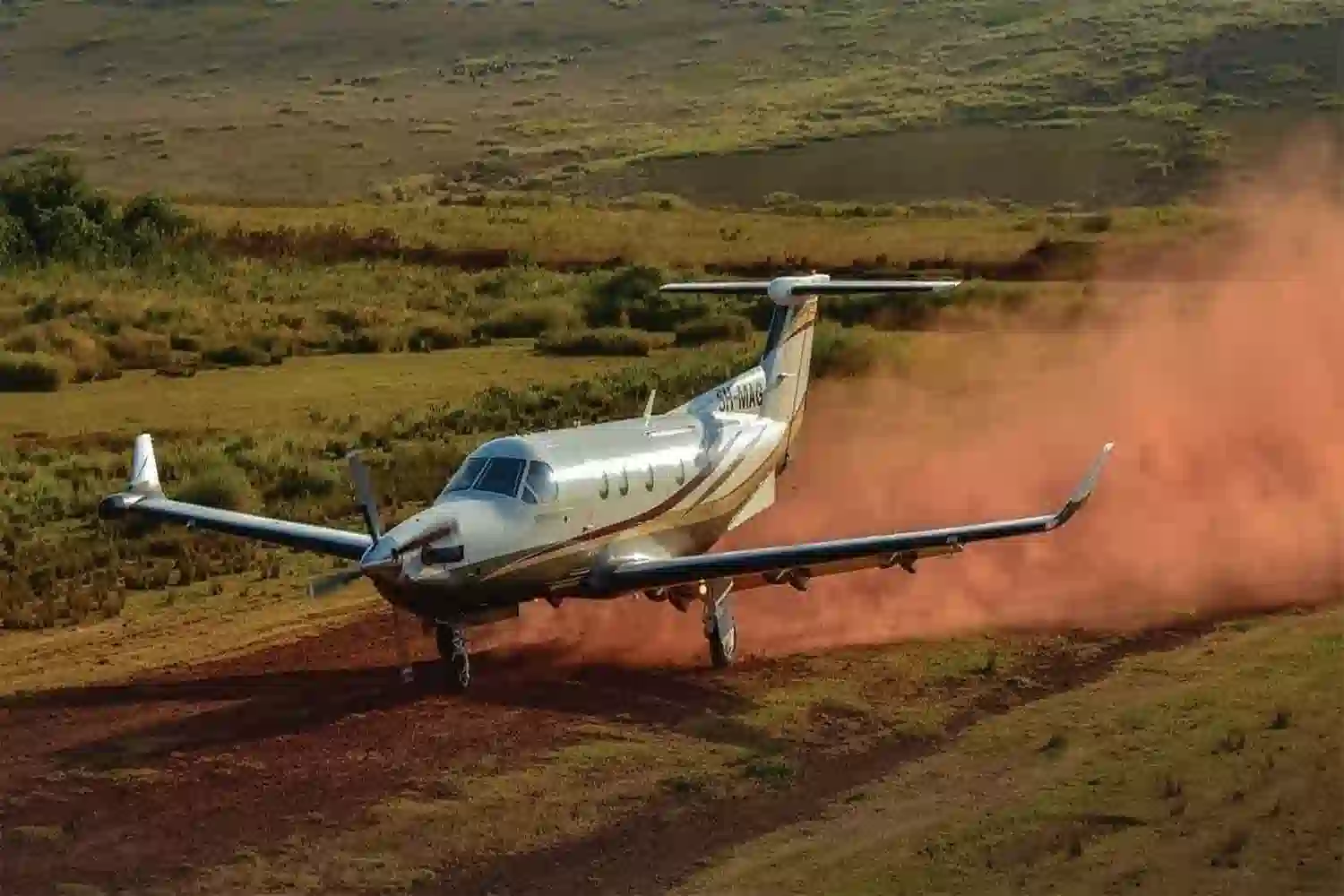
4-Day River Crossing Fly-In
Fly to Kogatende for three nights at the Mara River, July to October
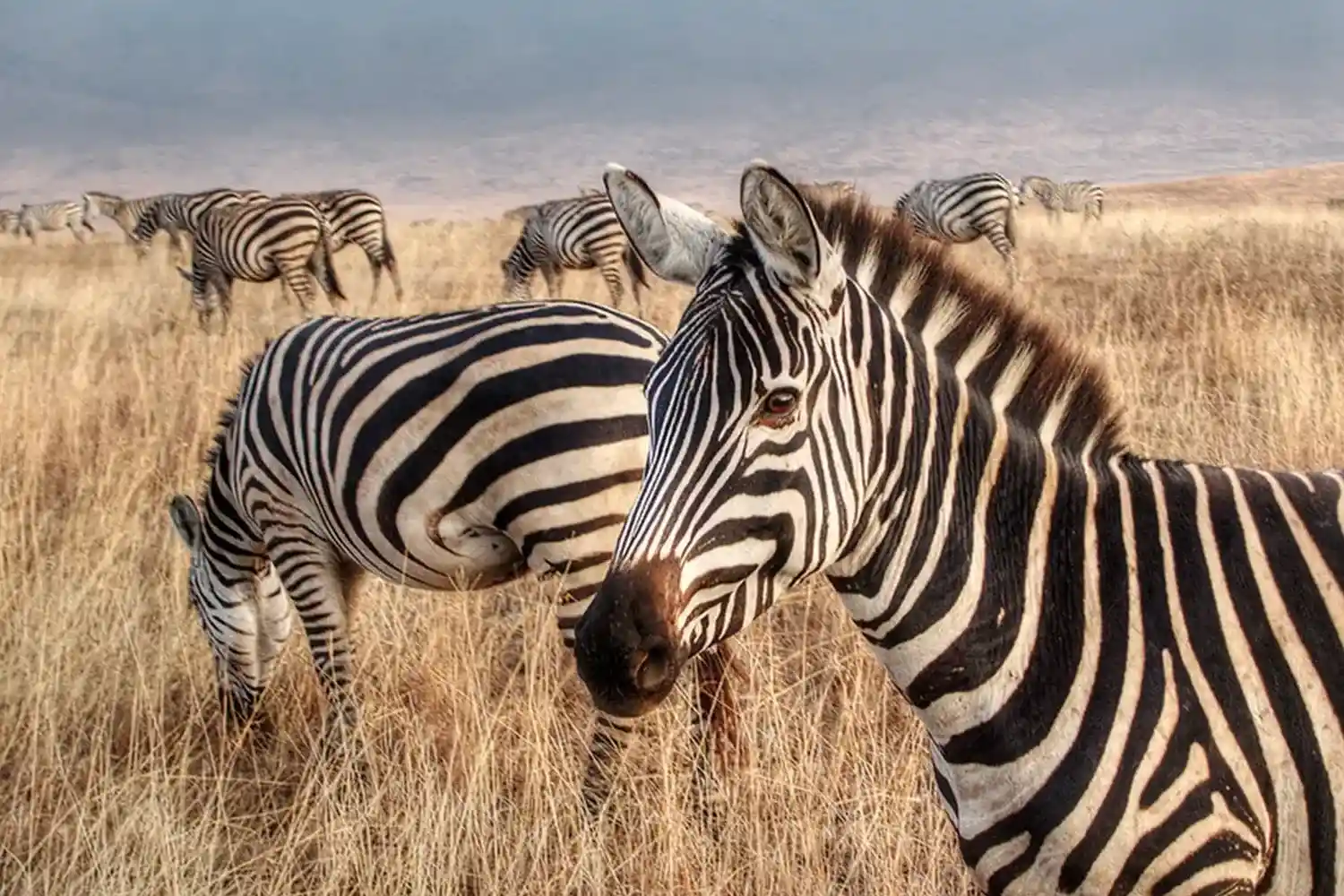
6-Day Northern Circuit Safari
Tarangire, Manyara, two Serengeti nights and the crater
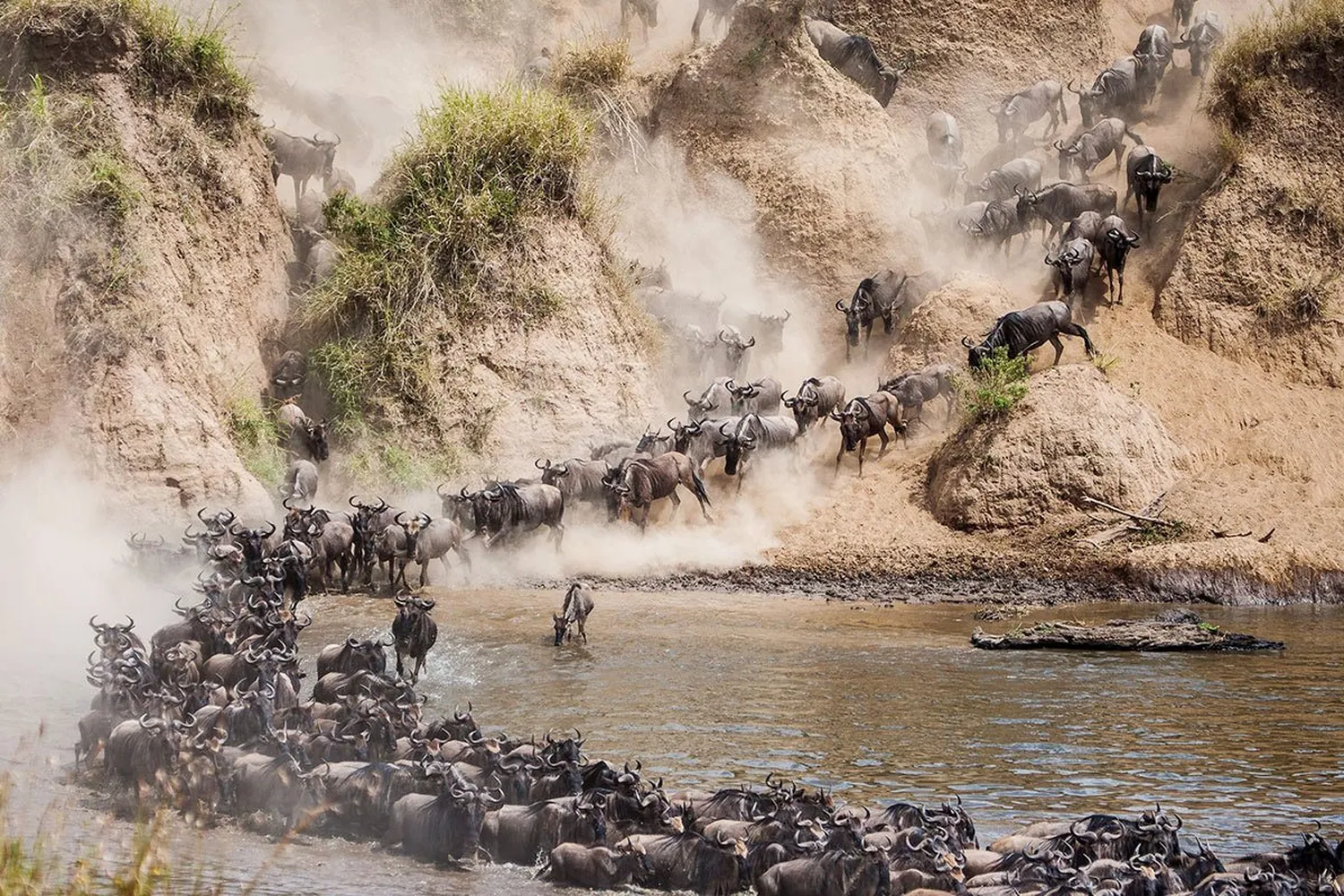
8-Day Family Migration Safari
Tarangire, two nights by the Mara River in the summer vacation, a Maasai village and the Ngorongoro Crater
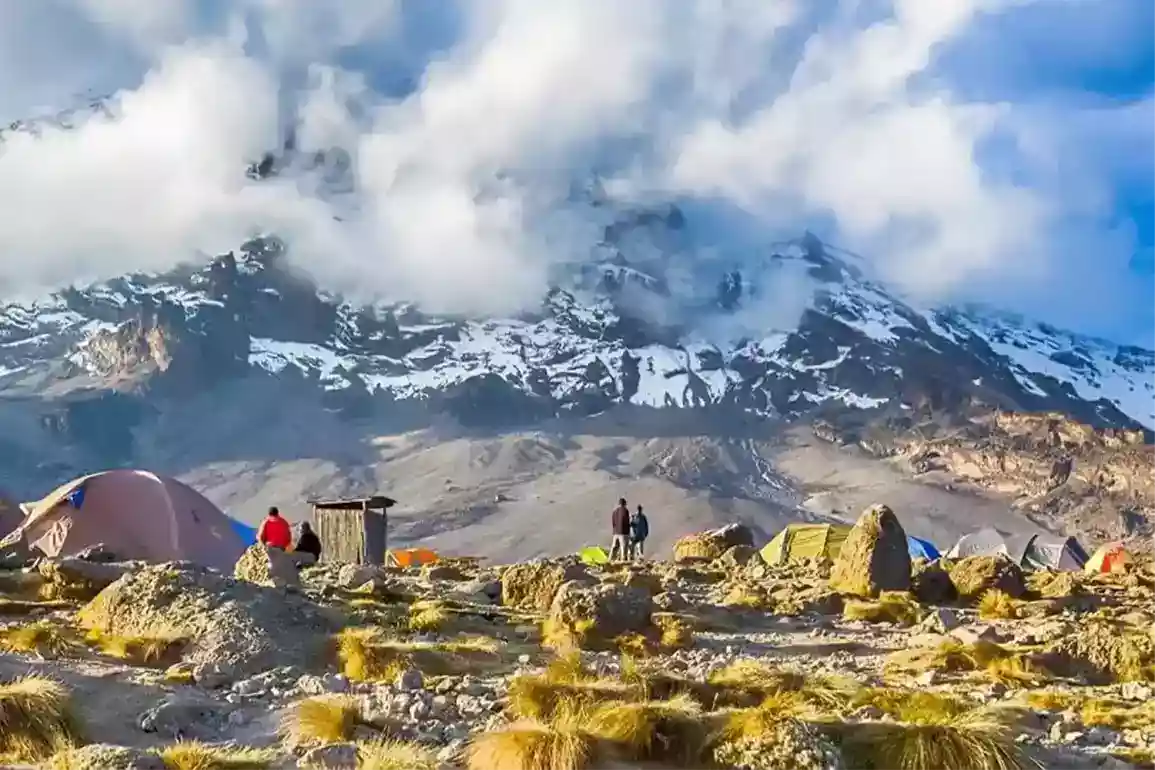
7-Day Machame Route
Machame with an extra night at Karanga; our usual first-timer recommendation
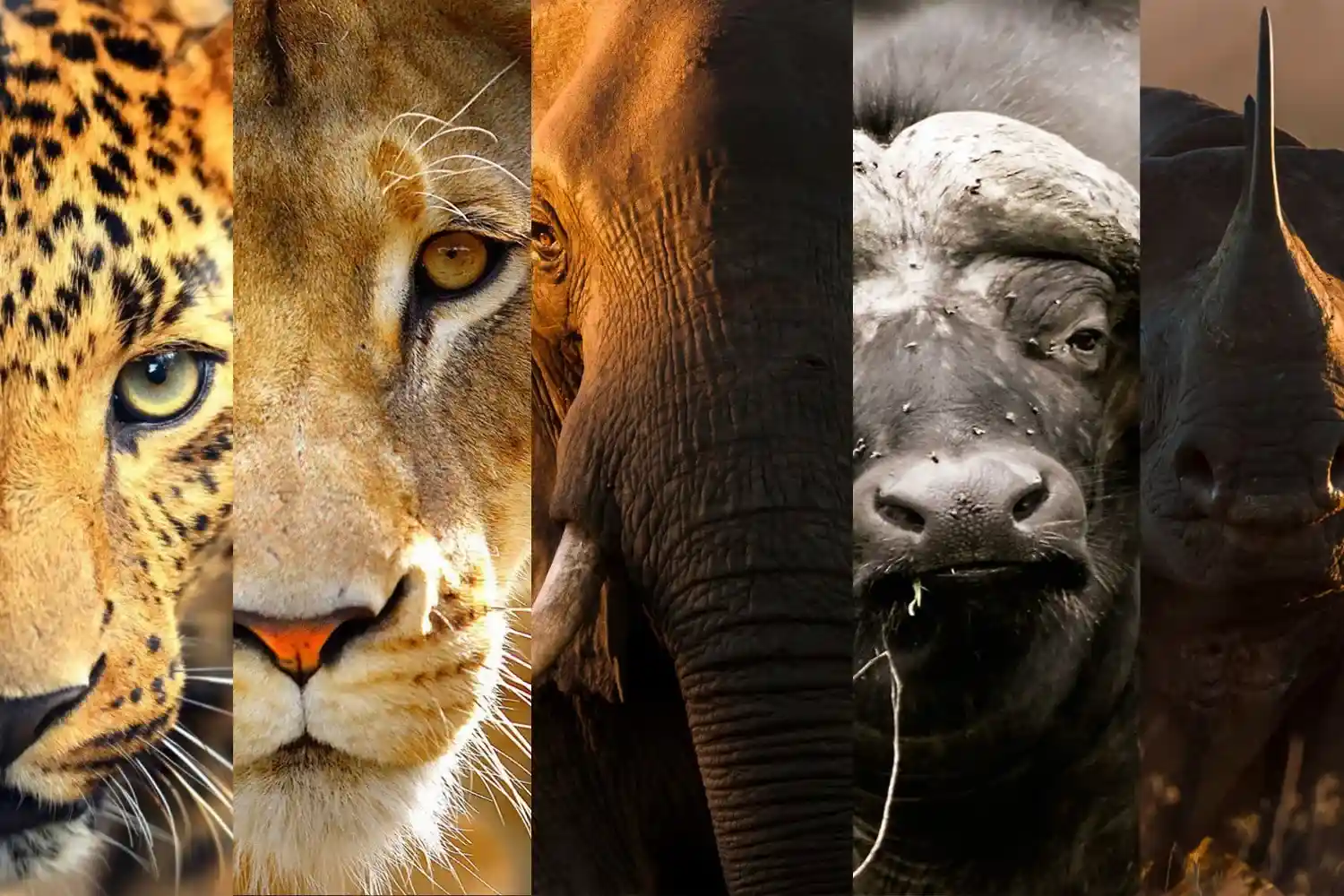
10-Day Big Five Safari and Zanzibar Holiday
The northern parks in the dry season, then beach days on Zanzibar to finish the family holiday
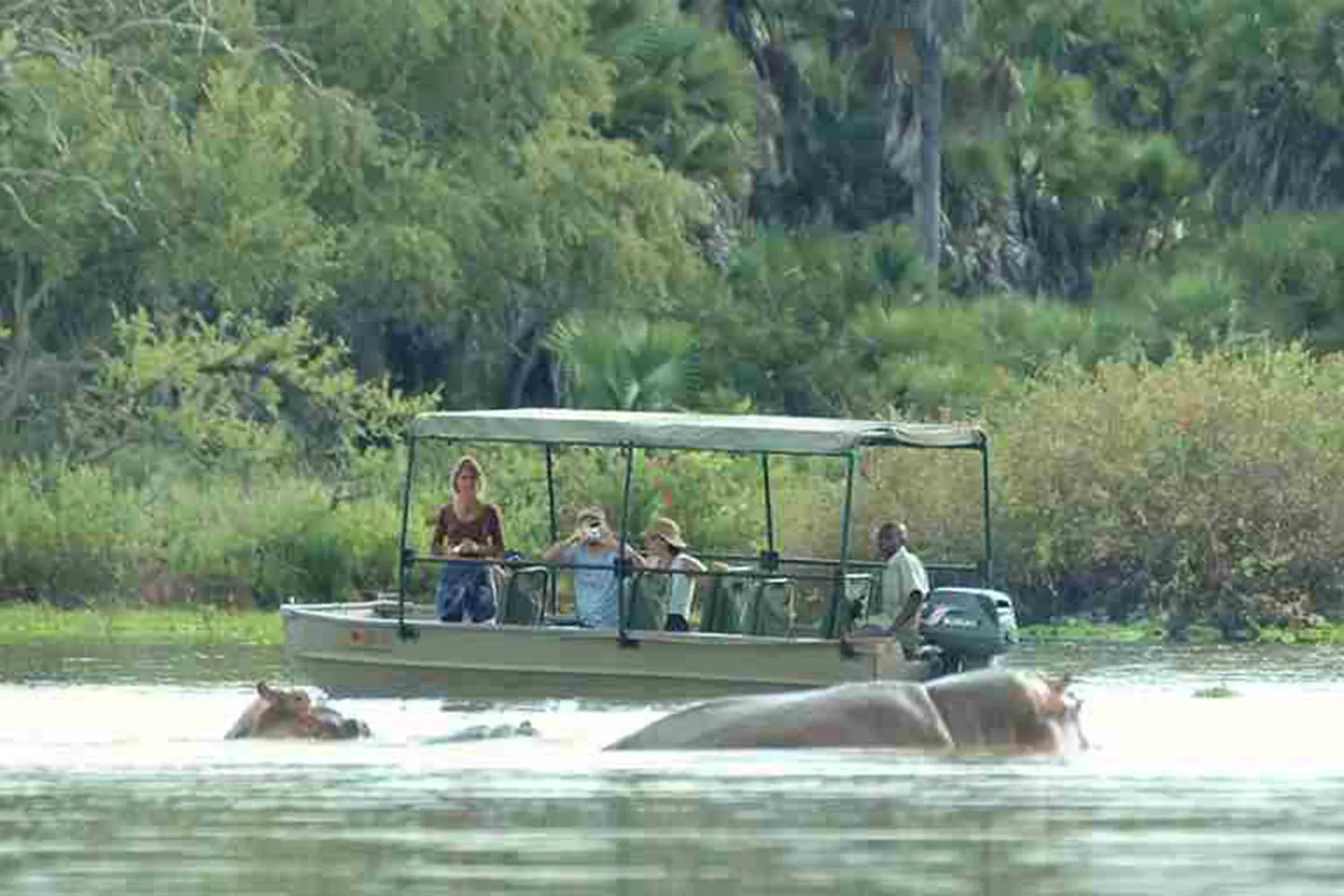
3-Day Nyerere (Selous) Safari from Dar es Salaam
A sunset boat safari, a full day of game drives and a bushman walk
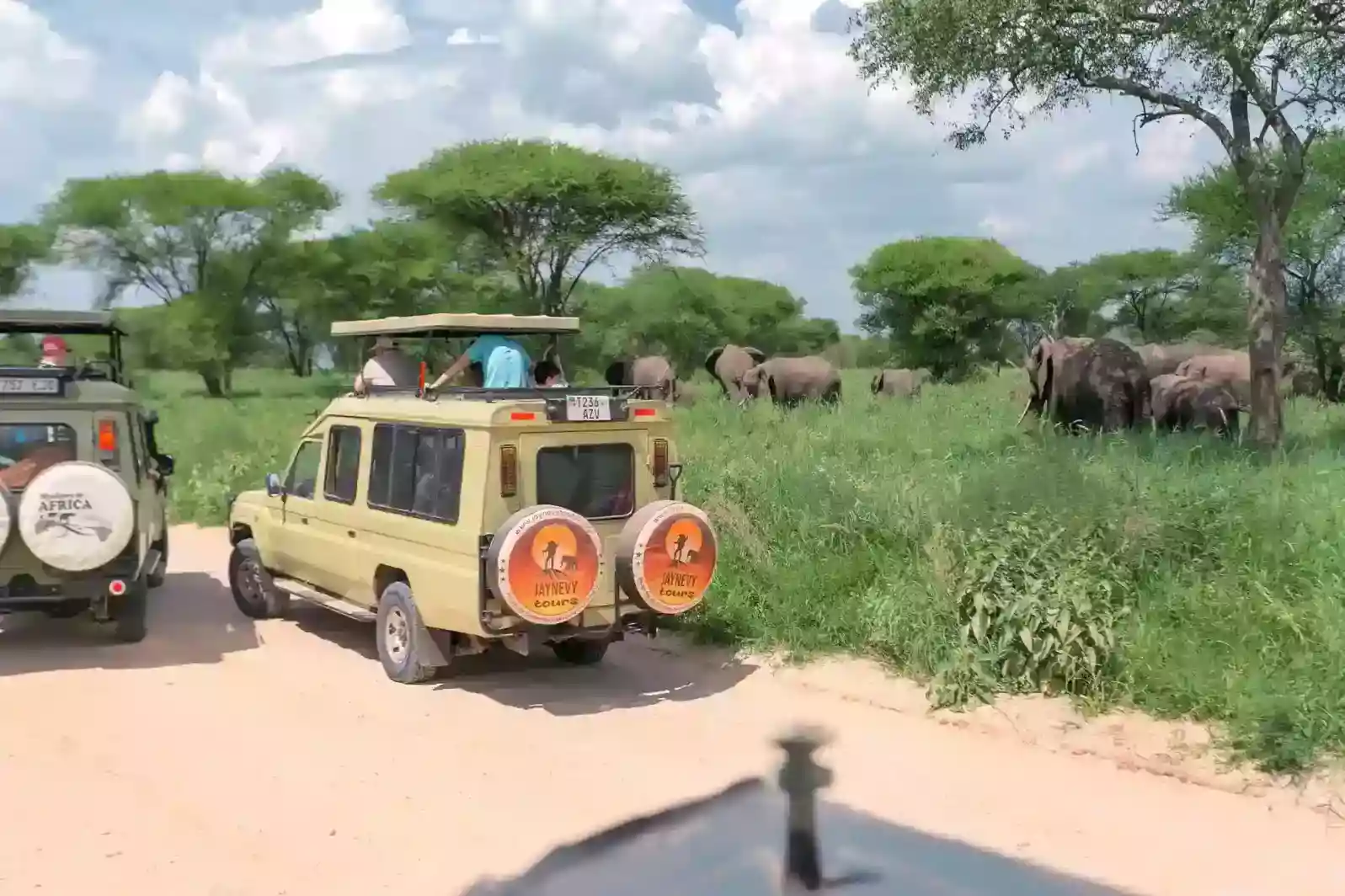
4-Day Group Safari: Tarangire, Serengeti and Ngorongoro
Tarangire, Serengeti, Ngorongoro Crater
The Short Rains: November to Mid-December
The short rains turn the plains green again. Showers are usually short and come in the afternoon, with sunny mornings for game drives. The parks are quiet, lodge rates drop, and migrant birds arrive from Europe and Asia.
Where to go in the short rains
This season rewards travelers who want space and value more than a guaranteed dry day:
- Central Serengeti and the Ngorongoro Crater: resident lions, leopards and the crater's wildlife are there all year, and the herds pass back south through the Serengeti in November
- Lake Manyara: migrant birds from November to March
- Zanzibar: short showers, plenty of sunshine and quieter beaches
- Mafia Island: whale sharks from October to February, with the calmest seas from November
What to avoid in the short rains
We don't recommend climbing Kilimanjaro in November: the forest trails turn to mud and the summit is often in cloud. Early December, as the rains ease, is fine. The northern Serengeti is quiet once the herds leave in early November.
Our tours for November and early December
Shorter safaris to the parks that are good all year, and the coast while the sea is calm:
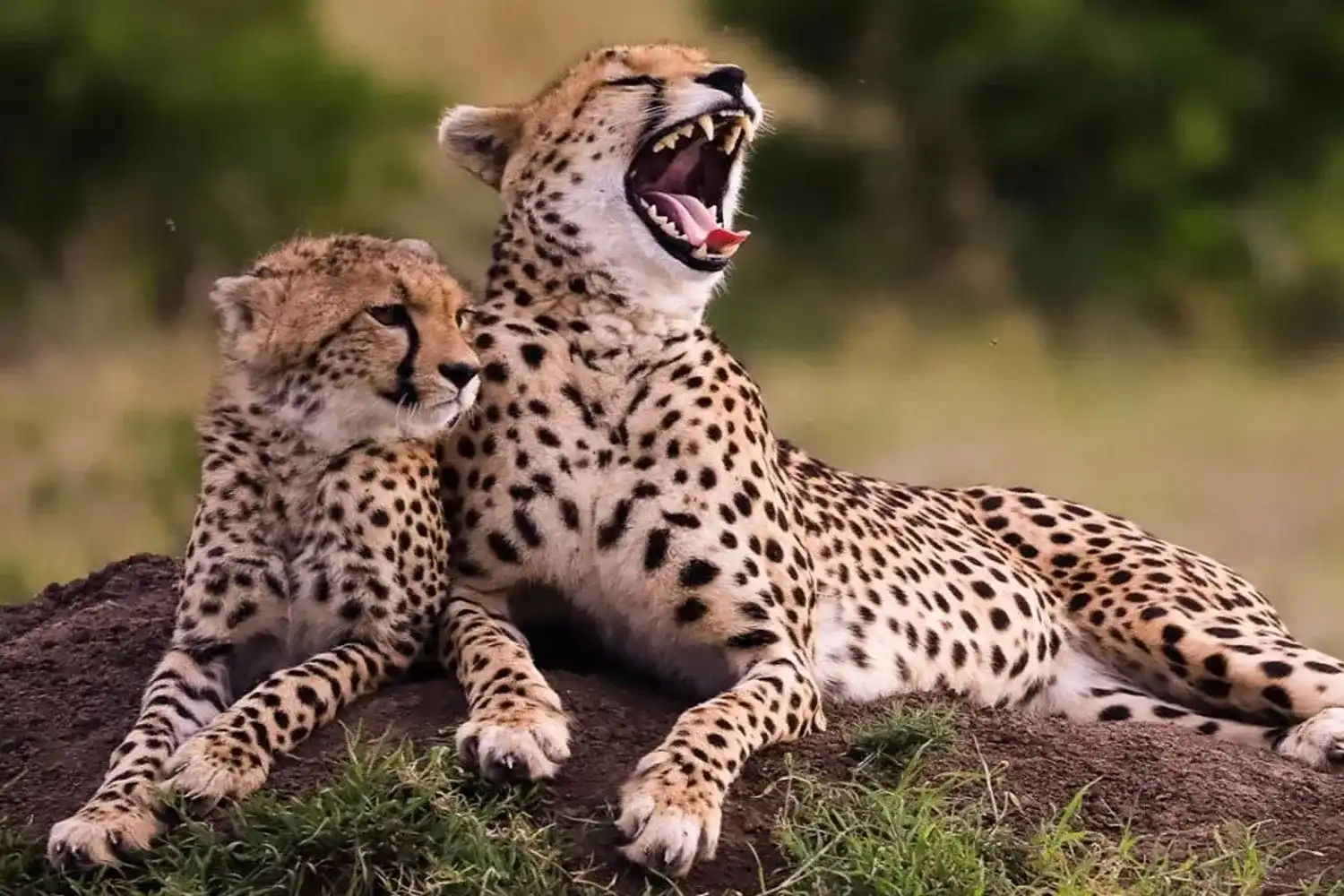
4-Day Serengeti and Ngorongoro
Two Serengeti nights and a crater morning
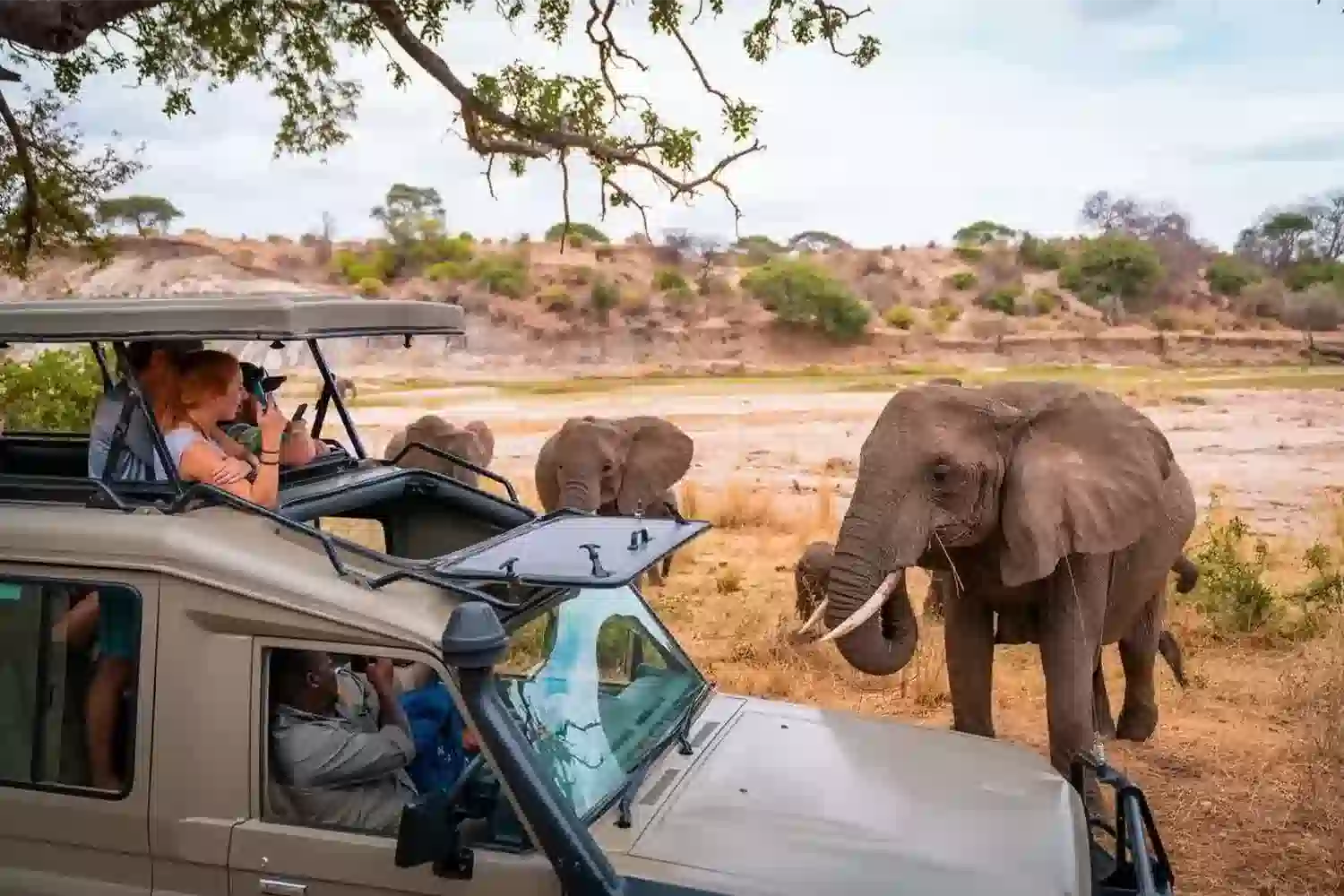
2-Day Tarangire and Ngorongoro
Tarangire game drive, night in Karatu, crater morning
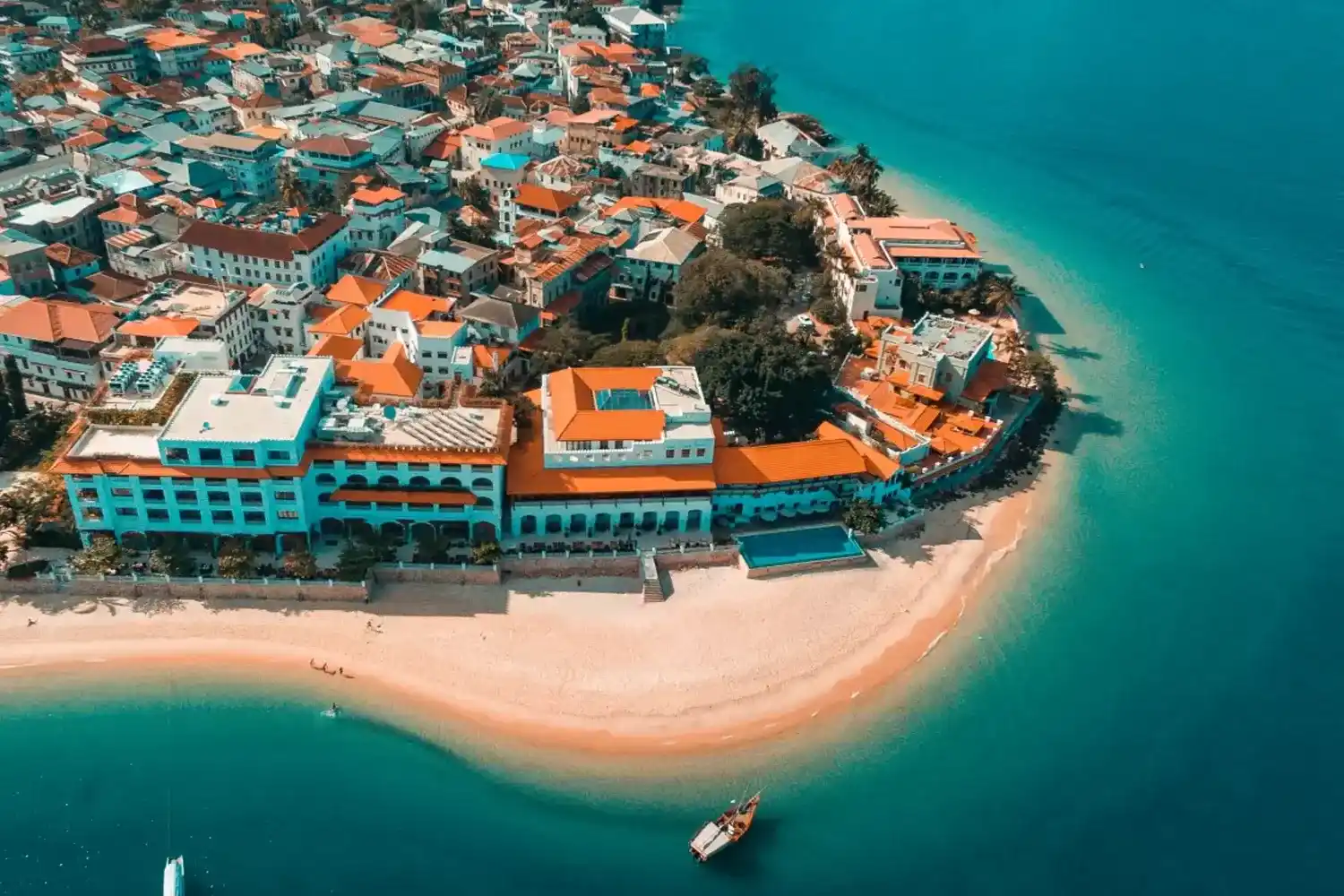
5-Day Zanzibar Beach Holiday
A night in Stone Town with Prison Island, then three nights at Kendwa or Nungwi

4-Day Mafia Island Whale Shark Holiday
Whale sharks, the marine park, Chole Island and the Blue Lagoon
The Short Dry Season: Mid-December to February
This is Tanzania's second high season, and for many of our guests the best one. The landscapes are green, the days hot and mostly dry, and the herds are back on the short-grass plains of the southern Serengeti to give birth.
Where to go in the short dry season
The calving season decides most itineraries in these months:
- Ndutu and the southern Serengeti: hundreds of thousands of wildebeest calves are born in a few weeks in January and February, with lions, cheetahs and hyenas close by
- Kilimanjaro: January and February are mostly dry and warm, with clear mornings and fewer climbers than July and August
- Zanzibar: hot and mostly dry with a calm sea, ideal for beach days and diving after a calving safari
- Mafia Island: the whale shark season continues
- Lake Manyara and Lake Natron: migrant birds at Manyara, and a good time for the long drive to Natron
What to watch in the short dry season
The last week of December is the busiest week of the year on Kilimanjaro, and lodges and Zanzibar hotels fill over Christmas and New Year. There are no public campsites at Ndutu, so camping groups sleep in the central Serengeti and drive down for the herds.
Our tours for mid-December to February
Calving safaris at every budget, from a group trip to a luxury camp, plus a climb and a beach week:
5-Day Calving Season Safari: Ndutu and the Crater
Newborn wildebeest calves on the Ndutu plains in the winter-break months, then the Ngorongoro Crater
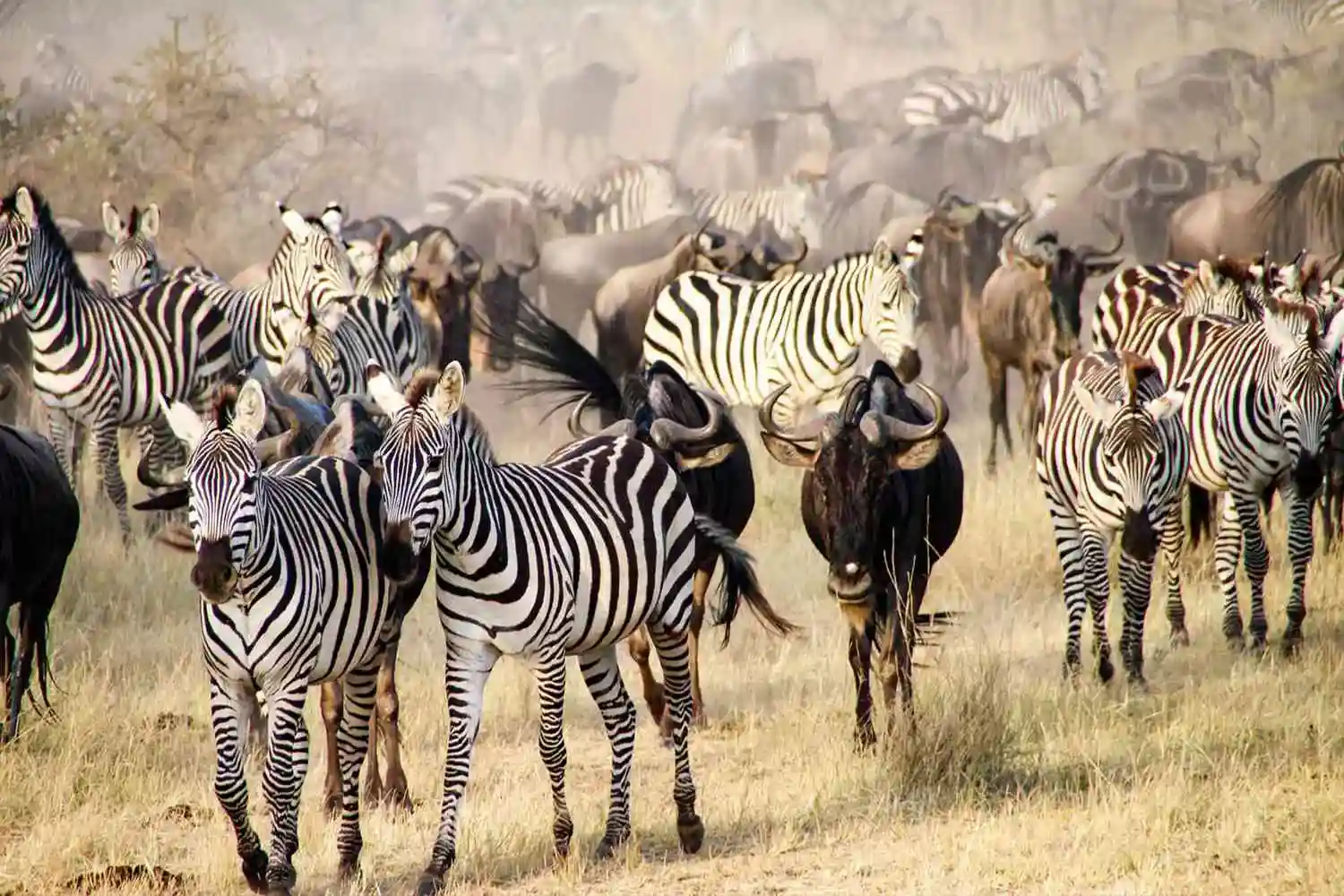
6-Day Ndutu Calving Safari
Three nights with the calving herds, January to March
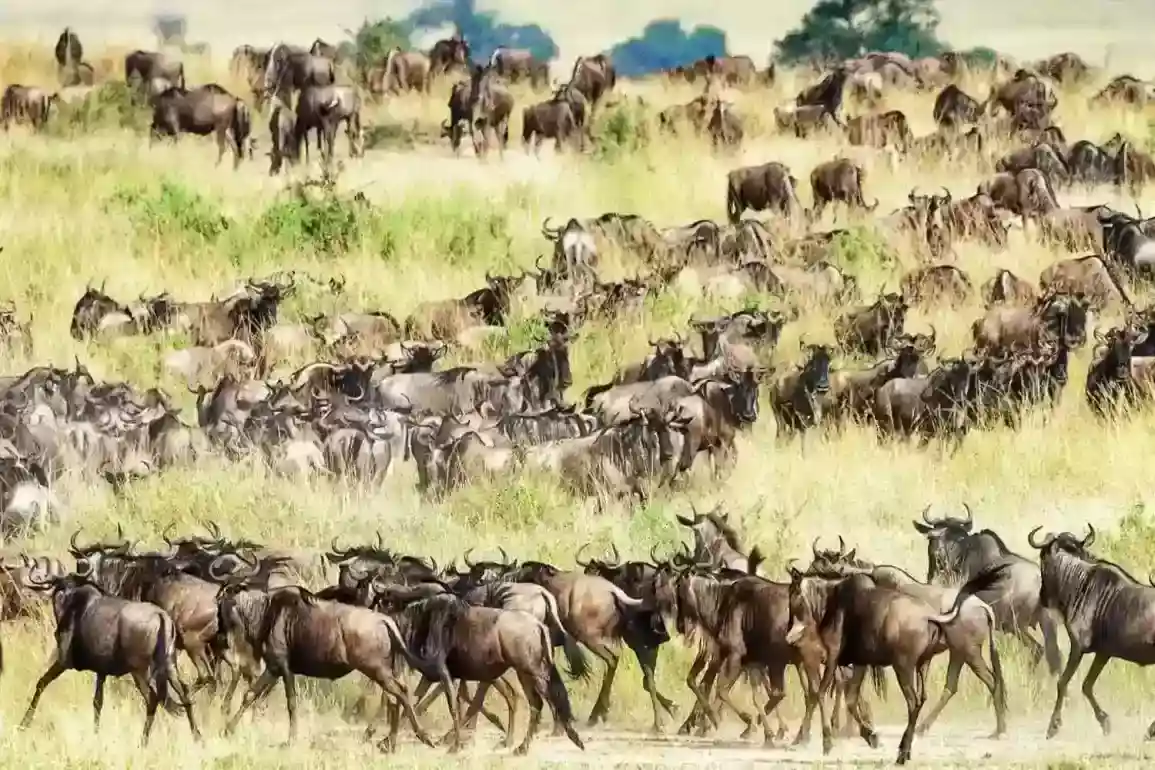
5-Day Budget Calving Group Safari
January to March: a day with the calving herds at Ndutu, Serengeti and the crater
6-Day Luxury Ndutu Calving Safari
Three nights at Ndutu with the calving herds, January to March, and the crater to finish.

10-Day Family Calving Season Safari
Arusha National Park, the crater and three nights at Ndutu among the newborn calves, with rest days at both ends
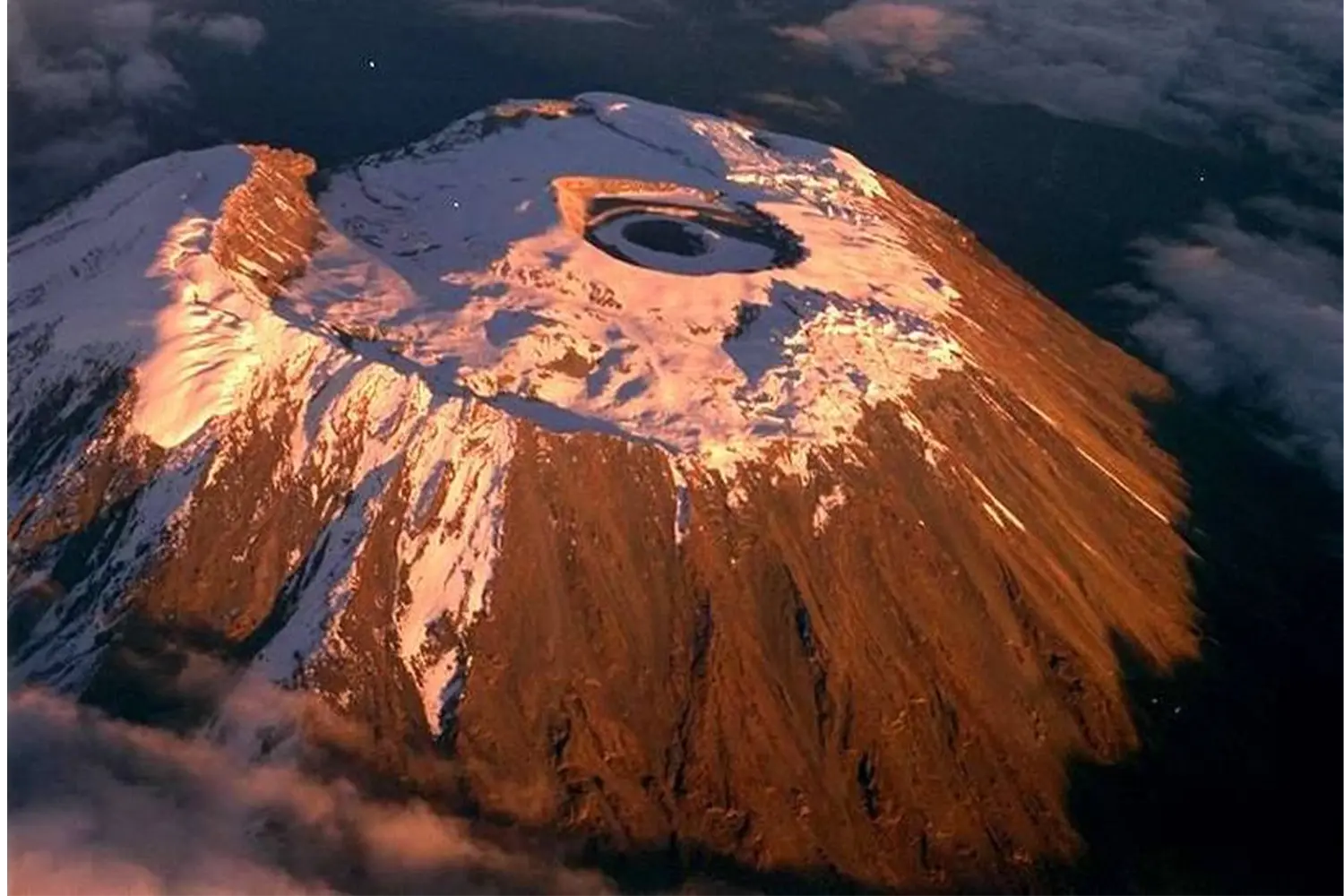
7-Day Lemosho Route
Quiet western start across the Shira Plateau
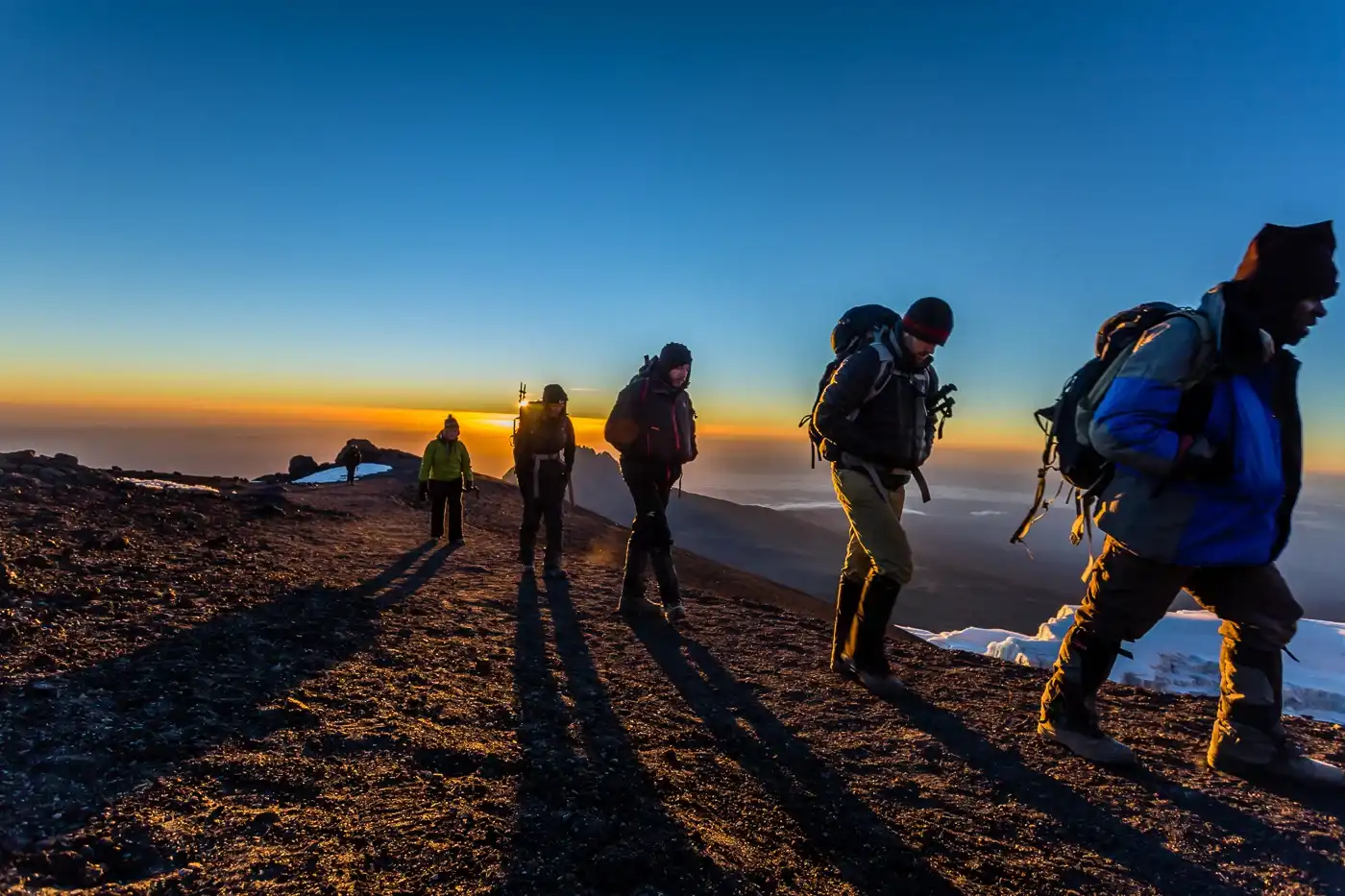
13-Day Climb and Zanzibar Beach
7-day Machame, then four nights on the beach at Kendwa
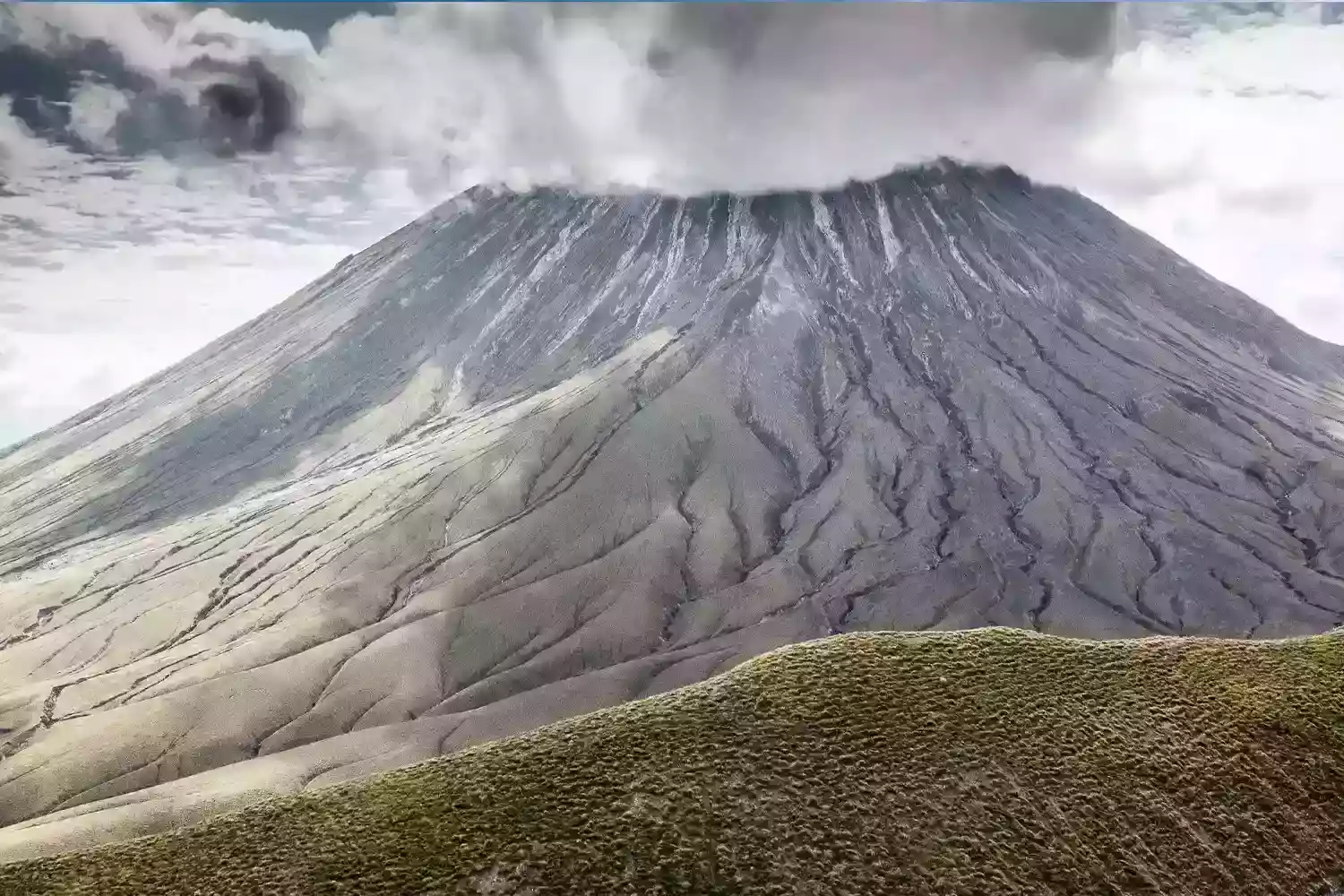
2-Day Lake Natron
Flamingos, the Ngare Sero waterfall and Ol Doinyo Lengai
The Long Rains: March to May
March is still a good month: the calves are growing and the herds stay in the south while the rains begin. April and May bring the heavy rain. Roads turn muddy, drives take longer, and many camps in the south and west close, as do some hotels on Zanzibar. In return, the parks are at their quietest and prices are at their lowest.
Where to go in the long rains
Choose parks close to Arusha on good roads, where a wet afternoon doesn't cost you the trip:
- The Ngorongoro Crater: its wildlife stays on the crater floor all year, and it is our first choice in the rains
- Tarangire and Lake Manyara: short drives from Arusha, green and quiet
- Central Serengeti: possible, with resident cats and the herds passing through, but plan for slower drives
- Zanzibar: heavy showers with sunny spells between, the island's lowest prices; check that your hotel is open
What to avoid in the long rains
We don't recommend climbing Kilimanjaro in April or early May, only in early March or late May; a wet tent at 13,100 ft (4,000 m) makes summit night much harder. We don't run the Lake Natron trip in April and May, and many camps in the southern and western parks are closed. If your dates fall in the long rains, we suggest the routes and lodges that work, and tell you honestly if a trip isn't a good idea.
Our tours for March to May
Short trips to the parks that stay easy in the rain, each starting from Arusha:
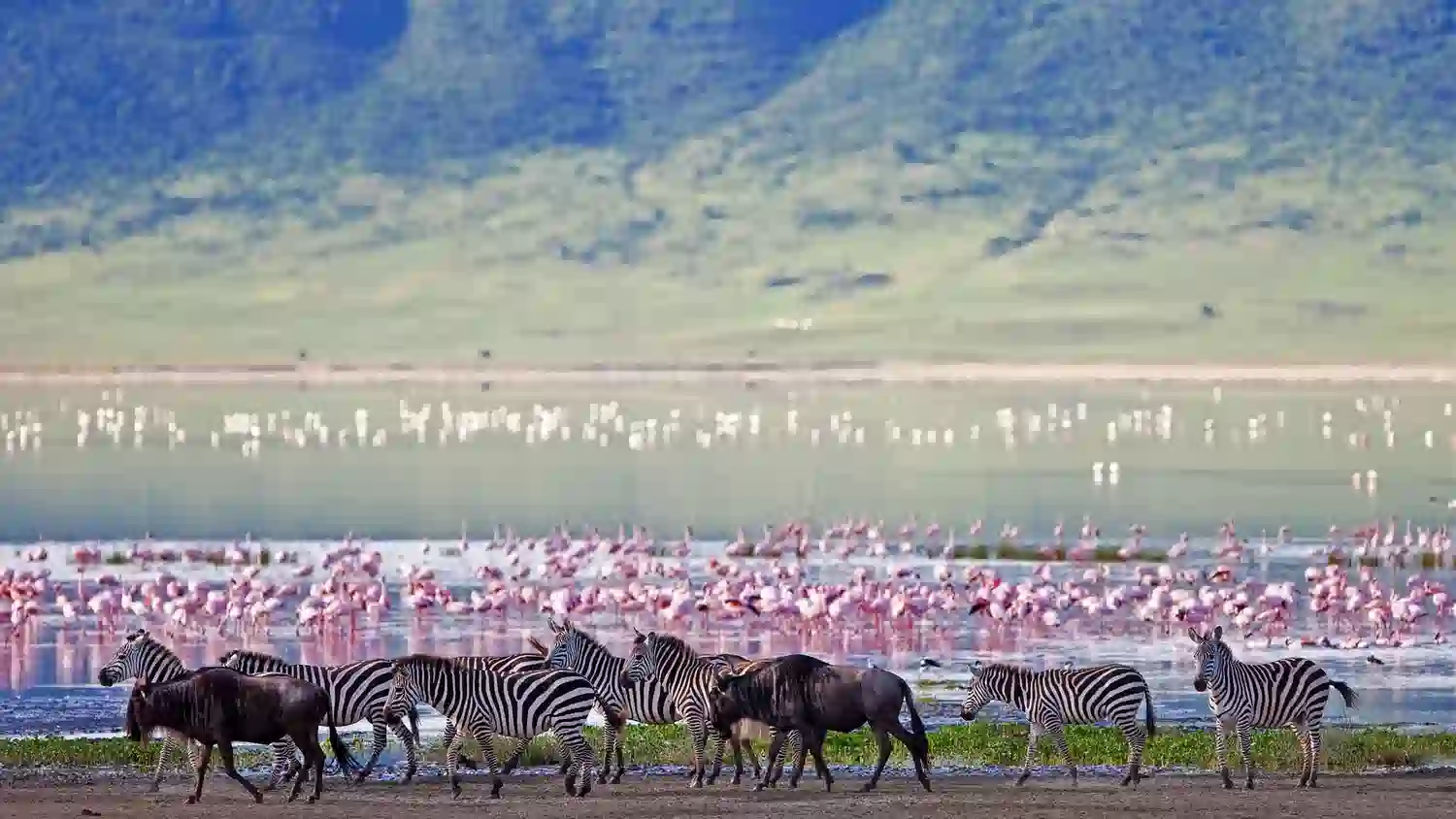
Ngorongoro Crater Day Trip
One full day on the crater floor from Arusha
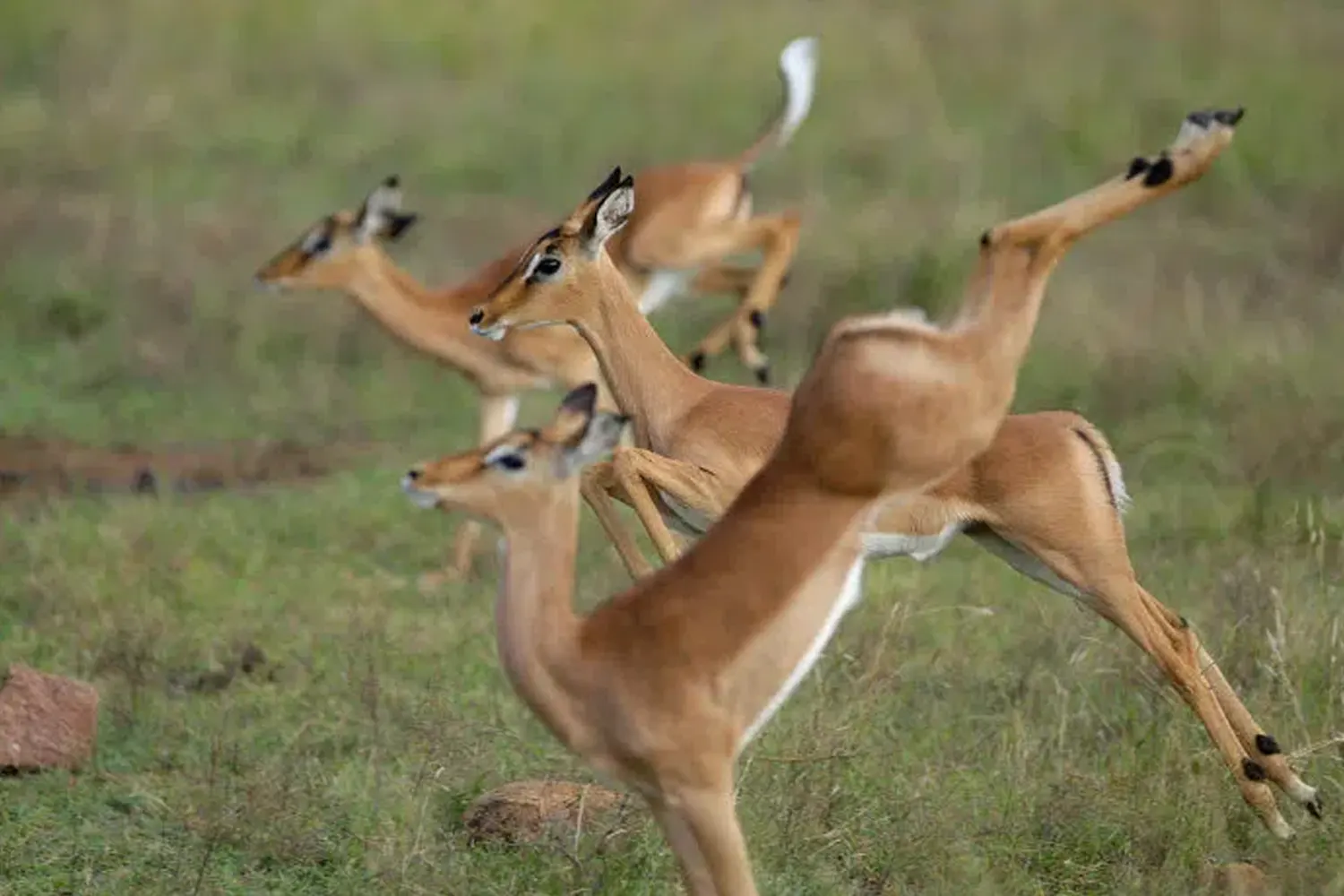
2-Day Lake Manyara and Ngorongoro
Lake Manyara, night in Karatu, crater morning
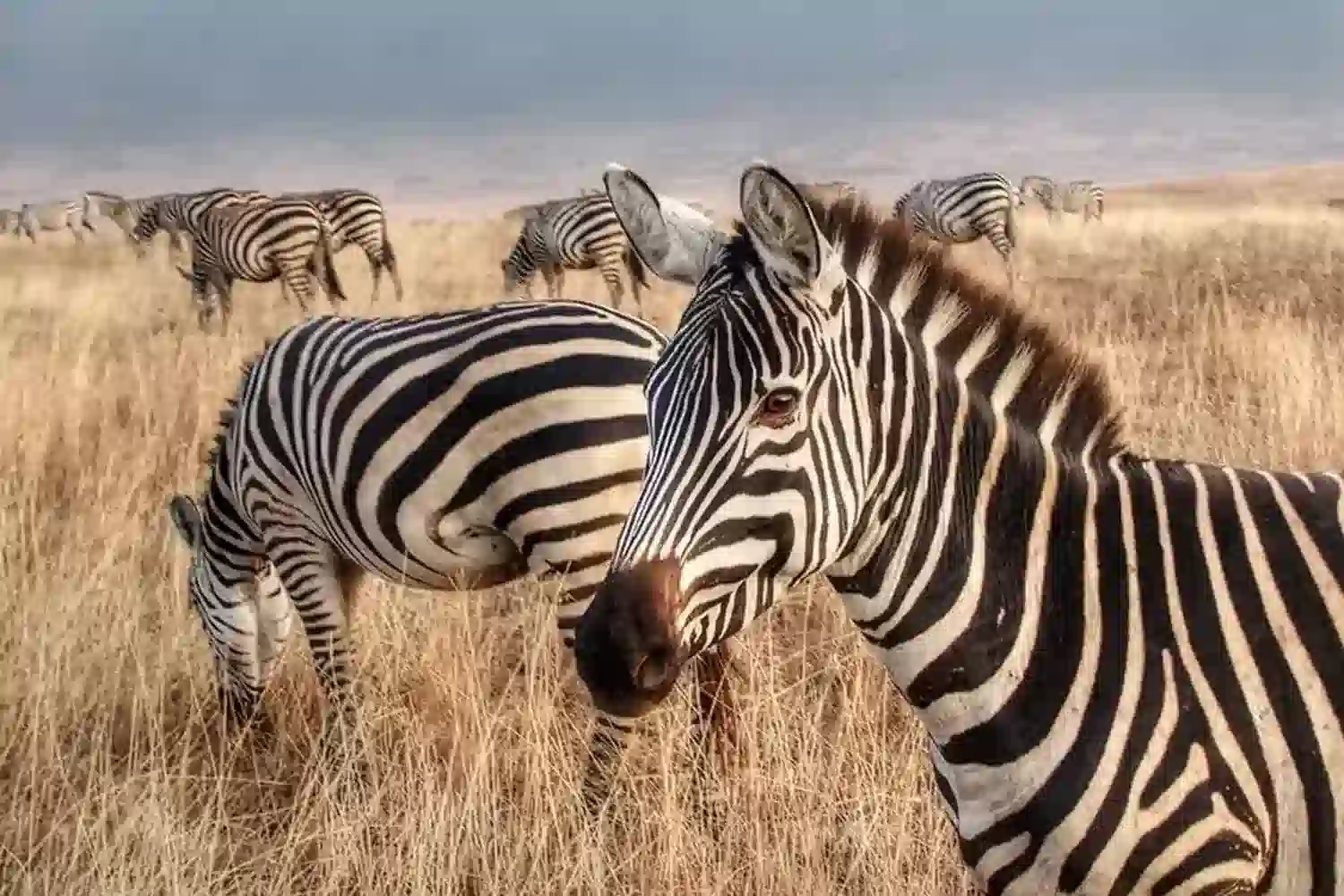
3-Day Tarangire, Manyara and Ngorongoro
Three parks close to Arusha, no long drives

Lake Manyara Day Trip
Forest, lake shore and birdlife, a day from Arusha
Recommended Months to Visit Tanzania, by What You Want
If one experience matters most, start with its months and build the rest of the trip around it:
| You want… | Go in | Start with |
|---|---|---|
| The calving herds and their predators | February (January–March) | 5-day calving season safari, US$2,950 |
| Mara River crossings | August and September (July–October) | 7-day Mara River crossing safari, US$4,470 |
| To summit Kilimanjaro | January–February or late June–October | 7-day Machame route, US$2,090 |
| A safari and a beach week | June–October or January–February | 10-day Big Five safari and Zanzibar, US$5,315 |
| Elephant herds | June–October | 6-day northern circuit safari, US$3,190 |
| Birds and green landscapes | November–March | 3-day Tarangire, Manyara and Ngorongoro, US$1,320 |
| Chimpanzees | July–October | Mahale Mountains or Gombe, quoted on request |
| Whale sharks | November–February | 4-day Mafia Island whale shark holiday, US$2,400 |
| A family trip in the US summer vacation | July–August | 8-day family migration safari, US$3,915 |
| The lowest prices and empty parks | November, March and early June | group joining safaris, from US$205 |
Card and table prices are per person, from; each trip page shows the price for your group size. Planning a honeymoon? Our honeymoon timing guide matches the seasons to romantic lodges and beach weeks.
Dry Season or Green Season: Which Should You Choose?
Most travelers weigh the same trade-offs. Here they are side by side:
| Dry season (June–October) | Green season (November–May) | |
|---|---|---|
| Game viewing | Easiest: thin bush, animals at water | Good, with calving in January–February; thicker grass elsewhere |
| Scenery | Golden and dusty | Green, with dramatic skies |
| Weather | Dry, cold mornings | Hot; showers, heavy in April–May |
| Crowds | Busiest, especially July–August | Quieter, except at Christmas |
| Lodge rates | Highest | Lower, lowest in April–May |
| Kilimanjaro | Best | Good January–February; avoid November and April |
If you can travel any time, our advice is simple: June to October for your first safari, January and February for the calving or a quieter climb, and November or March if you want the parks to yourself at a lower price.
Combining a Safari, Kilimanjaro and Zanzibar in One Season
The dry seasons line up across the country, which makes combining trips easy. From late June to October and from January to February, Kilimanjaro, the northern parks and Zanzibar are all in good shape at the same time. Climb first while you are fresh, then go on safari, and finish on the beach; our combination trips are planned that way. In the short rains, pair a safari with Zanzibar and skip the climb; in April and May, keep the safari short and choose a Zanzibar hotel that stays open.
When to Book for Each Season
How far ahead you need to book depends on the season more than on the trip:
- July, August and Christmas to New Year: book as early as you can, because the lodges fill early
- November, March to May: often possible at short notice, but confirm that your lodge or hotel is open
Your quotation names every lodge for your exact dates, so you see what is available before you pay a deposit.
Common Questions About Tanzania's Seasons
Short answers to what travelers ask us most about Tanzania's weather and seasons:
What are the seasons in Tanzania?
Four: the long dry season from June to October, the short rains from November to mid-December, a short dry season from mid-December to February, and the long rains from March to May, heaviest in April and May.
What is the best month to visit Tanzania?
For most trips, a month between late June and October. February is the best single month for the calving herds at Ndutu, and August and September for the Mara River crossings.
What is the rainy season in Tanzania?
The long rains fall from March to May, heaviest in April and May, and the short rains in November and early December. In the short rains showers are usually brief; in the long rains roads get muddy and some camps close.
Is it worth visiting Tanzania in the green season?
Yes, for the right trip. January and February bring the calving, and November and March have quiet parks and lower lodge rates. Only April and May need careful planning.
When is the cheapest time to visit Tanzania?
April and May, when lodge rates are lowest and some camps close. November and March are a good middle ground: lower prices and mostly fine weather.
When should I avoid climbing Kilimanjaro?
In April, early May and November, the rainy months. We recommend January to early March and late June to October.
Can I see the Great Migration in any season?
The herds are in the Serengeti all year, but they move. They are at Ndutu from December to March, in the center and west from April to July, and at the Mara River from July to October.
Is Zanzibar good all year?
Mostly. It is best from June to October and December to February. April and May bring the long rains and some hotels close, but prices are at their lowest.
Should You Visit Tanzania in the Dry Season or the Green Season?
Choose the dry season, June to October, if it is your first trip, you want the easiest game viewing or you are climbing Kilimanjaro. Choose the short dry season, mid-December to February, for the calving herds and a hot beach week. Choose the short rains or March for quiet parks and lower prices. Tell us your dates and what matters most through the contact form, on WhatsApp +255 678 992 599 or by email to jaynevytours@gmail.com, and we will suggest the trip that fits your season.