
Best Safari Parks in Tanzania
The best safari parks in Tanzania are Serengeti for the Great Migration and predators, Ngorongoro for concentrated wildlife inside a volcanic caldera, Tarangire for elephants and baobabs, Nyerere for boat safaris, and Ruaha for a quieter wilderness experience. Lake Manyara and Mikumi suit shorter itineraries, while Katavi, Mahale and Gombe reward travelers who are prepared to reach more remote parts of the country.
This guide compares the parks by wildlife, landscape, reported protected area, season, accessibility and the amount of time each destination deserves. The ranking is not a claim that one park is perfect for every traveler. A first safari, a family trip, a photography journey and a remote fly-in expedition require different choices.
Quick answer: which Tanzania safari park should you choose?
- Best overall safari park: Serengeti National Park.
- Best for a short, wildlife-rich game drive: Ngorongoro Crater.
- Best for elephants and baobab landscapes: Tarangire National Park.
- Best for boat safaris: Nyerere National Park.
- Best for a quieter big-game safari: Ruaha National Park.
- Best close to Dar es Salaam: Mikumi National Park.
- Best remote dry-season wilderness: Katavi National Park.
- Best for chimpanzees and Lake Tanganyika scenery: Mahale Mountains National Park.
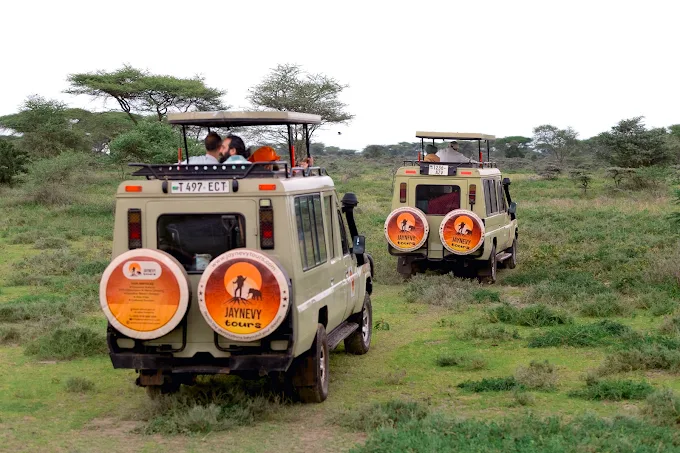
Tanzania safari parks comparison table
| Rank | Park or safari area | Reported area | Best known for | Strong travel period | Recommended stay |
|---|---|---|---|---|---|
| 1 | Serengeti National Park | 14,763 km² | Great Migration, predators and varied savanna | Year-round; Jan-Mar and Jun-Oct are major seasonal windows | 3-4 days |
| 2 | Ngorongoro Conservation Area | 8,094.4 km²; crater floor about 264 km² | Dense wildlife, crater scenery and black rhino possibility | Year-round; drier months usually have easier road conditions | 1-2 days |
| 3 | Tarangire National Park | 2,850 km² | Elephants, baobabs and dry-season concentrations | July-November | 1-2 days |
| 4 | Nyerere National Park | About 30,000 km² | Rufiji River, boat safaris, wild dogs and low visitor density | June-October | 3-4 days |
| 5 | Ruaha National Park | 20,226 km² in TANAPA visitor literature | Remote big game, baobabs, kudu, sable and roan antelope | June-October | 3-4 days |
| 6 | Lake Manyara National Park | About 644 km² reported protected area | Rift Valley scenery, forest, birds, primates and short safaris | June-October; January-February | 1 day |
| 7 | Mikumi National Park | 3,230 km² | Accessible southern-circuit game viewing | June-October | 1-2 days |
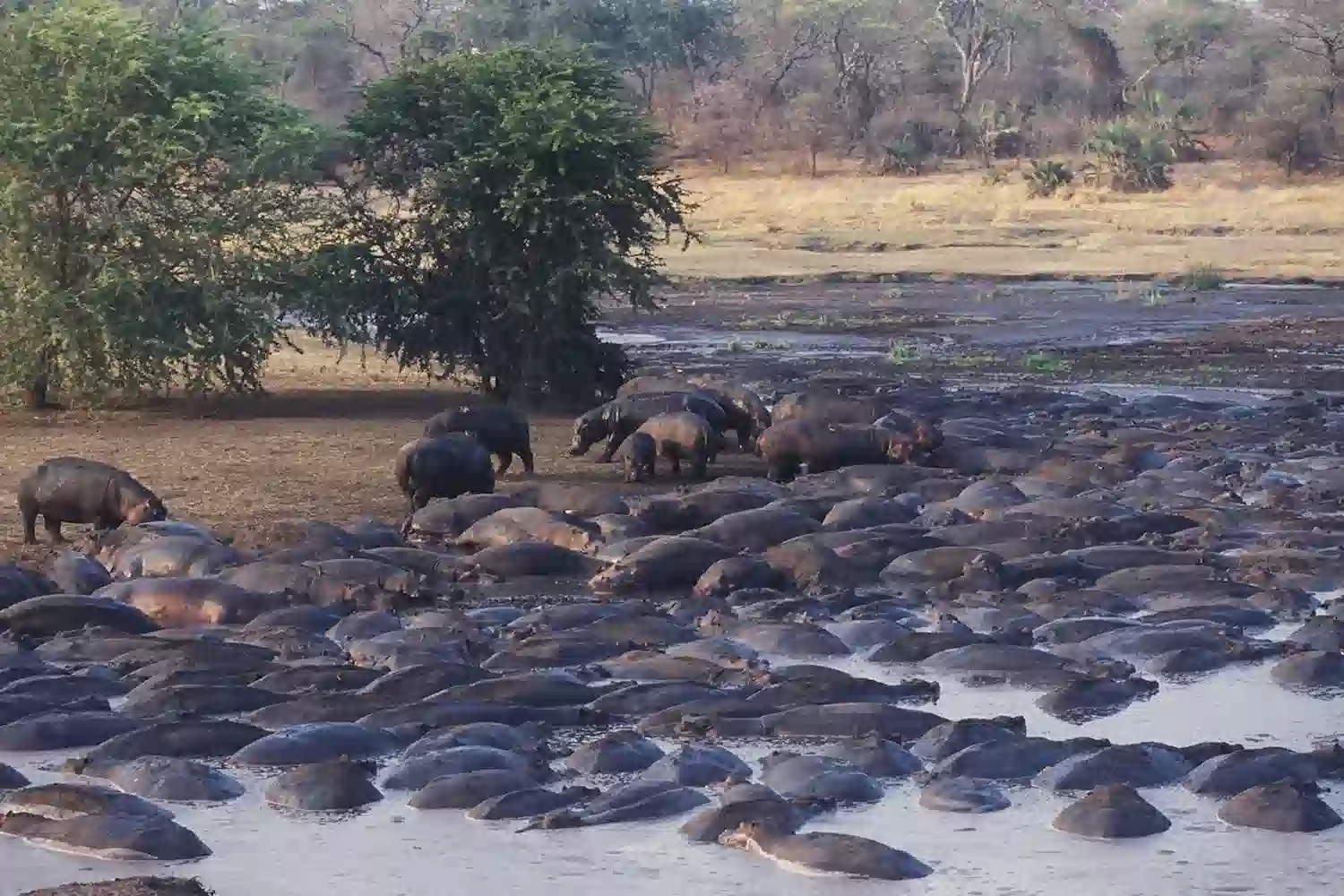
| 8 | Katavi National Park | 4,471 km² | Remote floodplains, buffalo, hippos and dry-season drama | July-October | 3 days or more |
| 9 | Mahale Mountains National Park | About 1,600 km² | Chimpanzee trekking and Lake Tanganyika | July-October for generally drier trekking conditions | 3-4 days |
| 10 | Gombe National Park | 52 km² in TANAPA visitor literature | Chimpanzee history, forest hikes and Lake Tanganyika | June-October for generally drier trails | 2-3 days |
How this list of Tanzania's best safari parks was selected
The ranking considers six practical factors rather than fame alone:
- Wildlife quality: the range of animals, frequency of sightings and reliability across seasons.
- Distinctive experience: migration, crater game viewing, boat safaris, chimpanzee trekking or unusually remote wilderness.
- Landscape variety: open plains, woodland, river systems, escarpments, lakes and forests.
- Time value: how much a traveler can realistically experience in one, two or three days.
- Access and itinerary fit: whether the park combines naturally with Arusha, Dar es Salaam, Zanzibar or another safari destination.
- Crowd profile: famous parks rank highly for wildlife, while remote parks earn value for space and quiet.
1. Serengeti National Park: best overall safari park in Tanzania
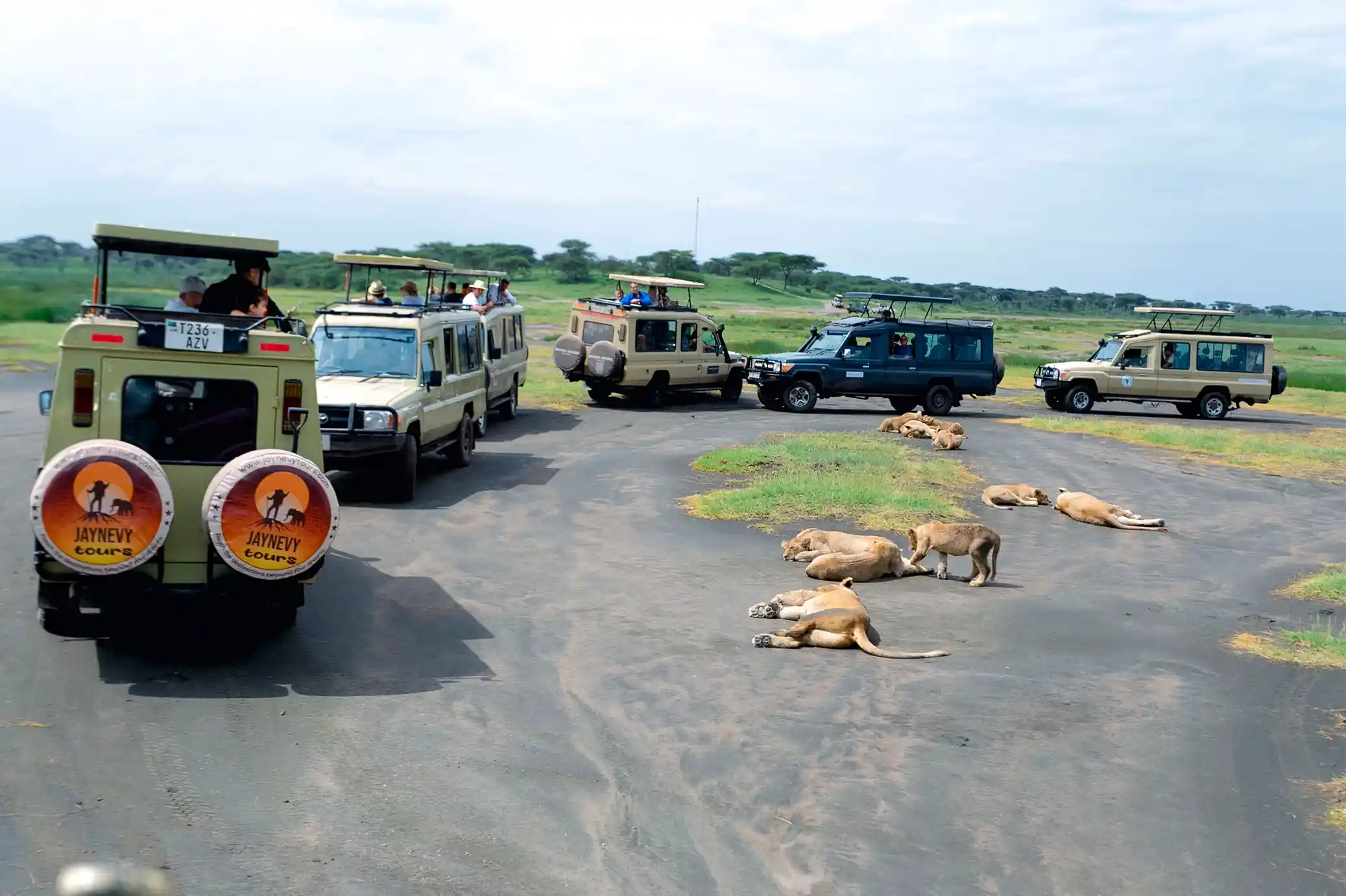
Serengeti deserves first place because it performs strongly in almost every category: predator sightings, open landscapes, seasonal wildlife movement, year-round game viewing and the ability to support anything from a short fly-in safari to a week-long expedition. The park covers 14,763 square kilometres and forms part of a wider Serengeti-Mara ecosystem that crosses the Tanzania-Kenya border.
The Great Migration is the park's best-known event, but it should not be treated as a single river-crossing moment. More than 1.5 million wildebeest, together with large numbers of zebras and gazelles, move through different parts of the ecosystem in response to rainfall, grazing and water. This means the right Serengeti region depends on the month: southern plains and Ndutu are associated with the calving period, the western corridor becomes important later, and the far north is known for movement toward the Mara River during part of the dry season.
Central Serengeti is the safest choice for a first visit because permanent water and varied habitats support resident wildlife throughout the year. Lions, cheetahs, leopards, hyenas, elephants, giraffes and large antelope species may be seen without relying entirely on the migration's location. Three nights is a practical minimum for a road safari; four or more nights allow time to explore more than one region.
- Choose Serengeti for: the strongest all-round wildlife safari.
- Best length: 3-4 days for most travelers.
- Strong periods: January-March for the southern ecosystem; June-October for dry-season viewing and northern movement.
- Possible limitation: popular sectors can feel busy during peak migration periods.
2. Ngorongoro Conservation Area: best for concentrated wildlife
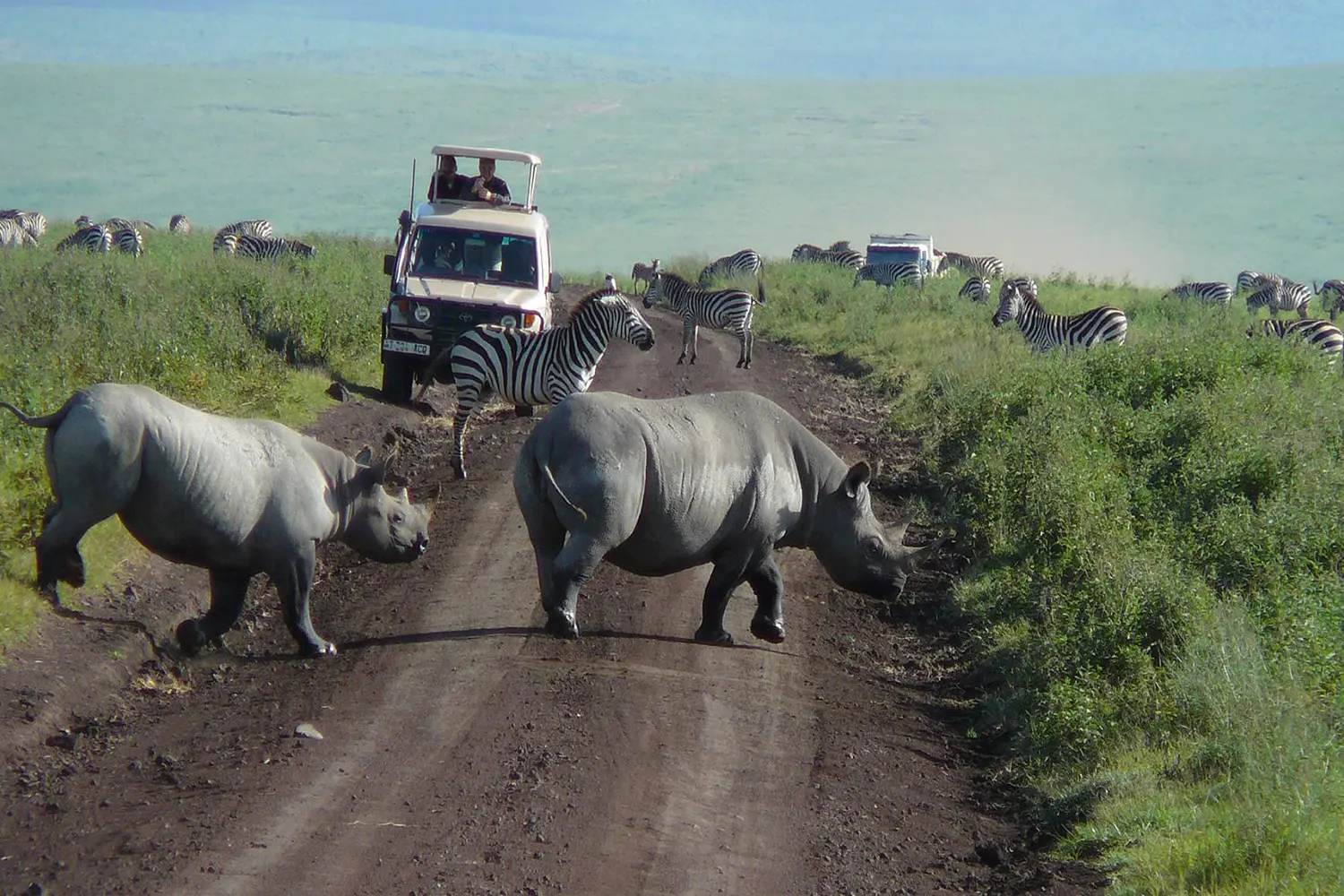
Ngorongoro is not a national park. It is a multiple-use conservation area where wildlife, protected landscapes and Maasai pastoral life exist within the same wider property. It belongs in any list of Tanzania's leading safari areas because the Ngorongoro Crater offers one of the country's most concentrated wildlife experiences.
The wider conservation area covers 809,440 hectares, equal to 8,094.4 square kilometres. The crater floor is approximately 26,400 hectares, or 264 square kilometres, and the caldera has a mean diameter of about 16 to 19 kilometres. Forested slopes, open grassland, marshes and alkaline water create several habitats within a compact driving area.
A crater descent normally works best as a focused game-drive day rather than a multi-day stay on the floor. Buffalo, wildebeest, zebra, hyena, lion, hippo and many bird species are regularly associated with the crater. Black rhino is possible but never guaranteed. The crater's strength is density and scenery; its weakness is that vehicle concentrations can be high during busy hours.
- Choose Ngorongoro for: maximum wildlife variety within a short visit.
- Best length: one crater day, with one or two nights nearby.
- Strong period: year-round.
- Important distinction: it is a conservation area, not a national park.
3. Tarangire National Park: best for elephants and baobabs
Tarangire covers approximately 2,850 square kilometres, but its influence extends beyond the park boundary into a much larger ecosystem. The Tarangire River and permanent pools become especially important when surrounding seasonal water sources dry up. From roughly July to November, wildlife moves toward the river system, creating some of northern Tanzania's strongest dry-season concentrations.
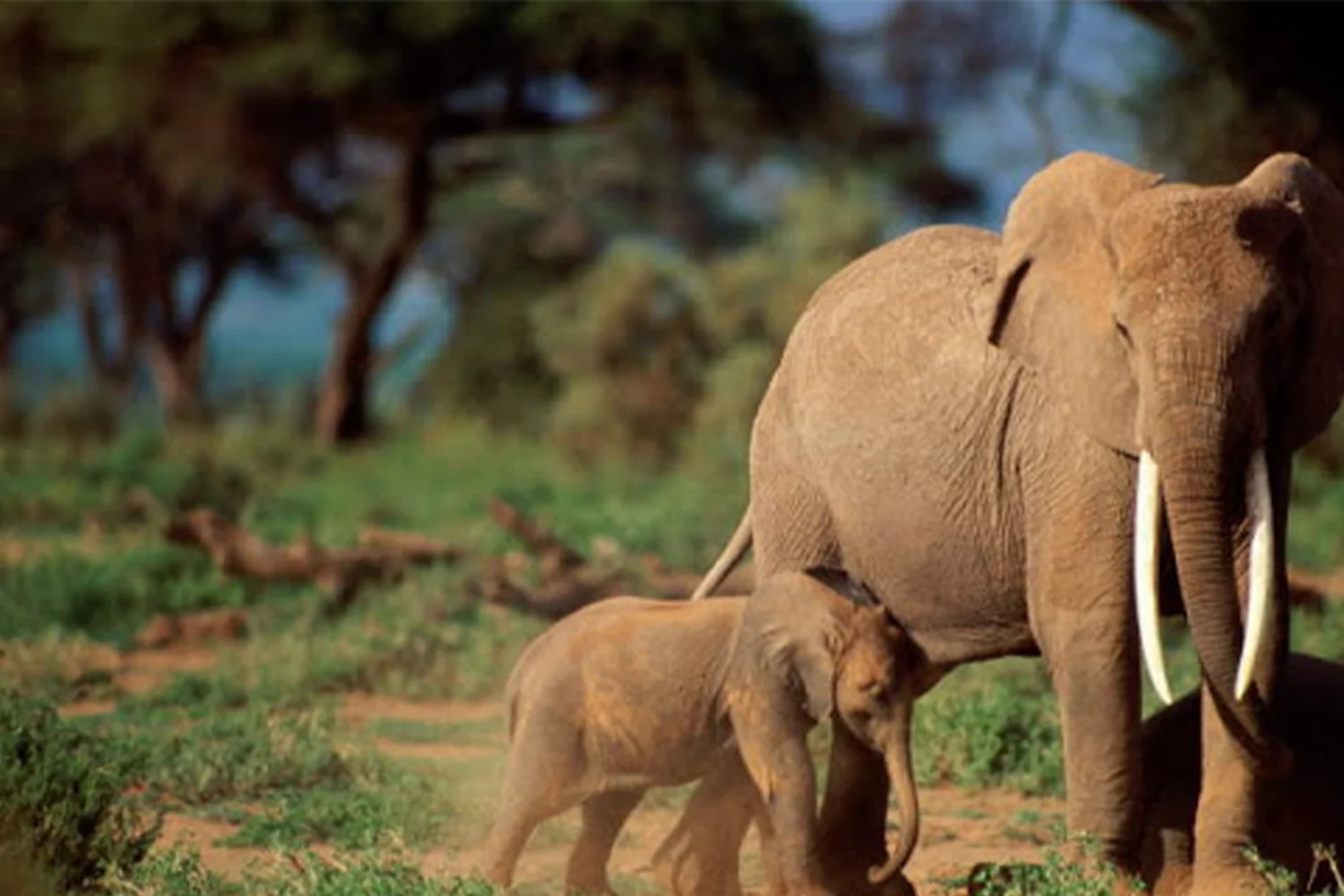
Elephants are the headline species, often appearing in family groups among baobabs, acacia woodland and open valleys. Zebra, wildebeest, giraffe, buffalo and several antelope species also use the ecosystem, while lions and leopards follow prey concentrations. Birdlife is diverse enough to make Tarangire worthwhile even outside the peak dry season.
Many short itineraries give Tarangire only one day. That is workable, but two days are better because the northern gate area is only part of the park. A second day allows slower game viewing and time to move toward quieter sections, seasonal swamps and less heavily used tracks.
- Choose Tarangire for: elephants, baobabs and a strong first or final safari stop from Arusha.
- Best length: 1-2 days.
- Strong period: July-November.
- Possible limitation: wildlife is more dispersed during wetter months.
4. Nyerere National Park: best for boat safaris and river wildlife
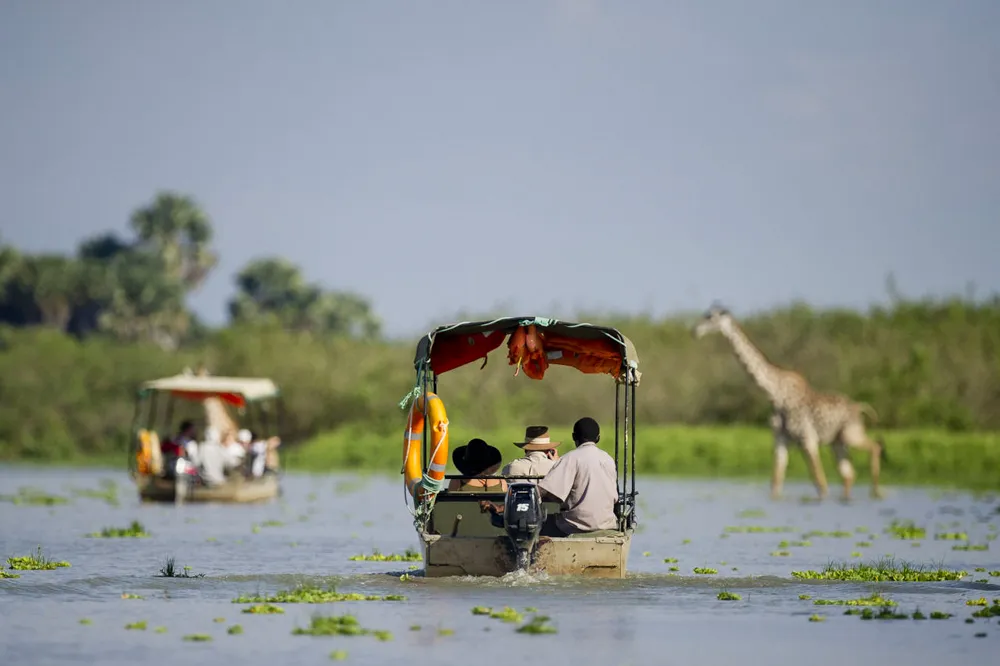
Nyerere National Park was created in 2019 from a large northern section of the former Selous Game Reserve. TANAPA visitor material describes the national park as roughly 30,000 square kilometres, making it larger than many complete safari circuits. The Rufiji River, oxbow lakes, palm-fringed channels, woodland and open clearings give the park a different character from the northern plains.
The defining advantage is variety of activity. Visitors can combine traditional game drives with boat safaris and, where arranged under park rules, guided walking experiences. From the water, hippos, crocodiles, waterbirds and animals approaching the riverbank can be viewed from a different angle. African wild dogs are an important conservation feature of the wider ecosystem, although sightings remain dependent on location and luck.
Nyerere is practical for travelers linking a safari with Zanzibar because bush flights connect the park with Dar es Salaam and the islands. Three nights give enough time for at least two different activities; four nights provide a better balance between river and inland game viewing.
- Choose Nyerere for: boat safaris, fewer vehicles and a safari-Zanzibar combination.
- Best length: 3-4 days.
- Strong period: June-October.
- Possible limitation: its scale means wildlife is less concentrated than inside Ngorongoro Crater.
5. Ruaha National Park: best quiet big-game wilderness
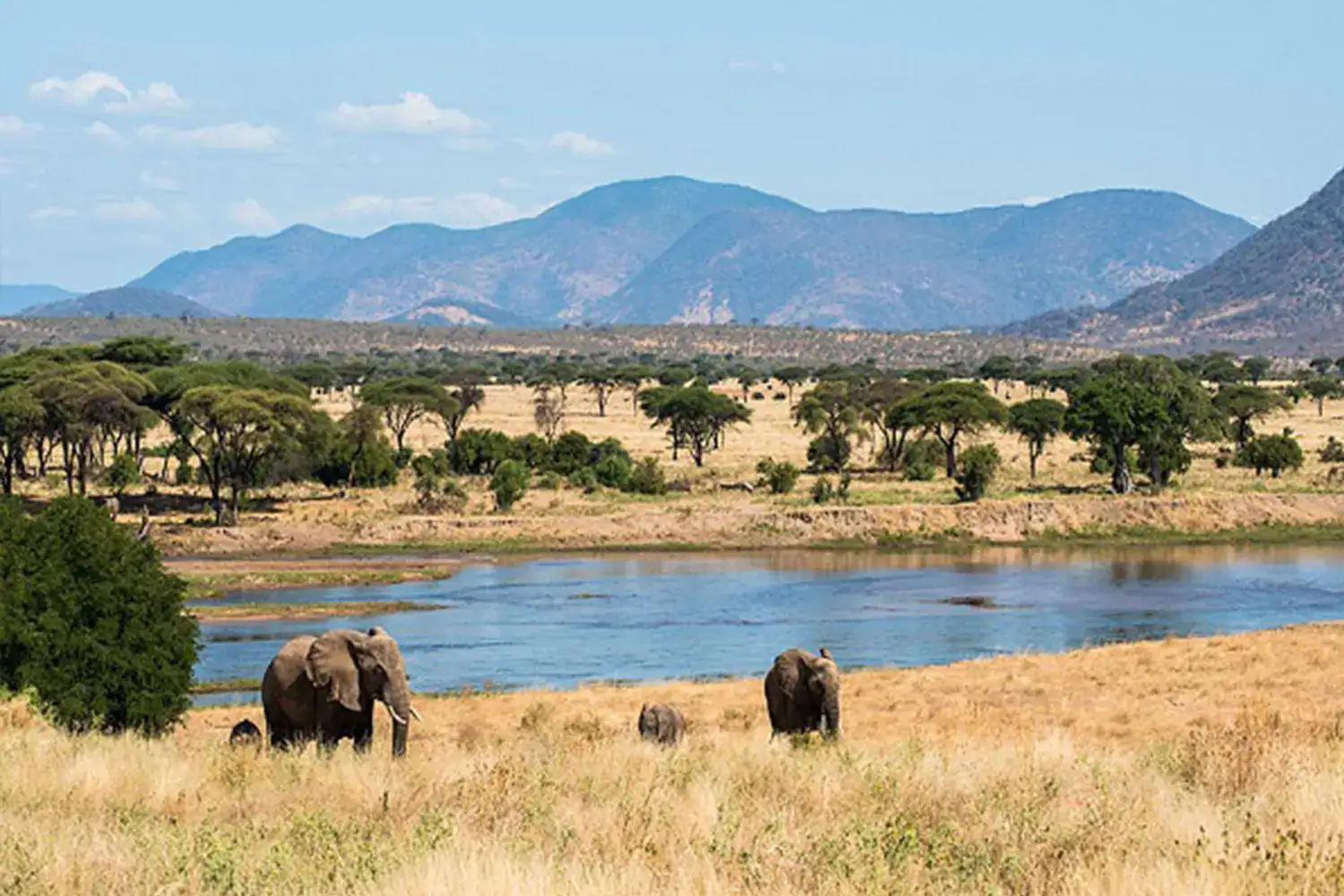
Ruaha is one of Tanzania's largest parks. TANAPA visitor literature gives a park area of 20,226 square kilometres and places it inside a wider ecosystem of approximately 45,000 square kilometres. Its size, limited development and southern location create a safari that feels more remote than the busiest northern destinations.
The Great Ruaha River and seasonal waterways concentrate animals during the dry season. Elephants, buffalo, lions, leopards and African wild dogs are part of the park's appeal, while greater and lesser kudu, sable antelope and roan antelope add species that many visitors do not commonly encounter on a standard northern circuit.
Ruaha is not a park to rush. Long distances and changing habitats reward at least three nights. It combines naturally with Nyerere by air, creating a southern circuit that includes river activities in one park and broad inland wilderness in the other.
- Choose Ruaha for: big game, unusual antelope and low-density safari travel.
- Best length: 3-4 days.
- Strong period: June-October.
- Possible limitation: road journeys are long, so flying is often the practical option.
6. Lake Manyara National Park: best compact park for landscape variety
Lake Manyara sits below the western wall of the Great Rift Valley and compresses forest, groundwater springs, acacia woodland, marsh, lake edge and escarpment scenery into a relatively small area. The World Database on Protected Areas currently reports about 644 square kilometres, while older TANAPA visitor literature described a smaller core landscape of approximately 325 square kilometres.
The park is known for elephants, baboons, monkeys, buffalo, giraffes, hippos and diverse birdlife. Flamingo numbers vary with water depth, food conditions and wider regional movement, so they should not be promised on a fixed date. Tree-climbing lions are part of the park's reputation, but lions may rest in trees in several East African ecosystems and sightings are never guaranteed.
Manyara works best as a one-day stop between Arusha, Tarangire and Ngorongoro. It is less suitable as the central focus of a long first safari, but valuable for travelers who want a rapid change of habitat and a break from open grassland.
- Choose Lake Manyara for: a compact park, Rift Valley scenery, primates and birding.
- Best length: one day.
- Strong periods: June-October and January-February.
- Possible limitation: lake levels and wildlife distribution change significantly.
7. Mikumi National Park: best accessible safari from Dar es Salaam
Mikumi covers 3,230 square kilometres and lies within a broader ecological connection between southern protected areas and the Eastern Arc landscapes. Its practical advantage is access: travelers based in Dar es Salaam can reach a classic savanna park without committing immediately to a long fly-in circuit.
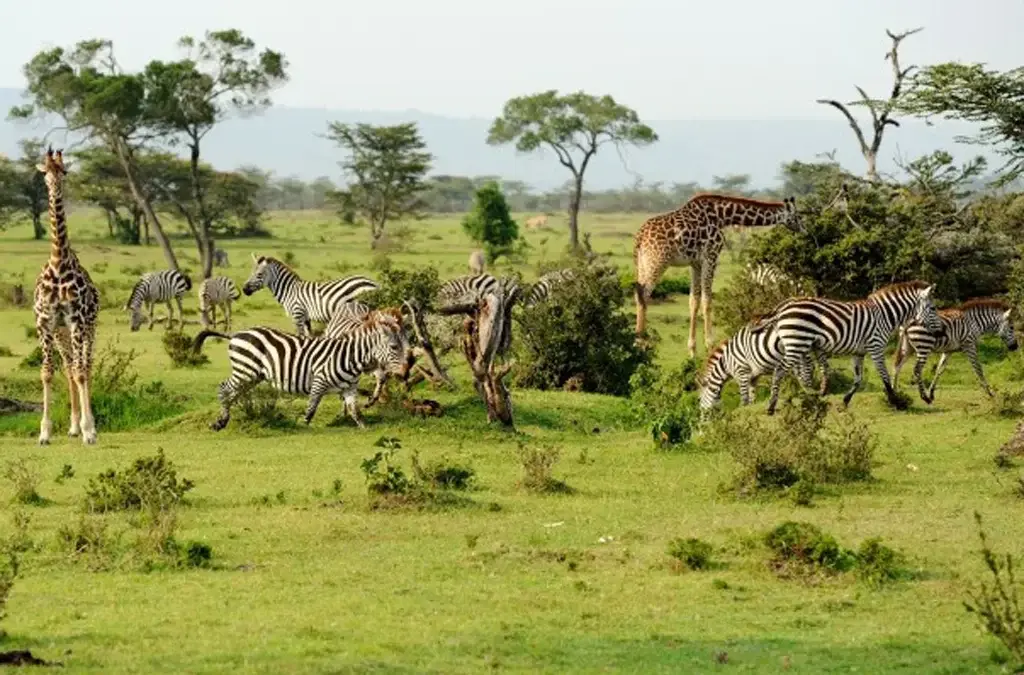
The Mkata floodplain is the best-known game-viewing area. Giraffes, zebras, wildebeest, buffalo, elephants, hippos, lions and numerous birds may be encountered across open grassland, woodland and wetland habitats. Mikumi does not have the migration scale of Serengeti or the river safari identity of Nyerere, but it provides a balanced and understandable introduction to southern Tanzania.
One night supports a short safari, while two nights allow early and late game drives without spending most of the visit in transit. Mikumi can also be combined with Udzungwa Mountains for travelers who want wildlife followed by hiking and forest scenery.
- Choose Mikumi for: a short road safari from Dar es Salaam.
- Best length: 1-2 days.
- Strong period: June-October.
- Possible limitation: it is less remote than Ruaha, Katavi or Nyerere.
8. Katavi National Park: best remote dry-season safari
Katavi covers 4,471 square kilometres and protects broad floodplains, woodland, seasonal lakes and river systems in western Tanzania. Its remoteness is not an inconvenience added to the experience; it is the reason the park remains attractive to experienced safari travelers.
During the long wet season, animals spread across a much larger landscape. From July to October, water contracts and wildlife becomes increasingly concentrated around the Katuma River, Lake Chada and remaining pools. Large buffalo herds, hippos, crocodiles, elephants, lions and plains game can create dramatic scenes late in the dry season.
Katavi requires time and budget because flying is normally more practical than driving. TANAPA's visitor material recommends at least three days, and that is sensible: a very short visit would not justify the travel required.
- Choose Katavi for: remoteness, floodplain wildlife and very low visitor density.
- Best length: 3 days or more.
- Strong period: July-October.
- Possible limitation: limited access and higher fly-in costs.
9. Mahale Mountains National Park: best chimpanzee and lake safari
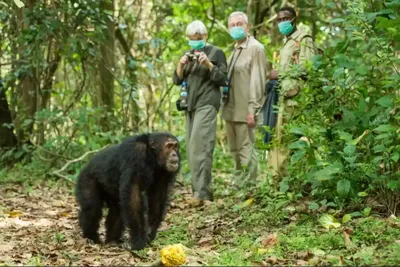
Mahale Mountains lies on the eastern shore of Lake Tanganyika and combines forested mountains, beaches and one of Tanzania's most important chimpanzee habitats. It is not a conventional vehicle safari park. Travel is built around boats, forest walks, chimpanzee trekking and time beside the lake.
Chimpanzee visits are controlled, and TANAPA visitor material describes a strictly managed viewing period of approximately one hour once a habituated group is reached. Trek length cannot be guaranteed because chimpanzees move through the forest and trail conditions change with season and rainfall.
Mahale combines especially well with Katavi. A journey pairing the two gives travelers a dry savanna and floodplain safari followed by a forest-and-lake experience. Three or four nights are recommended because weather, trekking conditions and the journey itself make a rushed stay poor value.
- Choose Mahale for: chimpanzees, walking and Lake Tanganyika scenery.
- Best length: 3-4 days.
- Strong period: July-October for generally drier conditions.
- Possible limitation: remote access and physically active forest trekking.
10. Gombe National Park: best for chimpanzee research history
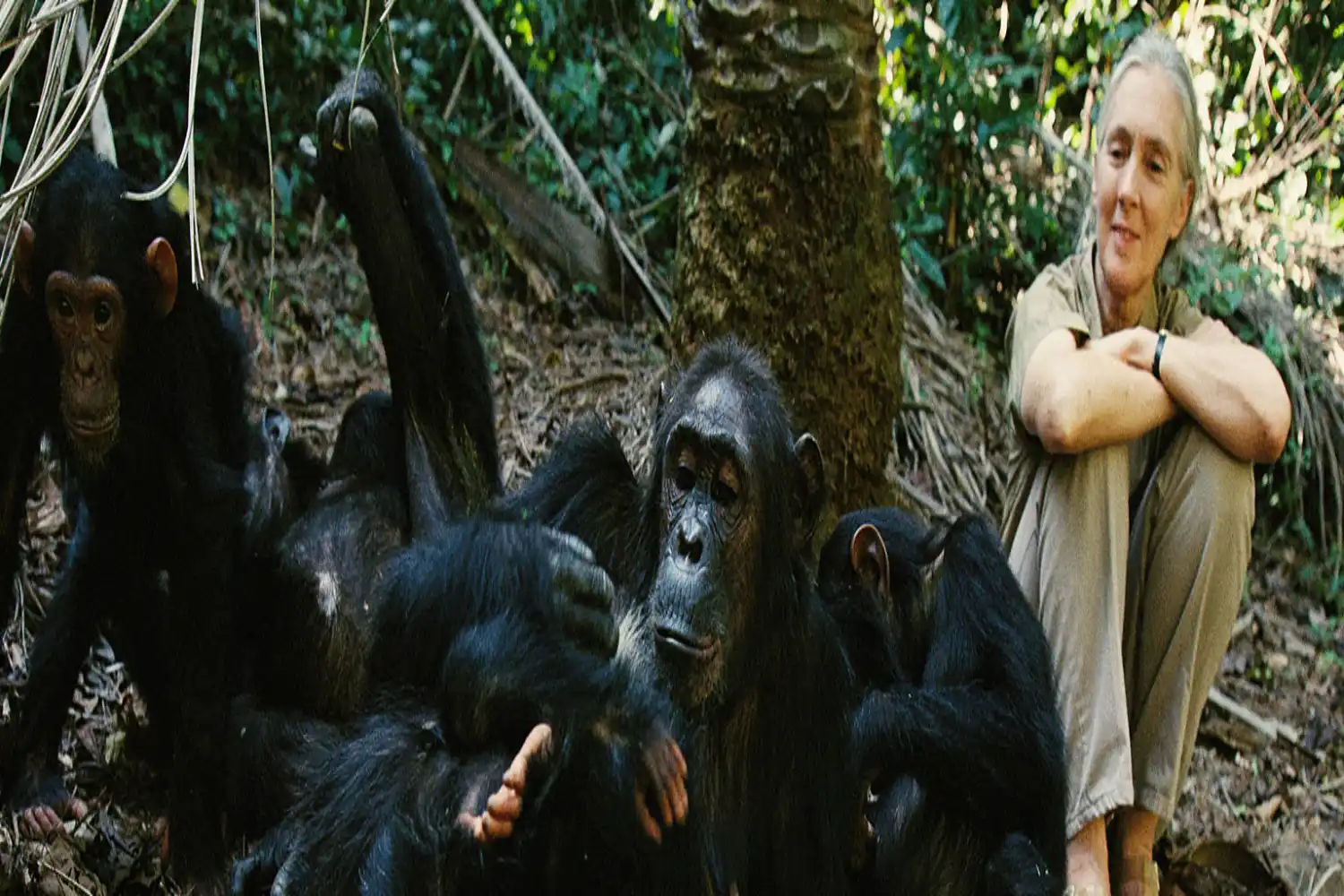
Gombe is Tanzania's smallest national park in TANAPA visitor literature, covering approximately 52 square kilometres. It is internationally connected with Jane Goodall's chimpanzee research, which began in 1960, and its value lies in forest hiking, primate behavior and the relationship between steep mountains and Lake Tanganyika.
Visitors reach the park from Kigoma by boat and explore on foot rather than by safari vehicle. Chimpanzees are the principal attraction, but the forest also supports other primates, birds and smaller wildlife. The experience is intimate and historically important, though less suited to travelers seeking elephants, large herds or traditional open-vehicle game drives.
Gombe can be a more accessible western Tanzania chimpanzee option than Mahale, but it still requires careful transport planning. Two or three days allow for boat schedules and more than one forest outing.
- Choose Gombe for: chimpanzees, research history and a compact forest experience.
- Best length: 2-3 days.
- Strong period: June-October for generally drier trails.
- Possible limitation: it is a specialist primate destination, not a complete big-game safari.
Best Tanzania safari parks by travel interest
| Travel interest | Best park or area | Why it fits |
|---|---|---|
| First safari | Serengeti + Ngorongoro + Tarangire | Combines large predators, dense crater wildlife and elephant country. |
| Great Migration | Serengeti National Park | Different sectors cover different stages of the annual movement. |
| Elephants | Tarangire National Park | Dry-season water sources attract elephants and other large mammals. |
| Boat safari | Nyerere National Park | The Rufiji River and associated lakes support water-based game viewing. |
| Quiet wilderness | Ruaha or Katavi | Large landscapes and lower visitor density create a remote experience. |
| Short trip from Dar es Salaam | Mikumi National Park | Road access makes a one- or two-night safari practical. |
| Chimpanzees | Mahale Mountains or Gombe | Both offer guided forest trekking beside Lake Tanganyika. |
| Safari plus Zanzibar | Nyerere or northern circuit | Domestic flights connect the mainland parks with Zanzibar. |
Best time to visit Tanzania's safari parks
No single month is best for every park. The following seasonal guide is more useful than treating Tanzania as one uniform safari zone:
- January to March: strong for the southern Serengeti and Ndutu calving season; generally warm, with shorter rains possible.
- April and May: the main rainy period in many regions; landscapes are green and some properties reduce operations, especially in remote parks.
- June: transition into the dry season, with improving road conditions and wildlife beginning to concentrate around reliable water.
- July to October: the most dependable general wildlife period for Tarangire, Ruaha, Nyerere, Katavi and many other parks.
- November and December: short rains may begin; scenery becomes greener, migratory birds arrive and wildlife distribution starts changing.
How many parks should you include in one Tanzania safari?
More parks do not automatically create a better safari. Long road transfers reduce game-viewing time, while changing accommodation every night makes the trip tiring. A good itinerary usually gives important parks enough time rather than collecting names.
| Safari length | Practical park combination | Planning note |
|---|---|---|
| 3 days | Tarangire + Ngorongoro, or Mikumi only | Keep the route compact and avoid spending every day in transit. |
| 5 days | Tarangire + Serengeti + Ngorongoro | A workable first northern circuit, but Serengeti time remains limited. |
| 7 days | Tarangire + Serengeti + Ngorongoro + optional Manyara | Allows a better Serengeti stay and a more comfortable pace. |
| 8-10 days | Extended northern circuit or Nyerere + Ruaha | Suitable for regional variety and slower wildlife observation. |
| 10-14 days | Serengeti regions, southern circuit, or Katavi + Mahale | Best for repeat visitors, photographers and remote fly-in travel. |
Northern, southern or western Tanzania safari circuit?
Northern safari circuit
Serengeti, Ngorongoro, Tarangire and Lake Manyara form Tanzania's best-known circuit. It offers the strongest first-safari combination and can be driven from Arusha, although some itineraries use flights to reduce travel time. The trade-off is greater visitor density in famous areas.
Southern safari circuit
Nyerere, Ruaha and Mikumi offer large landscapes, different activities and fewer vehicles. Nyerere is strongest for river and boat experiences, Ruaha for inland wilderness, and Mikumi for accessibility. Flights are often the most efficient way to combine Nyerere and Ruaha.
Western safari circuit
Katavi, Mahale and Gombe require more planning but deliver Tanzania's most remote experiences. Katavi is a dry-season big-game park; Mahale and Gombe focus on chimpanzees, forests and Lake Tanganyika. This circuit is best for travelers who have already experienced a classic savanna safari or specifically value primates and isolation.
Important planning points before choosing a park
- Match the region to the month. Migration movement, water availability and road conditions vary through the year.
- Do not promise specific wildlife. National parks are natural ecosystems, not controlled animal collections.
- Allow enough time. One rushed afternoon in Serengeti or Ruaha is not equal to a full safari day.
- Consider flight costs against saved time. Flying may appear expensive but can recover one or two full days on remote routes.
- Check park activity rules. Boat safaris, walking safaris and night drives are available only in selected areas and with approved arrangements.
- Plan for changing conditions. Rainfall, river levels, road access and wildlife distribution can differ from historical averages.
Frequently asked questions about the best safari parks in Tanzania
1. What is the best safari park in Tanzania?
Serengeti is the best all-round choice because it combines major predators, resident wildlife, varied landscapes and the Great Migration. Ngorongoro is stronger for a short concentrated game drive, while Ruaha and Nyerere are better for quieter wilderness.
2. Which park is best for the Great Migration?
Serengeti National Park is Tanzania's main migration destination. The correct region depends on the month, so an itinerary should be built around seasonal movement rather than using one permanent Serengeti camp throughout the year.
3. Which Tanzania park is best for elephants?
Tarangire is one of the strongest elephant destinations, particularly from July to November when the river and permanent water attract wildlife from the surrounding ecosystem.
4. Is Ngorongoro a national park?
No. It is the Ngorongoro Conservation Area, a multiple-use protected landscape. It is included here because the crater is one of Tanzania's leading safari experiences.
5. Which parks offer boat safaris?
Nyerere National Park is the leading choice for a dedicated boat safari along the Rufiji River and nearby lakes. Availability depends on water conditions, operator arrangements and park regulations.
6. Which safari park is easiest to reach from Dar es Salaam?
Mikumi is one of the most practical classic parks to reach by road. Nyerere is convenient by scheduled bush flight and also works well before or after Zanzibar.
7. How many days are enough for a Tanzania safari?
Five to seven safari days suit a first northern circuit. Eight to twelve days allow a slower pace, multiple Serengeti regions or a southern and western itinerary.
8. Which Tanzania parks are least crowded?
Ruaha, Nyerere, Katavi and Mahale are generally quieter than the most popular northern parks. Katavi and Mahale are particularly remote because most visitors arrive by light aircraft.
9. Can I see the Big Five in Tanzania?
Tanzania supports all Big Five species, but seeing all five on one itinerary is never guaranteed. Serengeti and Ngorongoro offer a strong overall combination, while black rhino remains the least predictable sighting.
10. Can a Tanzania safari be combined with Zanzibar?
Yes. Domestic flights connect Zanzibar with Arusha, Serengeti airstrips, Dar es Salaam and southern safari areas. Nyerere is particularly convenient for a short safari-and-beach combination.
Data notes and official reference points
Protected-area sizes can differ slightly between visitor brochures, legal boundaries and modern geographic databases. This page uses UNESCO World Heritage information, Tanzania National Parks visitor literature and current World Database on Protected Areas profiles. Seasonal wildlife descriptions are planning guidance rather than guarantees.
- UNESCO World Heritage Centre: Serengeti National Park
- UNESCO World Heritage Centre: Ngorongoro Conservation Area
- Tanzania National Parks general visitor brochure
- Protected Planet: Serengeti National Park profile
- Protected Planet: Lake Manyara National Park profile
For help matching the right parks to your travel month, number of days and preferred safari style, contact Jaynevy Tours via email at info@jaynevytours.com or WhatsApp at +255 678 992 599.