
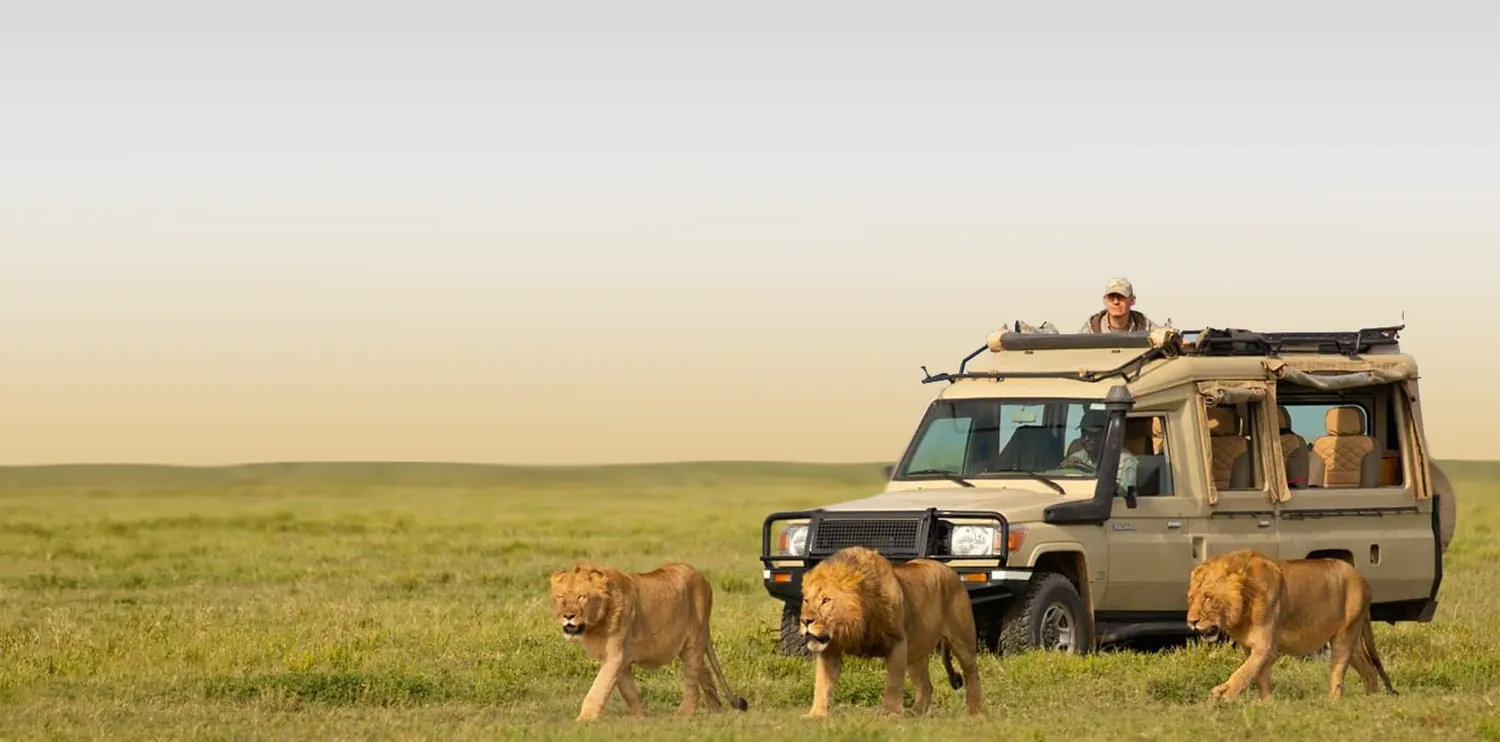
Quick Answer: What Is the Best Value for Money 6 Day Tanzania Safari?
For most first-time visitors, the best value is a six-day Northern Circuit safari that protects two meaningful Serengeti game-drive periods, includes Ngorongoro Crater, avoids unnecessary backtracking, and uses either a good mid-range lodge/tented camp or a well-run group format. If you are solo or a couple and can accept a fixed schedule, current Jaynevy group references of about USD 900–1,300 pp for budget and USD 1,400–1,900 pp for mid-range can deliver strong wildlife value. For 4–6 travellers, a private mid-range route published from USD 1,850 pp can be especially compelling because fixed vehicle and guide costs are spread across more people.
- Best for solo travellers: group joining, provided route and accommodation are clearly confirmed.
- Best for couples: group mid-range for price efficiency; private mid-range when flexibility and photography matter.
- Best for 4–6 travellers: private mid-range is often the value sweet spot because vehicle costs are shared within your own party.
- Best comfort upgrade: pay for location and sleep quality before decorative luxury.
- Best route principle: fewer rushed transfers and more useful wildlife hours usually create better value than adding another park name.
2026/2027 Price Benchmarks: What Does “Good Value” Actually Cost?
Good value is not the lowest number on a quotation; it is the lowest sensible total for the experience you actually want. A quote should be judged against its route, vehicle arrangement, accommodation location, number of game-drive hours, statutory fees, meals and exclusions. Current Jaynevy pages provide several useful planning anchors.
| 6-day format | Current published/planning reference | Where the value comes from | Main trade-off |
|---|---|---|---|
| Budget group joining | USD 900–1,300 pp | Vehicle, guide and logistics shared across unrelated travellers | Fixed schedule, less privacy and simpler accommodation |
| Mid-range group joining | USD 1,400–1,900 pp | Shared operating costs plus more comfortable lodges/tented camps | Limited control over timing and stops |
| Private mid-range, 4–6 travellers | USD 1,850 pp on one four-park Arusha example | Your own vehicle while fixed costs are divided across a larger party | Higher total booking value than a basic shared safari |
| Private mid-range, 2–3 travellers | USD 2,150 pp on the same example | Privacy, schedule control and photography flexibility | Fewer people share the vehicle cost |
| Private luxury, 4–6 travellers | USD 2,150 pp on the same example | Upgraded accommodation while retaining private guiding | You pay more for comfort rather than more wildlife guarantees |
| Private luxury, 2–3 travellers | USD 2,450 pp on the same example | Premium comfort and private operating format | Highest per-person fixed-cost exposure in this comparison |
How to read the table: the group ranges come from Jaynevy’s current Tanzania group joining safari guide. The same-route private figures come from the current 6-day Tarangire, Manyara, Serengeti & Ngorongoro safari from Arusha. These are planning references, not a promise that every date or lodge will sell at the same rate.
Where Is the Real Value Sweet Spot?
For many travellers, the value sweet spot is mid-range rather than the absolute cheapest budget camp or the highest luxury tier. Mid-range can preserve the expensive parts that matter—park access, a proper safari vehicle, professional guiding and enough time in Serengeti—while spending enough on sleep, meals and location to keep six consecutive safari days comfortable.
That 16.2% figure is useful because it is an apples-to-apples route comparison, not a claim that all luxury safaris cost 16% more. For 2–3 travellers on the same page, the move from USD 2,150 mid-range to USD 2,450 luxury is about 14.0%. Whether the upgrade is good value depends on the actual camps offered, their location, room standard and what else changes.
Why Six Days Can Be Better Value Than a Very Short Safari
Six days gives fixed safari costs more opportunity to produce real wildlife time. A 4x4, guide, long transfer into Serengeti and park-entry logistics are expensive whether you stay briefly or use the route well. On a very short itinerary, a high share of the trip can disappear into driving between gateways. With six days, you can normally spend meaningful time in Serengeti and Ngorongoro while still including Tarangire or Lake Manyara without compressing every stop into a checklist.
This does not mean “more parks = more value.” A poorly designed six-day itinerary that races through five or six destinations can be worse value than a three-area route with two strong Serengeti periods. The objective is usable wildlife time per dollar, not destination count.
Best-Value Route for First-Time Visitors
A Tarangire–Serengeti–Ngorongoro core route is usually the strongest six-day value for a first northern Tanzania safari. It combines three different ecosystems and keeps the Serengeti—the area that usually requires the biggest time investment—at the centre of the trip. Lake Manyara can be added when birding, groundwater forest or a four-park itinerary matters, but it should not steal the Serengeti time you travelled so far to get.
| Route choice | Value strength | Who it suits | Watch-out |
|---|---|---|---|
| Tarangire + Serengeti + Ngorongoro | Excellent balance of wildlife diversity and route efficiency | First-time visitors, couples, photographers | Long road sectors still need sensible timing |
| Manyara + Serengeti + Ngorongoro | Strong scenery and classic highlights | Birders, travellers who value ecosystem variety | May offer less elephant/baobab emphasis than Tarangire |
| Tarangire + Manyara + Serengeti + Ngorongoro | High destination variety | Travellers who want four named parks | Can become rushed if Serengeti time is cut too far |
| Serengeti + Ngorongoro focus | Excellent depth per wildlife day | Predator lovers, migration-focused travellers, repeat visitors | Less landscape variety outside the core |
See the broader Tanzania safari packages and 6-day private Tanzania safari pages if you want to compare route structures before choosing accommodation.
What Should You Spend More Money On?
Spend more where it protects wildlife time, guiding quality, sleep and route efficiency. Those areas affect nearly every hour of the trip. The best-value upgrades are not necessarily the most photogenic ones.
- A dependable safari vehicle and good guide. Six days means long hours in the vehicle. Mechanical reliability, safe driving, wildlife knowledge and communication matter more than decorative extras.
- Accommodation location. A modest camp in a useful location can be better value than a grand property that adds long daily access drives.
- Enough Serengeti time. Do not save USD 100–200 by deleting the very game-drive period that made the route worthwhile.
- Private vehicle when the party is large enough. For 4–6 travellers, dividing vehicle costs can make privacy economically attractive.
- Clear inclusions. A slightly higher quote that includes park/conservation fees, meals, water and transfers can beat a cheap headline price loaded with extras.
What Can You Save On Without Damaging the Safari?
You can often save on room luxury, optional activities and travel timing before cutting core wildlife operations. The key is to preserve a safe vehicle, qualified guiding, legal park access and adequate food/accommodation.
- Choose a clean mid-range tented camp instead of an ultra-luxury suite if you will spend most daylight hours on game drives.
- Share a vehicle if you are solo or a couple and do not need complete control of photography stops.
- Travel in a shoulder or green-season window when lower demand improves accommodation value.
- Start from the city that fits your wider trip. If you are already in Moshi after Kilimanjaro, compare a safari from Moshi rather than paying for unnecessary relocation.
- Skip optional balloon flights, premium drinks and special private dining unless they are genuinely important to you.
- Pack properly before arrival using the Tanzania safari packing list so you do not buy avoidable gear at tourist prices.
Group Joining vs Private: Which Gives Better Value?
Group joining usually wins on pure price for one or two people; private often becomes more compelling as your own party grows. Safari vehicles and guides are partly fixed daily costs. In a group departure, those costs are divided across separate bookings. In a private safari, your party pays for the vehicle—but when four, five or six people share it, the per-person burden falls.
| Factor | Group joining | Private safari | Better value when... |
|---|---|---|---|
| Vehicle cost | Shared across unrelated travellers | Shared only within your party | Group for solo/couple; private becomes stronger as your party grows |
| Departure times | Structured around the group | More control within park rules | Private if early starts or photography are priorities |
| Sighting stops | Must balance everyone’s interests | Your party decides when practical | Private for photographers and families |
| Social element | Built-in | Your own party only | Group if meeting other travellers is a benefit |
| Headline price | Usually lower for 1–2 travellers | Usually higher for small parties | Depends on occupancy and same-route quote |
For a deeper decision, compare private vs group safari in Tanzania rather than assuming one format is always superior.
Is Camping the Best Value?
Camping can deliver the lowest accommodation cost and a strong wilderness experience, but it is only good value if the comfort level matches the traveller. A six-day camping safari may feel rewarding for adventurous guests who enjoy simple facilities and evenings close to nature. It can feel poor value for travellers who lose sleep, need private bathrooms or arrive exhausted from a long international journey.
Jaynevy’s Tanzania camping safari guide distinguishes practical camping from more expensive mobile/luxury camping. Do not compare “camping” quotes until you know whether the price means public campsites, upgraded permanent tents, ensuite facilities or full luxury mobile service.
Is Luxury Ever the Best Value for Money?
Yes—when the extra spend solves a real problem or materially improves the trip for that traveller. Luxury can be good value for honeymooners, travellers who need excellent sleep, guests with limited tolerance for long rough-road days, or people who deliberately want premium camps as part of the experience rather than treating accommodation as a place to shower and sleep.
However, luxury does not buy guaranteed Big Five sightings, a guaranteed river crossing, perfect weather or control over wild animals. A USD 1,000-per-night room does not make a leopard appear. Review 6-day luxury Tanzania safari packages by route, location and transport—not by the word “luxury” alone.
How Much Does Group Size Change Value?
Group size can change a private safari’s per-person price dramatically because the vehicle and guide are shared fixed resources. On Jaynevy’s current four-park Arusha example, private mid-range is USD 2,150 pp for 2–3 travellers and USD 1,850 pp for 4–6 travellers—a USD 300 pp difference. Luxury shows the same USD 300 pp difference: USD 2,450 vs USD 2,150.
That is why a family or group of friends should ask for the exact 4-, 5- or 6-person quote instead of multiplying a two-person price. Room configuration can also affect the final number, especially when single rooms or family rooms are required.
Seasonality: When Is the Best Value Time to Travel?
Shoulder and green-season periods can improve value when your goal is wildlife plus lower demand rather than a specific peak-season event. Jaynevy’s current best time for Tanzania safari guide identifies June–October as the strongest overall dry-season window, January–February as a key southern Serengeti calving period, April–May as a lower-demand green period with more rain, and November/early December as useful shoulder-season choices.
| Travel window | Value profile | Strength | Trade-off |
|---|---|---|---|
| June–October | High demand / usually higher rates | Dry conditions, strong general wildlife visibility | Busy popular areas and less rate flexibility |
| January–February | High value for calving-focused travel | Southern Serengeti/Ndutu seasonal interest | Best route depends on actual wildlife positioning |
| April–May | Potentially strong price-to-comfort value | Green landscapes, fewer vehicles, lower demand | Rain, some difficult roads and some seasonal camp closures |
| November–early December | Strong shoulder-season compromise | Fresh landscapes, birding, better availability | Short rains are possible |
A cheaper month is not automatically better value if weather disrupts the route you care about. Choose the season around your wildlife priority first, then look for the best accommodation and vehicle value within that window.
How Much Wildlife Value Does Serengeti Add?
Serengeti is expensive to reach and operate in, but it is usually the reason a northern Tanzania itinerary deserves six days instead of three or four. UNESCO lists the Serengeti World Heritage property at 1,476,300 hectares (about 1.5 million hectares) and describes the annual movement of roughly two million wildebeest plus hundreds of thousands of gazelles and zebras. The scale is one reason one rushed afternoon rarely captures the park’s value.
UNESCO also describes a roughly 1,000 km annual circular migration across the broader Kenya–Tanzania ecosystem. That does not mean every visitor sees migration action; herds move with ecological conditions. It does explain why route timing and camp location can matter more than adding superficial luxury.
Does Lake Manyara Add Enough Value?
Lake Manyara can add excellent ecological variety when the route is already efficient, but it should be chosen for a reason rather than because four parks sounds better than three. TANAPA states that Lake Manyara National Park covers 648.7 km² and combines groundwater forest, Rift Valley scenery, a soda lake and varied birdlife. It is compact compared with Serengeti, which can make it practical on a transition day.
If your only priority is large predators and maximum Serengeti time, you may prefer to use that day elsewhere. If you value birding, forest habitat and landscape contrast, Manyara can be worthwhile.
A Best-Value 6-Day Itinerary Example
The following route protects Serengeti time while keeping a classic Northern Circuit flow. It is a planning example; accommodation and exact gate timings should be adapted to your arrival point and season.
Day 1: Arusha or Moshi to Tarangire
Start early enough for a substantial game drive rather than arriving late for a token loop. Tarangire’s baobab country and elephant habitat provide a distinctly different first day. Overnight near Tarangire or Karatu depending on the next day’s route.
Day 2: Tarangire/Karatu to Serengeti
Move through the Ngorongoro highlands toward Serengeti. Protect an afternoon game-drive period if gate and transfer timing allow. Avoid an itinerary that turns the whole day into transfers plus paperwork.
Day 3: Full Serengeti Game Drive
This is the value anchor of the itinerary: an unhurried wildlife day with the flexibility to respond to predator sightings, herd movements and local guide information.
Day 4: Serengeti Morning, Then Toward Ngorongoro
Use the morning rather than checking out and racing away. Later, move toward the crater rim or Karatu depending on accommodation pricing, gate logic and next-day timing.
Day 5: Ngorongoro Crater
Descend for the scheduled crater game drive and use your guide’s timing to avoid wasting the best hours. Overnight in Karatu or another logical base rather than adding a long unnecessary return drive.
Day 6: Lake Manyara or Flexible Final Wildlife Day, Then Return
Use Lake Manyara for ecosystem variety if it suits your interests, or adapt the final day around Tarangire/Ngorongoro-area priorities. Return to Arusha or Moshi according to the confirmed itinerary and onward travel plan.
What Should a Best-Value Quote Include?
A value quote should make the expensive operational items visible before you pay a deposit. “All inclusive” is not useful unless the inclusions are itemised.
- Safari vehicle type and whether it is private or shared.
- Professional driver-guide and guiding language.
- Five nights of named or clearly categorized accommodation.
- Meal plan for every safari day.
- Park, conservation and crater-related charges included in the confirmed quotation.
- Drinking water policy.
- Pickup city, final drop-off and any airport-transfer assumptions.
- Taxes/levies included in the operator quote.
- Optional activities clearly separated from compulsory costs.
- Single supplement, child pricing and room configuration where relevant.
For a deeper cost audit, use the Tanzania safari cost guide and compare it with the final written quotation.
Which Exclusions Should You Budget Separately?
International flights, visa costs, travel insurance, tips, alcoholic drinks, laundry, souvenirs and optional activities are commonly separate. This does not make them “hidden costs” if they are disclosed before booking. What matters is whether your quote identifies them clearly enough to calculate the trip’s real total.
Do not compare Operator A at USD 1,700 with Operator B at USD 1,850 until you know whether both include the same park access, crater plan, number of safari nights, vehicle arrangement, water, taxes and transfers. The lower price can be excellent—or it can simply exclude more.
Best Value for Couples
Couples should compare two versions of the same route: group mid-range and private mid-range. The group can save money if you are comfortable sharing. The private option can justify the premium when photography, early starts, quiet travel or flexible meal/comfort stops matter. For a honeymoon, accommodation itself may be part of the experience, so a luxury upgrade can create real personal value even if wildlife access is similar.
Best Value for Families
Families often get more value from private mid-range than from the cheapest group seat. A private vehicle makes bathroom stops, meal timing and tired-child days easier to manage. As the family size grows, the fixed vehicle cost is also divided among more people. Ask for child rates, family-room availability and age rules rather than assuming every child pays a flat percentage of the adult price.
Best Value for Solo Travellers
Solo travellers usually benefit most from scheduled group departures because they avoid carrying the full cost of a private 4x4. Check the single-room supplement and luggage rules before comparing offers. A low group price can lose its advantage if a large single supplement is added later.
Best Value for Wildlife Photographers
Photographers should value vehicle control more highly than room luxury. Being able to position the vehicle, stay longer at a sighting and leave before other guests are ready can be worth more than an upgraded room. If the budget is fixed, a private mid-range safari can therefore outperform a shared luxury safari for photography.
Road Safari or Fly-In: Which Is Better Value?
A road safari is usually the better financial value, while a fly-in can be better time value. Domestic flights can remove long road transfers and protect game-drive hours, but they add airfare, baggage constraints and transfer coordination. Travellers already in Zanzibar or with very limited days may value saved time more than the higher cash cost. Travellers starting in Arusha or Moshi with six full safari days can often extract excellent value from a well-designed road route.
How to Compare Two Safari Quotes Properly
Normalize the quotes before deciding which one is cheaper. Create one table and force every operator into the same comparison fields.
| Comparison field | Quote A | Quote B | Why it changes value |
|---|---|---|---|
| Same travel dates? | Confirm | Confirm | Seasonal lodge rates vary |
| Same route/park nights? | Confirm | Confirm | Serengeti time is a major cost and value driver |
| Private or shared vehicle? | Confirm | Confirm | Changes both price and control |
| Exact camps/lodges? | List | List | Location and standard can differ dramatically |
| Park/conservation charges? | Included? | Included? | Mandatory statutory costs can be substantial |
| Crater plan? | Confirm | Confirm | Do not assume Ngorongoro transit equals crater descent |
| Meals/water? | Confirm | Confirm | Daily out-of-pocket costs add up |
| Transfers? | Confirm | Confirm | Start/end cities matter |
| Single/child supplements? | Confirm | Confirm | Can materially change the total |
Red Flags That Make a Cheap Safari Poor Value
Walk away from a price that cannot be explained. A legitimate budget safari can be excellent, but the operator should still be able to state what you receive.
- No named route or vague wording such as “Serengeti visit” without nights or game-drive detail.
- No explanation of whether the vehicle is private or shared.
- Accommodation listed only as “lodge” with no standard, location or example.
- Park fees described as “extra” without an estimate or confirmation process.
- Unrealistically packed itinerary with long transfers and several full game drives claimed on the same day.
- Optional activities presented as if they are included wildlife guarantees.
- No written cancellation/payment terms.
How Much Should a First-Time Visitor Budget?
Jaynevy’s current broader cost guide suggests roughly USD 2,500–4,000 per person for a 6–7 day mid-range Northern Circuit safari as a practical first-time planning target, excluding international flights. That broad target sits above some published group and large-private-party examples because it allows room for date, lodge and route differences. Travellers comfortable with shared departures can spend less; couples choosing private transport and well-located Serengeti camps can spend more.
The right number is therefore a range with assumptions, not a universal price. Ask for two or three versions using the same dates and route: budget/shared, private mid-range, and upgraded/luxury. That reveals what each additional dollar changes.
Our Value-for-Money Scoring Framework
Use this as a planning framework, not a scientific index. When we compare safari quotes, we give the highest attention to elements that affect the actual wildlife day.
| Value factor | Suggested planning weight | What to inspect |
|---|---|---|
| Wildlife time & route efficiency | 30% | Useful game-drive hours, transfer logic, Serengeti depth |
| Guide & vehicle quality | 25% | Professional guiding, safe/reliable 4x4, vehicle occupancy |
| Accommodation location & sleep | 20% | Drive time to wildlife, room comfort, meal reliability |
| Price transparency | 15% | Fees, transfers, supplements, optional extras |
| Personal fit | 10% | Privacy, photography, children, mobility, celebration needs |
Important: these percentages are Jaynevy’s editorial planning framework for comparing quotes; they are not tourism-industry statistics. They are included to make the decision process transparent.
Frequently Asked Questions
What is the best value 6 day Tanzania safari for a couple?
A group mid-range safari is usually the first price-efficient option to compare, then compare a private mid-range version of the same route. Choose private if flexibility, quiet travel or photography is worth the premium.
Is USD 1,500 enough for six days?
It can be enough for some published group-joining formats, but not for every date, route or accommodation standard. Current Jaynevy group mid-range planning references run about USD 1,400–1,900 pp, while budget group formats are listed around USD 900–1,300 pp.
Is a private safari worth paying more for?
Yes when vehicle control matters or when four to six people share the cost. Private travel offers more control over starts, stops and pacing. For solo travellers, the same vehicle cost can make private travel much less economical.
Should I choose budget camping or mid-range lodging?
Choose camping if the simple wilderness style is part of what you want; choose mid-range if better sleep and private facilities will help you enjoy six consecutive safari days. Do not treat discomfort as a saving if it reduces your energy for game drives.
Which three parks give the best value in six days?
Tarangire, Serengeti and Ngorongoro form a strong first-time trio. They combine elephant/baobab country, vast Serengeti ecosystems and the concentrated crater experience without forcing too many destinations into six days.
Does luxury mean I will see more animals?
No. Luxury can improve accommodation, location, service and privacy, but wildlife remains wild. Guide quality, route timing and time in the field are often more important to sightings than the price of the room.
Is the Great Migration guaranteed on a six-day safari?
No. The migration is a natural, moving system. Route planning can target the most relevant Serengeti sector for the season, but no ethical operator should guarantee a river crossing or a specific herd position.
What is the single best way to save money?
For one or two travellers, sharing the safari vehicle is usually the strongest saving lever. For larger parties, compare a private quote because your own group may already be large enough to spread fixed costs efficiently.
How far in advance should I book?
Book earlier when your dates fall in peak wildlife windows or when you want specific well-located camps. Flexible travellers can sometimes find better value in shoulder or green seasons, but the final decision should be based on actual availability rather than a generic rule.
Research Notes and Sources
Price examples in this guide are Jaynevy’s own currently published planning/product references checked on 18 August 2026; protected-area statistics are drawn from official conservation sources. Prices can change with dates, supplier availability, room type, park charges and group composition, so the written quotation remains the final commercial reference.
- Jaynevy Tours — Group Joining Safari Price Guide 2026/2027
- Jaynevy Tours — 6-Day Four-Park Safari from Arusha
- Jaynevy Tours — Tanzania Safari Cost Guide 2026/2027
- Jaynevy Tours — Best Time for Tanzania Safari
- UNESCO World Heritage Centre — Serengeti National Park
- Tanzania National Parks — Lake Manyara National Park
Get a Best-Value 6-Day Safari Quote
Send your travel dates, number of adults and children, start city, room preference and approximate budget. We can prepare comparable six-day options using the same route so you can see whether group joining, private mid-range or an upgraded lodge plan gives you the strongest value. You can also compare our group joining safaris, 6-day private safari, 6-day luxury safari packages and Tanzania safaris from Arusha.