
By Sharifa Lema, Manager and Chief of Staff, Jaynevy Tours, Moshi · Updated October 2026
What You Need to Know: For most first-time climbers, the best Kilimanjaro route is the 7-day Machame or the 8-day Lemosho: both give you a climb-high, sleep-low day at Lava Tower and enough nights to acclimatize. Choose Marangu if you want huts instead of tents, Rongai for the drier, quieter north side, Umbwe only if you are experienced at altitude, and the 9-day Northern Circuit if you want the most time and the fewest people. Whatever the route, the number of days matters more than the route name.
Four Questions That Decide Your Kilimanjaro Route
Every route ends on the same summit, Uhuru Peak at 19,341 ft (5,895 m). What changes is how quickly you gain height, where you sleep, how many people you share the trail with, and what you see on the way. Answer these four questions in order and the choice usually makes itself.
- How many days can you give the mountain? This matters most, because time is what lets your body adjust to altitude. If you can manage seven or eight days, every good option is open to you. With five or six, your choice narrows to routes that suit climbers with altitude experience.
- Have you been above 13,100 ft (4,000 m) before, and how did you feel? First-timers should pick a route with a gradual profile and an acclimatization day. Climbers who have handled altitude well can consider steeper or shorter options.
- Tent or hut? Marangu is the only route with huts. Every other route is camping.
- What do you care about after that: scenery, quiet trails or dry weather? Machame and Lemosho have the most varied scenery. Rongai and the Northern Circuit are quietest. Rongai is driest in the rainy months.
Kilimanjaro's Six Routes Side by Side
Marangu is the hut route. Machame and Lemosho are the scenic camping routes on the southwest. Rongai is the quiet northern route, Umbwe the steep direct one, and the Northern Circuit the longest. The table compares them on the things that affect your climb.
| Route | Days we offer | Sleep in | Acclimatization | Crowds | From |
|---|---|---|---|---|---|
| Marangu | 5–6 | Huts | Fair; good on 6 days | Moderate | US$1,600 (5 days) |
| Machame | 6–7 | Tents | Good: Lava Tower day | Busiest | US$1,845 (6 days) |
| Lemosho | 7–8 | Tents | Very good | Quiet start, busier from Lava Tower | US$2,090 (7 days) |
| Rongai | 6–7 | Tents | Good; Mawenzi Tarn on 7 days | Quiet | US$1,845 (6 days) |
| Umbwe | 6–7 | Tents | Limited in the first two days | Very quiet until Barranco | US$1,845 (6 days) |
| Northern Circuit | 9 | Tents | Best | Very quiet on the north side | US$2,580 (9 days) |
Prices are per person for 2 climbers with mid-range hotels, and include park fees, a crew of seven per climber, meals, safety equipment, transfers and a hotel night in Moshi before and after the climb.
How Many Days Should You Spend on Kilimanjaro?
Seven days or more if you can. Every extra night on the mountain improves your body's chance to adjust, and altitude, not fitness or terrain, is what stops most climbers short of the summit.
The figures most often quoted come from Kilimanjaro National Park records from the early 2000s, across all routes. They are old, and today's rates are higher because operators manage acclimatization better, but the pattern still holds:
| Days on the mountain | Climbers who reached the summit | Our view |
|---|---|---|
| 5 days | 27% | Only with recent experience above 14,800 ft (4,500 m) |
| 6 days | 44% | Fit climbers who have handled altitude before |
| 7 days | 64% | The minimum we recommend for first-timers |
| 8 days | 85% | The best balance of time and success |
| 9 days | Not recorded separately | The most time; for anyone who wants every advantage |
Source: Kilimanjaro National Park (KINAPA) statistics, early 2000s, as widely published. A 2009 study in Wilderness & Environmental Medicine followed 181 climbers on fast 4- and 5-day Marangu climbs: 77% developed acute mountain sickness and 61% reached the summit. Short climbs aren't impossible, but they leave little room if your body is slow to adjust.
Put another way: the extra day costs about US$245 per person on our climbs. A failed summit attempt costs the whole trip. Read more in our guide to acclimatization on Kilimanjaro.
Each Kilimanjaro Route in Brief: Who It Suits and Its Trade-offs
Marangu: the hut route
Marangu is the oldest route and the only one where you sleep in huts: shared bunk rooms at Mandara (8,924 ft / 2,720 m), Horombo (12,205 ft / 3,720 m) and Kibo (15,430 ft / 4,703 m). That is a real comfort in rain or cold. You go up and down the same trail, and you reach the crater rim at Gilman's Point. The 5-day version climbs fast; the 6-day Marangu adds an acclimatization day at Horombo and is the one we recommend.
Choose it if you would rather not camp. Trade-off: less varied scenery and no climb-high, sleep-low day.
Machame: the scenic, popular route
Machame climbs the southwest side through rainforest and moorland to the Shira Plateau, then crosses to Lava Tower and down into the Barranco Valley before the Barranco Wall scramble. The Lava Tower day is a built-in acclimatization day. The 7-day Machame adds a night at Karanga before the summit base camp; the 6-day version doesn't.
Choose it if you want variety and a good acclimatization profile in seven days. Trade-off: it is the busiest route, especially from July to September.
Lemosho: the quiet western start
Lemosho starts in the remote western forest and crosses the whole Shira Plateau before joining the Machame trail at Lava Tower. The first days are quiet, the scenery is the most varied on the mountain, and the ascent is gradual. Our 8-day Lemosho adds a night near Moir Hut and is the most gradual ascent we offer; the 7-day version has a long second day of about 10 miles (16 km).
Choose it if you want the best chance and quiet trails, and have eight days. Trade-off: a longer drive to the start and a higher price.
Rongai: the dry northern route
Rongai starts near the Kenyan border on the north side, which lies in the mountain's rain shadow and gets less rain than the south. The climb is steady, with no scramble like the Barranco Wall, and the trail is quiet. You come down the Marangu side. The 7-day Rongai adds a night at Mawenzi Tarn below the jagged Mawenzi peak.
Choose it if you climb in the shoulder or rainy months, or want a quiet, steady route. Trade-off: less varied scenery in the first days, and a longer drive.
Umbwe: the steep, direct route
Umbwe climbs a narrow forest ridge straight up the south side and gains a lot of height in the first two days, reaching Barranco Camp on Day 2. Above Barranco it is the same as Machame. It is very quiet until it joins the main trail.
Choose it only if you are fit, comfortable on steep ground and have acclimatized well before. Trade-off: the least time to adjust of any route. If you choose Umbwe, take 7 days.
Northern Circuit: the longest route
The Northern Circuit starts like Lemosho, then circles the quiet north side of Kibo, with views over the Kenyan plains, before the summit from School Hut. Over nine days the height gain is spread out more than on any other route.
Choose it if you want the most time to acclimatize and the fewest people. Trade-off: the highest cost and the longest time away. See the 9-day Northern Circuit.
Acclimatization Profile: Which Routes Climb High and Sleep Low?
Climbing to a higher point during the day and sleeping lower helps your body adjust to altitude. Routes that include this pattern give you an advantage over routes that only go up.
| Route | Climb high, sleep low? | Summit base camp | Reach the crater rim at |
|---|---|---|---|
| Marangu | On the 6-day version (acclimatization walk from Horombo) | Kibo Hut (15,430 ft / 4,703 m) | Gilman's Point |
| Machame | Yes: Lava Tower (about 15,100 ft / 4,600 m), sleep at Barranco (about 13,000 ft / 3,960 m) | Barafu (15,354 ft / 4,680 m) | Stella Point |
| Lemosho | Yes: Lava Tower | Barafu (15,354 ft / 4,680 m) | Stella Point |
| Rongai | Partly: Mawenzi Tarn on 7 days | Kibo Hut (15,400 ft / 4,700 m) | Gilman's Point |
| Umbwe | Yes on 7 days, but after two steep days | Barafu (15,354 ft / 4,680 m) | Stella Point |
| Northern Circuit | Yes: Lava Tower, then the north side | School Hut (about 15,600 ft / 4,750 m) | Gilman's Point |
Season, Weather and Crowds by Route
The best months for every route are late May to October and January to March. In the rainy months, April to early May and November, the southern routes (Machame, Lemosho, Umbwe and Marangu) are wettest, and the northern Rongai is the better choice if you must climb then.
Crowds follow the seasons. July to September is the busiest time on Machame, and the late-December holidays are busy everywhere. If quiet trails matter, choose Lemosho, Rongai or the Northern Circuit, or climb in January to March. See the best time to climb Kilimanjaro.
Why Some Kilimanjaro Routes Cost More
Route prices differ mainly because of days on the mountain, not the route itself. Kilimanjaro National Park charges a conservation fee of US$70 per climber per day, a camping fee of US$50 per night (US$60 per night in the Marangu huts), a US$20 rescue fee per climb, and 18% VAT on top (2026 published rates). The mountain crew is paid by the day as well.
So each extra day adds roughly US$140 in park fees and VAT alone, plus a day's wages and food for the crew. The routes that start in the west or north (Lemosho, Northern Circuit, Rongai) also need a longer drive to the gate. The full breakdown is in our guide to how much it costs to climb Kilimanjaro.
Which Kilimanjaro Climb Do We Recommend for You?
These are the climbs we suggest most often. Tell us about your experience and dates, and we will advise you individually.
| You are… | We recommend |
|---|---|
| A first-timer with 7 days | 7-day Machame |
| A first-timer with 8 days or more | 8-day Lemosho |
| Someone who would rather not camp | 6-day Marangu |
| Climbing in April, May or November | 7-day Rongai |
| An experienced high-altitude trekker, short of time | 6-day Machame or 7-day Umbwe |
| Someone who wants every advantage and quiet trails | 9-day Northern Circuit |
6-Day Marangu Route
Hut route with an acclimatization day at Horombo
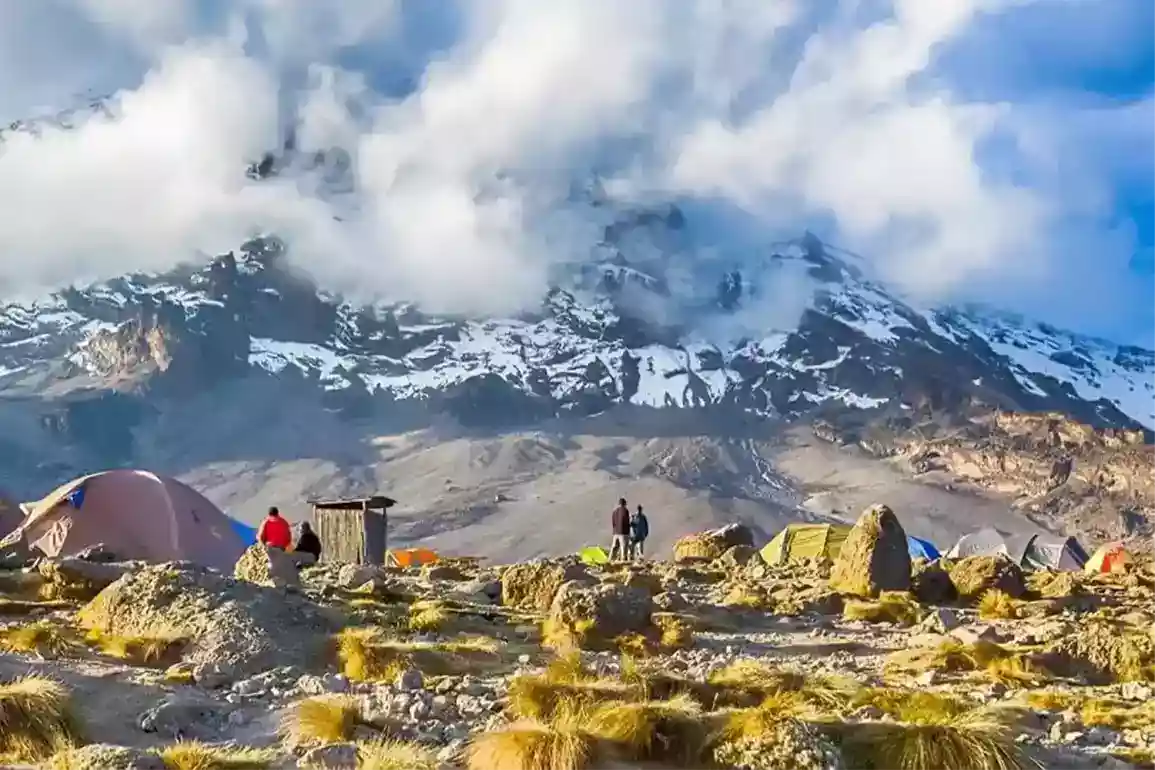
7-Day Machame Route
Machame with an extra night at Karanga; our usual first-timer recommendation
8-Day Lemosho Route
Most gradual ascent we offer, with a night near Moir Hut
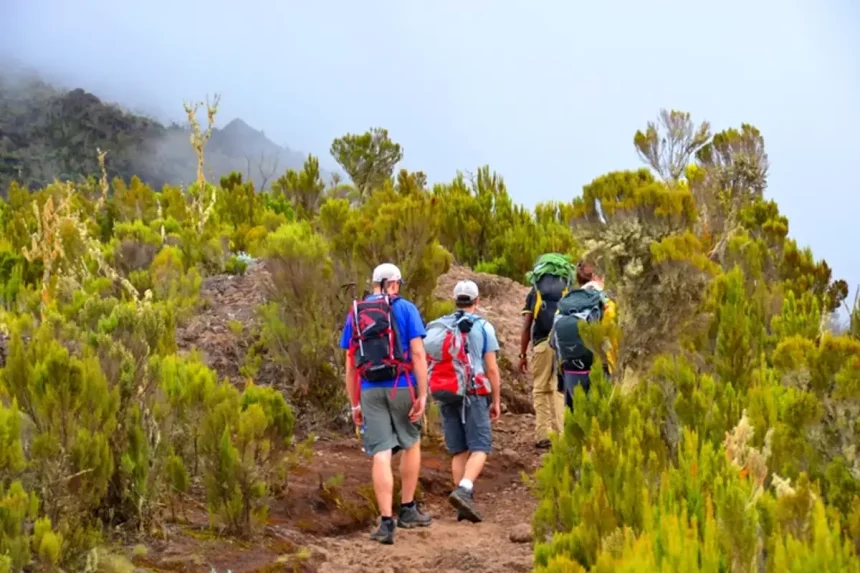
Rongai Route, 6 or 7 days
Northern approach from the Kenyan side; drier and quieter
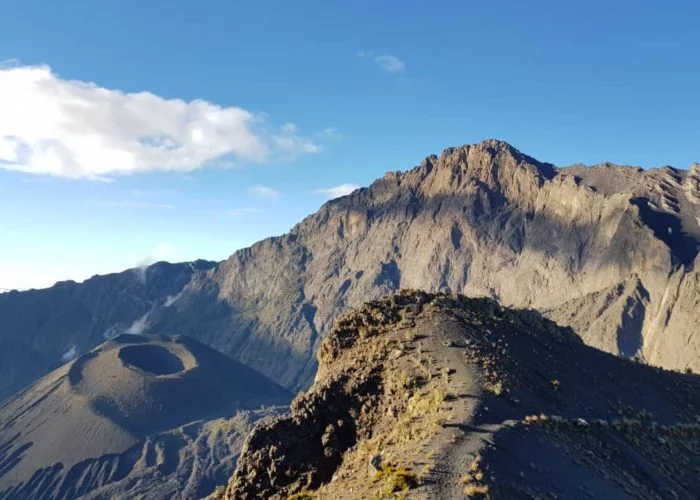
Umbwe Route, 6 or 7 days
Steep, direct southern route for strong, experienced hikers
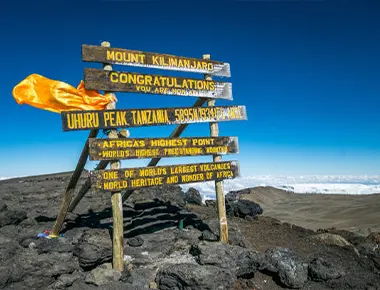
9-Day Northern Circuit
Longest route, circling the north side of Kibo
Prices are per person, 2 climbers, mid-range hotels.
Common Mistakes When Choosing a Kilimanjaro Route
- Choosing the shortest climb to save money. One day less saves about US$245, but it is the day most likely to make the difference on summit night.
- Thinking fitness protects you from altitude. Very fit people get altitude sickness too. Fitness makes the walking easier; time is what helps with altitude.
- Picking Marangu because it sounds easiest. The terrain is gentle, but the 5-day version climbs fast. If you want huts, take 6 days.
- Choosing Umbwe for the quiet trail as a first-timer. The quiet comes with the steepest height gain on the mountain.
- Comparing operators on price alone. Park fees are the same for everyone. Ask how many crew come per climber, what safety equipment they carry, and whether they are KPAP members.
What Stays the Same Whatever Route You Choose
On every route we run, each climber has a crew of seven: a mountain guide, a cook and five porters. The porters carry the tents, a mess tent, a private portable toilet tent, food and water, with no more than 18 kg (40 lb) each. Our guides are certified through Tanzanian universities, have three years of guiding experience, and check your blood-oxygen and pulse with a pulse oximeter at every camp. Every climb carries emergency oxygen, a first-aid kit and a stretcher. Every climb includes a hotel night in Moshi before and after, and airport and park-gate transfers. We have been a KPAP partner since 2023 (the Kilimanjaro Porters Assistance Project) and are members of TATO, the Tanzania Association of Tour Operators. For serious cases we arrange helicopter evacuation through companies such as Pro Flight.
Common Questions About Choosing a Kilimanjaro Route
What is the easiest Kilimanjaro route?
For acclimatization, the longer routes: the 8-day Lemosho and the 9-day Northern Circuit. For terrain, Marangu and Rongai, which have no scramble like the Barranco Wall. For most people, "easiest" should mean the route with the most time to adjust.
Which Kilimanjaro route has the highest success rate?
The longest itineraries: the 8-day Lemosho and the 9-day Northern Circuit. Success depends on days on the mountain and pace more than on the route name.
What is the most scenic route?
Lemosho and Machame, which cross the Shira Plateau and pass Lava Tower, the Barranco Valley and the Barranco Wall. The Northern Circuit adds the remote north side.
Which route is least crowded?
The Northern Circuit, Rongai and Umbwe. Lemosho is quiet for its first days and then joins the Machame trail at Lava Tower.
Which route is best in the rainy season?
Rongai, because the north side gets less rain. Marangu's huts also help in wet weather.
Machame or Lemosho?
Both are excellent. Lemosho has a quieter start and, on 8 days, a more gradual ascent. The 7-day Machame costs less and suits a shorter trip.
Is Marangu really the "Coca-Cola route"?
It has that nickname because huts once sold soft drinks. It is not an easy option: the 5-day version climbs fast, which is why we recommend 6 days.
Do I need climbing experience for any route?
No. All six routes are trekking routes. Umbwe and the Barranco Wall on Machame and Lemosho need some scrambling with your hands, but no ropes or technical skills.
The Bottom Line
Choose the number of days first, then the route. For most first-time climbers that means the 7-day Machame or, if you can give it an extra day, the 8-day Lemosho. Choose Marangu for huts, Rongai for the rainy months, and Umbwe only with real altitude experience.
Tell us your dates, how many climbers, your hiking and altitude experience, and your hotel level (budget, mid-range or luxury) through the booking form, on WhatsApp +255 678 992 599 or by email to jaynevytours@gmail.com, and our team in Moshi will suggest a route and send a written quotation.