
What You Need to Know: Climbing Kilimanjaro with us costs US$1,600 to US$2,580 per person (2 climbers, mid-range hotels), depending mostly on the number of days. That includes about US$720–1,240 of national park fees, a crew of seven per climber, meals, safety kit, transfers and two hotel nights in Moshi. On top, budget about US$385–665 in tips for a 7-day climb, a US$100 visa for US citizens, travel insurance and flights. A 7-day climb from the US usually comes to US$3,700–5,300 per person door to door.
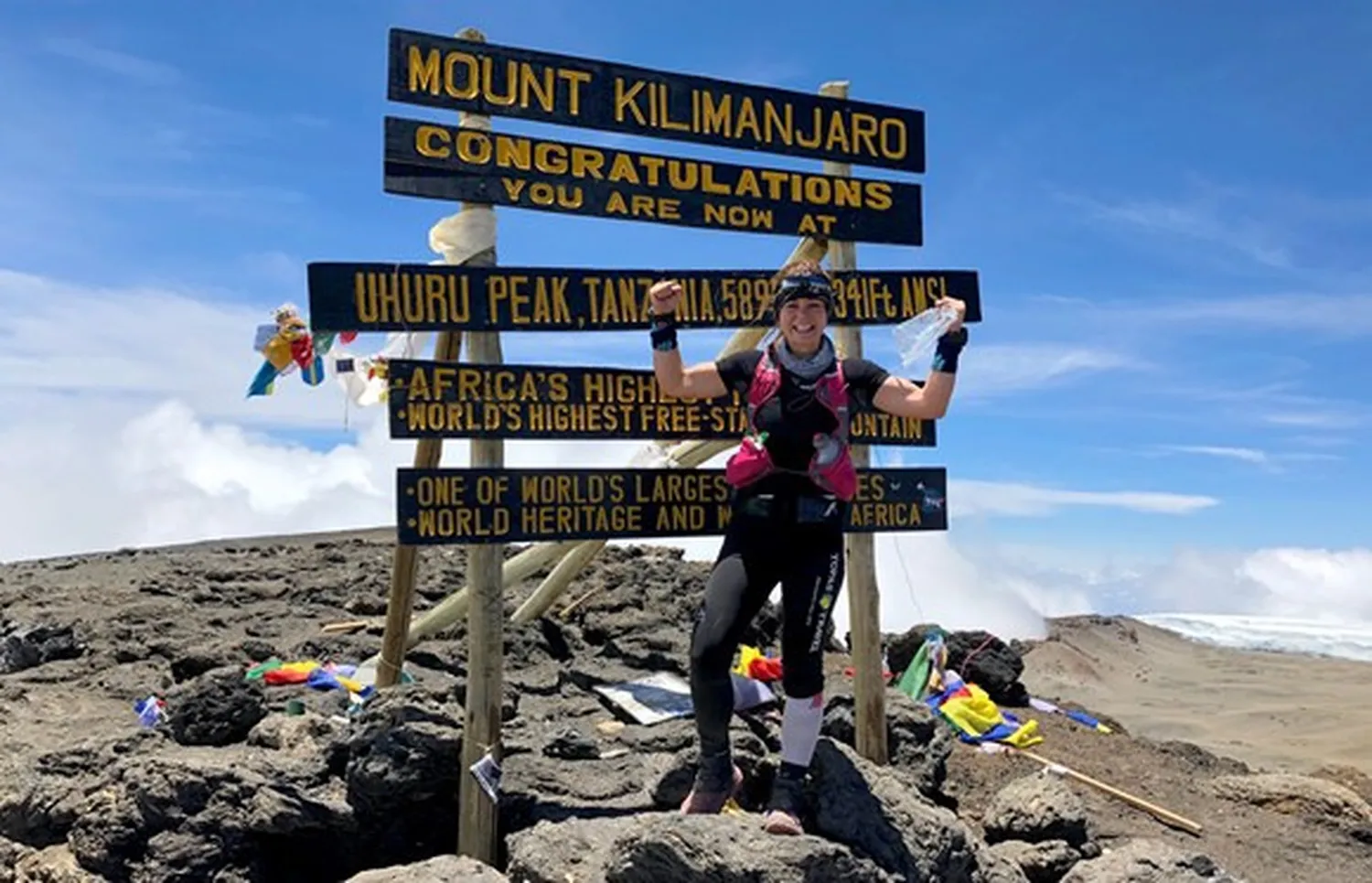
The price of a Kilimanjaro climb is easy to compare once you know what it is made of. Almost half of any honest price is park fees that every operator pays at the same rate; most of the rest is the crew who carry, cook and guide for you. This guide breaks down our prices, the fees, the extras and a whole-trip budget, so you can compare quotes line by line rather than by the headline figure.
Kilimanjaro Prices by Route and Length
The number of days on the mountain decides most of the price, because park fees and crew wages are charged per day. Each extra day adds about US$245 per person on our prices, whatever the route.
All prices are per person for 2 climbers with mid-range hotels in Moshi, for a private climb on your own dates, and include the hotel nights before and after the climb.
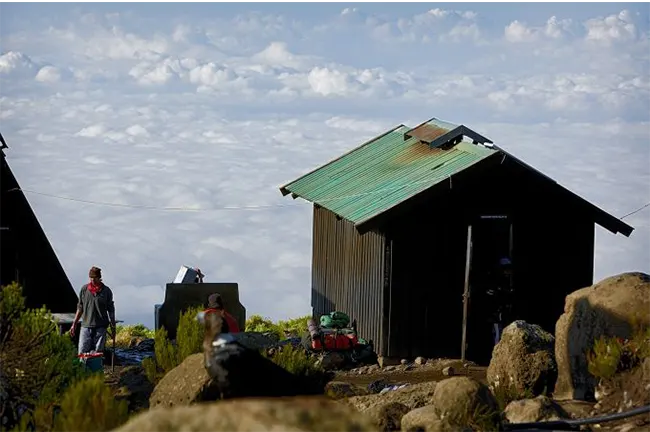
5-Day Marangu Route
Hut route, quickest climb; for fit climbers with altitude experience
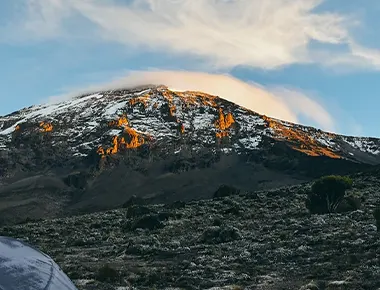
6-Day Marangu Route
Hut route with an acclimatization day at Horombo
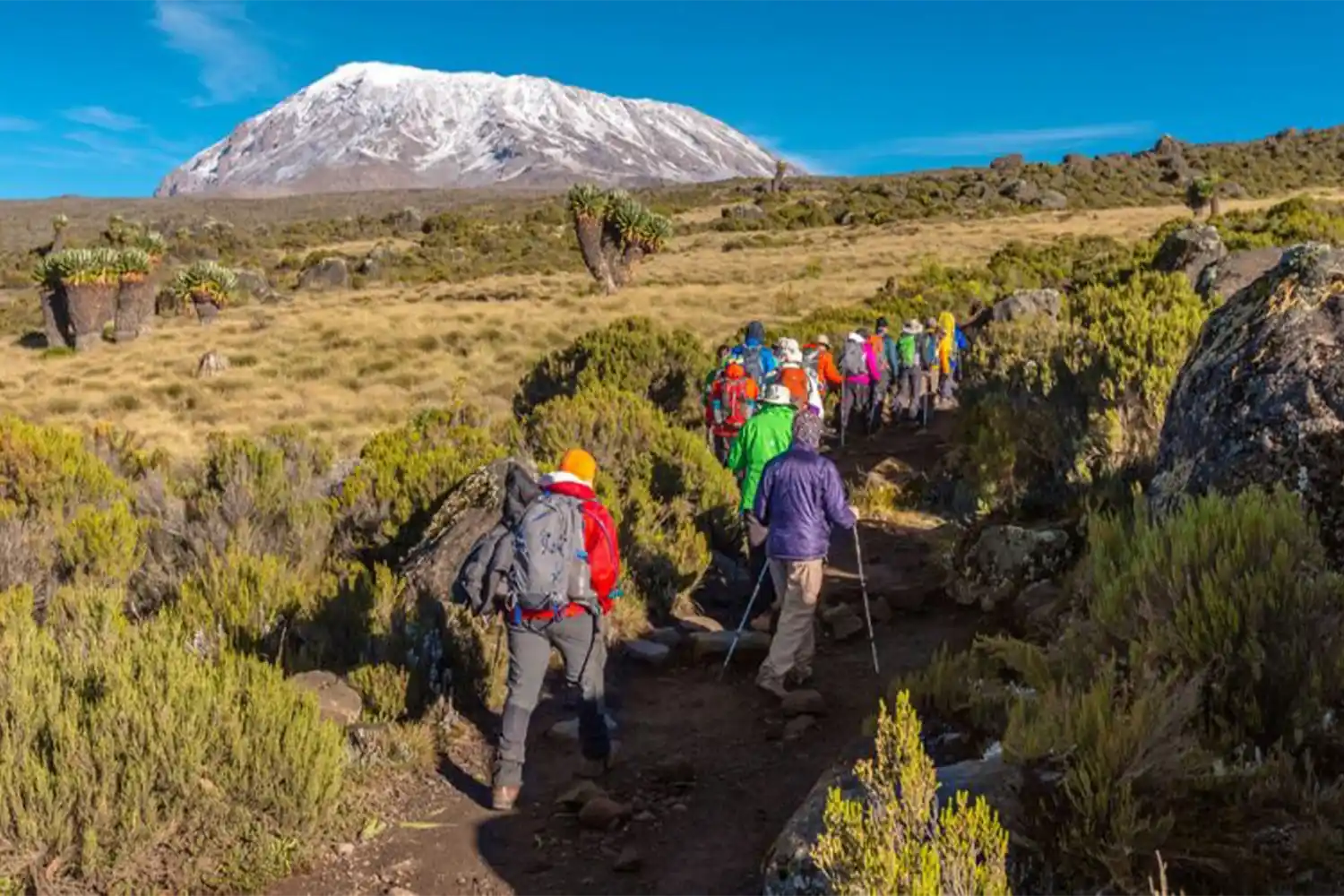
6-Day Machame Route
Camping route via Lava Tower and the Barranco Wall
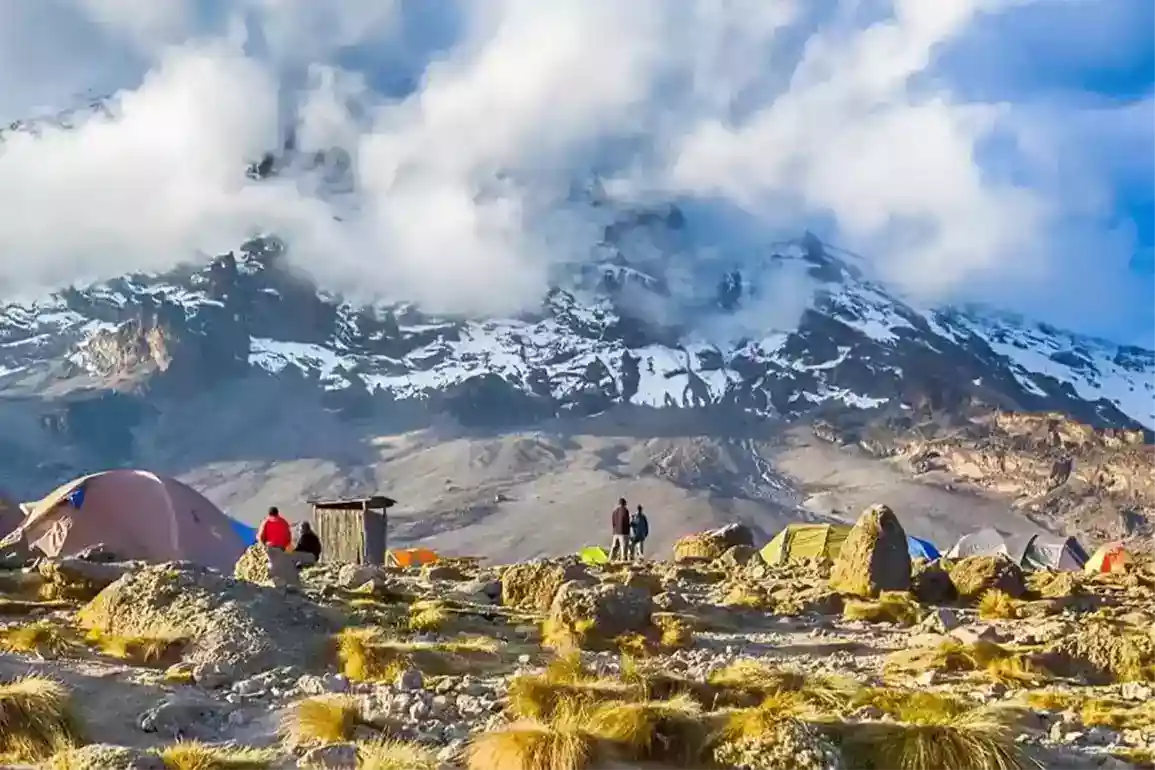
7-Day Machame Route
Machame with an extra night at Karanga; our usual first-timer recommendation
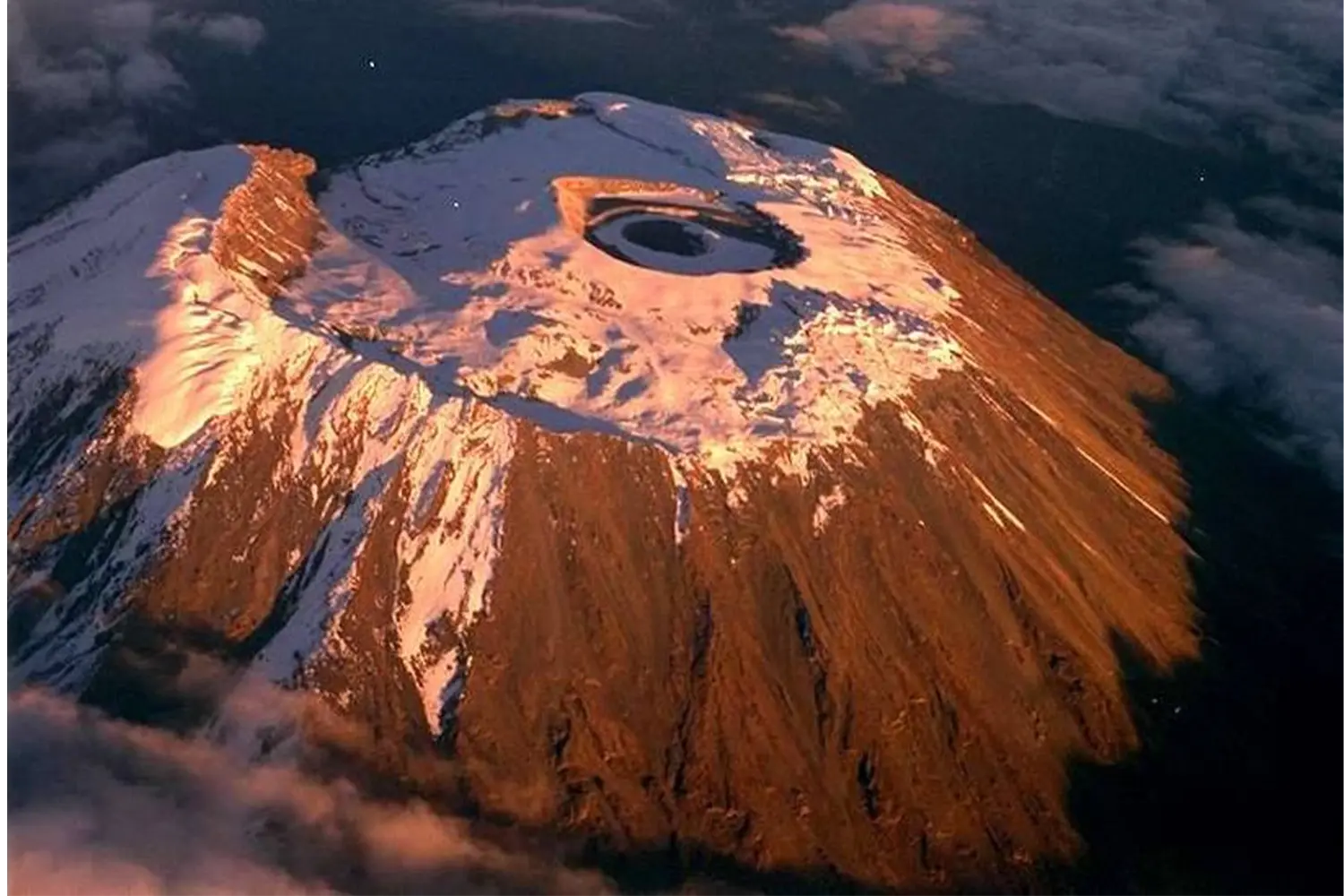
7-Day Lemosho Route
Quiet western start across the Shira Plateau
8-Day Lemosho Route
Most gradual ascent we offer, with a night near Moir Hut
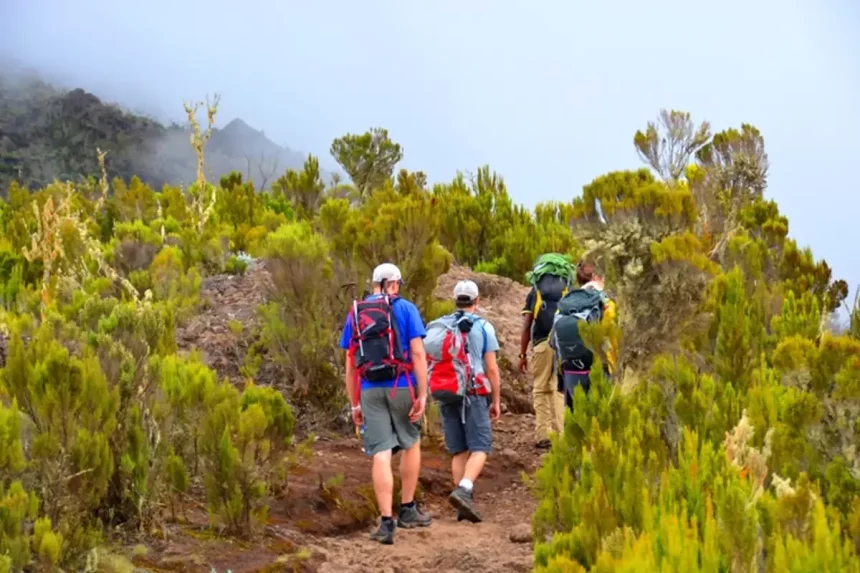
Rongai Route, 6 or 7 days
Northern approach from the Kenyan side; drier and quieter
Umbwe Route, 6 or 7 days
Steep, direct southern route for strong, experienced hikers
9-Day Northern Circuit
Longest route, circling the north side of Kibo
Prices are per person, 2 climbers, mid-range. Open any climb for a full price table for 1–6 climbers at budget, mid-range and luxury level.
What Does a Whole Kilimanjaro Trip Cost from the US?
For a 7-day Machame climb, a traveler from the US should budget about US$3,700–5,300 per person door to door. The climb itself is US$2,090; flights, tips, the visa and insurance make up the rest. Here is the worked example for two friends climbing together with mid-range hotels:
| Cost per person | Amount | Notes |
|---|---|---|
| 7-day Machame climb | US$2,090 | Park fees, crew, meals, transfers, 2 hotel nights |
| Tips for the crew | US$385–665 | US$55–95 per day for a crew of seven |
| Tanzania visa (US passport) | US$100 | Multiple-entry tourist visa |
| Travel insurance | About US$100–300 | Must cover trekking to 19,700 ft (6,000 m) |
| Gear rental, if needed | US$0–150 | Sleeping bag US$25, down jacket US$20, poles US$15 |
| Round-trip flights to Kilimanjaro | About US$1,000–2,000 | Depends on season and departure city |
| Total | About US$3,700–5,300 |
The two biggest variables are flights and tips. Flights to Kilimanjaro International Airport (JRO) are usually cheapest when booked early, and January to March often costs less than the July–August peak. Tips depend on how the climb goes and on you; the ranges above are the ones we suggest to every climber.
Budget a little more if you are adding a safari or Zanzibar after the climb, and for meals, drinks and laundry in Moshi, which aren't part of the package.
Kilimanjaro National Park Fees in 2026
Kilimanjaro National Park charges non-resident climbers a conservation fee of US$70 per day, a camping fee of US$50 per night (US$60 per night in the Marangu huts) and a rescue fee of US$20 per climb, plus 18% VAT. Every operator pays the same fees, and all of them are included in our prices.
Because the conservation fee is charged for every day you are inside the park, a longer climb costs more in fees as well as in crew. This is what the 2026 published rates come to for each of our climbs:
| Climb | Park fees per climber (incl. VAT) | Our price from | Share of price |
|---|---|---|---|
| 5-day Marangu (huts) | About US$720 | US$1,600 | 45% |
| 6-day Marangu (huts) | About US$873 | US$1,845 | 47% |
| 6-day Machame, Rongai or Umbwe | About US$814 | US$1,845 | 44% |
| 7-day Machame, Lemosho, Rongai or Umbwe | About US$956 | US$2,090 | 46% |
| 8-day Lemosho | About US$1,097 | US$2,335 | 47% |
| 9-day Northern Circuit | About US$1,239 | US$2,580 | 48% |
For a 7-day camping climb, that is US$490 conservation (7 days), US$300 camping (6 nights) and US$20 rescue, plus US$146 VAT. Park fees change from time to time; your quotation uses the rates on the day you book. Note that the rescue fee covers the park's rescue service on foot, not a helicopter, which is why your own insurance matters.
Where the Rest of Your Kilimanjaro Money Goes
After park fees, most of the price pays the mountain crew. Every climber has seven: a guide, a cook and five porters, each paid for every day of the climb, with their food and equipment.
The crew is large because loads are limited: our porters carry no more than 18 kg (40 lb) each, and the tents, mess tent, private toilet tent, food, water and safety kit for one climber need five of them. We have been a KPAP partner since 2023, which means our porter pay, equipment and loads are open to the Kilimanjaro Porters Assistance Project's checks.
| Cost | How it is charged |
|---|---|
| National park fees | Per climber, per day on the mountain |
| Guide, cook and five porters | Per climber, per day on the mountain |
| Food, water, tents and camping equipment | Per day on the mountain |
| Safety kit: oxygen, pulse oximeter, first aid, stretcher | Per climb |
| Hotel nights in Moshi | Per night, by hotel level |
| Airport and park-gate transfers | Per climb |
Does Your Hotel Level Change the Kilimanjaro Price?
Only a little. Budget, mid-range or luxury applies only to your two hotel nights in Moshi, and changes the price of a 7-day climb by about US$300 per person. On the mountain everyone has the same crew, meals and equipment.
For the 7-day Machame, 2 climbers pay US$1,915 each with budget hotels, US$2,090 with mid-range hotels and US$2,235 with luxury hotels. Group size changes the price by a few dollars at most, because the crew and park fees are charged per climber.
| Climbers | Budget | Mid-range | Luxury |
|---|---|---|---|
| 1 | US$1,945 | US$2,130 | US$2,325 |
| 2 | US$1,915 | US$2,090 | US$2,235 |
| 3 | US$1,925 | US$2,125 | US$2,225 |
| 4 | US$1,915 | US$2,090 | US$2,235 |
| 5 | US$1,920 | US$2,110 | US$2,230 |
| 6 | US$1,915 | US$2,090 | US$2,235 |
Choose your route and number of days first; the hotel level is a small adjustment. See the hotels at each level on where to stay before and after the climb.
Climb Mount Meru first: our own team also runs 3- and 4-day climbs on Mount Meru (4,566 m), from US$1,150 per person. Climbing Meru a few days before Kilimanjaro is the best acclimatization there is, and we quote the two climbs together, with a rest day in Moshi between them.
How Much Are Tips on Kilimanjaro?
Tips are the largest cost outside the package: about US$55–95 per climber per day for a crew of seven, or US$385–665 for a 7-day climb. They are given at the end of the climb, usually at the exit gate, and they are an important part of the crew's income.
| Crew member | Suggested tip per day | 7-day climb |
|---|---|---|
| Mountain guide | US$20–30 | US$140–210 |
| Cook | US$10–15 | US$70–105 |
| Each of 5 porters | US$5–10 | US$175–350 in total |
| Total per climber | US$55–95 | US$385–665 |
| Climb length | Tips per climber |
|---|---|
| 5 days | US$275–475 |
| 6 days | US$330–570 |
| 7 days | US$385–665 |
| 8 days | US$440–760 |
| 9 days | US$495–855 |
Our tipping guide explains how the tip is shared and handed over.
Gear Rental Prices in Moshi
If you don't own cold-weather gear, renting it in Moshi is much cheaper than buying it for one climb. Our prices are per item for the whole climb, and a sleeping pad is included free.
| Item | Price | Item | Price |
|---|---|---|---|
| Sleeping bag | US$25 | Down or synthetic jacket | US$20 |
| Hiking boots | US$25 | Duffel bag | US$25 |
| Gaiters | US$20 | Day pack | US$20 |
| Hiking poles | US$15 | Headlamp | US$15 |
| Fleece jacket | US$15 | Fleece pants | US$15 |
| Light rain jacket | US$15 | Light rain pants | US$15 |
| Summit pants | US$15 | Sunglasses | US$15 |
| Thick waterproof gloves | US$10 | Warm hat or balaclava | US$10 |
A typical rental for summit night, a sleeping bag, down jacket, poles and gaiters, comes to US$80. A personal oxygen system (Altox) can be rented for US$300; it is optional, as every climb already carries emergency oxygen. See every item on our gear rental page and what to bring from home on the packing list.
Other Kilimanjaro Costs to Budget For
Besides tips and gear, plan for your visa, insurance and flights, and a few small costs in Moshi.
- Visa: US citizens need a multiple-entry tourist visa, US$100, best applied for online before you travel.
- Travel insurance: must cover trekking up to 19,700 ft (6,000 m) and helicopter evacuation; standard policies often stop at lower altitudes.
- Tanzania's inbound travel insurance: from October 1, 2026 every foreign visitor to mainland Tanzania must also buy the government's inbound travel insurance, US$44 per adult (Zanzibar already requires it; one policy covers both). We can help you buy it.
- Flights: to Kilimanjaro International Airport (JRO). Our airport transfers are included.
- In Moshi: meals outside the hotel, drinks, laundry and souvenirs.
- Online payment: a card-processing fee applies when you pay the deposit online.
Your written quotation lists every inclusion and exclusion, so nothing is a surprise on arrival.
Why Do Kilimanjaro Prices Vary So Much?
You will see 7-day climbs advertised from about US$1,500 to more than US$6,000. Park fees are the same for everyone, so the difference comes from four things: who sells the climb, how many days it has, how the crew is paid and equipped, and what is left out of the price.
- Who sells it. Many overseas agencies sell climbs that a Tanzanian operator runs on the ground, adding their own margin. Booking with a company in Moshi removes that layer.
- Days. A cheaper 5- or 6-day climb is not the same product as a 7- or 8-day climb, and the chance of reaching the summit is lower.
- Crew and equipment. Fewer porters, heavier loads, lower wages, worn tents and no emergency oxygen all lower the price.
- Exclusions. Some quotes leave out park fees, hotel nights or transfers, and add them later.
How to Spot a Kilimanjaro Quote That Is Too Cheap
A quote below about US$1,500 for 7 days should make you ask questions, because the park fees alone are about US$956 per climber. Ask every operator these, and compare the answers:
- Are all park fees, including VAT, in the price?
- How many crew come per climber, and what is the porters' maximum load? (Ours: seven per climber, 18 kg / 40 lb.)
- Are you a KPAP partner? (We have been since 2023.)
- Do you carry emergency oxygen, a pulse oximeter and a stretcher, and how often are health checks done? (Ours: every climb, at every camp.)
- Is there a private toilet tent, and are the tents and sleeping mats provided? (Ours: yes, on every camping climb.)
- How many days on the mountain, and how many hotel nights are included?
Is a Longer Climb Worth the Extra Cost?
For a first climb, yes. On our prices one extra day costs about US$245 per person, while flights to Tanzania usually cost several times that. Kilimanjaro National Park records from the early 2000s showed 44% of climbers reaching the summit on 6-day climbs and 64% on 7-day climbs. Today's rates are higher, but the pattern holds.
Think of it this way: the extra day is a small part of what you spend to stand at the start of the climb. Two climbers from the US who spend about US$3,000 each on flights, visa, insurance and the climb itself would each add about 6% to the trip to move from 6 to 7 days, for the night that does most for summit night. The extra day is less useful only if you have been above 14,800 ft (4,500 m) recently and felt well.
That is why we recommend the 7-day Machame or the 8-day Lemosho to most first-timers. The route comparison explains the data in more detail.
How to Pay for Your Kilimanjaro Climb
A 30% deposit confirms your climb, and the balance is paid on arrival in Moshi. You can pay the deposit through Pesapal by card or mobile money, or by bank transfer in US dollars.
| When you cancel | Refund |
|---|---|
| 60 days or more before arrival | 100% |
| 30–59 days | 90% |
| 15–29 days | 60% |
| 10–14 days | 25% |
| Less than 10 days, or a no-show | No refund |
Full terms: our Kilimanjaro refund policy.
Common Questions About Kilimanjaro Costs
What is the cheapest way to climb Kilimanjaro?
The 5-day Marangu Route, from US$1,600 per person with mid-range hotels or US$1,430 with budget hotels. We don't recommend it for a first climb, because it gives the least time to acclimatize; the 6-day Marangu adds a day for US$245.
Are park fees included in your price?
Yes. All Kilimanjaro National Park fees, including VAT, are included: about US$956 per climber for a 7-day camping climb.
How much does it cost to climb Kilimanjaro on your own?
A solo climber pays a little more per person: the 7-day Machame is US$2,130 with mid-range hotels, compared with US$2,090 each for two. You still have your own guide, cook and five porters.
How much should I budget for tips?
About US$55–95 per climber per day, or US$385–665 for a 7-day climb. The tipping guide shows how it is shared.
Does the price include flights?
No. International and domestic flights are not included, but airport transfers from Kilimanjaro International Airport are.
How much is the visa for Tanzania?
US citizens pay US$100 for a multiple-entry tourist visa, which is best applied for online before you travel.
Why are some Kilimanjaro climbs so much more expensive?
Mostly because an overseas agency adds its margin to a climb run by a local operator, or because the climb has more days or more luxurious hotels. Park fees are the same for everyone.
Is a group climb cheaper?
Not with us. Our 2027 group departures cost the same per person as a private climb, because park fees and crew are charged per climber either way. Join a group for the company, not the price.
Do I have to pay the full price in advance?
No. A 30% deposit confirms the climb, and the balance is paid on arrival in Moshi.
The Bottom Line
Expect to pay about US$2,090 per person for a well-run 7-day climb with us, and about US$3,700–5,300 for the whole trip from the US once flights, tips, visa and insurance are added. Spend your budget on days before anything else: an extra day on the mountain does more for your summit chances than any hotel upgrade.
Tell us your dates, the number of climbers and your hotel level through the form, on WhatsApp +255 678 992 599 or by email to jaynevytours@gmail.com, and our sales team will send a written quotation with every cost listed.