What You Need to Know: The best months to climb Kilimanjaro are late May to October and January to March, when the trails are drier, the summit views clearer and the nights in camp more comfortable. July to September are the busiest months; January to March and September are often clear and quieter. Avoid April, early May and November, the rainy seasons, and late December, the busiest week of the year. If you must climb in the shoulder months, choose the drier Rongai Route on the north side.
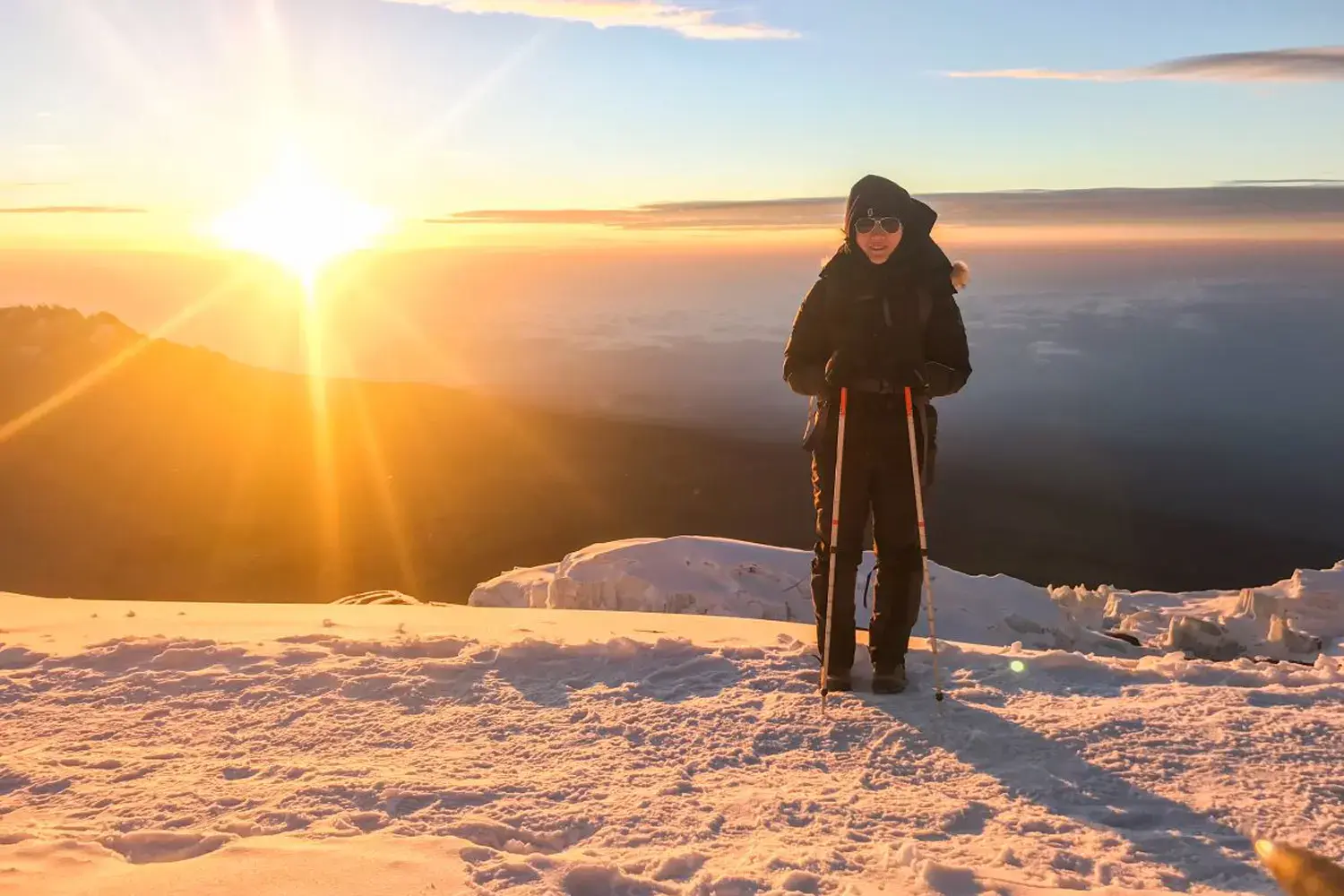
Kilimanjaro is close to the equator, so it has no summer and winter in the usual sense. What changes through the year is rain. Two dry seasons and two rainy seasons decide how muddy the forest is, how often the summit is in cloud and how many other climbers share the trail. Cold is constant: summit night is below freezing in every month.
Which Months Are Best to Climb Kilimanjaro?
Late May to October and January to March are the months we recommend. These are the months when we schedule most of our climbs, and when our guides see the best summit conditions.
| Month | Our advice | What it is like |
|---|---|---|
| January | Recommended | Mostly dry, warm days, clear mornings; quieter than July and August |
| February | Recommended | Mostly dry and warm; one of the most pleasant months |
| March | Recommended | Dry early in the month, with rain becoming more likely towards the end |
| April | Not recommended | Long rains: muddy forest trails, cloud, wet camps |
| May | Late May only | Long rains ending late in the month |
| June | Recommended | Dry, with colder nights; the season gets busier |
| July | Recommended | Dry, cold nights, busy |
| August | Recommended | Dry, cold nights, the busiest month |
| September | Recommended | Dry and clear, with fewer climbers than August |
| October | Recommended | Dry and warming up; rain becomes more likely at the end of the month |
| November | Not recommended | Short rains |
| December | Early December only | Drying out; late December is the busiest week of the year |
Dry Season or Rainy Season: How Kilimanjaro Changes
In the dry season the trails are firm and the views are clear. In the rains the forest trails turn to mud, the high camps are wet and cold, and the summit is often in cloud.
Rain matters more on Kilimanjaro than on a lowland hike because there is no way to dry out. Wet clothes and a wet sleeping bag at 13,100 ft (4,000 m) make the nights miserable and summit night colder. Rain also makes the steeper sections, such as the Barranco Wall and the Umbwe ridge, slippery.
| Dry months | Rainy months | |
|---|---|---|
| Trails | Firm | Muddy in the forest, slippery on steep sections |
| Views | Clearer | Often cloud, especially in the afternoon |
| Camp nights | Cold and dry | Cold and wet |
| Crowds | Busier | Quieter |
A quieter trail rarely makes up for a wet, cloudy summit. That is why we would rather move your dates than send you up in the long rains.
How Cold Is Kilimanjaro, Month by Month?
Temperature on Kilimanjaro depends far more on altitude than on the month. You walk from warm rainforest at the gate to arctic conditions at the summit in a few days.
| Altitude zone | What to expect |
|---|---|
| Rainforest, 5,900–9,200 ft (1,800–2,800 m) | Warm and humid by day; often damp |
| Heath and moorland, 9,200–13,100 ft (2,800–4,000 m) | Mild days, nights near freezing |
| Alpine desert, 13,100–16,400 ft (4,000–5,000 m) | Strong sun by day, below freezing at night |
| Summit zone, above 16,400 ft (5,000 m) | Well below freezing at night, colder with wind |
June to August brings the coldest nights; January to March is a little warmer. The difference is a few degrees, not a change of season, so pack for freezing temperatures whenever you climb. Our guide to Kilimanjaro's climate zones describes each zone, and the packing list shows what to wear.
What Each Season Is Like on Kilimanjaro
The year on Kilimanjaro falls into four parts. Here is what our guides see in each one.
January to March: warm, dry and quieter
The short dry season. Days are warmer than in mid-year, mornings are often clear with views of the glaciers, and there are fewer climbers than in July and August. Afternoon cloud builds on some days, and rain becomes more likely as March goes on. This is a good time for climbers who want good conditions without the crowds, and for the quieter routes such as the Northern Circuit.
April and early May: the long rains
The wettest time of the year. The forest trails on the southern and western routes turn to deep mud, the moorland is often in cloud, and tents and clothes are hard to keep dry. Snow can fall on the upper mountain. We advise against climbing now; if these are your only dates, the drier Rongai Route on the north side or the huts on the Marangu Route are the least bad options.
Late May to October: the long dry season
The main climbing season. Trails are firm, skies are mostly clear and summit views are at their best. June to August brings the coldest nights of the year, so a warm sleeping bag matters. July and August are the busiest months, especially on the Machame route; September and October are just as dry and a little quieter.
November and December: short rains, then the holidays
The short rains in November bring afternoon showers and cloud rather than the heavy, steady rain of April. By early December the mountain is drying out and conditions can be good. Late December is the busiest week of the year, with Christmas and New Year climbers filling the camps, and we don't recommend it.
Crowds, Holidays and Full-Moon Climbs on Kilimanjaro
July, August and the Christmas and New Year holidays are the busiest times on the mountain. If you want good weather with fewer people, January to March and September are the best compromise. On the busiest dates, a quieter route helps: the 8-day Lemosho starts on the empty western side, and the Northern Circuit and Rongai Route see far fewer climbers.
Many climbers time summit night for a full moon, which lights the trail and the crater rim and means you need your headlamp less. Tell us when you book and we will plan your start date so that summit night falls on or near it. Full-moon dates in the dry season are popular, so book those early.
For July, August, September and the holidays, book three to six months ahead; for the rest of the dry season, a few weeks is often enough. Private climbs can start on any day, so the limit is usually hotel availability in Moshi rather than the mountain. A 30% deposit confirms your climb, and you get a full refund if you cancel 60 days or more before arrival. Prefer company? Our 2027 group departures run from June to August.
Which Kilimanjaro Route Suits Which Season?
In the dry months every route is a good choice. Near the rainy seasons, choose the Rongai Route on the drier northern side, or the Marangu Route, where you sleep in huts.
| Season | Our route advice |
|---|---|
| Dry season, late May–October | Any route; 7-day Machame or 8-day Lemosho for first-timers |
| January–March | Any route; a good time for the quieter Northern Circuit |
| Shoulder weeks (early March, late May, late October) | Rongai for the drier north side, or 6-day Marangu for huts |
| Rainy months (April, early May, November) | We advise against climbing; if you must, Rongai or Marangu |
| Any wet weather | Avoid Umbwe: we don't run it in the rains |
The western and southern forests on Lemosho, Machame and Umbwe are the wettest parts of the mountain. We will tell you honestly if your dates are a poor fit for the route you want.
Combining Your Climb with a Safari or Zanzibar
The dry months that suit Kilimanjaro also suit a safari in northern Tanzania, so late June to October is an easy time to combine the two: the grass is short, animals gather near water, and the Serengeti herds are usually in the north of the park. January and February are good for both too, and they are when the wildebeest herds calve on the short-grass plains of the southern Serengeti.
Most climbers add the safari after the climb, once the hard work is done, and finish with a few days on Zanzibar's beaches, which are at their best in the same dry months. See our Kilimanjaro, safari and Zanzibar tour.
Common Questions About Kilimanjaro's Climbing Seasons
What is the best month to climb Kilimanjaro?
Any month from late May to October, or January to March. September and January are often clear and less busy than July and August.
Can you climb Kilimanjaro in the rainy season?
It is possible, but we don't recommend April, early May or November. If you must, choose the Rongai Route or the Marangu Route.
What is the coldest month on Kilimanjaro?
Nights are coldest from June to August, but summit night is below freezing in every month.
When is Kilimanjaro least crowded?
In the recommended months, January to March and September are usually quieter than July and August. The rainy months are quietest of all, for good reason.
Is December a good time to climb Kilimanjaro?
Early December can be fine as the short rains end. Late December is the busiest week of the year, so we don't recommend it.
Does the season change the price of a climb?
Park fees are the same all year. Ask us for a quotation for your dates.
Which route is best in the rainy season?
The Rongai Route, on the drier north side. We don't run the Umbwe Route in the rains.
The Bottom Line
Climb in late May to October or January to March, choose at least seven days, and pick a quieter route if you are going in July or August. If your dates fall in a rainy month, talk to us before you book: we would rather suggest Rongai, or different dates, than send you up a wet mountain.
Send us your dates, the number of climbers and your hotel level through the form, on WhatsApp +255 678 992 599 or by email to jaynevytours@gmail.com, and our sales team in Moshi will reply with a written quotation.