
Common Challenges During Kilimanjaro Climbing
Common challenges during Kilimanjaro climbing include altitude sickness, summit night fatigue, cold temperatures, weather changes, route choice, slow acclimatization, appetite loss, dehydration, poor sleep, gear mistakes, blisters, toilet discomfort, mental pressure and long walking days. Mount Kilimanjaro is not a technical climb on the standard routes, but it is still a serious high-altitude trek.
Kilimanjaro reaches 5,895 metres at Uhuru Peak, making it the highest point in Africa. UNESCO describes Kilimanjaro National Park as covering about 75,575 hectares and protecting the largest free-standing volcanic mass in the world. The mountain rises from surrounding plains to a summit where oxygen availability is much lower than at sea level. The CDC explains that around 3,050 metres, inspired oxygen pressure is only about 69% of sea-level value, which is why altitude is the main challenge for many climbers.
Quick answer: Kilimanjaro climbing challenges and solutions
- Altitude sickness: choose a longer route, walk slowly and report symptoms early.
- Summit night fatigue: train before travel and conserve energy during earlier days.
- Cold weather: use proper layers, warm gloves, hat, socks and a reliable sleeping bag.
- Route choice mistakes: avoid choosing only the cheapest or shortest route.
- Dehydration and appetite loss: drink regularly and eat even when appetite is low.
- Poor sleep: expect light sleep at altitude and protect yourself from cold at night.
- Blisters and foot pain: break in boots before the climb and use good socks.
- Weather changes: prepare for sun, rain, wind, dust, mud and freezing summit conditions.
- Mental pressure: focus on one stage at a time rather than thinking only about the summit.
- Safety decisions: listen to your guide; reaching the summit is never more important than health.
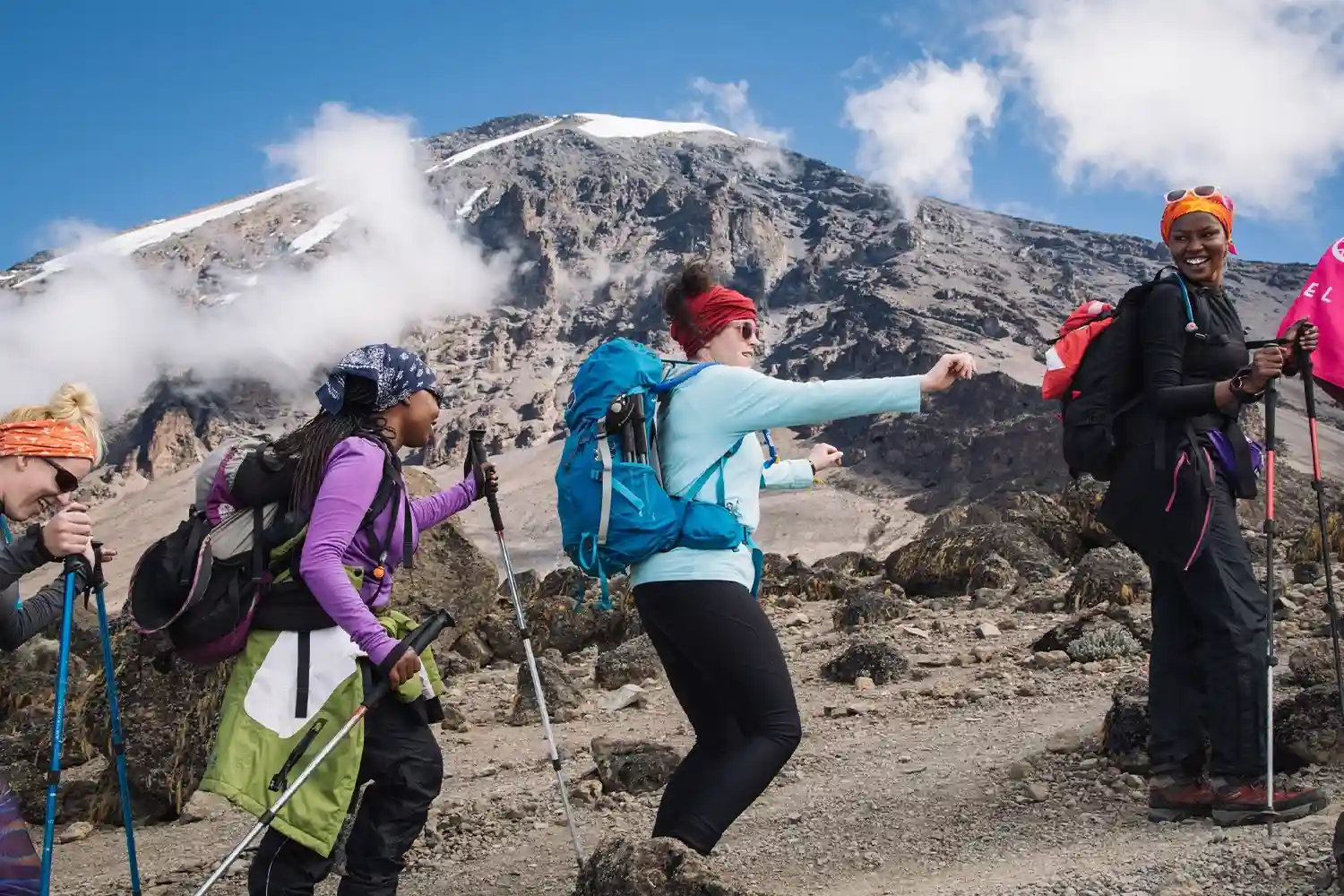
Kilimanjaro climbing challenges overview table
| Challenge | Why It Happens | Common Stage | Best Practical Solution |
|---|---|---|---|
| Altitude sickness | The body gets less oxygen as elevation increases | Usually above 2,500-3,000 m and more serious near summit camps | Choose more days, walk slowly and report symptoms early |
| Summit night fatigue | Very early start, cold, thin air and many hours of walking | Barafu, Kibo or School Hut to Uhuru Peak | Train, pace slowly, layer correctly and conserve energy |
| Cold and wind | High altitude and exposed summit slopes | High camps and summit night | Use thermal layers, down jacket, warm gloves and proper hat |
| Poor route choice | Short routes give less acclimatization time | Before the climb begins | Choose a route based on days, fitness and acclimatization, not price only |
| Dehydration | Cold air, exertion, altitude and reduced thirst | All trekking days | Drink regularly and monitor urine color and energy level |
| Appetite loss | Altitude can reduce hunger and digestion comfort | Mid to high altitude camps | Eat small portions often and tell guides if nausea is persistent |
| Blisters and foot pain | New boots, wet socks, long descents and poor fit | Any trekking day, especially descent | Break in boots, use good socks and treat hot spots early |
| Sleep problems | Altitude, cold, tents, nerves and camp noise | Most nights, especially higher camps | Use warm sleeping gear and accept that light sleep is normal |
| Weather changes | Kilimanjaro crosses several climate zones | Rainforest, moorland, alpine desert and summit zone | Pack layers and waterproof protection |
| Mental pressure | Summit expectations, fatigue and comparison with others | Summit night and tough trekking days | Focus on steady progress and listen to the guide team |
1. Altitude sickness and poor acclimatization
Altitude is the main Kilimanjaro challenge. The climb starts low enough for the body to feel normal, then quickly moves into elevations where oxygen availability drops. The CDC explains that high-altitude environments expose travelers to lower air pressure and reduced oxygen pressure, and that acute mountain sickness becomes more common when people ascend quickly without enough acclimatization.
Altitude symptoms can include headache, nausea, unusual tiredness, loss of appetite, poor sleep, dizziness or reduced coordination. These symptoms should not be hidden from guides. The correct response depends on severity, location, route plan and guide assessment. Climbers should discuss altitude medication and personal medical risks with a qualified health professional before travel.
How to reduce altitude problems
- Choose a longer itinerary instead of the shortest possible climb.
- Walk slowly from day one, even when the trail feels easy.
- Drink water regularly and eat enough to support energy.
- Tell guides early about headache, nausea, dizziness or unusual weakness.
- Do not treat summit success as more important than health.
- Use “climb high, sleep low” profiles where the route allows it.
2. Choosing the wrong Kilimanjaro route
Many Kilimanjaro problems start before the climb begins. A traveler may choose the cheapest or shortest route without understanding the acclimatization profile. Standard Kilimanjaro routes include Marangu, Machame, Lemosho, Rongai, Shira, Umbwe and the Northern Circuit. Routes differ by scenery, crowds, difficulty, camp type, starting side of the mountain and number of days.
Shorter routes can look attractive because they cost less, but less time on the mountain can make acclimatization harder. Longer routes often cost more because they require more park days, staff time, food, camping logistics and support, but they can create a more sensible pace.
| Route | Common Duration | Main Challenge | Best For |
|---|---|---|---|
| Marangu | 5-6 days | Shorter profile can be rushed; shared hut accommodation | Climbers who prefer huts and a direct route |
| Machame | 6-7 days | Busier trail and steep sections | Strong scenery and better acclimatization than very short routes |
| Lemosho | 7-8 days | Higher cost due to extra days and logistics | Good acclimatization profile and scenic variety |
| Rongai | 6-7 days | Drier northern side, but descent usually uses a different side | Travelers wanting a quieter approach from the north |
| Umbwe | 5-6 days | Steep, demanding and less forgiving for acclimatization | Experienced, fit trekkers with careful planning |
| Northern Circuit | 8-9 days | Higher total cost and more time required | Best for acclimatization, quieter travel and slow pacing |
3. Summit night fatigue
Summit night is the most difficult part for many climbers. The final push often begins around midnight or very early morning. Climbers walk slowly in darkness, cold and thin air for several hours before reaching Stella Point, Gilman's Point or Uhuru Peak depending on the route. After reaching the summit, the descent can still take many hours.
The challenge is not only physical. It is mental. The pace feels slow, the body may feel heavy, and small discomforts become bigger because of altitude and fatigue. The best summit preparation starts days earlier through slow walking, good hydration, enough food and protecting energy.
Summit night preparation tips
- Pack summit clothing before dinner so you are not searching in the dark.
- Keep batteries warm because cold can reduce battery performance.
- Use a reliable headlamp with spare batteries.
- Walk slowly and follow the guide's pace.
- Use layers that can be adjusted as your body warms and cools.
- Prepare mentally for the descent after the summit.
4. Cold temperatures and wind
Kilimanjaro starts near warm lower slopes but finishes in a cold high-altitude environment. Climbers pass through rainforest, heath, moorland, alpine desert and summit zones. Weather can change quickly, and summit night can feel much colder than visitors expect, especially with wind and slow movement.
Cold fingers, cold toes and poor layering can damage morale. A climber who is physically fit but poorly dressed may struggle more than a less athletic climber who has proper clothing and pacing.
Cold-weather gear priorities
- Thermal base layers for top and bottom.
- Warm fleece or mid-layer.
- Insulated down or synthetic summit jacket.
- Waterproof and windproof outer shell.
- Warm hat, neck gaiter and sun hat.
- Liner gloves plus insulated outer gloves or mittens.
- Warm socks and well-fitted boots.
- A sleeping bag rated for cold mountain nights.
5. Weather changes across climate zones
Kilimanjaro's climate zones create another challenge. A climber may walk through warm rainforest, muddy trails, exposed moorland, dry alpine desert and freezing summit conditions in the same expedition. This makes packing difficult for first-time climbers because one outfit cannot serve every zone.
Rain is more common in the rainforest and during wetter months. Sun exposure is stronger at altitude. Wind can become serious in open sections. The solution is layering, waterproof protection and avoiding cotton as a main trekking fabric.
| Mountain Zone | Common Conditions | Challenge | Preparation |
|---|---|---|---|
| Rainforest | Warm, humid, muddy and sometimes rainy | Wet boots, mud and sweating | Waterproof jacket, gaiters and breathable layers |
| Heath and moorland | Cooler air, open vegetation and changing weather | Sun, wind and temperature swings | Sun protection, fleece and wind shell |
| Alpine desert | Dry, exposed, cold nights and strong sun | Dehydration, sunburn and cold sleep | Drink regularly, use sunscreen and sleep warm |
| Summit zone | Very cold, windy, thin air and slow movement | Fatigue, cold hands and altitude symptoms | Full summit layers, headlamp and careful pacing |
6. Dehydration and appetite loss
Dehydration can make climbing harder. At altitude, air is dry, breathing rate can increase, and climbers may not feel thirsty even while losing fluid. Some climbers also lose appetite as altitude increases. This creates a problem because the body still needs energy for long walking days and cold conditions.
Guides often encourage climbers to drink and eat even when they do not feel like it. This is not just hospitality; it is part of keeping energy stable. However, persistent nausea, vomiting or inability to eat can also be a warning sign that should be reported to the guide.
How to manage food and water
- Drink small amounts regularly instead of waiting until very thirsty.
- Use a water system that is easy to access while walking.
- Carry snacks that you already know your body tolerates.
- Eat small portions if full meals feel difficult.
- Tell the guide if nausea becomes persistent or severe.
7. Poor sleep at altitude
Poor sleep is common on Kilimanjaro. Climbers may wake often because of altitude, cold, unfamiliar tents, wind, camp noise or nerves about the next day. A bad night does not automatically mean the climb is failing, but repeated poor sleep can increase fatigue.
Comfort improves when the sleeping system is warm enough. A sleeping bag that is too light can make every night difficult. A good sleeping mat, dry clothes, thermal layers and a warm hat can help.
Sleep tips
- Keep sleeping clothes dry and separate from trekking clothes.
- Use a warm hat at night.
- Avoid drinking too much immediately before sleeping if it causes repeated bathroom trips.
- Keep a headlamp within reach.
- Accept that sleep may be lighter than normal.
8. Blisters, knee pain and long descents
Many climbers focus on going up but forget the descent. After summit night, the descent can be long and hard on knees, toes and tired legs. Blisters often come from new boots, poor sock choice, wet feet or ignoring early hot spots.
Foot problems can turn a strong climber into a struggling climber. Boots should be tested before travel, not first used on Kilimanjaro. Trekking poles can help some climbers reduce pressure during descent, especially on steep or loose ground.
Foot and knee preparation
- Break in boots before the climb.
- Use moisture-managing socks and carry spare pairs.
- Treat hot spots before they become blisters.
- Trim toenails before the climb.
- Use trekking poles if comfortable with them.
- Train with downhill walking, not only flat fitness.
9. Gear mistakes
Gear mistakes are among the most preventable Kilimanjaro challenges. A weak rain jacket, thin gloves, poor sleeping bag, new boots or dead headlamp can create discomfort that affects the whole climb. The mountain does not require technical climbing equipment on standard routes, but it does require correct trekking and cold-weather gear.
| Gear Mistake | Problem It Causes | Better Choice |
|---|---|---|
| New boots used for the first time | Blisters and foot pain | Break in boots during training walks |
| Weak gloves | Cold fingers on summit night | Liner gloves plus warm outer gloves or mittens |
| Light sleeping bag | Cold nights and poor sleep | Cold-rated sleeping bag suitable for high camps |
| No rain protection | Wet clothes and uncomfortable trekking | Waterproof jacket, rain cover and dry bags |
| Dead headlamp batteries | Unsafe summit night walking | Test headlamp and carry spare batteries |
| Overweight duffel | Porter limit issues and difficult packing | Follow the operator's luggage limit before arrival |
10. Toilet discomfort and hygiene
Toilets are a real concern for many Kilimanjaro climbers. On camping routes, public mountain toilets can be basic, especially during busy seasons. Some operators offer private portable toilets for an additional cost. Marangu route uses huts, but facilities are still mountain facilities, not hotel bathrooms.
Good hygiene habits reduce discomfort. Hand sanitizer, toilet paper, wipes and a small personal hygiene kit can make a big difference. Climbers should also respect mountain rules and avoid littering.
Practical hygiene items
- Hand sanitizer.
- Toilet paper in a dry bag.
- Biodegradable wipes used responsibly and carried out where required.
- Small towel.
- Personal medicine and hygiene supplies.
- Headlamp for nighttime toilet visits.
11. Mental pressure and summit expectations
Kilimanjaro is emotional. Some climbers are climbing for a life goal, charity, birthday, honeymoon or personal challenge. That emotional investment can create pressure. When altitude, cold and tiredness appear, the mind may become more difficult than the legs.
Good guides help by setting a slow pace and encouraging climbers to focus on the next step. The summit is important, but safe descent is the real success. A climber who turns around for health reasons has made a responsible decision, not a failure.
How to manage the mental challenge
- Focus on the next break, not only the summit.
- Do not compare your pace with other climbers.
- Tell guides when you feel overwhelmed or unusually weak.
- Remember that walking slowly is normal on Kilimanjaro.
- Celebrate progress at each camp, not only Uhuru Peak.
12. Physical fitness and training gaps
Altitude is the main challenge, but fitness still matters. Kilimanjaro requires multiple days of walking, carrying a daypack, climbing uphill, descending on tired legs and managing cold. A person does not need to be an elite athlete, but arriving without training makes every challenge harder.
The best training is consistent walking, hill training, stair climbing, moderate cardio and leg strength. Training should include using the boots, socks and daypack planned for the climb.
Training focus areas
- Long walks of several hours.
- Hill or stair training.
- Leg strength and balance.
- Back-to-back walking days.
- Practice carrying a daypack.
- Testing boots and layers before travel.
13. Sun exposure and UV at altitude
Cold air can hide sun intensity. At altitude, sun exposure can be strong even when temperatures feel cool. Snow, cloud gaps and open alpine terrain can increase the need for eye and skin protection.
Sun protection checklist
- High-protection sunscreen.
- Lip balm with sun protection.
- UV-protective sunglasses.
- Wide-brimmed hat for lower and middle sections.
- Warm hat for higher sections.
- Long sleeves or sun-protective trekking shirt.
14. Cost, tipping and unclear inclusions
Kilimanjaro prices vary because routes, days, park fees, staff numbers, food, equipment, transport and safety standards vary. A very cheap climb may leave out important details or create pressure on the support team. Ethical treatment of guides, porters and cooks is part of a responsible Kilimanjaro climb.
Travelers should compare more than the headline price. A good quote should state route, number of days, accommodation before and after the climb, airport transfers, park fees, rescue fees, meals, camping equipment, guide-to-client support, porter luggage limits, exclusions and tipping guidance.
Questions to ask before booking
- Which route and how many climbing days are included?
- Are park fees, camping or hut fees and rescue fees included?
- What hotel nights before and after the climb are included?
- What is the guide, assistant guide and porter support structure?
- What safety equipment is carried by the team?
- What is the porter luggage limit?
- What meals and drinking water arrangements are included?
- What is the recommended tipping procedure?
- What is the emergency plan if a climber cannot continue?
15. Emergency decisions and safe descent
One of the hardest challenges is accepting that safety decisions may change the plan. If altitude symptoms become serious, the responsible decision may be to rest, stop ascending or descend. Guides are trained to assess the situation on the mountain. A climber should never hide symptoms because of summit pressure.
Emergency evacuation options depend on route, location, weather, daylight, park procedures and the climber's condition. Travel insurance should cover high-altitude trekking and emergency evacuation where applicable. The policy should be checked before departure, not after a problem occurs.
Safety-first rules
- Be honest about symptoms.
- Follow guide instructions during altitude concerns.
- Do not pressure another climber to continue.
- Confirm insurance coverage for high-altitude trekking.
- Keep emergency contacts accessible.
- Remember that descending safely is more important than reaching Uhuru Peak.
How to avoid most Kilimanjaro climbing challenges
- Choose enough days: six to eight days generally gives a better pace than a rushed five-day climb.
- Pick the right route: select route by acclimatization, not only price or popularity.
- Train consistently: walk, climb hills and prepare for long descents.
- Pack correctly: summit clothing, rain protection, boots and sleeping gear matter.
- Walk slowly: “pole pole” is not a slogan; it is a survival strategy on the mountain.
- Eat and drink regularly: support energy even when appetite is lower.
- Tell guides symptoms early: silence creates risk.
- Use proper insurance: confirm high-altitude trekking and evacuation coverage.
- Respect the mountain: Kilimanjaro is accessible, but it is not easy.
Best route choices for reducing challenges
The best route is not the same for every climber. A person with limited time may choose Marangu or Machame, while a first-time high-altitude trekker with more days may benefit from Lemosho or the Northern Circuit. The goal is to match time, budget, comfort and acclimatization.
| Traveler Type | Better Route Direction | Why |
|---|---|---|
| Beginner with enough time | Lemosho 7-8 days or Machame 7 days | More days and better acclimatization profile than very short climbs |
| Traveler who wants huts | Marangu 6 days instead of 5 days | Hut accommodation but extra day can help pacing |
| Traveler seeking quieter route | Rongai or Northern Circuit | Less crowded approach and different scenery |
| Strong trekker wanting the best acclimatization time | Northern Circuit 8-9 days | Longer route, more gradual approach and more mountain time |
| Traveler with very limited time | Be careful with short routes | Lower time cost can increase altitude difficulty |
Final advice
Kilimanjaro is achievable for many ordinary travelers, but it rewards humility. The mountain does not require ropes on standard routes, yet it demands respect through altitude, cold, fatigue and weather. The smartest climber is not always the fastest climber. The smartest climber chooses the right route, walks slowly, listens to guides and prepares properly before arrival.
Most Kilimanjaro challenges can be reduced with good planning: enough days, correct gear, realistic training, proper health preparation, strong guides and honest communication on the mountain. The summit is a beautiful goal, but a safe and meaningful climb is the real success.
Frequently asked questions about common challenges during Kilimanjaro climbing
1. What is the biggest challenge on Kilimanjaro?
Altitude is the biggest challenge for most climbers. Uhuru Peak stands at 5,895 metres, and the body needs time to adjust as oxygen availability decreases with altitude.
2. Is Kilimanjaro technically difficult?
Most standard routes are trekking routes, not technical climbing routes. The difficulty comes from altitude, long walking days, cold weather and summit night fatigue.
3. How can I reduce altitude sickness?
Choose a longer route, walk slowly, drink regularly, eat enough and tell guides early about symptoms. Discuss personal medical prevention with a health professional before travel.
4. Which Kilimanjaro route is best for acclimatization?
Longer routes such as Lemosho 7-8 days, Machame 7 days and the Northern Circuit generally provide more acclimatization time than very short itineraries.
5. Why is summit night so hard?
Summit night combines darkness, cold, thin air, steep walking, fatigue and many hours of effort. The descent after the summit also requires energy.
6. Can beginners climb Kilimanjaro?
Yes, beginners can climb Kilimanjaro if they train, choose a suitable route, pack correctly and respect altitude. It should not be treated as an easy walk.
7. What gear problems are most common?
Common problems include new boots, weak gloves, cold sleeping bags, poor rain protection, dead headlamp batteries and inadequate summit layers.
8. How cold does Kilimanjaro feel?
The summit zone can feel very cold because of altitude, wind and slow movement. Climbers should prepare with full summit layers even if the lower mountain feels warm.
9. How many days should I choose?
Six to eight climbing days are generally better than five because they allow more time for acclimatization. The ideal number depends on route, fitness and budget.
10. Do I need travel insurance?
Yes. Choose travel insurance that covers high-altitude trekking and emergency evacuation where applicable. Read the policy wording carefully before travel.
11. What should I do if I feel sick on the mountain?
Tell your guide immediately. Do not hide symptoms. The guide team can assess the situation and decide whether to rest, continue carefully or descend.
12. Can Jaynevy Tours help me choose the right route?
Yes. Jaynevy Tours can help match your fitness, time, budget and comfort level with a suitable Kilimanjaro route and climbing plan.
Data notes and trusted sources
This guide uses official and medical reference points available in June 2026. Route conditions, weather, park rules, health advice and individual altitude response can vary, so climbers should confirm details before travel and consult a qualified health professional for personal medical advice.
- UNESCO World Heritage Centre: Kilimanjaro National Park
- Mount Kilimanjaro National Park visitor information
- CDC Yellow Book: High-altitude travel and altitude illness
- Kilimanjaro route overview
- Jaynevy Tours: Kilimanjaro climbing routes
For help choosing the best Kilimanjaro route and reducing common climbing challenges, contact Jaynevy Tours via email at info@jaynevytours.com or WhatsApp at +255 678 992 599.