
Common Challenges During Serengeti Safari
Common challenges during a Serengeti safari include long travel distances, rough roads, dust, rain, high costs, crowded sightings, early mornings, wildlife unpredictability, limited connectivity, health preparation and choosing the wrong Serengeti region for the travel month. These challenges do not mean Serengeti is difficult in a negative way. They simply mean the park is a real wilderness, not a controlled attraction.
Serengeti is huge. Tanzania National Parks records Serengeti National Park at approximately 14,763 square kilometres, while UNESCO describes the park as 1.5 million hectares of savannah. The annual migration involves more than one million wildebeest moving with zebras and gazelles in search of water and pasture over a circular route of about 1,000 kilometres. These numbers explain why some visitor problems happen: the distances are long, wildlife moves naturally, roads are exposed to weather, and the best area changes by season.
Quick answer: Serengeti safari challenges and simple solutions
- Long drives: avoid one-night Serengeti trips and consider a bush flight if time is limited.
- Rough roads: use a proper 4x4 safari vehicle and keep fragile items protected.
- Dust: pack sunglasses, a scarf or buff, camera covers and eye drops.
- Rain and mud: travel with flexible expectations from March to May and during short rains.
- Migration uncertainty: choose the right region for your month, not just the word “Serengeti.”
- Crowds: avoid peak river-crossing areas or balance them with quieter regions.
- High cost: compare exact inclusions, not only total price.
- Health risks: speak to a travel-health professional and use mosquito-bite prevention.
- Packing mistakes: pack for cold mornings, sun, dust and luggage limits.
- Connectivity: expect limited internet and use the safari as time away from normal routine.
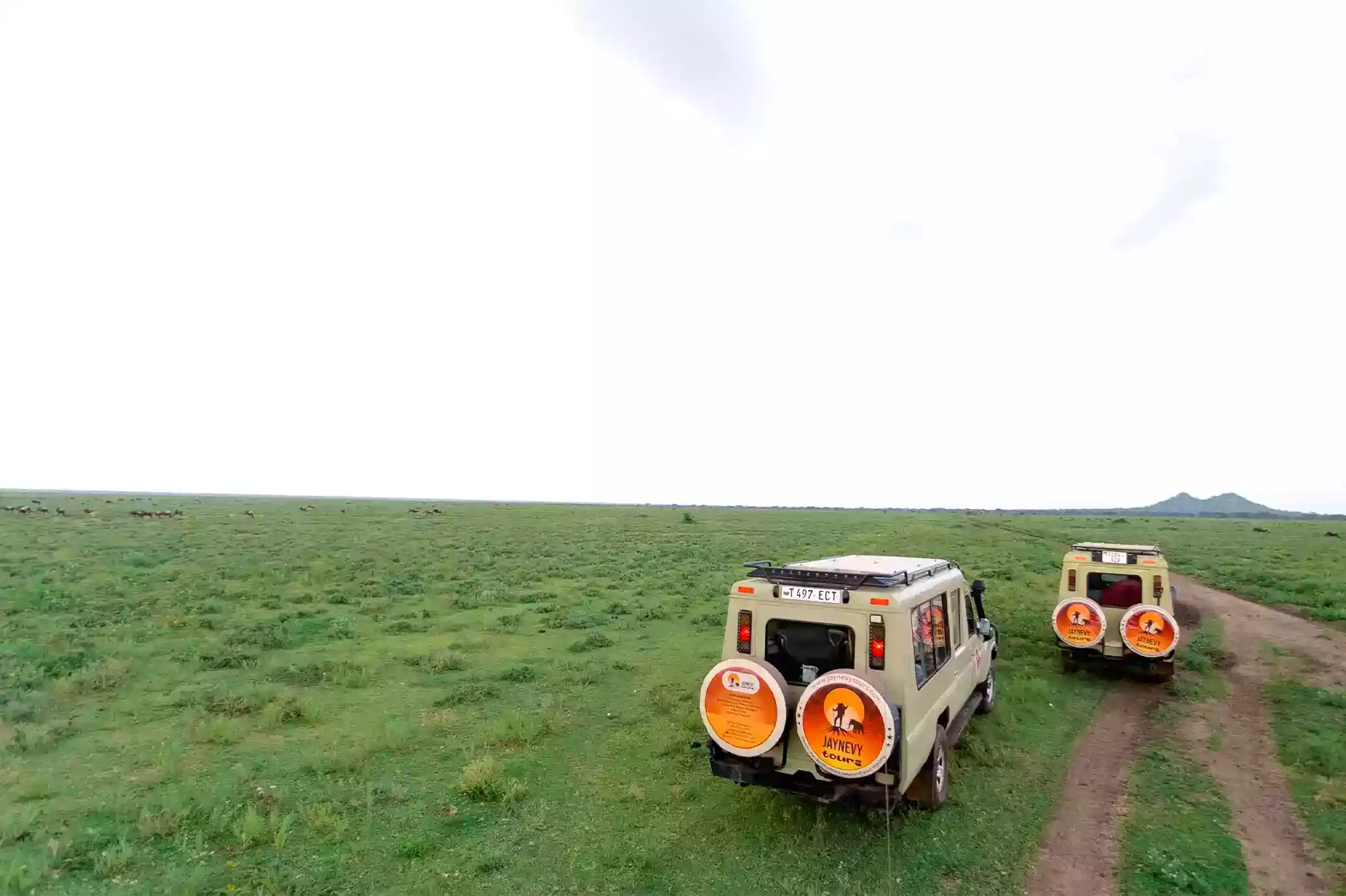
Serengeti safari challenges overview table
| Challenge | Why It Happens | When It Is Common | Best Practical Solution |
|---|---|---|---|
| Long travel distances | Serengeti is a large park and Arusha road safaris take many hours | All year | Allow 3+ Serengeti nights or use a bush flight |
| Rough and corrugated roads | Many park tracks are unpaved and used by safari vehicles | All year, worse after rain or heavy traffic | Use a 4x4, reduce luggage, and protect cameras |
| Dust | Dry tracks, vehicle movement and open plains | June to October | Carry sunglasses, scarf, camera bag and wipes |
| Rain and muddy tracks | Short rains and long rains affect some roads | November-December and March-May | Use flexible routing and avoid over-tight schedules |
| Missing the migration | Herds move with rainfall, pasture and water | All migration trips | Match region to month and avoid one-night stays |
| Crowded sightings | Famous cats and crossings attract many vehicles | Peak season and central areas | Travel shoulder months or add quieter regions |
| Higher safari cost | Park fees, vehicle costs, fuel, guide, accommodation and distance | Peak season and private safaris | Compare inclusions and group size, not just price |
| Early starts and fatigue | Wildlife is often more active in cooler hours | All year | Sleep early and avoid overpacking the itinerary |
| Health preparation | Remote travel, insects, sun, dust and limited medical access | All year | Use insurance, medical advice and prevention habits |
| Limited internet | Remote camps and large wilderness areas | All year | Download documents and inform family before travel |
1. Long travel distances
The first challenge many visitors feel is the distance. Serengeti is not a small wildlife park near a city. The road journey from Arusha to Serengeti can take most of the day, depending on the gate used, route, road conditions, wildlife stops, lodge location and traffic around towns. Some sources describe the drive from Arusha to Serengeti as roughly eight hours to the park's southern entrance area, while shorter distance figures may refer only to the nearest entry point rather than the actual lodge or camp.
This matters because a traveler who books only one night in Serengeti may spend more useful time transferring than watching animals. The park is also large inside the boundary; moving from central Serengeti to northern Serengeti is not a short city transfer. It can be a long safari day with game viewing on the way.
How to reduce the distance problem
- Spend at least three nights in Serengeti if budget and time allow.
- Use a flight into or out of Serengeti when you have few days.
- Break the road journey with Ngorongoro, Karatu, Lake Manyara or Tarangire.
- Avoid itineraries that move camp every single night.
- Ask the operator how many hours are actual transfers, not only game drives.
2. Rough roads and vehicle discomfort
Serengeti safaris use unpaved roads and park tracks. Some sections become corrugated, dusty, muddy or uneven. This is normal in a protected wilderness area where roads must serve conservation, tourism and seasonal weather conditions. A proper 4x4 safari vehicle is not a luxury detail; it is part of making the journey practical.
Visitors who are not used to long off-road driving may feel tired. Cameras, phones, glasses and laptops can also suffer from vibration and dust if they are not packed carefully.
How to prepare
- Use soft-sided luggage and avoid bringing unnecessary heavy bags.
- Keep medicine, documents, camera batteries and valuables in a small day bag.
- Pack camera equipment inside padded bags.
- Tell your guide early if motion sickness or back pain is an issue.
- Plan rest time at camp instead of turning every day into a sunrise-to-sunset drive.
3. Dust during the dry season
Dust is one of the most common Serengeti complaints from June to October. Dry tracks, open plains and vehicle movement can create dust clouds, especially behind another safari car. The dry season is excellent for wildlife visibility, but it is not a clean-room environment.
Dust affects comfort and equipment. It can irritate eyes, dry the throat, cover bags and get into camera lenses if equipment is changed carelessly in the vehicle.
Dust protection checklist
- Sunglasses with good coverage.
- A scarf, buff or light face covering for dusty tracks.
- Eye drops if your eyes are sensitive.
- Zip bags or dry bags for phones, chargers and documents.
- Camera dust cover or simple cloth protection.
- Wet wipes and hand sanitizer.
4. Rain, muddy roads and schedule changes
Serengeti has two rainy periods. Short rains normally occur around November to December, while the long rains are usually from March to May. The wet season rarely means rain all day every day, but rain can affect roads, visibility, camp access and the timing of wildlife movement.
Rain can create beautiful green landscapes and excellent birding, but it can also slow travel. Some seasonal camps may close during wetter months, and some tracks may be avoided by guides to protect vehicles and reduce risk of getting stuck.
How to plan around rain
- Use experienced operators who know seasonal route conditions.
- Pack a light rain jacket and waterproof protection for electronics.
- Do not schedule a tight same-day international flight after a long road transfer.
- Choose camps with reliable access during the month you travel.
- Accept that the guide may adjust the route for safety and road conditions.
5. Migration timing is unpredictable
The Great Migration is one of the main reasons people visit Serengeti, but it is also one of the easiest things to misunderstand. The herds do not move by a fixed human calendar. They respond to rain, pasture, water and pressure from predators. UNESCO describes the migration as a major natural movement to permanent water holes, followed by predators, across the Serengeti plains.
This means a traveler can be in Serengeti at the right time of year but still in the wrong region. A February trip should not be planned like a September trip. A central Serengeti camp is reliable for resident wildlife, but it may not be the best base for calving herds or northern river crossings.
| Migration Challenge | Common Mistake | Better Approach |
|---|---|---|
| Calving season | Staying far from southern plains in January-March | Use southern Serengeti or Ndutu-area routing |
| Western movement | Expecting river action in central Serengeti in June | Consider western corridor or central-western areas |
| Mara River crossings | Booking one northern night and expecting a guaranteed crossing | Allow more days in northern Serengeti around August-September |
| Short rains | Assuming herds return south on one exact date | Follow fresh seasonal reports and keep routing flexible |
6. Crowds around famous sightings
Serengeti is large, but certain places can become busy. Central Serengeti, Seronera, river-crossing points and famous cat sightings can attract many safari vehicles during peak season. For some travelers this feels exciting; for others it feels less wild than expected.
The challenge is not that Serengeti is always crowded. The challenge is that popular months and famous sightings concentrate attention. A skilled guide can balance the desire to see major wildlife with the need to respect animals and avoid spending the whole day in vehicle clusters.
How to reduce crowd pressure
- Travel in shoulder months such as early June, November or early December.
- Stay in camps positioned away from the busiest central routes.
- Spend more than one day in Serengeti so there is no pressure to chase every sighting.
- Ask for quieter game-drive areas when your priority is atmosphere over checklist wildlife.
- Respect viewing rules even when other vehicles behave poorly.
7. High safari costs and unclear inclusions
A Serengeti safari can be expensive because it combines park fees, conservation logistics, a 4x4 vehicle, fuel, guide wages, accommodation, meals, taxes and long-distance travel. Prices also change by season. Migration camps, premium lodges, private vehicles and bush flights add cost, but they can also save time and improve the experience.
The biggest problem is not always the price itself. It is unclear comparison. Two itineraries may look similar but differ in lodge location, park fees, vehicle type, number of guests, guide standard and whether flights or crater fees are included.
Questions to ask before booking
- Is the vehicle private or shared?
- How many travelers will share the vehicle?
- Which exact camps or lodges are confirmed?
- Are park fees, concession fees and government taxes included?
- Are domestic flights included or quoted separately?
- Is drinking water included during game drives?
- What is not included, especially tips, visas, insurance and drinks?
- What happens if the confirmed accommodation becomes unavailable?
8. Wildlife sightings are not guaranteed
Serengeti is not a zoo. Lions, leopards, cheetahs, elephants and migration herds move according to their own needs. Weather, grass height, recent rain, prey movement, time of day and human pressure can all change where animals are seen. A good guide increases the chance of success but cannot control nature.
This challenge affects expectations. A guest may see lions on the first morning and assume every hour will be dramatic. Another guest may spend a quiet morning learning tracks, birds and landscapes before the day changes completely in the afternoon. Both are normal safari experiences.
Better wildlife expectations
- Think in days, not minutes.
- Stay longer in key regions instead of changing camp too often.
- Respect quiet moments; they are part of real wilderness.
- Tell your guide your top animal interests at the beginning of the safari.
- Do not demand unsafe or unethical behavior for a photo.
9. Early mornings and safari fatigue
Many good game drives start early. Predators are often more active when it is cool, light is better for photography, and tracks are fresher. The challenge is that early mornings, long drives, sun exposure and excitement can make travelers tired after several days.
A safari should not feel like a punishment. A well-designed itinerary includes enough time at camp, proper meals, sleep and rest between intense drives.
How to avoid fatigue
- Sleep early before full-day game drives.
- Drink enough safe water during the day.
- Carry light snacks if allowed by your guide and camp rules.
- Take a half-day rest if you are staying several nights in one camp.
- Avoid adding too many parks into too few days.
10. Cold mornings, hot afternoons and changing weather
Many travelers imagine Africa as hot all day. Serengeti can be cool or cold in the morning and evening, especially in open vehicles. SafariBookings describes Serengeti's climate as moderate and notes that mornings and nights can be cool to cold. The dry season can also bring dust and sun, while wet months bring rain and greener conditions.
Useful clothing strategy
- Wear layers rather than one heavy outfit.
- Carry a fleece or light jacket for early drives.
- Use neutral colors such as khaki, olive, grey or brown.
- Pack a hat, sunglasses and sunscreen for midday sun.
- Carry a light rain jacket in wet or shoulder months.
11. Health preparation and insect bites
Serengeti is a remote wildlife area. Travelers should prepare before arrival, not after becoming uncomfortable. The CDC lists malaria transmission risk in Tanzania in areas below 1,800 metres, and many safari routes include low-elevation areas. Travelers should speak with a doctor or travel-health clinic about malaria prevention and other personal medical needs.
Insects are not present in the same intensity everywhere or every month, but prevention is practical. Long sleeves in the evening, insect repellent and sleeping under properly managed camp protection can make the safari more comfortable.
Health checklist
- Consult a travel-health professional before departure.
- Carry prescribed medicine in hand luggage.
- Use insect repellent and wear long sleeves in the evening.
- Drink safe water only.
- Use sunscreen and a hat during the day.
- Choose travel insurance with emergency medical evacuation cover.
- Tell the guide early if you feel unwell.
12. Limited internet, power and communication
Some Serengeti camps have Wi-Fi or mobile coverage, but it may be slow, restricted to common areas or unavailable during power interruptions. Remote travel means normal city connectivity cannot be assumed.
This is not always a disadvantage. Many travelers later say the lack of constant connection helped them enjoy the safari more. The key is to prepare before the trip so important documents and contacts are already available offline.
Before entering Serengeti
- Download travel documents, tickets, insurance and itinerary files.
- Share your operator contact and camp names with family.
- Carry a power bank.
- Bring the right plug adapter.
- Do not rely on real-time online maps for every transfer.
13. Packing mistakes
Packing badly creates many Serengeti problems. Too much luggage fills the vehicle, delays loading and becomes difficult on bush flights. Too little warm clothing makes early drives uncomfortable. Bright clothes, fragile bags and exposed electronics create avoidable issues.
| Packing Mistake | Why It Becomes a Problem | Better Choice |
|---|---|---|
| Hard oversized suitcase | Difficult in safari vehicles and restricted on light aircraft | Soft-sided bag with essential day bag |
| No warm layer | Mornings and evenings can be cold | Fleece, light jacket or sweater |
| No dust protection | Dry-season dust irritates eyes and damages equipment | Sunglasses, scarf, wipes and camera cover |
| Only fashion shoes | Uncomfortable around camp and vehicle steps | Closed comfortable shoes plus camp footwear |
| No binoculars | Distant wildlife and birds are harder to enjoy | One pair per traveler if possible |
| No power backup | Charging may be limited in remote camps | Power bank and spare camera battery |
14. Photography pressure
Many visitors arrive dreaming of perfect lion, cheetah or crossing photos. The challenge is that photography can become stressful if every moment is treated as a mission. Wildlife may face the wrong direction, sleep in shade or disappear into grass. Another vehicle may block the angle. The best sighting may happen when the camera battery is low.
How to enjoy photography without stress
- Carry spare batteries and memory cards.
- Protect equipment from dust before the drive starts.
- Ask for a private vehicle if photography is a main goal.
- Tell the guide whether you prefer action shots, close-ups or landscapes.
- Spend enough time at sightings rather than chasing every radio call.
- Put the camera down sometimes and enjoy the moment.
15. Food, dietary needs and camp routines
Most safari camps and lodges handle meals well, but remote logistics mean special requests should be communicated early. Vegetarian, vegan, gluten-free, allergy-related and religious dietary needs are easier to manage when the operator informs camps before arrival.
Picnic lunches are common on full-day drives. They may be simple but practical, allowing the vehicle to stay in the park instead of returning to camp at midday. Travelers expecting restaurant-style choice at every meal may need to adjust their expectations in remote areas.
Food planning tips
- Share dietary needs before the safari, not at check-in.
- Carry personal snacks if medically necessary and permitted.
- Tell the guide if a lunch stop needs shade or toilet access.
- Drink safe water and avoid dehydration.
16. Choosing the wrong Serengeti region
This is one of the biggest avoidable challenges. Serengeti is divided into areas that perform differently by month: southern plains, central Serengeti, western corridor, northern Serengeti and other less-used zones. A traveler can be inside the correct park but far from the wildlife event they came to see.
| Travel Goal | Best Planning Area | Useful Timing |
|---|---|---|
| Newborn wildebeest and predator action | Southern Serengeti and Ndutu area | January-March |
| Reliable resident wildlife | Central Serengeti and Seronera | Year-round |
| Western migration movement | Western corridor and Grumeti area | May-July |
| Mara River crossing possibility | Northern Serengeti | July-October, strongest around August-September |
| Fewer vehicles and slower safari atmosphere | Selected quieter zones away from peak hotspots | Varies by season and camp location |
17. Safety around wild animals
Serengeti wildlife is wild even when animals appear calm. Never step out of the vehicle unless your guide says it is allowed and safe. Do not feed animals, call them, imitate sounds, throw objects, stand near open windows in risky situations or ask the driver to move too close for a photo.
Simple safety rules
- Listen to your guide at all times.
- Keep arms, cameras and phones inside the vehicle when close to animals.
- Do not walk alone in camp at night if escorts are required.
- Keep food out of tents and rooms where camp rules prohibit it.
- Respect distance around elephants, predators and animals with young.
- Never use a drone unless the required permits and approvals are in place.
How to avoid most Serengeti safari challenges
- Plan enough days: give Serengeti at least three nights where possible.
- Choose the right region: match month, migration stage and camp location.
- Use a strong guide: guide skill changes the quality of every day.
- Be realistic about wildlife: no animal behavior is guaranteed.
- Pack for conditions: dust, sun, cold mornings and rain all matter.
- Compare quotes carefully: check exact inclusions and accommodation names.
- Prepare health documents: insurance, medicine and travel-health advice should be ready.
- Stay flexible: the best safari plans leave room for weather and wildlife movement.
Final advice
The real Serengeti is more powerful than the perfect picture many travelers have in their mind. It can be dusty, bumpy, expensive and unpredictable. It can also produce some of the most memorable wildlife moments in Africa. The difference between frustration and a great safari is preparation.
Book the right number of days, choose the right region for your month, travel with a good guide and accept that nature is not controlled. When you understand the challenges before arrival, Serengeti becomes easier to enjoy and much harder to forget.
Frequently asked questions about common challenges during Serengeti safari
1. What are the most common challenges during a Serengeti safari?
The most common challenges are long drives, rough roads, dust, rain, high costs, crowded sightings, early starts, migration unpredictability, health preparation, limited connectivity and packing mistakes.
2. Is the road to Serengeti very bad?
Some sections can be rough, corrugated or dusty, especially inside park and conservation areas. A proper 4x4 safari vehicle and realistic travel time are important.
3. Can rain ruin my Serengeti safari?
Rain can slow the trip but does not automatically ruin the safari. Green-season safaris can offer birds, fresh landscapes, fewer visitors and active resident wildlife.
4. Is dust a serious problem?
Dust is common in the dry season. It is usually manageable with sunglasses, a scarf, camera protection and basic personal comfort items.
5. Why do some travelers miss the Great Migration?
They often stay in the wrong region for their travel month, book too few nights or expect the herds to follow fixed dates. Migration follows rain, grass and water.
6. Is Serengeti too crowded?
Some famous areas can be crowded during peak season, especially around cats and river crossings. Quieter regions and shoulder months can reduce this problem.
7. Is Serengeti safe for tourists?
Yes, when travelers follow guide instructions and camp rules. The main safety rules are to stay inside the vehicle when required, respect wildlife distance and avoid walking alone at night in unfenced camps.
8. Do I need malaria medicine?
Ask a travel-health professional before travel. Tanzania has malaria risk in many areas below 1,800 metres, so mosquito-bite prevention and medical advice are important.
9. How many days are enough for Serengeti?
Three nights is a good minimum. Four or five nights are better if you are focusing on migration, photography or more than one Serengeti region.
10. What should I pack for Serengeti challenges?
Pack neutral clothes, warm layers, sunglasses, a hat, sunscreen, insect repellent, a scarf for dust, camera protection, binoculars, medicine, a power bank and soft-sided luggage.
11. Are animal sightings guaranteed?
No. Serengeti is a natural ecosystem. Good guides increase chances, but specific sightings and river crossings cannot be guaranteed.
12. Can Jaynevy Tours help reduce these challenges?
Yes. Good planning reduces most problems by matching your dates with the right Serengeti region, choosing suitable accommodation and creating a realistic itinerary.
Data notes and trusted sources
This guide uses official and established reference points available in June 2026. Weather, migration movement, park conditions, visa rules and health advice can change, so they should be reconfirmed for the travel date.
- Tanzania National Parks: Serengeti National Park brochure
- UNESCO World Heritage Centre: Serengeti National Park
- Serengeti weather and climate information
- SafariBookings: Serengeti climate and seasonal conditions
- Serengeti travel access and road travel information
- CDC Tanzania traveler health information
- Tanzania Immigration: official visa guidelines
For help planning a realistic Serengeti safari that avoids common mistakes, contact Jaynevy Tours via email at info@jaynevytours.com or WhatsApp at +255 678 992 599.