
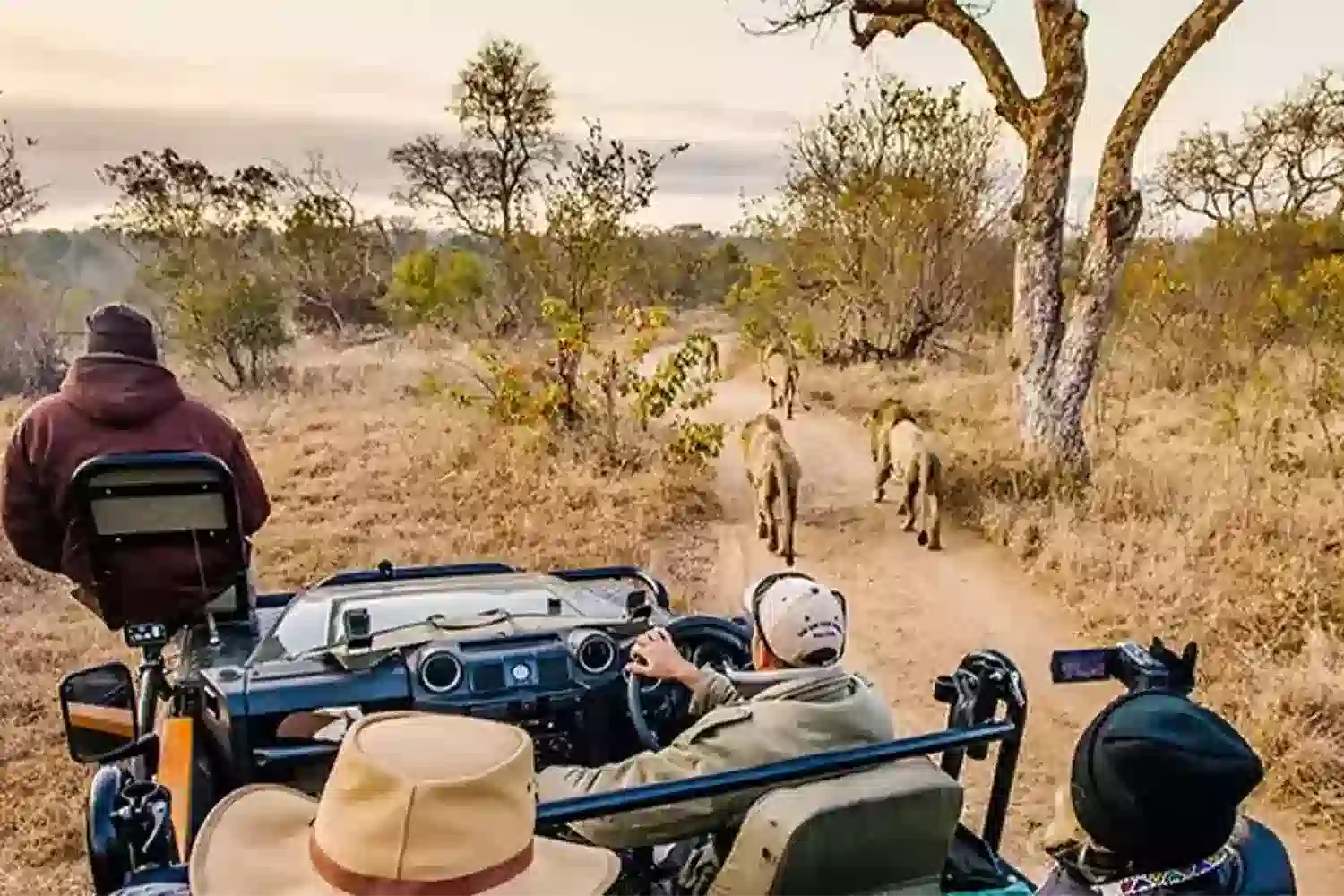
Quick Answer: What Is the Best Relaxed 3-Day Tanzania Safari?
The least-rushed three-day private safari is usually Tarangire on day one, Ngorongoro Crater on day two and Lake Manyara on day three, with two nights at the same lodge in Karatu. This keeps the parks in a logical order, avoids changing accommodation every night and gives you meaningful game-drive time in three different habitats.
| Planning question | Best practical answer |
|---|---|
| Best route for first-time visitors | Tarangire → Ngorongoro Crater → Lake Manyara |
| Best overnight base | Karatu for both nights |
| Ideal starting point | Arusha; Moshi also works with earlier starts |
| Best way to include Serengeti | Fly in; avoid a rushed overland circuit |
| Typical total safari day length | About 8–11 hours including transfers, stops and game drives |
| Who benefits most from private travel | Couples, families, photographers and travellers who value flexible pacing |
Why Three-Day Safaris Often Feel Rushed
The problem is rarely the number of days alone. It is usually an itinerary that tries to cover too much geography. Northern Tanzania looks compact on a map, but park roads are slow, gate procedures take time and wildlife sightings cannot be scheduled. A lion beside the road may hold your attention for forty minutes, while an elephant herd can change the route your guide planned.
A short safari becomes tiring when it includes long point-to-point drives, daily hotel changes, late arrivals, early departures and too many advertised attractions. A private vehicle gives you control, but it cannot remove distance. The best design therefore uses fewer transfers, one strategic base and one clear priority per day.
Best 3-Day Private Safari Routes Compared
| Route | Wildlife value | Pacing | Best for | Main compromise |
|---|---|---|---|---|
| Tarangire, Ngorongoro and Lake Manyara | High variety across elephant country, crater grasslands and Rift Valley forest | Best balanced | First safari, couples and families | No Serengeti |
| Tarangire and Ngorongoro only | Excellent large-mammal focus | Most relaxed | Travellers who prefer longer drives inside fewer parks | Less habitat variety |
| Serengeti and Ngorongoro by road | Iconic parks and strong predator potential | Transfer-heavy | Travellers who accept long drives | Limited time in Serengeti |
| Fly-in Serengeti safari | Excellent Serengeti focus | Efficient but costly | Short holidays and migration-focused travel | Higher airfare and baggage restrictions |
| Arusha National Park, Tarangire and Ngorongoro | Good mix of scenery, primates and big game | Moderate | Visitors arriving early near Arusha | One-night movement is less efficient than Karatu-based routing |
Travellers still deciding between routes can compare the best national parks for a short Tanzania safari and the most practical park combinations in Tanzania.
The Recommended Itinerary: Tarangire, Ngorongoro and Lake Manyara
This itinerary works because the route moves west from Arusha toward Tarangire, continues to Karatu and then returns through Lake Manyara. Staying in Karatu for both nights removes one full packing-and-check-in cycle and puts you close to the Ngorongoro entrance and Lake Manyara.
Day 1: Arusha or Moshi to Tarangire, Then Karatu
Leave Arusha after an early breakfast, ideally between 7:00 and 7:30 a.m. The road to Tarangire is generally around two to three hours depending on traffic, the exact gate and comfort stops. Starting in Moshi usually adds roughly one and a half to two hours, so a departure close to 5:30 or 6:00 a.m. protects your game-drive time.
Tarangire covers about 2,850 km². TANAPA describes it as elephant country, reporting more than 3,000 elephants and landscapes dominated by ancient baobabs. The Tarangire River becomes especially important during the dry season, when wildlife concentrates around dependable water.
A practical first day includes a late-morning game drive, picnic lunch and another two to three hours of wildlife viewing before continuing to Karatu. Do not plan to cover the whole park. Focus on productive river and woodland circuits selected by your guide.
Day 2: Full Ngorongoro Crater Day, Return to Karatu
Start early enough to reach the conservation-area gate before the main rush. From Karatu, allow approximately one to one and a half hours to complete the approach, gate process and drive toward the crater descent, depending on your lodge and conditions.
The Ngorongoro Crater is approximately 20 km across, 600 metres deep and around 300 km². The conservation authority reports more than 25,000 large animals in the wider crater count used in its visitor information. Wildlife numbers change over time, and no individual species is guaranteed, but the compact crater floor gives a short safari an unusually strong chance of seeing a wide range of mammals in one day.
Plan about five to six hours on the crater floor, including a picnic stop. Returning to the same Karatu lodge gives you a quieter evening and avoids driving onward to another hotel after an intense day.
Day 3: Lake Manyara Game Drive, Then Arusha or Moshi
Karatu is usually around 30–45 minutes from Lake Manyara's main gate, making the final morning efficient. TANAPA lists the park at 648.7 km² and records more than 400 bird species. Its habitats include groundwater forest, acacia woodland, floodplains, wetlands and the alkaline lake.
Allow about four to five hours for a focused game drive. Elephants, baboons, blue monkeys, giraffes, buffalo, hippos and waterbirds may be seen, while flamingo numbers and lake access vary with water conditions. The park's famous tree-climbing lions are possible but should never be presented as guaranteed.
After lunch, return to Arusha in roughly two to three hours. Continue to Moshi only when your onward schedule allows a longer final transfer. Avoid booking an international flight on the same evening unless your operator has built a large time buffer.
Realistic Drive-Time Planning Table
The figures below are planning ranges rather than promises. Traffic, weather, roadworks, gate queues, lodge location and wildlife stops can change the day.
| Route | Typical planning range | What can add time |
|---|---|---|
| Arusha to Tarangire gate | About 2–3 hours | Arusha traffic, stops and gate used |
| Moshi to Tarangire gate | About 3.5–4.5 hours | Traffic through Arusha and comfort stops |
| Tarangire gate to Karatu | About 1.5–2.5 hours | Exit location, traffic near Mto wa Mbu and lodge access |
| Karatu to Ngorongoro descent area | About 1–1.5 hours | Gate process, fog and crater-rim traffic |
| Karatu to Lake Manyara gate | About 30–45 minutes | Lodge location and local traffic |
| Lake Manyara to Arusha | About 2–3 hours | Market traffic, stops and Arusha congestion |
How Much Does a 3-Day Private Tanzania Safari Cost in 2026/2027?
Private-safari pricing depends on the number of travellers, season, accommodation, room type, vehicle specification and exactly which fees are included. Vehicle and guide costs are largely fixed, so the per-person price normally falls as more people share the same private Land Cruiser.
A review of live 2026 marketplace listings for two travellers showed road-based private trips covering Tarangire, Ngorongoro and Lake Manyara at approximately USD 840–1,480 per person. Comparable fly-in Serengeti and Ngorongoro examples were around USD 1,760–1,885 per person. These are market observations, not fixed Jaynevy Tours quotations.
| Safari style | Indicative 2026/2027 range per adult | Usually includes |
|---|---|---|
| Private budget lodge, two adults | USD 800–1,050 | Private 4x4, guide, park fees, basic lodge, meals and water |
| Private mid-range lodge, two adults | USD 1,000–1,400 | Comfortable lodge, private vehicle, full-board safari services |
| Private luxury lodge, two adults | USD 1,400–2,200+ | Higher-end rooms, premium location and enhanced service |
| Fly-in Serengeti, two adults | USD 1,700–2,300+ | Scheduled bush flights, camp, transfers and game drives |
| Four to six adults sharing one private vehicle | Often 15–35% less per person than a couple | Same private vehicle cost divided among more travellers |
Before comparing quotes, check whether the price includes VAT, park entry, Ngorongoro vehicle descent fee, accommodation, meals, airport transfers, drinking water and any one-way transfer to Moshi. Use the site's guide to Tanzania national park fees as a starting point, but request a current quotation because official tariffs can change.
What a Proper Private Safari Quote Should Include
- A private safari vehicle reserved only for your party.
- A licensed professional driver-guide for all three days.
- All stated national park and conservation-area fees.
- The Ngorongoro Crater vehicle service or descent fee where applicable.
- Two nights of accommodation in the agreed room category.
- Meals according to the itinerary, commonly full board during safari.
- Bottled or filtered drinking water in the vehicle.
- Pickup and drop-off locations written clearly.
- Emergency contact details and a transparent cancellation policy.
Also confirm exclusions such as gratuities, visas, travel insurance, alcohol, laundry, optional village visits and international or domestic flights.
Why Two Nights in Karatu Improve the Safari
Changing hotels may look harmless on paper, but it uses time. Every move includes packing, checking out, loading luggage, finding the new property, checking in and settling into the room. A two-night Karatu stay removes one complete transition.
Karatu also gives practical access to both Ngorongoro and Lake Manyara, offers a wide range of lodge levels and usually provides cooler evenings than the lower savannah. The result is a short itinerary that feels like a safari rather than a sequence of transfers.
Is Serengeti Realistic in Three Days?
Yes, but not every version is relaxed. An overland Arusha–Serengeti–Ngorongoro route spends a substantial portion of the trip travelling across the Ngorongoro highlands and conservation area. The scenery is rewarding, but the itinerary should be sold honestly as a road adventure with limited park depth.
Choose an overland three-day Serengeti and Ngorongoro itinerary only when seeing the Serengeti matters more than avoiding long transfers. For better use of limited time, consider a three-day Serengeti fly-in safari, which replaces a major road transfer with a bush flight.
| Serengeti option | Time efficiency | Cost | Best choice when |
|---|---|---|---|
| Drive in and drive out | Low | Lower | You enjoy road scenery and accept limited game-drive time |
| Fly in, drive out | Good | Medium-high | You want Serengeti plus Ngorongoro without two long road transfers |
| Fly in and fly out | Highest | Highest | Your priority is maximum Serengeti time |
Best Months for a Comfortable Three-Day Safari
The northern circuit operates year-round, but conditions change the experience. July through October usually brings drier roads and strong wildlife concentration in Tarangire, while January and February are often warm, green and rewarding. March to May can bring heavier rain, lower lodge prices, dramatic skies and quieter parks, but road conditions and visibility may vary.
| Period | Typical strengths | Planning consideration |
|---|---|---|
| January–February | Green landscapes, good general wildlife and clear mornings | Hot afternoons; popular holiday dates cost more |
| March–May | Lower rates, fewer vehicles and lush scenery | Rain can lengthen drives and some tracks may be muddy |
| June | Drying conditions and good value before peak crowds | Cool mornings around Ngorongoro |
| July–October | Excellent Tarangire elephant season and generally dry roads | Higher prices and more vehicles at popular sightings |
| November–mid-December | Fresh landscapes, fewer crowds and useful shoulder-season value | Short rains are variable |
| Late December | Festive travel and green-season scenery | High demand; book early |
For a wider seasonal comparison, read the guide to the best time for wildlife viewing in Tanzania.
How a Private Safari Reduces Pressure
A private safari is not simply a luxury label. On a short itinerary, it is a time-management tool. Your party can leave earlier, stay longer at a sighting, shorten lunch, return to the lodge when children are tired and adjust the day around photography or birding.
- No collection circuit: you do not spend the morning picking up guests from several hotels.
- Flexible stops: comfort, photography and wildlife stops follow your group.
- Seat control: your party decides how vehicle space is used.
- Guide continuity: one guide understands your priorities across the trip.
- Route flexibility: the guide can change tracks when wildlife information changes.
Review the detailed three-day private Tanzania safari page for a bookable route, or compare a private luxury three-day safari from Arusha.
Seven Ways to Keep the Itinerary Relaxed
- Arrive one day before the safari. Do not land internationally and begin a long game-drive day immediately.
- Start in Arusha where possible. Starting in Moshi is workable, but it lengthens days one and three.
- Use Karatu for both nights. This is the single easiest way to remove unnecessary logistics.
- Choose one main wildlife objective per day. Do not add multiple cultural tours, walking activities and long transfers to the same day.
- Keep lunch simple. A picnic inside the park generally protects game-drive time better than leaving for a restaurant.
- Do not schedule a tight flight connection after the safari. Wildlife, weather and road traffic are unpredictable.
- Ask for actual transfer estimates. A quality itinerary separates road time from game-drive time.
Common Planning Mistakes
| Mistake | Why it causes pressure | Better decision |
|---|---|---|
| Adding Serengeti to a road itinerary without discussing distance | Long transfers replace game-drive hours | Choose nearby parks or fly one sector |
| Sleeping in a different lodge every night | Repeated packing and check-in time | Use Karatu for two nights |
| Starting after 9:00 a.m. | Reduces cooler morning wildlife time | Prepare luggage and breakfast the night before |
| Choosing only by the lowest price | Important fees or vehicle standards may be excluded | Compare line-by-line inclusions |
| Expecting every Big Five species | Wildlife is free-ranging and sightings are never guaranteed | Judge the trip by habitat, guiding and overall wildlife diversity |
| Booking a same-evening international flight | Traffic or delays can create major risk | Stay overnight near Arusha, Moshi or the airport |
What to Pack for Three Days
Pack lightly even when travelling by road. Use soft luggage, neutral clothing and layers for the cool Ngorongoro morning. Useful items include a hat, sunscreen, sunglasses, light rain jacket, warm fleece, closed shoes, camera batteries, power bank, binoculars and prescribed medication. The complete Tanzania safari packing list covers clothing and equipment in more detail.
Who Should Choose This Safari—and Who Should Add a Day?
| Three days works well when | Add a fourth or fifth day when |
|---|---|
| You want a strong introduction to northern Tanzania | Serengeti is essential to your trip |
| You are combining safari with Kilimanjaro or Zanzibar | You travel with very young children or slower-moving relatives |
| You are comfortable with early starts | You want photography at both sunrise and sunset |
| You prefer three distinct ecosystems | You dislike changing activities every day |
| Your budget is concentrated on a private vehicle and good guide | You want cultural visits, walking, ballooning or extended lodge time |
First-time safari travellers may also find the guide to what to expect on a first Tanzania safari useful before confirming the route.
Final Verdict: Can Three Days Feel Relaxed?
Yes—when the geography is disciplined. The route should not be judged by how many famous names appear in the itinerary. It should be judged by how much useful time you spend in wildlife habitat, how often you change hotels and whether each day has room for real sightings rather than a fixed checklist.
For the best balance, start in Arusha, visit Tarangire, spend both nights in Karatu, explore Ngorongoro Crater on the middle day and finish at Lake Manyara. Choose Tarangire plus Ngorongoro only when you want an even slower pace. Include Serengeti only when you accept the road time or can budget for a flight.
Frequently Asked Questions
Is three days enough for a Tanzania safari?
Three days are enough for a high-quality short safari when you choose neighbouring northern-circuit parks. Tarangire, Ngorongoro and Lake Manyara provide strong variety without requiring a long Serengeti transfer.
What is the best three-day safari route from Arusha?
The most balanced route is Arusha to Tarangire, two nights in Karatu, Ngorongoro Crater on day two and Lake Manyara before returning to Arusha on day three.
Can I start a three-day safari from Moshi?
Yes. Moshi is a practical starting point, especially after Kilimanjaro, but it adds roughly one and a half to two hours compared with Arusha on the first and final travel days.
Should I include Serengeti in only three days?
Include Serengeti when it is your main priority. A road itinerary is possible but transfer-heavy. A fly-in or fly-in/drive-out plan uses limited time more efficiently.
Where should I stay on a relaxed three-day safari?
Karatu is the most practical two-night base for a Tarangire, Ngorongoro and Lake Manyara route because it reduces hotel changes and sits close to the final two parks.
How much does a private three-day Tanzania safari cost?
For two adults, indicative 2026/2027 road-safari prices commonly fall around USD 800–1,400 per person for budget-to-mid-range lodging. Luxury and fly-in options cost more, while larger private groups usually pay less per person.
Are park fees included in private safari prices?
Reputable package quotes usually include the listed park and conservation fees, but travellers should verify every inclusion, including the Ngorongoro vehicle descent fee, VAT and accommodation charges.
Will I see the Big Five in three days?
You may see several Big Five species, especially in Ngorongoro and Tarangire, but no ethical operator can guarantee all five. Rhino and leopard sightings are particularly unpredictable.
Is a private safari better than a joining safari for three days?
A private safari offers more control over departure times, stops, seating and sighting duration. That flexibility is especially valuable on a short itinerary.
What is the best month for this route?
The route works year-round. July to October is especially strong for Tarangire wildlife concentration, while January, February, June and November can offer an appealing balance of wildlife, scenery and crowd levels.
Should I book a flight immediately after the safari?
A domestic evening flight may be workable with a generous buffer, but an overnight stay is safer before an international departure because road, weather and wildlife delays can occur.
Research Notes and Data Sources
This guide combines route-planning estimates with current public information. Park sizes and wildlife figures were checked against the Tanzania National Parks Authority and Ngorongoro Conservation Area Authority. Price ranges were benchmarked against live three-day private safari listings viewed on 29 July 2026. Driving times are operational planning ranges, not guaranteed journey times.
- Tanzania National Parks: Tarangire National Park
- Tanzania National Parks: Lake Manyara National Park
- TANAPA park tariffs
- Ngorongoro Conservation Area Authority
- Live three-day Tanzania safari market examples
Last researched and updated: 29 July 2026. Always request a date-specific quotation and reconfirm government fees before payment.