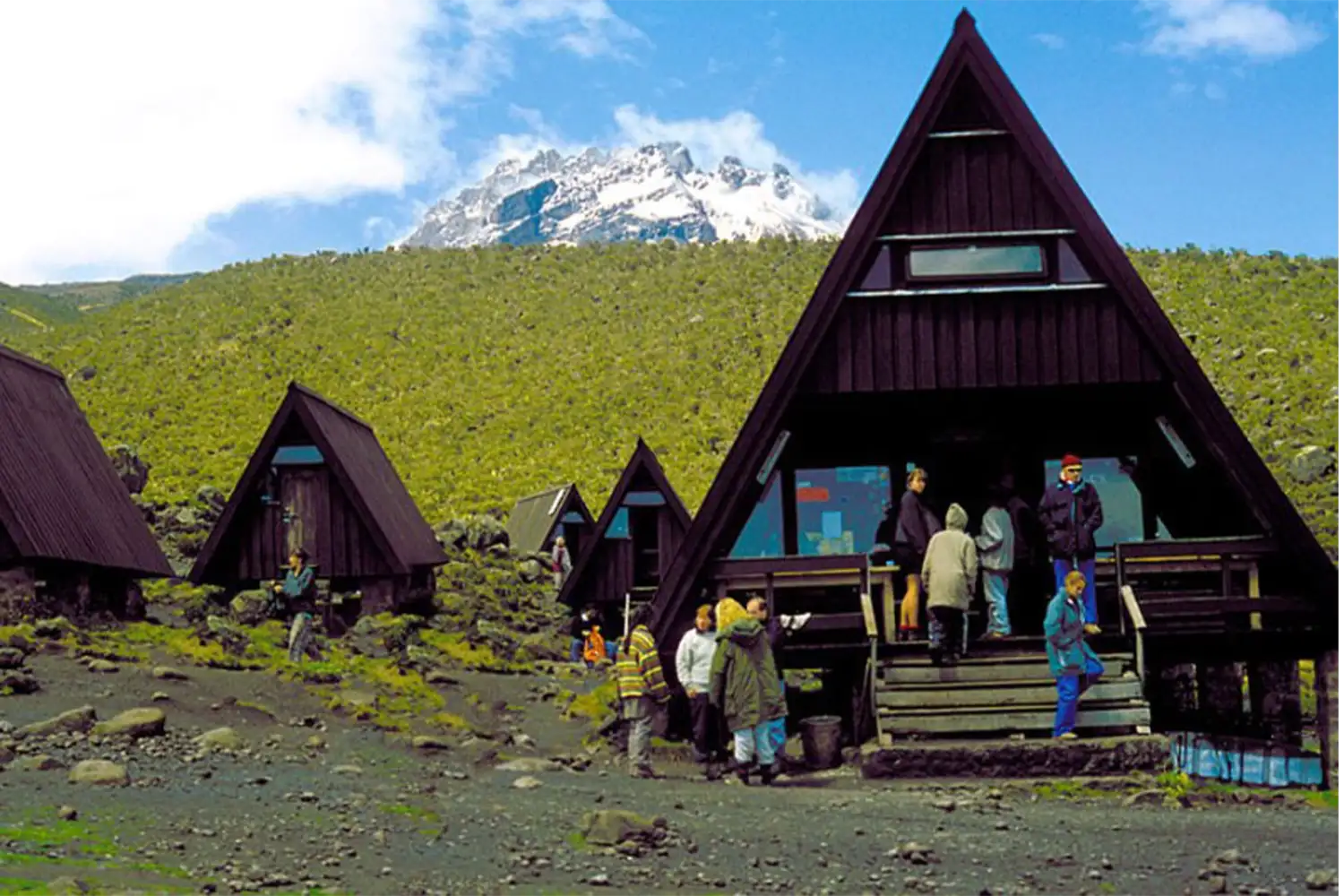
Quick Answer: Are Kilimanjaro Huts Better Than Camping?
Choose Marangu huts if you value a solid roof, communal mountain accommodation and less dependence on a tent during wet nights. Choose a camping route if you want more route options, more privacy inside your sleeping tent, and access to itineraries such as Machame, Lemosho, Rongai or the Northern Circuit. For summit planning, the accommodation type is secondary: ascent speed, sleeping altitude, number of climbing days and how you respond to altitude matter more.
Kilimanjaro Huts vs Camping at a Glance
| Factor | Marangu Huts | Camping Routes |
|---|---|---|
| Where used | Marangu Route | Machame, Lemosho, Rongai, Northern Circuit, Umbwe and related camping itineraries |
| Sleeping shelter | Permanent mountain huts | Expedition tents at designated campsites |
| Privacy | Lower; sleeping is generally communal | Usually higher; commonly one or two climbers per sleeping tent |
| Protection at camp | Solid walls and roof give an advantage in rain and wind | Good mountain tents protect from weather, but comfort depends on tent quality and setup |
| Route choice | One main hut-based route | Several route choices and itinerary lengths |
| Acclimatization | Depends strongly on choosing the 5- or 6-day schedule | Depends on the route and duration; longer camping itineraries can create more gradual profiles |
| Night atmosphere | Shared hut environment | Outdoor camp atmosphere with private sleeping tents and shared dining facilities |
| Best for | Climbers who dislike sleeping in tents or expect wetter conditions | Climbers prioritizing route variety, scenery and tent privacy |
What Accommodation Actually Exists on Kilimanjaro?
Tanzania National Parks lists Mandara, Horombo and Kibo as Kilimanjaro huts. Its park facilities schedule also identifies 19 camping areas across six Kilimanjaro route systems. That distinction explains why Marangu feels different from the rest of the mountain: instead of arriving at a campsite where tents are erected, climbers move between permanent hut stations.
For a route overview before deciding, compare the Marangu Route with the Machame Route, Lemosho Route and Rongai Route.
Marangu Route Huts: What You Should Expect
Marangu is often described as the “hut route,” but that can create the wrong expectation. These are practical high-altitude mountain shelters, not lodges. The important advantage is weather protection and a fixed place to sleep; the trade-off is shared space and less privacy than a small expedition tent.
Mandara Hut
Mandara is the first major overnight hut on the usual Marangu ascent. It sits in the lower mountain environment after the forest approach. For many first-time climbers, the night here is their first test of sleeping at altitude, but it is still far below the heights reached later in the itinerary.
Horombo Hut
Horombo is a key station because the six-day Marangu itinerary can use it for an additional acclimatization day before moving higher. That extra day is often more important than the hut itself. If you are considering Marangu, compare the exact schedule rather than assuming that hut accommodation automatically means a gentler climb.
Kibo Hut
Kibo is the high staging point before the summit attempt on the standard Marangu itinerary. Conditions are colder, sleep can be difficult, and the next stage is demanding. A solid building does not change the fact that you are sleeping at very high altitude before climbing toward Uhuru Peak at 5,895 m.
Important: Huts Are Not a Shortcut Around Altitude
A warm roof may improve comfort, but it does not accelerate acclimatization. A five-day Marangu climb is still a fast ascent. If your priority is altitude adaptation, compare the six-day Marangu schedule with longer camping itineraries rather than comparing “hut versus tent” alone.
What Camping on Kilimanjaro Is Really Like
Camping routes use designated mountain sites rather than permanent sleeping huts. On an organized climb, the crew transports and sets up the main camp equipment. Your sleeping tent normally travels ahead with the porters while you hike with a daypack. A separate dining tent is commonly used for meals and briefings, depending on the operator and package.
Camping is not the same as sleeping in a permanent safari tented lodge. The campsite moves with the itinerary, facilities are basic, and space is limited. What camping gives you is route flexibility: you can choose a profile that suits your available days, scenery priorities and acclimatization plan.
Camping by Route: How the Experience Changes
| Route | Accommodation | Typical Strength | Main Accommodation Consideration |
|---|---|---|---|
| Machame | Camping | Varied scenery and climb-high, sleep-lower profile | Popular camps can feel busy; tent quality matters in wind and rain |
| Lemosho | Camping | Long western approach and strong scenery | More camping nights on longer versions; good choice if you value a slower itinerary |
| Rongai | Camping | Northern approach and different landscape | Remote camp feel; route normally descends by Marangu |
| Northern Circuit | Camping | Longest standard itinerary and quieter northern traverse | More nights in tents, so sleep system quality becomes especially important |
| Umbwe | Camping | Steep, direct approach | Accommodation is not the limiting factor; the aggressive altitude profile is the bigger issue |
For route-specific accommodation details, see the pages on Machame camping accommodation, Lemosho camping and Rongai camping.
Huts vs Tents: Which Is More Comfortable?
Comfort depends on what bothers you most. If your main concern is rain, wind or the idea of sleeping under canvas, Marangu has a clear advantage. If your main concern is sharing a sleeping room with other climbers, camping can feel more comfortable because your sleeping space is usually limited to your tent partner.
- Huts win for solid-weather shelter: walls and a roof are useful during wet evenings.
- Tents win for sleeping privacy: fewer people share the immediate sleeping space.
- Both remain basic: neither option is comparable with a hotel room.
- Sleeping-bag quality still matters: high-altitude nights can be cold in both huts and tents.
- Camp hygiene depends on management: shared mountain facilities require disciplined crew and guest practices regardless of route.
Which Option Is Better in Rain, Wind and Cold?
Marangu huts provide the strongest advantage when weather is poor around camp. You can change clothes, organize gear and sleep without relying on the waterproofing of a tent. However, you still hike outside all day and summit in exposed conditions, so a hut should never be used as a reason to pack lighter rain or cold-weather gear.
Camping performance depends partly on equipment. A well-maintained four-season-style mountain tent, correct staking and a dry sleeping system can be very comfortable. A poor tent or wet sleeping bag can turn a normal mountain night into a miserable one. Before booking, ask what tent model is used, how many climbers share it, whether sleeping mats are included and how wet equipment is managed.
Does Hut or Camping Accommodation Affect Acclimatization?
The route profile matters much more than the building you sleep in. Acclimatization is driven by how quickly sleeping altitude increases, how many days you spend ascending and how your body responds. A tent at a sensible altitude is not less “acclimatizing” than a hut at the same altitude.
CDC guidance notes that altitude illness commonly becomes a concern above about 3,048 m and reports acute mountain sickness prevalence of 75–77% in studies of rapid four- and five-day Kilimanjaro ascents. That is one reason very short itineraries deserve careful scrutiny.
What Kilimanjaro Research Shows
- A prospective cohort included 1,237 recreational hikers.
- 87.9% reached Uhuru Peak in that study population.
- 8.6% developed severe altitude-illness symptoms.
- 1.1% were hospitalized because of severe altitude illness.
- Climbing in more days was one of the factors associated with summit success.
These figures describe the study population as a whole; they are not audited success rates for Marangu huts or any single camping route.
If altitude adaptation is a priority, read the Kilimanjaro acclimatization guide and compare the number of mountain days before choosing accommodation.
Marangu Huts vs Camping: Cost Differences
It is tempting to assume that huts are automatically cheaper because tents do not need to be carried, but total package pricing is more complicated. TANAPA treats mountain accommodation and camping within the park tariff system, while operators also price crew wages, food, transport, equipment, park days and route logistics.
A shorter Marangu climb can therefore cost less than a longer Lemosho or Northern Circuit itinerary, but that difference is mainly about duration and logistics, not simply “hut versus tent.” Compare inclusions line by line and use the Kilimanjaro climbing packages as a starting point rather than judging by accommodation label.
Privacy, Noise and Sleep Quality
Sleep is personal. In a hut, you may appreciate the stable structure but notice other climbers moving, packing, talking or waking early. In a tent, wind noise can be stronger, but the sleeping space is usually more private. For light sleepers, neither option guarantees perfect rest at altitude.
The most practical preparation is a warm sleeping bag, comfortable base layers, earplugs if you use them normally, and disciplined organization of your summit-night clothing. The Kilimanjaro packing checklist covers the core personal items for either accommodation style.
Which Accommodation Is Better for Different Climbers?
| Traveller Priority | Better Starting Point | Why |
|---|---|---|
| I strongly dislike tents | Marangu | Permanent huts remove the need to sleep under canvas |
| I want more sleeping privacy | Camping route | Sleeping tents normally hold fewer people than communal huts |
| I want the widest route choice | Camping route | Most Kilimanjaro routes are camping itineraries |
| I am worried about rainy nights | Marangu | Huts improve shelter at camp, although the trail and summit remain exposed |
| Acclimatization is my main concern | Longer itinerary | Choose by ascent profile and days, not by hut versus tent |
| I want Lemosho or Northern Circuit scenery | Camping route | Those itineraries require camping |
Five Common Myths About Kilimanjaro Accommodation
- “Marangu huts are hotels.” They are basic mountain facilities, not private hotel rooms.
- “Camping means carrying your own tent.” On a supported climb, the crew normally carries and sets up main camp equipment.
- “Huts make Marangu safer at altitude.” Accommodation does not replace acclimatization time or guide decisions.
- “Camping routes are always colder.” Weather and altitude drive temperature; proper sleeping equipment matters on every route.
- “The cheapest accommodation is the best value.” Route duration, safety systems, crew standards and itinerary quality matter more than the shelter alone.
What to Ask Before Booking a Hut or Camping Climb
- How many actual mountain days are included?
- What are the sleeping altitudes each night?
- If camping, what tent and sleeping mat are provided?
- If using Marangu, is the itinerary five or six days?
- How are weather, wet gear and cold nights managed?
- What toilet facilities are available or provided?
- What happens if a climber develops altitude symptoms?
- Are park, hut/camping and rescue-related fees included in the written quote?
Final Verdict: Marangu Huts or Kilimanjaro Camping?
Marangu is the better accommodation choice when sleeping under a solid roof matters enough to shape your route decision. Camping is the better choice when you want access to more routes, greater sleeping privacy and itineraries such as Machame, Lemosho, Rongai or Northern Circuit. But accommodation should come after the bigger questions: how many days you have, how the sleeping altitude rises, what scenery you want and how the operator manages safety.
For many climbers, the best decision is not “hut or tent?” but “which itinerary gives me the best combination of pace, route experience and sleep comfort?”
Frequently Asked Questions
Does Kilimanjaro have mountain huts?
Yes. The standard Marangu Route uses the Mandara, Horombo and Kibo huts. Most other standard Kilimanjaro routes use designated campsites and tents instead of sleeping huts.
Which Kilimanjaro route has huts instead of tents?
Marangu is the standard Kilimanjaro trekking route known for hut accommodation. Machame, Lemosho, Rongai, Northern Circuit, Umbwe and Shira-style itineraries are normally camping routes.
Are Marangu huts private rooms?
No. Marangu huts are mountain accommodation, not private hotel rooms. Sleeping arrangements are generally shared and basic, so climbers should expect communal spaces and limited privacy.
Is camping colder than sleeping in Marangu huts?
A hut gives more protection from wind and rain around camp, but both hut and camping climbers still need a warm sleeping bag and proper cold-weather clothing. Night temperatures are driven mainly by altitude and weather.
Is Marangu better in the rainy season because it has huts?
Huts can make evenings more comfortable during wet weather because climbers do not sleep inside tents. The trail can still be wet or muddy, and summit weather remains exposed, so huts do not remove weather risk.
Does sleeping in huts improve acclimatization?
Not by itself. Acclimatization depends much more on ascent rate, sleeping altitude, route profile and number of mountain days. A longer itinerary can be more important than whether the bed is inside a hut or a tent.
Which is more private: Marangu huts or camping?
Camping usually offers more sleeping privacy because most trekking tents are shared by one or two climbers, while Marangu sleeping huts are communal. Campsites still have shared dining and toilet areas.
Do I need to carry my own tent on Kilimanjaro?
On an organized camping climb, the mountain crew normally transports and sets up the main camping equipment. Climbers still carry their own daypack with water, clothing layers and personal essentials.
Which camping route is best for acclimatization?
There is no single answer for every climber. Longer versions of Lemosho, the Northern Circuit and seven-day Machame can provide more time than short itineraries, but the exact camp sequence and sleeping-altitude gains should be checked before booking.
Are Kilimanjaro campsites permanent tented camps?
No. Standard trekking campsites are designated mountain sites where expedition tents are erected for the climbing group. They should not be confused with permanent safari tented lodges.
Are hut routes cheaper than camping routes?
Not automatically. Total price depends on park charges, route length, crew size, meals, equipment, transport and operator standards. A short Marangu itinerary can cost less than a longer camping itinerary, but accommodation type alone does not determine the final price.
Which accommodation should a first-time Kilimanjaro climber choose?
Choose based on the complete route rather than accommodation alone. Pick Marangu if hut sleeping and a direct trail matter most; choose a camping route if you prefer greater route choice, tent privacy and itineraries such as Machame, Lemosho, Rongai or Northern Circuit.
Research and Planning Sources
This guide separates official park information from medical research and operator planning advice. Accommodation availability and park tariffs can change, so confirm current details in your written quotation before payment.