
What You Need to Know: On our Kilimanjaro climbs you have a private toilet tent on every camping route, drinking water and three cooked meals a day from your own cook, but no showers or electricity, so bring a power bank and wet wipes. You need a passport, a Tanzania visa, travel insurance covering 19,700 ft (6,000 m) and a licensed guide, which every climb includes. Budget about US$55–95 per day for crew tips.
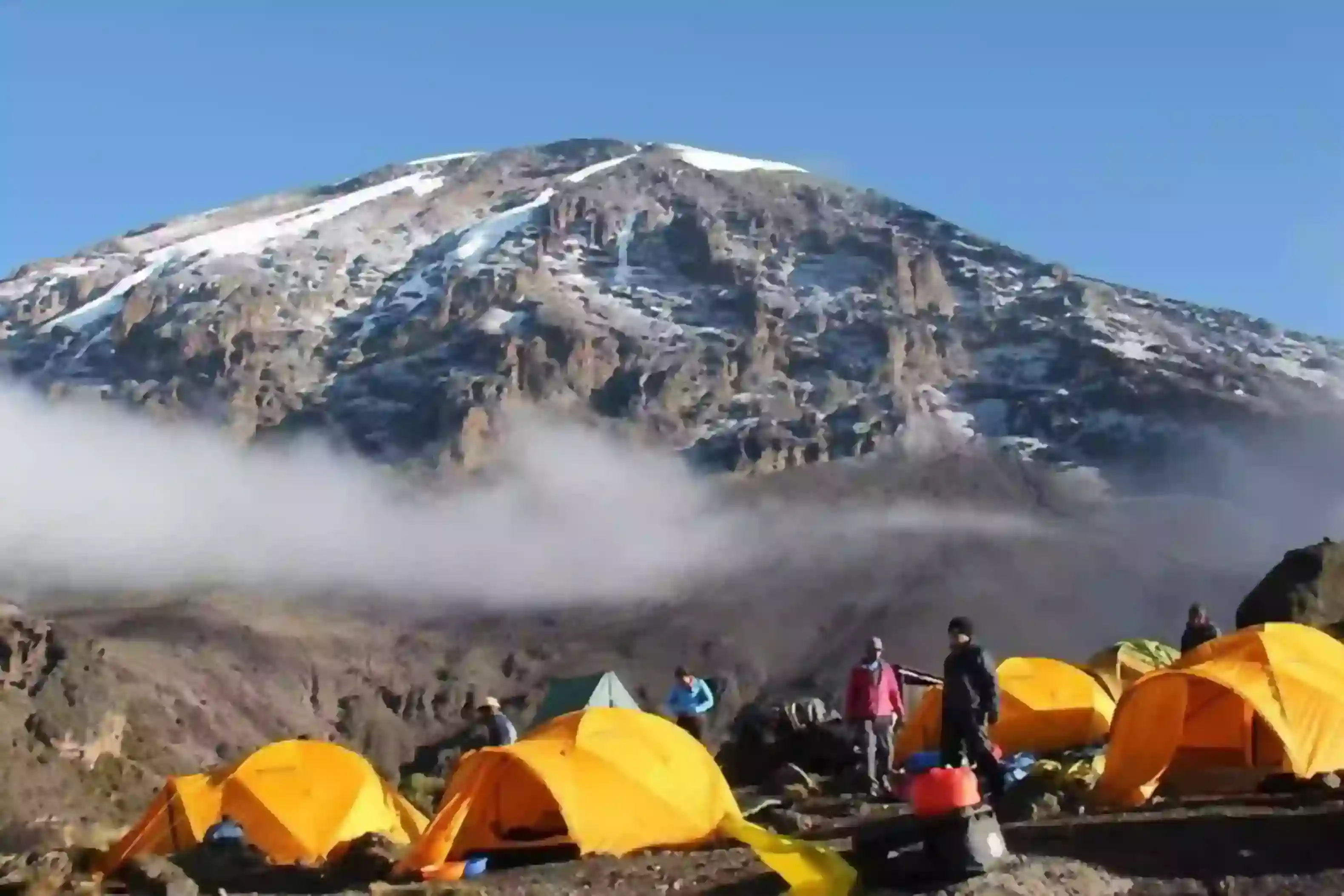
Life in Camp: Toilets, Water and Washing
Every camping climb has a private portable toilet tent for your group; the public camps also have basic long-drop toilets. Drinking water is provided by the crew, and washing is with a bowl of warm water.
| Question | Answer |
|---|---|
| Are there toilets? | A private toilet tent for your group on every camping climb; basic long-drop toilets at public camps; shared toilets at the Marangu huts |
| Is drinking water provided? | Yes, included with hot drinks |
| Can I shower? | No showers on the mountain; a bowl of warm water for washing |
| Is there laundry? | Not on the mountain; laundry is available in Moshi |
Pack wet wipes and hand sanitizer. They make camp life much easier.
Food on the mountain
Your cook prepares breakfast, lunch and dinner every day and doesn't repeat a meal during the climb. Meals are built around filling staples such as potatoes, rice, spaghetti and chicken, and every lunch and dinner starts with a fresh soup, such as potato, pumpkin or cucumber.
Vegan, vegetarian and allergy requirements are followed for every meal; tell us when you book. Bring a few of your favorite snacks for the trail and summit night.
Phone Signal, Charging and Drones on Kilimanjaro
Phone signal is patchy and comes and goes with altitude and direction. There is no electricity on the mountain, so bring a power bank. Flying a drone needs official permission.
- Signal: patchy, at some camps and on parts of the crater rim
- Charging: bring power banks; keep them warm in your sleeping bag at night
- Drones: not allowed without official permits
Tell family not to worry if they don't hear from you for a few days.
Documents and Park Rules for Climbing Kilimanjaro
You need a passport, a Tanzania visa and travel insurance. Every climber must go with a licensed guide; climbing without one is not allowed. The park registers every climber at the gate with their passport details, and your guide handles the permits, which are included in your climb price.
- Passport valid for at least six months
- Tanzania visa: US$100 for US citizens (see visa information)
- Travel insurance covering trekking to 19,700 ft (6,000 m) and helicopter evacuation
- Tanzania's mandatory inbound travel insurance, US$44 per adult from October 1, 2026
- Licensed guide: required for every climber
- Minimum age for the summit: 10
Send copies of your passport and insurance when you book.
Which Languages Do Our Kilimanjaro Guides Speak?
Our guides speak English and Swahili, and we can arrange a guide who speaks Spanish, French, Chinese, German or Italian. Each climber has a crew of seven: one guide, one cook and five porters. A few words of Swahili go a long way:
| Swahili | Meaning |
|---|---|
| Jambo | Hello |
| Asante | Thank you |
| Pole pole | Slowly, slowly |
| Hakuna matata | No problem |
| Twende | Let's go |
Tell us which language you need when you book, so we can assign the right guide.
Money, Tips and What Happens After the Climb
Bring enough cash for tips, about US$55–95 per climber per day for a crew of seven, plus small amounts for drinks and souvenirs in Moshi. US dollars are widely accepted; bring newer notes. See our tipping guide and cost guide.
At the exit gate, climbers who reach the crater rim or the summit receive a certificate from the park. Most climbers then rest in Moshi, take an easy day trip, or go on to a safari or Zanzibar.
- Chemka hot springs
- Materuni waterfall and coffee tour
- A safari: see our Kilimanjaro, safari and Zanzibar tour
- Zanzibar
More Quick Answers About Climbing Kilimanjaro
Can women climb safely during their period?
Yes. Bring enough supplies and a way to carry used items out, and let your guide know if you feel unwell.
Will I get a summit certificate?
Yes. Kilimanjaro National Park issues certificates at the exit gate: one for reaching the crater rim at Stella Point or Gilman's Point, and one for Uhuru Peak.
How much cash should I bring?
Enough for tips for the crew, about US$55–95 per climber per day, plus small amounts for drinks and souvenirs. US dollars are widely accepted.
Can I climb Kilimanjaro without a guide?
No. Kilimanjaro National Park only allows climbs with a licensed guide, booked through a registered operator.
What is the minimum age to climb Kilimanjaro?
10 years for summit climbs. There is no upper age limit.
Is the water safe to drink?
Drinking water is provided by the crew throughout the climb, along with hot drinks.
Can I bring my own snacks?
Yes, and we recommend it, especially for summit night.
Can I charge my phone on the mountain?
No. There is no electricity on the mountain; bring power banks and keep them warm.
Do I need a sleeping bag?
Yes, rated to about 14 °F (−10 °C). You can rent one in Moshi for US$25.
What happens if I can't continue?
A guide takes you down, and the rest of the group continues with their own guides. See safety on Kilimanjaro.
Can I climb Kilimanjaro without training?
Many people do, but you'll enjoy it more after a few weeks of hiking and stairs.
Do I need a visa to climb Kilimanjaro?
Yes, a Tanzania visa, plus the inbound travel insurance.
More Kilimanjaro guides
- All Kilimanjaro climbs and prices
- Choosing a route
- The best time to climb
- How hard it is
- Packing list
- Safety
- Camps and huts
The Bottom Line
Bring a power bank, wet wipes, cash for tips and your documents; the crew provides the rest, from water and meals to a private toilet tent. If your question isn't here, ask us.
Send us your dates, the number of climbers and your hotel level through the form, on WhatsApp +255 678 992 599 or by email to jaynevytours@gmail.com, and our sales team in Moshi will reply with a written quotation.