
What You Need to Know: Summit night on Kilimanjaro starts around midnight from high camp, at about 15,100 to 15,500 ft (4,600 to 4,700 m). You climb for 6 to 8 hours to the crater rim, reaching Stella Point or Gilman's Point around sunrise, then walk 1 to 2 hours more to Uhuru Peak, 19,341 ft (5,895 m). The descent to a lower camp takes another 4 to 6 hours, so expect 11 to 15 hours on your feet. Temperatures are often 0 to -4 °F (-18 to -20 °C) with wind chill.
Kilimanjaro Summit Night Hour by Hour
Timings vary with your route and pace, but on the southern routes (Machame, Lemosho, Umbwe) from Barafu Camp a typical night runs like this:
| Time | What happens |
|---|---|
| Afternoon | Arrive at Barafu, a hot meal, the summit briefing, a health check and a gear check with your guide |
| 6 to 11 pm | Early dinner, then rest in your sleeping bag; few people sleep much |
| 11 pm | Wake-up with tea and biscuits; dress in all your layers |
| Midnight | Set off by headlamp up the switchbacks of loose scree |
| 3 to 5 am | The coldest, hardest hours; short stops for a drink and a snack |
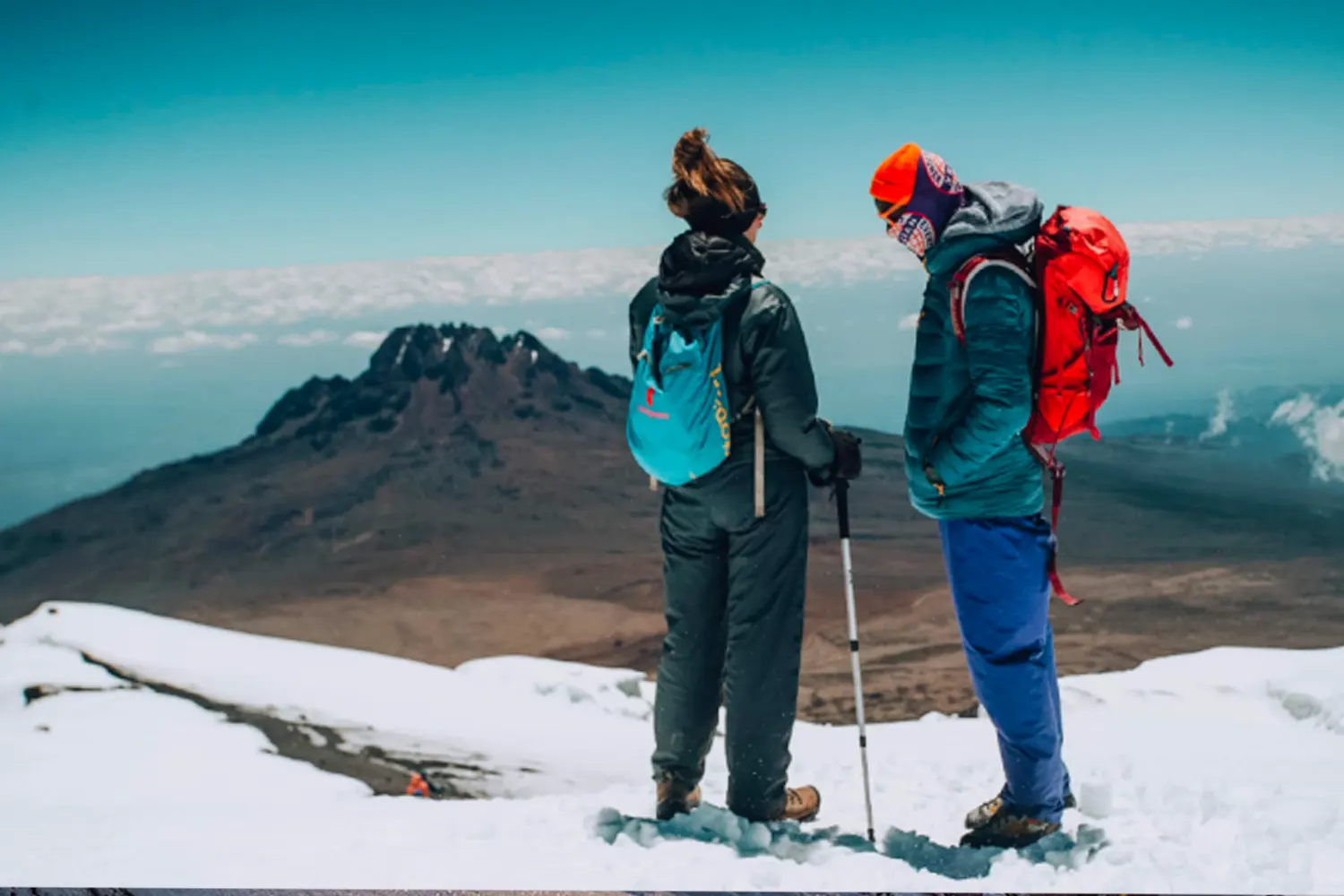
| 5:30 to 6:30 am | Stella Point on the crater rim, as the sun rises over Mawenzi |
| 7 to 8 am | Uhuru Peak: photos at the sign, a few minutes at the top |
| 8 am to noon | Back down to Barafu for a rest and a meal |
| Afternoon | Continue down to Mweka or Millennium Camp for the night |
On the Marangu and Rongai Routes, you start from Kibo Hut and reach the rim at Gilman's Point; on the Northern Circuit, from School Hut. The pattern is the same.
Why Is Summit Night So Hard?
Three things come together. The air at the summit has about half the oxygen of sea level, so every step is slow and breathing is hard. It is cold, often well below freezing with wind. And you start tired, after little sleep. The scree above high camp is steep and loose, and the climb seems endless in the dark. Most people find the hours before dawn the hardest; the sunrise brings a lift of energy. Our guides set a very slow, steady pace, "pole pole", and keep you moving with short breaks so you don't get cold.
What to Wear on Kilimanjaro Summit Night
Dress in layers you can adjust without stopping long:
- On top: a base layer, a fleece or two, a down jacket and a windproof shell
- On your legs: thermal leggings, trekking trousers and waterproof over-trousers
- Hands: thin liner gloves inside warm insulated mittens
- Head: a warm hat, a buff or balaclava, and a headlamp with spare batteries
- Feet: warm wool socks in your broken-in boots, with gaiters for the scree
- In your pack: sunglasses and sunscreen for the descent, snacks and 2 to 3 liters of water
Our packing list covers each item, and you can rent a down jacket and other gear in Moshi.
Water and Food on Summit Night
Water freezes in exposed tubes and bottles, so carry insulated bottles, or a hydration bladder with an insulated hose that you blow back after each sip, and keep a bottle inside your jacket. Drink at every stop even if you don't feel thirsty. Your cook sends you off with tea and biscuits; carry snacks you like and can eat cold, such as chocolate, nuts or energy bars, because your appetite fades at altitude.
How Our Guides Keep You Safe on Summit Night
Your guide checks your oxygen level and pulse at high camp before you set off, as every morning and evening on the climb, and watches you closely all night: how you walk, talk and answer questions. Each guide carries emergency oxygen and a first-aid kit. Severe headache, confusion, loss of balance or breathlessness at rest are signs to go down, and descending is the cure; your guide makes that call for your safety. Read more in safety on Kilimanjaro and acclimatization tips.
Summit Night Under a Full Moon
On a full-moon night, the moon lights the slope from dusk to dawn, and many climbers find the dark hours easier to bear. We can time your climb so that summit night falls on the full moon; the dates for 2027 and 2028 are on our full-moon Kilimanjaro climb page.
The Descent After the Summit
After a few minutes at Uhuru Peak, you walk back along the rim and down the scree, which goes much faster than the climb: many climbers slide down in long steps. At high camp you rest and eat, then continue down to a lower camp, where the thicker air helps you sleep. Walking poles save your knees; the next morning you walk out through the rainforest to the gate.
How to Improve Your Chance of Reaching the Summit
Choose a route with enough days; in park figures from the early 2000s, summit success was about 64% on 7-day climbs and 85% on 8-day climbs. Walk slowly from the first day, drink 3 to 4 liters a day, eat even when you aren't hungry and tell your guide how you feel. Train before you come, using our 12-week training plan.
Common Questions About Kilimanjaro Summit Night
Short answers to the questions our guests ask us most often:
What time does summit night start on Kilimanjaro?
Usually around midnight, after a wake-up at about 11 pm, so that you reach the crater rim around sunrise.
How long is summit night on Kilimanjaro?
About 6 to 8 hours up to the crater rim, 1 to 2 hours more to Uhuru Peak, and 4 to 6 hours down: 11 to 15 hours in all.
How cold is Kilimanjaro summit night?
Often 0 to -4 °F (-18 to -20 °C) with wind chill near the summit, so you need all your warm layers.
What is the difference between Stella Point and Uhuru Peak?
Stella Point is on the crater rim at about 18,885 ft (5,756 m); Uhuru Peak, the true summit at 19,341 ft (5,895 m), is about an hour further along the rim.
Can you climb Kilimanjaro summit night in daylight?
Not on the standard routes; the night start lets you reach the top at sunrise, when the weather is clearest, and get down before afternoon cloud.
Bottom Line: What Is Kilimanjaro Summit Night Like?
Long, cold and hard, then unforgettable: a midnight start, the slow climb in the dark, sunrise on the crater rim and Uhuru Peak. With enough days on the mountain, warm layers and a guide setting the pace, most of our climbers make it. Choose your climb from the 7-day Machame, 8-day Lemosho or our other Kilimanjaro climbs.