
What You Need to Know: Train for about 12 weeks before a Kilimanjaro climb, building up to back-to-back days of 5 to 7 hours' walking with a 15 to 20 lb (7 to 9 kg) daypack. Long hikes on hills matter most, then stair or step work, steady cardio and leg and core strength. Fitness does not prevent altitude sickness, which depends on climbing slowly, so choose a route with enough days as well.
How Fit Do You Need to Be for Kilimanjaro?
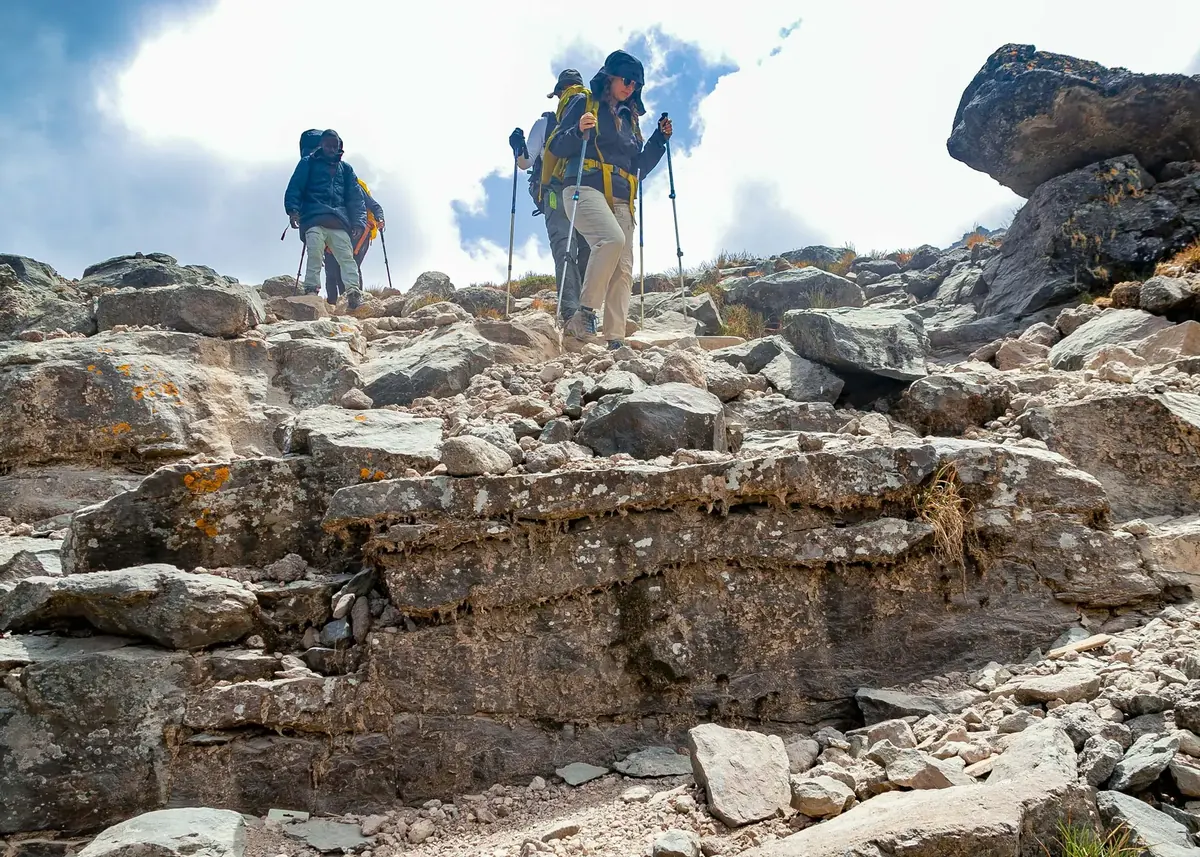
Fit enough to walk for 5 to 7 hours a day, several days in a row, on uneven trails, carrying a daypack with water, layers and snacks. Our porters carry everything else. The hardest day is summit night: about 6 to 8 hours up from high camp in the cold and thin air, then 4 to 6 hours down. If you can hike 10 to 12 miles (16 to 19 km) with some climbing and feel fine the next morning, you are fit enough; training makes it enjoyable rather than just possible. Our guide to how hard Kilimanjaro is explains each part of the challenge.
Does Fitness Protect You From Altitude Sickness?
No. Very fit people get altitude sickness too, sometimes because they walk too fast. What protects you is time: climbing slowly and spending enough nights on the mountain. In park figures from the early 2000s, summit success rose from about 27% on 5-day climbs to 44% on 6 days, 64% on 7 and 85% on 8. Training gives you the strength to enjoy the climb; the 8-day Lemosho or 7-day Machame gives your body the time to adjust. More in acclimatization tips.
The 12-Week Kilimanjaro Training Plan
Each week has one long hike (at the weekend), two or three shorter cardio sessions and two strength sessions. Increase the load gradually, and take an easier week if you feel run down.
| Weeks | Long hike (weekend) | Cardio | Strength | Pack |
|---|---|---|---|---|
| 1 to 3 | 2 to 3 hours on trails or hills | 3 × 30 to 40 min brisk walking, cycling or swimming | 2 × 20 min: squats, lunges, step-ups, planks | Light, 5 to 10 lb (2 to 4 kg) |
| 4 to 6 | 3 to 4 hours with some climbing | 3 × 40 to 50 min, one session on stairs or a step machine | 2 × 30 min, adding calf raises and single-leg work | 10 to 15 lb (4 to 7 kg) |
| 7 to 9 | 5 to 6 hours; one weekend two days in a row | 3 × 45 to 60 min, two on hills or stairs | 2 × 30 to 40 min | 15 lb (7 kg), in your climbing boots |
| 10 to 11 | 6 to 7 hours on back-to-back days, as hilly as you can find | 3 × 45 min | 2 × 30 min, lighter | 15 to 20 lb (7 to 9 kg) |
| 12 | One easy 2 to 3 hour walk | 2 × 30 min, easy | None | Light; rest before you fly |
If you live somewhere flat, use stairs, a step machine or a treadmill on its steepest setting, and walk downhill as well as up: the descent from the summit is long, and it is your knees and thighs that feel it.
Why Long Hikes Matter Most
Nothing replaces hours on your feet. Long hikes train your legs and back for the daypack, toughen your feet in your boots and show you what you need to eat and drink to keep going. Wear the boots, socks and pack you will climb in, so any blister or rubbing shows up at home rather than on the mountain. Try walking poles too: most of our climbers use them, especially on the way down.
Strength and Core Exercises for Kilimanjaro
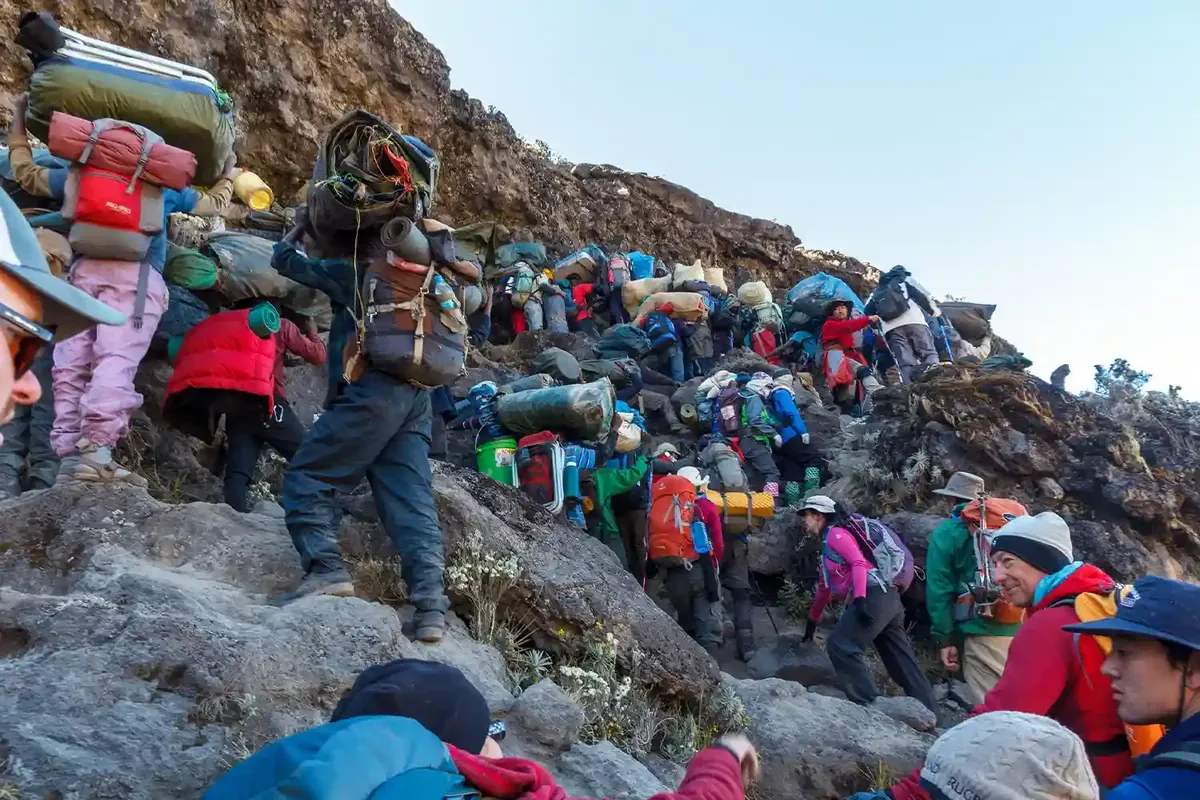
Two short sessions a week make the steep sections and the long descent easier. Choose four or five of these and do 2 or 3 sets of 10 to 15 each:
- Step-ups on a bench or stair, with your pack on, for the steep steps of the Barranco Wall and the summit scree
- Squats and lunges (walking or reverse) for climbing and for controlling the descent
- Single-leg deadlifts and calf raises for balance on uneven ground
- Planks and side planks for a strong core under a daypack
- Slow downhill or step-down work, which trains the muscles you use most on the way down
Cardio and Breathing at Altitude
Steady cardio, at a pace where you can still talk, builds the endurance you need for long days. There is no need for high-intensity training. On the mountain itself, our guides set a slow pace, "pole pole" in Swahili, and teach you to breathe deeply and rhythmically. Altitude training masks and tents are not necessary for our climbs; the extra days on the mountain do that job.
What If You Only Have 6 Weeks?
Start with weeks 4 to 6 of the plan if you are already active, and focus on long weekend hikes with your pack and stair sessions in the week. Choose a longer route so the pace on the mountain is gentler, such as the 8-day Lemosho. If you are starting from very little exercise, talk to your doctor first and give yourself the full 12 weeks or more.
Health Checks Before You Climb
See your doctor before you start training, especially if you are over 50 or have a heart, lung or blood-pressure condition, and ask about altitude medication. On the mountain, our guides check your oxygen level and pulse every morning and evening and carry emergency oxygen. Read how we keep climbers safe in safety on Kilimanjaro.
Training With the Right Gear
Break in your boots over at least 50 miles (80 km) of walking before you fly, and train in the layers and daypack you will use. Our Kilimanjaro packing list covers everything, and you can rent gear in Moshi instead of buying items you will use once.
Common Questions About Training for Kilimanjaro
Short answers to the questions our guests ask us most often:
How long should you train for Kilimanjaro?
About 12 weeks for most people; 6 weeks can be enough if you already exercise regularly and hike.
Can an unfit person climb Kilimanjaro?
Many people who start unfit reach the summit after a few months of steady training and a route with enough days. Training makes the climb far more enjoyable.
What is the best training for Kilimanjaro?
Long hikes on hills with a 15 to 20 lb (7 to 9 kg) daypack, in your climbing boots, ideally on back-to-back days.
Does training prevent altitude sickness?
No. It depends on how fast you climb; choose a route of 7 or 8 days and walk slowly.
Do you need climbing experience for Kilimanjaro?
No. The standard routes are hikes; the Barranco Wall needs your hands in places but no ropes or technical skills.
Bottom Line: How Should You Train for Kilimanjaro?
Give yourself 12 weeks, build up to long hikes on back-to-back days with your pack and boots, add stairs and simple strength work, and choose a route with enough days, such as the 7-day Machame (from US$2,090 per person for two) or the 8-day Lemosho (from US$2,335). See all our Kilimanjaro climbs.