
Kilimanjaro vs Everest | Top Mountain Trekking Destinations
Mount Kilimanjaro in Tanzania and Mount Everest in Nepal are two of the world’s most iconic trekking destinations, each offering a unique high-altitude adventure. Kilimanjaro, Africa’s highest peak, is a non-technical climb accessible to many, while Everest, the world’s tallest mountain, is a formidable challenge for experienced mountaineers. This comparison explores difficulty, scenery, costs, accommodations, activities, accessibility, best time to climb, and preparation to help you choose your ideal mountain adventure.
Kilimanjaro vs Everest: Which Mountain Trek Suits You?
From Kilimanjaro’s diverse ecosystems to Everest’s extreme high-altitude challenge, these mountains offer contrasting trekking experiences. Whether you’re a beginner seeking a bucket-list summit or an expert aiming for the ultimate climb, this guide highlights key differences to inform your decision.
Difficulty
Mount Kilimanjaro (5,895 m) is a non-technical trek, requiring no climbing skills. Its challenge lies in Altitude Sickness and endurance, with a 6-9 day ascent across routes like Marangu or Machame. Suitable for fit beginners with proper acclimatization, success rates are 60-85%.
Mount Everest (8,848 m) is an extreme mountaineering challenge, requiring technical skills like ice climbing and rope handling. The 6-8 week expedition to Base Camp (5,364 m) or the summit involves severe altitude, weather, and risks like avalanches. Success rates are 50-60% for summiteers, suited for experienced climbers.
Scenery
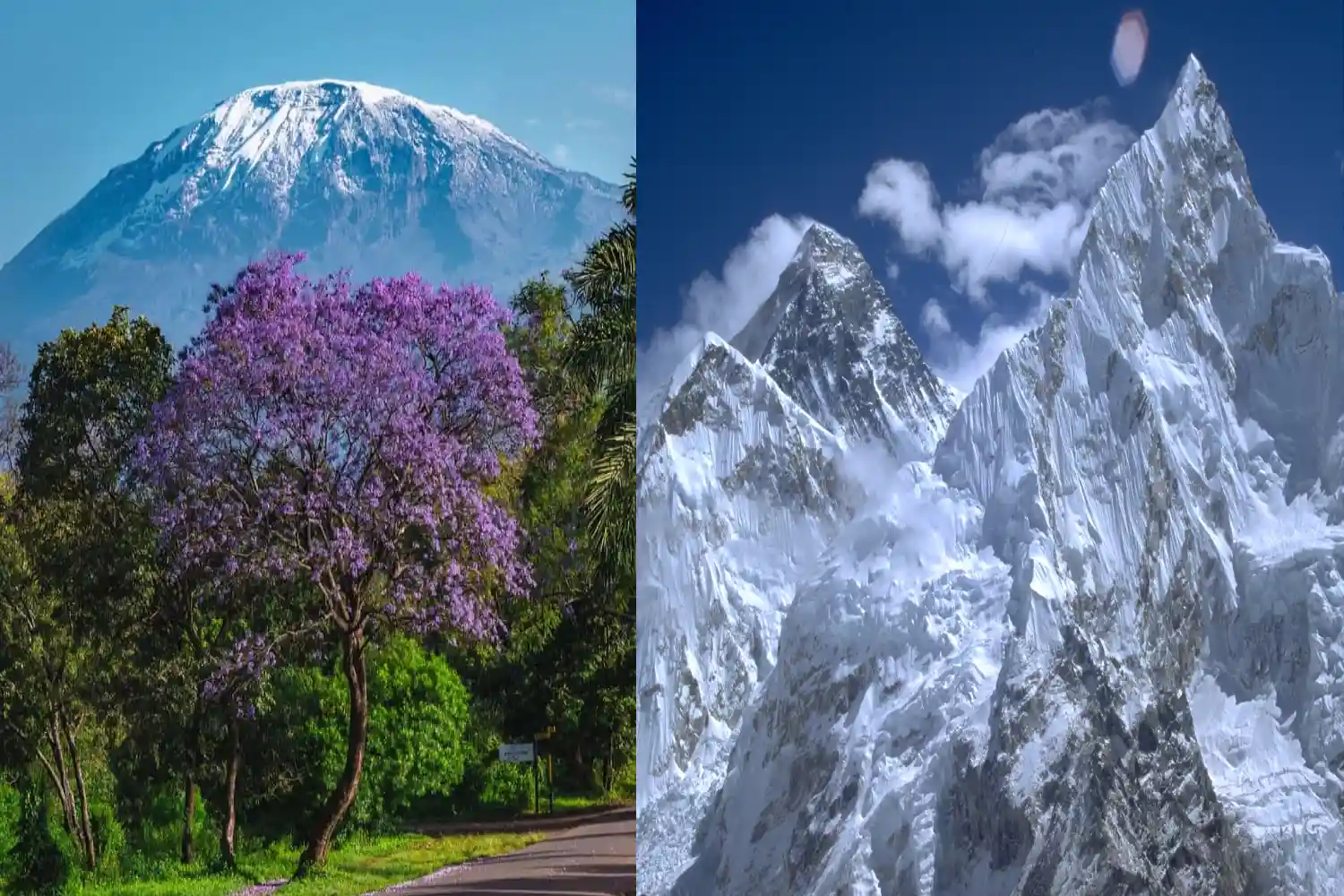
Mount Kilimanjaro offers diverse landscapes, transitioning from rainforest to moorland, alpine desert, and glacial summit. The snow-capped Uhuru Peak provides panoramic views of Tanzania’s plains, with unique ecosystems hosting wildlife like colobus monkeys.
Mount Everest features dramatic Himalayan vistas, with rugged peaks, glaciers, and the Khumbu Icefall. Treks to Base Camp showcase Sherpa villages and monasteries, while summit climbs reveal breathtaking views of peaks like Lhotse and Makalu, though extreme conditions dominate.
Price
Mount Kilimanjaro costs $1,500-$5,000 per person, including park fees ($800-$1,200), guides, porters, and gear. Budget options start at $1,500, while luxury climbs with better accommodations and services reach $5,000. Flights to Tanzania add $500-$1,500.
Mount Everest is far costlier, with summit expeditions ranging from $30,000-$100,000, covering permits ($11,000), Sherpas, oxygen, and logistics. Base Camp treks cost $1,000-$3,000. Flights to Nepal and gear add $1,000-$5,000, making it a significant investment.
Accommodation Options
Mount Kilimanjaro provides tented camps on most routes, with basic facilities like shared toilets. Marangu route offers dormitory-style huts. Pre- and post-climb hotels in Arusha or Moshi range from budget ($30-$50 per night) to luxury ($150-$300 per night).
Mount Everest Base Camp treks use teahouses with basic rooms and shared bathrooms ($10-$30 per night). Summit expeditions involve tented camps with minimal comforts at high altitudes. Kathmandu hotels range from budget ($20-$50 per night) to luxury ($100-$250 per night).
Activities
Mount Kilimanjaro focuses on trekking, with daily hikes of 5-8 hours through varied terrain. Cultural visits to Chagga villages or coffee plantations near Moshi can complement the climb, while wildlife spotting occurs in lower zones.
Mount Everest involves trekking to Base Camp (12-14 days) or summit climbs with technical mountaineering. Base Camp treks include cultural experiences in Sherpa villages like Namche Bazaar. Summit expeditions require acclimatization rotations and high-altitude training.
Accessibility
Mount Kilimanjaro is accessible via Kilimanjaro International Airport (JRO), 45 km from Moshi (1-hour drive). Trails start near Arusha or Moshi, reachable by road. No visas are required for many nationalities, with on-arrival visas costing $50-$100.
Mount Everest requires a flight to Kathmandu, followed by a 30-minute flight to Lukla ($150-$200 one-way) or a 5-6 day trek to the trailhead. Nepal visas cost $30-$50 on arrival. Remote access and weather-dependent flights add logistical challenges.
Best Time to Climb
Mount Kilimanjaro is best climbed during dry seasons: January-March and June-October. September-October offers clear skies and mild temperatures, while January-February is warmer. Wet seasons (April-May, November) bring rain and slippery trails.
Mount Everest summit expeditions occur in April-May, with stable weather before the monsoon. Base Camp treks are ideal in March-May or September-November for clear views. Monsoon season (June-August) brings heavy rain and snow.
Preparation
Mount Kilimanjaro requires moderate fitness, with training like hiking, cardio, and strength exercises 3-6 months prior. Altitude acclimatization is critical, with longer routes like Lemosho improving success. Basic gear (boots, layers, sleeping bag) costs $500-$1,000.
Mount Everest demands elite fitness, with 6-12 months of training in mountaineering, cardio, and high-altitude simulation. Summit climbers need prior experience on 6,000-7,000 m peaks. Gear (crampons, oxygen systems) costs $5,000-$10,000, with mandatory Sherpa support.
FAQs About Kilimanjaro vs Everest
Which is easier to climb, Kilimanjaro or Everest?
Kilimanjaro is significantly easier, requiring no technical climbing skills and achievable in 6-9 days. Everest demands advanced mountaineering skills and 6-8 weeks.
Is Kilimanjaro or Everest more budget-friendly?
Kilimanjaro is far more budget-friendly, with costs ranging from $1,500-$5,000. Everest expeditions typically cost $30,000-$100,000 due to logistics and permits.
Which mountain is better for beginners?
Kilimanjaro is ideal for beginners, with non-technical routes and moderate fitness requirements. Everest is suited for experienced mountaineers due to its extreme conditions.
Can I combine both treks in one trip?
Combining Kilimanjaro and Everest in one trip is impractical due to their distant locations, high costs, and significant time and physical demands.
Final Thoughts
Your choice between Mount Kilimanjaro and Mount Everest depends on your experience, budget, and adventure goals. Kilimanjaro is perfect for beginners or those seeking a challenging yet accessible trek, offering diverse scenery, affordability, and a high success rate in under two weeks. Everest, whether to Base Camp or the summit, is for seasoned adventurers craving an extreme challenge, with stunning Himalayan views but significant costs, risks, and preparation. Both mountains promise life-changing experiences, but Kilimanjaro suits most trekkers, while Everest is the ultimate test for elite climbers.