
Kilimanjaro vs Inca Trail to Machu Picchu | Which Trek Is Harder? 2026/2027
Mount Kilimanjaro and the Classic Inca Trail to Machu Picchu are not identical types of trek. Kilimanjaro is a summit-focused mountain journey that reaches 5,895 m, while the Classic Inca Trail is a protected multi-day route through Andean landscapes and archaeological sites that finishes at Machu Picchu, which UNESCO places at 2,430 m. If “harder” means greater altitude exposure and a higher summit objective, Kilimanjaro generally presents the greater overall challenge. The Inca Trail is still physically demanding, and individual experience varies with itinerary, conditions and personal response.
Quick Answer: Is Kilimanjaro Harder Than the Inca Trail?
Kilimanjaro is usually the more demanding high-altitude objective because the trek builds toward a 5,895 m summit and spends more time in a very high mountain environment. The Classic Inca Trail is shorter in its principal four-day format but remains strenuous because it combines repeated climbs and descents, stone paths, camping and high Andean terrain before reaching Machu Picchu.
The comparison should therefore focus on Kilimanjaro vs the Classic Inca Trail to Machu Picchu, not Kilimanjaro’s summit elevation versus Machu Picchu’s archaeological-site elevation as if they were equivalent mountain summits.
Kilimanjaro vs Inca Trail: Quick Comparison
| Comparison Point | Mount Kilimanjaro | Classic Inca Trail to Machu Picchu |
|---|---|---|
| Main objective | Reach a high mountain summit | Trek through the protected Inca Trail network to Machu Picchu |
| Destination elevation | Uhuru Peak: 5,895 m | Machu Picchu archaeological site: 2,430 m |
| Route duration | Multi-day; exact number of mountain days varies by route and itinerary | Principal protected routes are commonly 4 days / 3 nights; other authorised route formats also exist |
| Terrain focus | Changing mountain vegetation zones and increasingly exposed high-altitude terrain | Andean passes, repeated ascents/descents, stone paths, cloud forest and archaeological sites |
| Sleeping setup | Camping on most routes; huts on Marangu | Designated camping areas on the protected trail |
| Primary challenge | Very high altitude plus a summit-focused mountain itinerary | Repeated climbing and descending over several days at Andean elevation |
| Operator rules | Operates within Kilimanjaro National Park under current park procedures | SERNANP requires entry to the protected Inca Trail network through authorised tourism agencies |
1. Why Is This Comparison Really Kilimanjaro vs the Inca Trail?
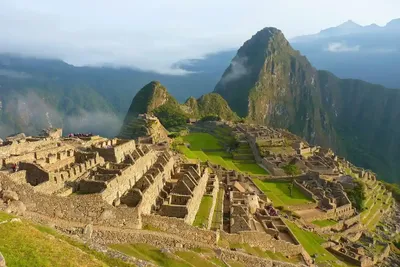
Machu Picchu is the archaeological destination at the end of the classic route, not the name of a single equivalent mountain summit trek. UNESCO places the Historic Sanctuary of Machu Picchu at 2,430 m, while the protected Inca Trail network approaches the site through high Andean terrain.
Kilimanjaro is different: the trekking objective itself is a mountain summit at 5,895 m. That distinction matters because comparing the two destination elevations alone can make the Inca Trail look artificially easy or make the comparison technically inaccurate.
2. How Much Greater Is the Altitude Challenge on Kilimanjaro?
UNESCO identifies Kilimanjaro as Africa’s highest point at 5,895 m. This makes altitude one of the defining characteristics of the trek. The Inca Trail also crosses high Andean terrain, including the Warmiwañuscca pass on the principal network, but its destination at Machu Picchu is far lower.
Because individual responses to altitude vary, this page does not convert those elevations into a personal prediction. The defensible conclusion is simply that Kilimanjaro involves substantially greater summit altitude and generally more very-high-altitude exposure.
3. Which Trek Takes Longer?
Kilimanjaro is a multi-day mountain trek whose duration depends on the selected route and itinerary. Different routes use different trail networks, camps or huts, so one universal number should not be applied to every Kilimanjaro climb.
For Machu Picchu, SERNANP lists the principal protected Inca Trail routes at 4 days and 3 nights and also lists other authorised formats. Therefore, the Classic Inca Trail is normally the shorter comparison itinerary, while Kilimanjaro generally requires a longer mountain schedule.
4. Which Trek Has Harder Terrain?
The terrain is challenging in different ways. Kilimanjaro progresses through changing ecological zones toward colder and more exposed upper-mountain terrain. UNESCO identifies five main vegetation zones on Kilimanjaro: lower slopes, montane forest, heath and moorland, alpine desert and summit.
The Classic Inca Trail combines Andean mountain terrain, stone paths, long stepped sections, repeated climbing and descending, cloud forest and archaeological sites. It should not be described as an easy walk simply because its final destination sits lower than Kilimanjaro’s summit.
5. How Do Camping and Overnight Arrangements Differ?
On Kilimanjaro, most established routes use designated campsites, while the Marangu network uses hut facilities. The exact overnight sequence depends on the route selected.
On the protected Inca Trail, SERNANP lists camping as a visitor activity and provides designated camping areas within the route system. Accommodation in Machu Picchu Pueblo is separate from the camping structure of the multi-day protected trail.
6. Do You Need an Authorised Operator for the Inca Trail?
Yes. SERNANP states that entry to the Inca Trails Network of the Historic Sanctuary of Machu Picchu is made only through travel and tourism agencies authorised by the sanctuary administration. Current operator status and entry rules should be checked again for the actual travel date.
Kilimanjaro is also a protected national-park trek, so the route, park procedures and services should be confirmed through the operator arranging the climb.
7. Which Trek Is More Demanding Overall?
If the comparison is based on altitude, summit objective and time spent in a high mountain environment, Kilimanjaro generally presents the greater overall trekking challenge. That conclusion does not mean the Inca Trail is easy or that every traveler will experience the two routes in the same way.
The Inca Trail can feel especially demanding to travelers who find repeated stone steps and continuous climbing and descending difficult, while Kilimanjaro’s defining challenge is the combination of multi-day trekking and much higher final elevation.
8. Which Trek Is Better for Scenery and Culture?
This is a preference question rather than a difficulty ranking. Kilimanjaro offers a progression through different mountain vegetation zones toward a volcanic summit. The Inca Trail combines Andean mountain scenery, cloud forest and archaeological sites before reaching Machu Picchu.
Choose based on the experience you want: a high-altitude summit objective in Tanzania or a trekking journey strongly linked to Inca heritage and archaeology in Peru.
9. Can Either Trek Be Called a Beginner Trek?
Neither should be described as universally suitable for beginners. Both involve multiple days of trekking at altitude, and personal suitability depends on the individual, the itinerary, current conditions and appropriate professional assessment.
The page therefore avoids promising that a first-time trekker will find either experience easy or suitable simply because the route is non-technical.
10. What Should Be Checked for 2026/2027?
For Kilimanjaro, confirm the selected route, number of mountain days, current park charges, accommodation format, transfers, crew and equipment inclusions, and the written cancellation and payment terms. Jaynevy Tours can provide a dated Tanzania itinerary and quotation.
For the Classic Inca Trail, verify current availability, authorised operator status and the route and entry rules published by Peru’s SERNANP before travel. Permit systems and operational rules can change, so old blog posts should not replace current official information.
Frequently Asked Questions: Kilimanjaro vs Inca Trail
Is Kilimanjaro more dangerous than Machu Picchu?
Kilimanjaro presents substantially greater summit altitude than the Machu Picchu archaeological site and greater overall high-altitude exposure than the Classic Inca Trail comparison. However, neither trek should be described as risk-free, and a general article cannot predict an individual outcome.
Do you need a guide or operator for both treks?
For the protected Inca Trail network, SERNANP requires entry through authorised travel and tourism agencies. Kilimanjaro trips operate inside Kilimanjaro National Park under current park procedures, so the route and services should be arranged and confirmed appropriately.
Can beginners hike Kilimanjaro or the Inca Trail?
There is no universal beginner guarantee for either trek. Both involve multi-day walking at altitude, and suitability varies by individual and itinerary.
Which trek is more scenic?
Both are scenic in different ways. Kilimanjaro moves through several mountain vegetation zones toward a high volcanic summit, while the Classic Inca Trail combines Andean landscapes, cloud forest and archaeological sites before Machu Picchu.
Which trek is more rewarding?
That depends on the travel goal. Kilimanjaro centres on reaching a 5,895 m summit; the Classic Inca Trail is a multi-day cultural and landscape journey ending at the Machu Picchu archaeological site.
Explore More Kilimanjaro Information
For Tanzania trekking options, see our Mount Kilimanjaro overview, compare Kilimanjaro climbing packages, browse travel articles and guides, or contact Jaynevy Tours for a current written itinerary and quotation.