
Quick answer: what is the best 6-day route?
The best-paced route is to fly from Dar es Salaam to Ruaha on Day 1, spend two nights in Ruaha, drive east to Udzungwa for two nights, then finish with one night in Mikumi before returning to Dar es Salaam on Day 6. This direction gives Ruaha the strongest wildlife time, places the longest road transfer in the middle of the trip and avoids the exhausting Ruaha-to-Dar drive on the final day.
| Day | Route and activity | Night | Pacing |
|---|---|---|---|
| 1 | Fly Dar es Salaam to Ruaha; afternoon game drive | Ruaha | Easy arrival day |
| 2 | Full-day Ruaha game drive | Ruaha | Best wildlife day |
| 3 | Ruaha to Udzungwa via Iringa and the Southern Highlands | Udzungwa/Mang'ula | Longest road day |
| 4 | Udzungwa hiking day, normally Sanje Waterfalls | Udzungwa/Mang'ula | Active walking day |
| 5 | Udzungwa to Mikumi; afternoon game drive | Mikumi | Short transfer plus wildlife |
| 6 | Morning Mikumi game drive; drive to Dar es Salaam | — | Early start recommended |
Travellers who prefer to start by road can reverse the route—Dar to Mikumi, then Udzungwa and Ruaha—and fly out of Ruaha on Day 6. Both versions work. The important planning rule is to use a flight at the Ruaha end rather than driving between Ruaha and Dar in one day.
Is six days enough for Mikumi, Ruaha and Udzungwa?
Six days is enough for a focused introduction, but it is the shortest duration that can include all three parks without turning every day into a transfer. The itinerary works because the three destinations offer different experiences rather than repeating the same safari style:
- Ruaha: two nights for large-scale wilderness, predators, elephants, buffalo and kudu.
- Udzungwa: two nights so the hike is not squeezed between two long drives.
- Mikumi: one night for accessible savannah game viewing near the route back to Dar.
A seven- or eight-day safari is better for slow travel, photography or a second full day in Ruaha. A five-day version is possible only by cutting one park or accepting rushed transfers. For an existing bookable route, review the 6-day Mikumi, Ruaha and Udzungwa safari.
Why fly into Ruaha and drive out?
Ruaha is the most remote park in this combination. Driving from Dar es Salaam to Ruaha is roughly a full day and can exceed 10 hours once traffic, road conditions, stops and the final park approach are included. Coastal Aviation currently publishes a scheduled Dar es Salaam departure at 08:30 with arrival in Ruaha around 11:00, although times can change and intermediate stops are possible.
Flying first also protects the wildlife value of the trip. You arrive with enough daylight for an afternoon game drive instead of losing Day 1 to the highway. After Ruaha, the journey becomes a logical eastbound route through the Southern Highlands, Udzungwa and Mikumi.
| Route design | Advantages | Disadvantages |
|---|---|---|
| Fly into Ruaha, drive out | Best use of Day 1; no final-day flight risk; ends closer to Dar | Requires a one-way vehicle arrangement |
| Drive in, fly out of Ruaha | Simple early road start; finishes with a fast return | Flight must match international or Zanzibar connection |
| All road | No light-aircraft baggage limits; lower flight cost | Too much driving for six days; final transfer can be exhausting |
For aircraft planning, see the Tanzania fly-in safari guide. Confirm the operating day, airstrip, baggage limit and check-in point before paying for non-refundable accommodation.
Day 1: fly from Dar es Salaam to Ruaha
Begin at Julius Nyerere International Airport Terminal 1 or the airline's confirmed domestic check-in point. Scheduled safari flights normally use small aircraft and may stop at another airstrip. A published arrival around late morning leaves time for lodge transfer, lunch and a first game drive along the Great Ruaha River or surrounding plains.
Keep Day 1 flexible. Aircraft routing, weather and airstrip stops can shift the arrival time. Do not schedule a paid walking safari immediately after landing. An afternoon vehicle game drive is easier to adjust.
What you may see on the first drive
Ruaha supports elephants, buffalo, lions, leopards, hippos, crocodiles, giraffes and antelopes associated with both eastern and southern African ecosystems. TANAPA highlights Ruaha as one of the few parks where both greater and lesser kudu occur. Wildlife is never guaranteed, but river corridors and water points become especially productive during the dry season.
Day 2: full-day Ruaha safari
Day 2 should remain entirely inside Ruaha. The park covers 20,226 km², so trying to see every sector is unrealistic. A good guide chooses one productive zone according to water, recent sightings, road conditions and your lodge location.
Early morning is useful for predators and softer light. Midday can still be productive around rivers, shade and water, while late afternoon often brings renewed animal movement. Carry lunch or return to camp depending on the distance from the lodge.
Why Ruaha deserves two nights
- The park is more than six times the size of Mikumi.
- TANAPA records about 574 bird species, making it valuable beyond big mammals.
- Low vehicle density often allows quieter sightings than Tanzania's busiest northern parks.
- Wildlife is spread across a vast landscape, so tracking time matters.
Read more about habitats and access in the Ruaha National Park guide or compare a longer standalone option such as the 4-day Ruaha safari.
Day 3: Ruaha to Udzungwa via Iringa
This is the main transfer day. Allow roughly six to seven hours from the eastern Ruaha lodge zone to Mang'ula, depending on the exact camp, park roads, Iringa traffic, weather and stops. The journey passes through changing landscapes: dry miombo and baobab country around Ruaha, the cooler Southern Highlands, then the greener Kilombero and Udzungwa foothills.
Leave after breakfast rather than adding a long morning game drive. Arriving before dark gives time to check hiking arrangements, meet the local guide and prepare water, footwear and rain protection for the next day.
Should you stop in Iringa?
A lunch stop is practical. A full Iringa or Isimila visit usually needs extra time and is better on a seven-day itinerary. In six days, protect the Udzungwa arrival rather than filling the transfer with too many attractions.
Day 4: hike Udzungwa Mountains National Park
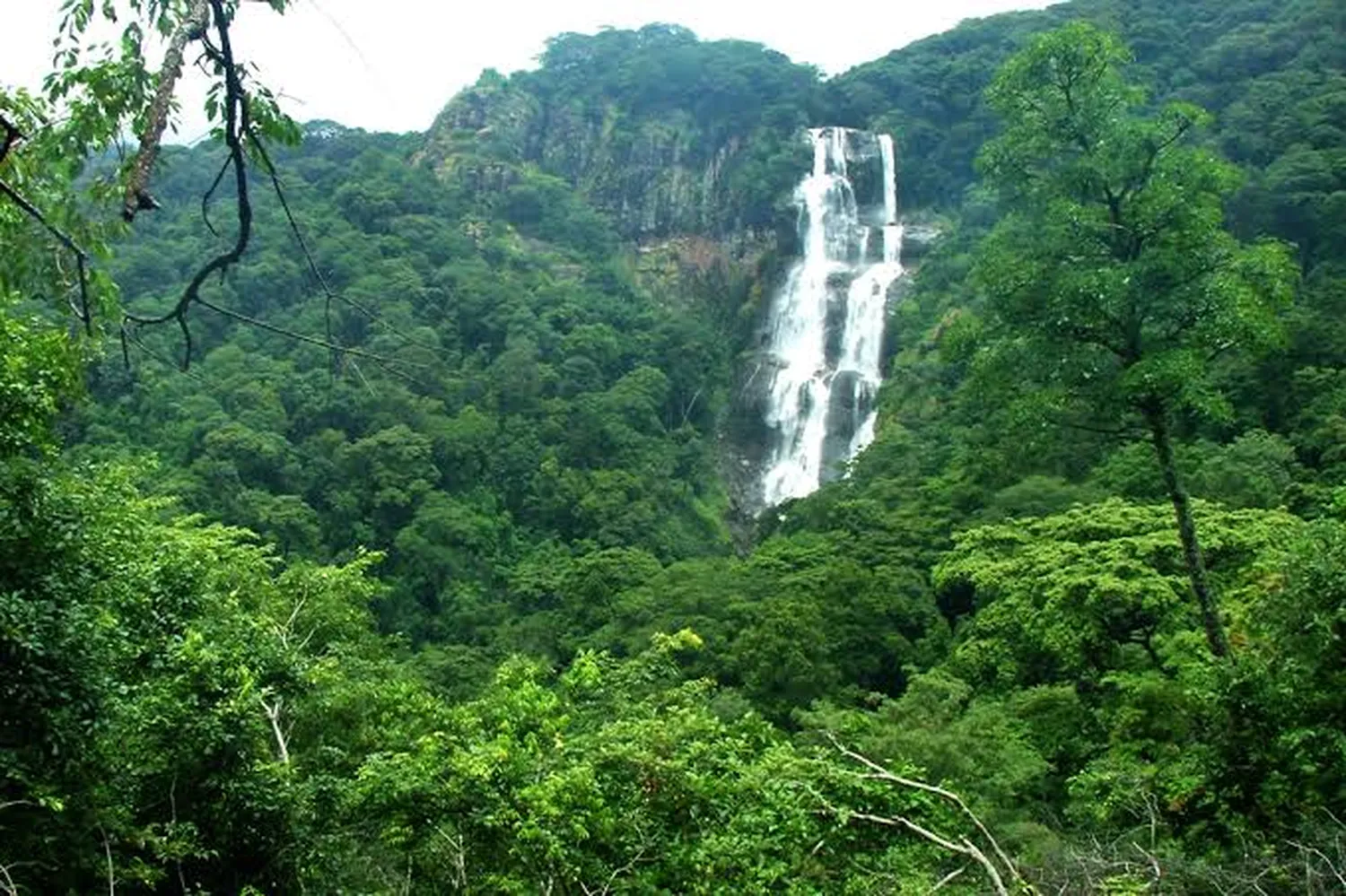
Udzungwa is not a conventional game-drive park. Its value is rainforest, waterfalls, steep escarpment trails, primates and endemic biodiversity. The most common first visit is the Sanje Waterfalls hike, which can occupy roughly four to six hours depending on pace, trail condition, stops and the chosen viewpoint.
The park covers about 1,990 km² and contains tropical rainforest, montane forest, miombo woodland, grassland and steppe. Specialist sources record 11 primate species inside the park, including the endemic Sanje mangabey and Udzungwa red colobus. Sightings are possible, not guaranteed.
| Udzungwa option | Typical commitment | Best for | Important note |
|---|---|---|---|
| Sanje Waterfalls hike | About 4–6 hours | First visit, waterfalls and forest views | Steep and humid; surfaces can be slippery |
| Short forest walk | About 2–3 hours | Families or travellers with limited fitness | Less elevation and fewer panoramic views |
| Mwanihana trail | Multi-day | Serious trekkers | Does not fit a standard six-day three-park itinerary |
| Primate-focused walk | Variable | Wildlife specialists | Animals move freely; no guaranteed encounter |
A local guide is required for park hiking. Start early, carry at least 1.5–2 litres of water per person for the standard Sanje route, and use shoes with reliable grip. The waterfall can be impressive during wetter months, but rain also makes the trail more demanding.
See additional options in the Udzungwa Mountains tour packages and the shorter 3-day Udzungwa and Mikumi combination.
Day 5: Udzungwa to Mikumi and afternoon game drive
Mang'ula is about 60–65 km from Mikumi, and the road transfer commonly takes around one to two hours. This is the shortest relocation of the itinerary. Depart after breakfast, enter Mikumi before or around midday and use the afternoon on the Mkata Floodplain.
Mikumi covers about 3,230 km². The open floodplain makes elephants, giraffes, buffalo, zebra, wildebeest, hippos and lions easier to locate than wildlife in dense forest. TANAPA and Tanzania Tourism both describe the park as a reliable short-safari destination, while more than 400 bird species have been recorded.
Because you have already spent a full day in Ruaha, use Mikumi for accessible viewing rather than chasing a checklist. The park adds open savannah and a different landscape to the trip.
Explore the destination in the Mikumi National Park guide.
Day 6: morning Mikumi game drive and return to Dar
Enter early for a final game drive, then leave by late morning. Official tourism sources place Mikumi roughly 283 km from Dar es Salaam and commonly describe the road journey as about three to five hours. In practice, allow four to six hours because road works, trucks and Dar traffic can add delays.
Do not book an international flight on the same evening unless the connection has a generous buffer and the operator agrees the timing is realistic. A safer plan is to sleep in Dar or connect to Zanzibar the following day.
Realistic travel times for the six-day circuit
| Sector | Planning time | Reliability | Main delay risks |
|---|---|---|---|
| Dar to Ruaha by scheduled flight | About 2.5 hours on a published schedule | Medium | Intermediate stops, weather and airstrip routing |
| Ruaha lodge area to Mang'ula/Udzungwa | About 6–7 hours | Medium | Park roads, Iringa traffic, rain and lodge location |
| Udzungwa to Mikumi | About 1–2 hours | High | Local traffic and short road delays |
| Mikumi to Dar es Salaam | About 4–6 hours | Low to medium | Trucks, road works and city traffic |
These are planning windows, not guaranteed transfer times. A lodge deep inside Ruaha can add significant game-road time before reaching the main road. Your quotation should state the exact start and finish points rather than only naming the parks.
What wildlife is each park best for?
| Park | Area | Strongest experience | Likely highlights |
|---|---|---|---|
| Ruaha | 20,226 km² | Remote big-game wilderness | Lions, elephants, buffalo, greater and lesser kudu, leopards, 570+ bird species |
| Udzungwa | 1,990 km² | Hiking and endemic forest biodiversity | Waterfalls, primates, forest birds, butterflies and mountain scenery |
| Mikumi | 3,230 km² | Accessible open-plains game viewing | Elephants, giraffes, buffalo, zebra, wildebeest, hippos, lions and 400+ bird species |
This is not a Big Five route in the strict checklist sense because rhino is not a normal expectation. Its strength is variety: remote predators and large mammals in Ruaha, a walking day in Udzungwa and easy savannah viewing in Mikumi.
Best months for Mikumi, Ruaha and Udzungwa
June to October is the easiest overall period for this three-park route. Wildlife tends to concentrate around water in Ruaha and Mikumi, road conditions are more predictable and Udzungwa hiking is generally less wet. The trade-off is higher demand and drier, dustier landscapes.
| Months | Wildlife | Udzungwa hiking | Roads and availability | Overall verdict |
|---|---|---|---|---|
| June–October | Strong dry-season concentration | Generally easier and less slippery | Best road reliability; peak demand | Best overall |
| November–December | Green scenery and good birding | Possible short-rain showers | Usually workable; holiday demand rises | Good value outside festive dates |
| January–February | Lush parks, young animals and migratory birds | Humid with possible rain | Some tracks slower; fewer visitors | Good for green-season travellers |
| March–May | Beautiful but dispersed wildlife | Wettest and most slippery period | Some camps close; road disruption possible | Only with flexible planning |
Ruaha's dry-season wildlife can remain excellent into November or December depending on rainfall. No month guarantees a particular sighting. Review broader seasonal patterns in the best time for a Tanzania wildlife safari.
Expected costs in 2026/2027
Published 2026 examples for similar six-day routes show a wide range. Current listings include roughly USD 1,450–1,800 per person for simpler private road-based trips and about USD 2,100–4,000 per person for comfort, superior or signature accommodation. A flight into or out of Ruaha can raise the price but saves a full road day.
The table below gives practical planning ranges per person sharing for two travellers. They are not fixed Jaynevy Tours quotations.
| Style | Planning range per person | Typical accommodation | What changes the price |
|---|---|---|---|
| Value private safari | USD 1,600–2,100 | Simple lodges outside some park boundaries | Road-heavy routing, room standard and group size |
| Comfort / mid-range | USD 2,100–2,900 | En-suite camps and well-located lodges | Ruaha flight, in-park stays and private vehicle |
| Upper-mid-range | USD 2,900–3,800 | Premium tented camps and stronger locations | Season, lodge package and activity inclusions |
| Luxury | USD 3,800–5,000+ | High-end Ruaha camp, upgraded rooms and inclusive service | Exclusive activities, premium flights and single supplements |
What should the price include?
- One-way Ruaha safari flight when specified.
- Private 4x4 vehicle and professional driver-guide for road sectors.
- Five nights' accommodation and stated meal plan.
- Park conservation fees, vehicle fees and applicable taxes.
- Udzungwa guide and the specific hiking activity.
- Airport or hotel transfers stated in the itinerary.
- Drinking water during safari activities.
Common exclusions
- International flights, visas and travel insurance.
- Tips, alcoholic drinks and personal purchases.
- Optional walks, night drives or cultural visits not listed.
- Extra accommodation before Day 1 or after Day 6.
- Baggage storage or excess baggage charges for light aircraft.
TANAPA's central tariff page currently displays a non-resident adult conservation fee of USD 35.40 for Mikumi, Ruaha and Udzungwa, inclusive of VAT where applicable and valid for 24 hours. Other park pages sometimes show illustrative figures, so the operator should reconfirm the live booking-system charges before issuing a final invoice.
Where should you stay?
| Destination | Best location for this itinerary | Why location matters |
|---|---|---|
| Ruaha | Near Msembe or the productive Great Ruaha River sector | Reduces airstrip and game-drive transfer time |
| Udzungwa | Mang'ula near the park headquarters | Allows an early hike and avoids extra road time |
| Mikumi | Inside the park or close to the main gate | Protects the Day 5 afternoon and Day 6 morning drives |
Do not compare lodges only by room quality. A cheaper property far from the gate can cost valuable safari time and additional fuel. Ask for the drive time from each lodge to the planned activity area.
How difficult is the Udzungwa hike?
The standard Sanje route is moderately demanding rather than technical. The main challenges are heat, humidity, sustained uphill sections and slippery ground. Travellers with reasonable fitness usually complete it, but knee problems, poor balance or recent injury require a shorter route.
- Wear broken-in walking shoes or trail shoes with grip.
- Carry rain protection even outside the main rainy season.
- Use a small daypack, hat, sunscreen and insect repellent.
- Tell the guide about medical limitations before starting.
- Do not rely on swimming at the waterfall; water level and safety conditions vary.
Families should match the route to the youngest traveller. A shorter forest walk can still deliver a meaningful Udzungwa experience without forcing children through a long steep ascent.
Private safari or self-drive?
A private guided safari is the safer and more efficient choice for this six-day route. The trip includes a one-way vehicle arrangement, bush-flight coordination, park payment systems, remote roads and a long transfer through unfamiliar areas. A local driver-guide also manages wildlife viewing and can adjust the route when conditions change.
Self-drive is possible for experienced African overland travellers, but six days leaves little margin for breakdowns, navigation errors or road delays. Night driving should be avoided, and a reliable 4x4, recovery equipment, offline maps and confirmed fuel stops are essential.
Who will enjoy this safari most?
- Repeat Tanzania visitors who want an alternative to Serengeti and Ngorongoro.
- Travellers who enjoy both wildlife drives and an active hiking day.
- Couples and small private groups seeking lower vehicle density.
- Birders who value Ruaha and Udzungwa's habitat diversity.
- Zanzibar visitors prepared to route through Dar es Salaam or use a Ruaha flight connection.
Who should choose a different itinerary?
- Travellers whose main goal is the Great Migration.
- Guests requiring a guaranteed Big Five checklist.
- Anyone unable to tolerate a six- to seven-hour road transfer.
- Travellers who want a completely relaxed luxury pace in only six days.
First-time visitors deciding between regions can review what to expect on a first Tanzania safari and compare other Tanzania safari packages.
Common planning mistakes
- Driving Dar to Ruaha and back in six days: this consumes too much of the safari.
- Giving Ruaha only one night: lodge and transfer time leave little meaningful game viewing.
- Hiking immediately after a long road transfer: fatigue reduces enjoyment and safety.
- Booking a lodge without checking its exact location: park names can hide long access drives.
- Connecting directly to an international flight on Day 6: road delays can cause a missed departure.
- Treating Udzungwa as a game-drive park: its main experience is guided hiking.
- Using fixed wildlife promises: animals are free-ranging and sightings change daily.
Booking checklist for 2026/2027
- Confirm whether the route flies into or out of Ruaha.
- Request the exact airline, departure terminal, flight time and baggage allowance.
- Check the exact Ruaha airstrip: Msembe and Jongomero serve different lodge areas.
- Ask for lodge names, room category, meal plan and gate distance.
- Confirm whether every park, vehicle and Udzungwa guide fee is included.
- Specify the hiking route and expected duration.
- Allow a Dar overnight before an international departure.
- Carry travel insurance covering medical treatment and evacuation.
- Reconfirm flight schedules and park tariffs before the final balance is paid.
Final verdict
A six-day Mikumi, Ruaha and Udzungwa safari works best as a one-way journey, not a road loop. Fly into Ruaha, spend two nights there, cross to Udzungwa for a full hiking day, then finish with Mikumi before returning to Dar. This gives each park a clear role and keeps the unavoidable long transfer to one day.
The itinerary is active, varied and more private than Tanzania's busiest northern routes. It is not the right choice for travellers seeking the Serengeti migration or a slow luxury holiday, but it is one of the strongest short itineraries for combining big-game wilderness, rainforest hiking and accessible savannah in southern Tanzania.
Research notes and data sources
Park area, wildlife, bird and tariff figures were checked against Tanzania National Parks and Tanzania Tourism pages available in July 2026. Ruaha flight times were checked against Coastal Aviation's published timetable. Travel times are operational planning ranges and can change with the lodge location, weather, traffic, road works, park conditions and aircraft routing. Published prices were used only to establish broad market ranges; obtain a dated quotation for your group.
- TANAPA: Ruaha National Park
- TANAPA: Mikumi National Park
- TANAPA: current park tariffs
- Tanzania Tourism: Udzungwa Mountains
- Coastal Aviation: Ruaha timetable
Frequently asked questions
Can Mikumi, Ruaha and Udzungwa really be visited in six days?
Yes. Use a one-way route with a scheduled flight at the Ruaha end, two nights in Ruaha, two nights near Udzungwa and one night in Mikumi. An all-road return journey is too demanding for most travellers.
Which park should receive the most safari time?
Ruaha should receive the most wildlife time because it is vast, remote and requires more tracking. Two nights is the minimum; three nights is better when time allows.
What is the best order from Dar es Salaam?
Fly Dar to Ruaha, drive Ruaha to Udzungwa, continue to Mikumi and finish in Dar. The reverse order also works when the flight out of Ruaha matches your onward plans.
How long is the drive from Ruaha to Udzungwa?
Plan about six to seven hours from the eastern Ruaha lodge zone to Mang'ula. The exact duration depends heavily on the lodge, park-road conditions, Iringa traffic and stops.
How long is Mikumi from Udzungwa?
The parks are roughly 60–65 km apart. Most safari vehicles need about one to two hours between Mang'ula and Mikumi, depending on the exact gate or lodge.
Is the Sanje Waterfalls hike difficult?
It is moderately demanding, with steep and sometimes slippery sections. A normal visit takes roughly four to six hours. Shorter forest walks are available for limited fitness or younger children.
Can I see the Big Five on this route?
Lion, leopard, elephant and buffalo are possible, especially in Ruaha and Mikumi. Rhino is not a normal expectation, so this should not be sold as a guaranteed Big Five itinerary.
What are the best months?
June to October offers the easiest combination of dry-season wildlife viewing and more predictable hiking and road conditions. November to February can be greener, quieter and excellent for birds.
How much should I budget?
For two travellers sharing, practical 2026/2027 planning ranges begin around USD 1,600–2,100 per person for value accommodation and can exceed USD 4,000 per person for premium camps and services.
Can this safari start from Zanzibar?
Yes. Connect Zanzibar to Dar or use a scheduled Ruaha connection when available, then follow the same one-way route. Confirm baggage and timing before booking separate tickets.
Should I sleep inside the parks?
In-park accommodation can protect game-drive time, especially in Ruaha and Mikumi. Near Udzungwa, staying in Mang'ula close to park headquarters is usually more important than staying inside a protected area.
Is this itinerary suitable for children?
It can suit older children who tolerate long drives and hiking. For younger children, shorten the Udzungwa walk, use comfortable lodges and consider adding a seventh day to reduce fatigue.