
Where to See Rhinos in Tanzania
Where to see rhinos in Tanzania is one of the most important questions for travelers planning a Big Five safari. The honest answer is that rhinos are rare in Tanzania, and sightings should never be promised like lions, elephants or buffalo. The best places to plan a rhino-focused safari are Ngorongoro Crater, Mkomazi National Park Rhino Sanctuary and, for rare wild sightings, selected areas of Serengeti National Park such as Moru Kopjes.
Tanzania is a strong Big Five safari destination, but rhinos are the most sensitive and least predictable member of the Big Five. Black rhinos are critically endangered and heavily protected. They are not found everywhere, and in some areas their exact locations are not promoted openly for security reasons. A good Tanzania rhino safari is therefore planned around realistic expectations, conservation awareness and the right route.
Quick answer: best places to see rhinos in Tanzania
- Best overall wild rhino safari: Ngorongoro Crater.
- Best rhino conservation experience: Mkomazi National Park Rhino Sanctuary.
- Best rare rhino possibility in Serengeti: Moru Kopjes and protected central Serengeti areas.
- Best Big Five route: Tarangire, Serengeti and Ngorongoro, with Ngorongoro as the rhino focus.
- Best for travelers staying near Moshi: Mkomazi, because it is easier to connect from Moshi than Serengeti.
- Best for first-time safari travelers: Ngorongoro plus Serengeti.
- Best dry-season period: June to October for easier general wildlife visibility.
- Most important expectation: rhinos are rare and sightings are not guaranteed.
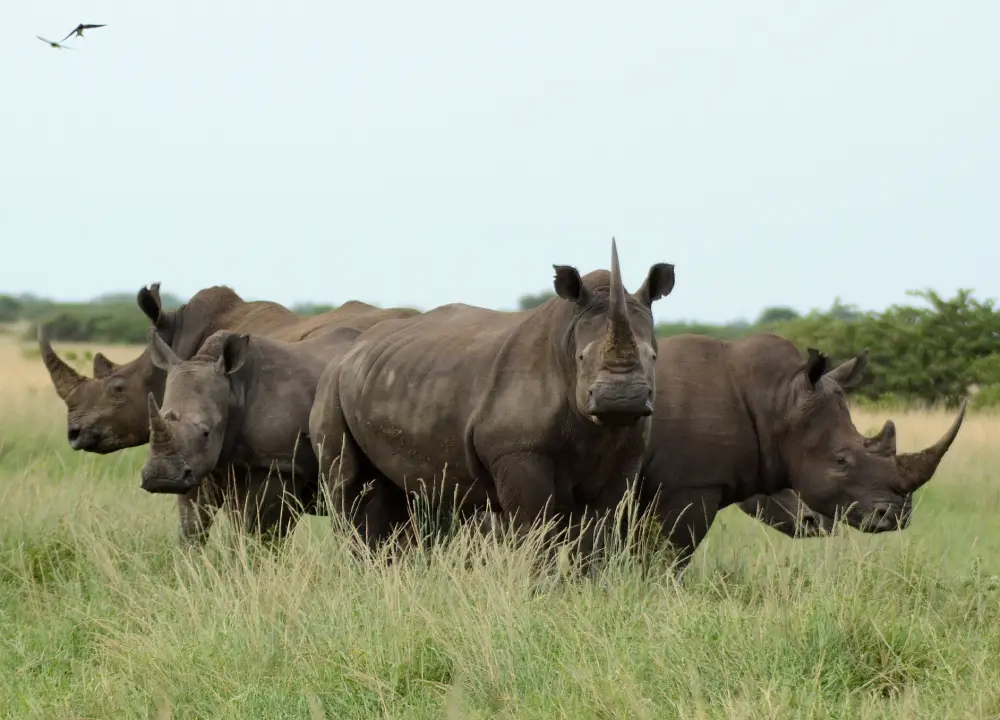
Best places to see rhinos in Tanzania comparison table
| Place | Rhino Experience | Best For | Rhino Sightings Expectation |
|---|---|---|---|
| Ngorongoro Crater | Wild black rhino viewing inside a famous Big Five crater ecosystem | First-time visitors, Big Five safaris and classic northern circuit trips | Usually the most reliable wild rhino option, but sightings can be distant |
| Mkomazi National Park Rhino Sanctuary | Protected rhino sanctuary and conservation-focused viewing | Travelers who specifically want rhinos, conservation stories and a less crowded park | Strongest focused rhino experience when official visits are available |
| Serengeti National Park, Moru Kopjes area | Rare black rhino possibility in a natural Serengeti setting | Travelers already visiting central Serengeti who understand sightings are not guaranteed | Low to moderate chance; should be considered a bonus, not the main reason to visit |
| Nyerere or former Selous ecosystem | Historically linked with black rhino conservation but not a normal tourist rhino-viewing plan | Repeat safari travelers focused on wilderness, wild dogs, river safaris and elephants | Not recommended as a rhino-specific destination for normal safari planning |
| Tarangire, Lake Manyara, Ruaha and Mikumi | Excellent safari parks, but not reliable rhino-viewing destinations | Elephants, lions, birds, landscapes and general safari diversity | Do not choose these parks specifically for rhinos |
1. Ngorongoro Crater: best wild place to see rhinos in Tanzania
Ngorongoro Crater is usually the best place to see rhinos in Tanzania if your goal is a wild Big Five safari. The crater is a natural volcanic caldera with grassland, woodland, wetlands and open plains. UNESCO notes that Ngorongoro Conservation Area harbours endangered species including the black rhino, and it supports about 25,000 large animals. This is why many first-time visitors choose Ngorongoro when they want a realistic chance of seeing rhino in Tanzania.
Ngorongoro is especially useful because it combines rhino possibility with lions, elephants, buffalo, hyenas, hippos, zebras, wildebeest, gazelles and many birds. A single crater day can be powerful, but it should be planned carefully. Rhinos may be far away, hidden by grass, resting in protected zones or difficult to photograph without binoculars or a good lens.
Why Ngorongoro is strong for rhino viewing
- It is one of Tanzania's most famous Big Five areas.
- Rhinos are wild, not a staged tourist display.
- The crater floor creates a concentrated wildlife experience.
- It combines well with Serengeti, Tarangire and Lake Manyara.
- It suits first-time Tanzania safari travelers who want a classic route.
Important Ngorongoro rhino expectations
- Rhino sightings are never guaranteed.
- Rhinos are often seen at a distance, so binoculars are very useful.
- Early descent can improve the general wildlife experience.
- Vehicle time inside the crater is controlled by park rules and practical logistics.
- Good guide knowledge matters more than rushing around the crater.
2. Mkomazi National Park Rhino Sanctuary: best conservation rhino experience
Mkomazi National Park is one of the best places for travelers who specifically want a rhino conservation experience in Tanzania. TANAPA materials describe Mkomazi as the home of black rhinos and list rhino viewing and rhino naming among activities connected with the park. Other Mkomazi visitor information describes a protected rhino sanctuary where tourists can watch rhinos during special park-arranged visits.
Mkomazi is different from Ngorongoro. Ngorongoro is a wild crater safari where rhinos are part of a wider Big Five game drive. Mkomazi is more conservation focused. It is useful for visitors who want to learn how black rhinos are protected, why sanctuaries matter and how tourism supports conservation work.
Why Mkomazi is worth considering
- It is a less crowded northern Tanzania park.
- It is easier to connect with Moshi and Kilimanjaro than Serengeti.
- It has a rhino sanctuary experience connected to conservation.
- It can be combined with Pare Mountains, Usambara Mountains or Kilimanjaro-area travel.
- It also has species such as giraffes, elephants, zebras, antelopes, birds and African wild dog conservation interest.
When Mkomazi is the best choice
- You are based in Moshi and want a rhino-focused day or short safari extension.
- You have already visited Serengeti and Ngorongoro before.
- You want to support conservation tourism.
- You prefer fewer vehicles and a quieter park atmosphere.
- You are interested in rare and endangered species, not only classic Big Five checklists.
3. Serengeti National Park: rare rhino possibility around Moru Kopjes
Serengeti National Park is world-famous for the Great Migration, lions, cheetahs, leopards and endless plains, but it also has critically endangered black rhinos. TANAPA's Serengeti brochure describes the park as one of the last remaining sanctuaries for critically endangered black rhino. The best-known area associated with Serengeti rhinos is around Moru Kopjes in central Serengeti.
Serengeti rhino viewing must be explained carefully. You should not book Serengeti only because you expect a rhino. Serengeti rhinos are rare, protected and not always easy to find. A sighting is possible, but it should be treated as a special bonus rather than a guaranteed part of the itinerary.
Why Serengeti is still important for rhino safaris
- It offers the most iconic Tanzania safari landscape.
- It connects rhino conservation with broader Serengeti wildlife conservation.
- Moru Kopjes is a beautiful area with granite outcrops, lions and plains wildlife.
- Central Serengeti is already part of many classic northern safari routes.
- A rhino sighting here feels especially wild because it is not a sanctuary visit.
How to plan Serengeti if rhinos matter
- Spend more than one night in central Serengeti.
- Ask your guide about Moru Kopjes and rhino conservation areas.
- Carry binoculars because rhinos may be far away.
- Respect any restrictions around sensitive conservation zones.
- Do not pressure guides to break rules for a closer view.
Which place gives the best chance of seeing rhinos in Tanzania?
| Travel Goal | Best Place | Reason |
|---|---|---|
| Classic Big Five safari | Ngorongoro Crater | Best-known wild rhino option combined with lions, elephants and buffalo |
| Close conservation-focused rhino viewing | Mkomazi National Park Rhino Sanctuary | Sanctuary experience designed around rhino protection and education |
| Rare wild rhino possibility during Serengeti safari | Serengeti, Moru Kopjes area | Rhinos exist but are rare, so sightings are special and not guaranteed |
| Best first-time Tanzania safari route | Tarangire, Serengeti and Ngorongoro | Good balance of elephants, big cats, migration landscapes and rhino possibility |
| Best Moshi-based rhino extension | Mkomazi | More practical from Moshi than a long road trip to Serengeti |
Why rhinos are harder to see than lions, elephants or buffalo
Rhinos are harder to see because Tanzania's rhino populations are small, carefully protected and concentrated in selected areas. Black rhinos were heavily affected by poaching across Africa, and conservation recovery takes time. IUCN reported that Africa had an estimated 22,540 rhinos by the end of 2024, including 6,788 black rhinos, with black rhino still listed as Critically Endangered.
In Tanzania, this means rhinos are treated differently from common safari animals. Their locations may be monitored, movement can be sensitive, and guides must follow conservation rules. A responsible operator should help you increase your chances without making false promises or encouraging risky behavior around protected wildlife.
Best Tanzania rhino safari itinerary ideas
Option 1: Classic 5-day northern Big Five safari
- Day 1: Arusha to Tarangire for elephants, baobabs and dry-season wildlife.
- Day 2: Drive toward Serengeti with game viewing on the route.
- Day 3: Full day in central Serengeti for lions, leopards, cheetahs and plains wildlife.
- Day 4: Serengeti to Ngorongoro highlands.
- Day 5: Ngorongoro Crater descent with rhino possibility, then return to Arusha.
Option 2: 6-day rhino-focused northern route
- Day 1: Arusha to Tarangire.
- Day 2: Tarangire or Lake Manyara to Karatu.
- Day 3: Ngorongoro Crater for the strongest wild rhino chance.
- Day 4: Transfer to central Serengeti.
- Day 5: Serengeti game drive including Moru Kopjes when route and rules allow.
- Day 6: Fly or drive back depending on budget and time.
Option 3: Moshi-based Mkomazi rhino extension
- Day 1: Drive from Moshi toward Mkomazi National Park.
- Day 2: Rhino sanctuary visit, game drive and conservation learning.
- Day 3: Return to Moshi or continue toward Arusha and the northern safari circuit.
Best time to see rhinos in Tanzania
Rhinos can be seen year-round in the right places, but the dry season from June to October often makes general wildlife viewing easier because vegetation is thinner and animals may be easier to locate. Ngorongoro Crater can be visited all year, while Mkomazi is often more comfortable in the dry season. Serengeti rhino sightings remain rare regardless of month.
| Period | Rhino Safari Advantage | Planning Note |
|---|---|---|
| June to October | Dry conditions, clearer visibility and strong general wildlife viewing | Best overall period for a classic Tanzania safari with rhino focus |
| January to March | Good northern circuit conditions and strong southern Serengeti wildlife | Combine Ngorongoro rhino search with Serengeti calving-season safari |
| November to December | Fresh scenery after short rains and fewer visitors in some places | Flexible planning is useful because rain can change conditions |
| March to May | Green season, fewer tourists and possible value | Roads can be wetter; choose operators and camps carefully |
What to expect when watching rhinos in Tanzania
Rhino watching is different from watching lions or elephants. A rhino may be far away, partly hidden or visible only for a short time. In some places, rangers and park rules control the experience to protect the animals. Travelers should approach rhino viewing with patience and respect.
Rhino viewing tips
- Carry binoculars because rhinos are often seen at a distance.
- Use a camera lens with good zoom if photography matters.
- Start early, especially in Ngorongoro Crater.
- Trust the guide's route and local information.
- Respect viewing distance and conservation restrictions.
- Do not ask for off-road driving where it is not allowed.
- Do not share sensitive rhino locations publicly online.
Can you see white rhinos in Tanzania?
Normal Tanzania safari planning is focused on black rhinos, not white rhinos. Travelers searching for “rhinos in Tanzania” are usually looking for the rare black rhino that survives in selected protected areas. If your main dream is high-volume white rhino viewing, other African countries may be better known for that specific experience. If your dream is a complete Tanzania Big Five safari, Ngorongoro and Mkomazi are the most useful rhino-focused places to include.
Is Ngorongoro or Mkomazi better for rhinos?
Choose Ngorongoro if you want a wild rhino possibility inside a famous Big Five safari route. Ngorongoro is easier to combine with Serengeti, Tarangire and Lake Manyara, making it the stronger choice for first-time safari travelers.
Choose Mkomazi if you want a conservation-focused rhino sanctuary and a quieter park experience. It is especially useful if you are already in Moshi, Kilimanjaro region, or if you want a shorter rhino extension without traveling all the way to Serengeti.
Places not to choose only for rhinos
Some Tanzania parks are excellent for safari but not reliable for rhino-focused travel. This does not make them weak parks; it simply means they are better for other wildlife.
- Tarangire: best for elephants, baobabs and dry-season wildlife, not rhinos.
- Lake Manyara: best for scenery, birds, forest and Rift Valley experience, not rhinos.
- Ruaha: excellent for wilderness, lions, elephants and southern species, not a normal rhino-viewing plan.
- Mikumi: accessible safari option near Dar es Salaam, but not a rhino destination.
- Nyerere: outstanding for river safaris and wilderness, but not the easiest place for normal tourist rhino sightings.
How to plan the best rhino safari in Tanzania
- Decide whether you want wild rhino viewing or sanctuary-based viewing.
- Use Ngorongoro for the strongest classic Big Five rhino plan.
- Add Mkomazi if rhinos and conservation are a major priority.
- Include Serengeti for big cats, migration landscapes and rare rhino possibility.
- Give important parks enough time instead of rushing the route.
- Carry binoculars and manage expectations.
- Travel with a guide who understands park rules and conservation sensitivity.
- Do not judge the safari only by whether you saw a rhino.
Final recommendation
If your question is simply where to see rhinos in Tanzania, the best answer is Ngorongoro Crater for a classic wild safari and Mkomazi National Park Rhino Sanctuary for a focused rhino conservation experience. Serengeti is important for rare black rhino conservation, especially around Moru Kopjes, but it should not be treated as a guaranteed rhino destination.
For most first-time travelers, the best plan is a northern Tanzania safari that combines Tarangire, Serengeti and Ngorongoro. This gives elephants, big cats, plains wildlife, scenery, migration possibilities and the strongest practical chance of seeing rhino in a wild Tanzania setting. For travelers who specifically love rhinos and conservation, add Mkomazi before or after the main safari.
Frequently asked questions about where to see rhinos in Tanzania
1. Where can I see rhinos in Tanzania?
The best places to see rhinos in Tanzania are Ngorongoro Crater, Mkomazi National Park Rhino Sanctuary and selected protected areas of Serengeti, especially around Moru Kopjes, where sightings are rare and not guaranteed.
2. What is the best place to see rhinos in Tanzania?
Ngorongoro Crater is usually the best place for a wild rhino safari in Tanzania, while Mkomazi National Park Rhino Sanctuary is best for a focused conservation rhino experience.
3. Can I see rhinos in Ngorongoro Crater?
Yes. Ngorongoro Crater is one of Tanzania's most reliable places for black rhino sightings, although rhinos may be distant and sightings still depend on natural movement.
4. Can I see rhinos in Mkomazi National Park?
Yes. Mkomazi National Park has a rhino sanctuary and is one of Tanzania's best places for a conservation-focused black rhino experience.
5. Can I see rhinos in Serengeti?
Yes, Serengeti has critically endangered black rhinos, especially associated with protected areas around Moru Kopjes, but sightings are rare and should be treated as a special bonus.
6. Are rhino sightings guaranteed in Tanzania?
No. Rhinos are rare, protected and naturally moving animals. Good route planning improves your chances, but an ethical safari operator should not guarantee wild rhino sightings.
7. Which rhino species can be seen in Tanzania?
Tanzania safari rhino viewing is mainly associated with black rhinos, especially eastern black rhino conservation populations.
8. What is the best time to see rhinos in Tanzania?
Rhinos can be seen year-round in the right places, but June to October often gives easier general wildlife visibility because vegetation is thinner.
9. Is Tanzania good for a Big Five safari?
Yes. Tanzania is excellent for a Big Five safari, especially when combining Serengeti, Ngorongoro and Tarangire. Rhino is the rarest Big Five member and needs careful planning.
10. Should I choose Ngorongoro or Mkomazi for rhinos?
Choose Ngorongoro for a wild Big Five safari and choose Mkomazi for a rhino sanctuary and conservation learning experience.
11. Is Mkomazi worth visiting for rhinos?
Yes. Mkomazi is worth visiting if rhino conservation, fewer crowds and a Moshi or Kilimanjaro-area extension are important to your trip.
12. Can Jaynevy Tours help plan a Tanzania rhino safari?
Yes. Jaynevy Tours can help match your dates, budget and wildlife goals with Ngorongoro, Mkomazi, Serengeti or a complete northern Tanzania route.
Data notes and trusted sources
This guide uses official and established reference points available in June 2026. Rhino populations, park rules, viewing access and conservation procedures can change, so travelers should reconfirm details for their exact travel dates. Rhino sightings remain natural wildlife experiences and should not be treated as guaranteed.
- UNESCO World Heritage Centre: Ngorongoro Conservation Area
- TANAPA Kilimanjaro Zone tourism guide: Mkomazi rhino viewing
- TANAPA Serengeti National Park brochure: black rhino sanctuary note
- IUCN: African rhino status and 2024 estimates
- Jaynevy Tours: Tanzania Safari
For help planning a Tanzania rhino safari, contact Jaynevy Tours via email at info@jaynevytours.com or WhatsApp at +255 678 992 599.