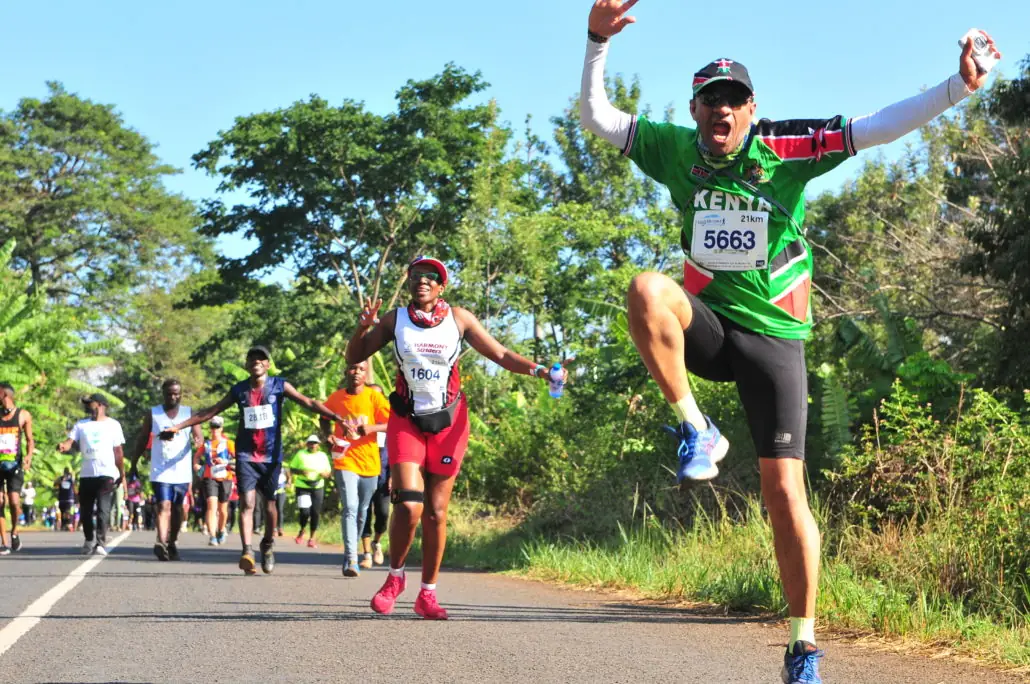
What You Need to Know: This 10-day package costs from US$4,110 per person for two sharing at mid-range level (US$2,920 budget, US$6,370 luxury). It runs from Friday, February 5 to Sunday, February 14, 2027: three nights in Moshi around the race on Sunday, February 7, then a private safari with Tarangire, two nights at Ndutu among the calving herds, a night in the central Serengeti and a Ngorongoro Crater game drive. Race entry is not included: every runner registers in their own name on the official race website (US$80 for the full or half marathon, US$20 for the 5 km for international runners) before entries close at midnight on December 15, 2026.
Why a Safari Is the Perfect Recovery After the Kilimanjaro Marathon
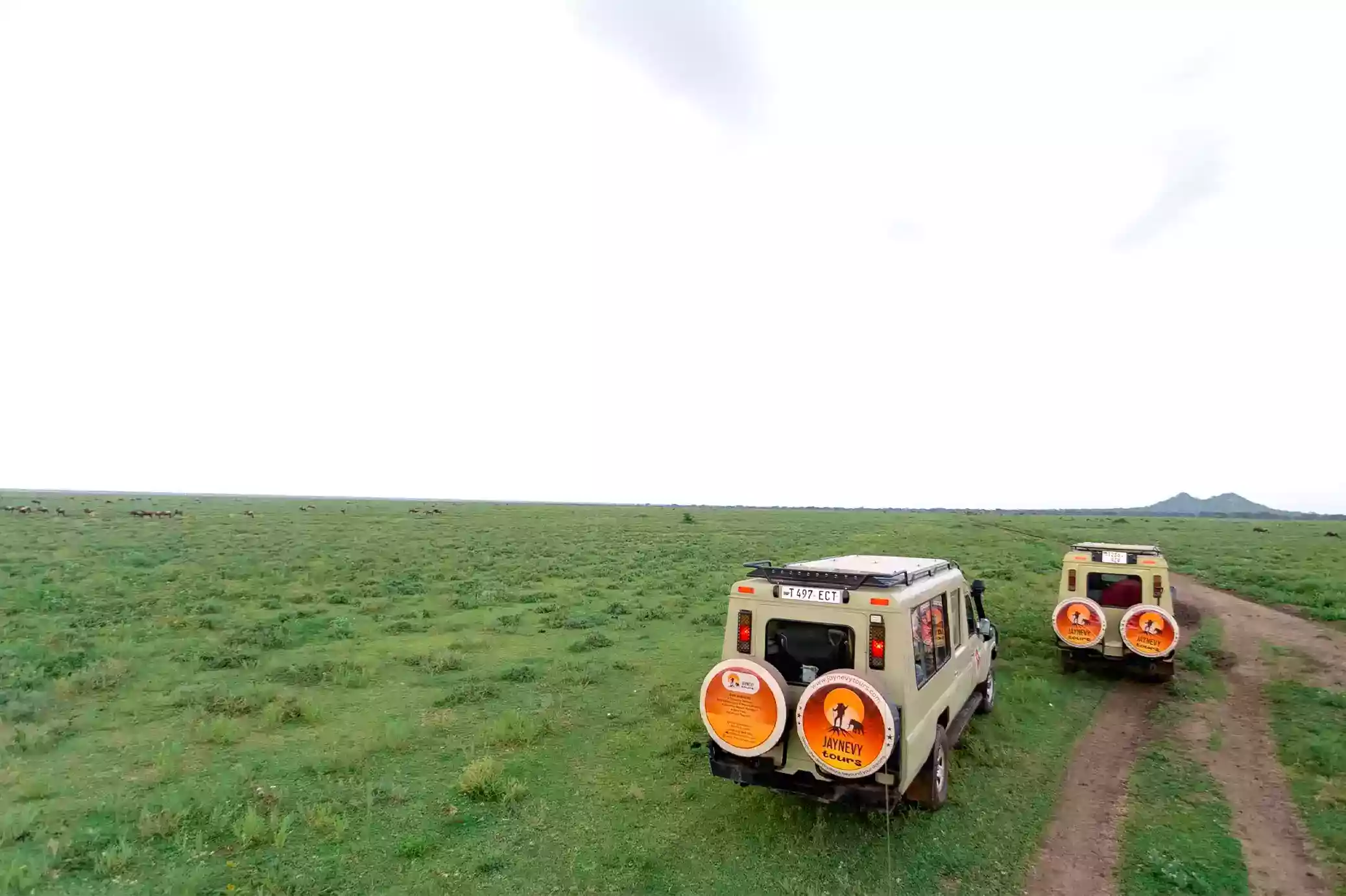
After 42 or 21 km of hills, the last thing your legs want is more running, and a safari asks almost nothing of them: you sit, look and stand up through the pop-up roof when something appears. The timing is the real bonus. The race falls in the calving season, when the wildebeest herds gather on the short-grass plains around Ndutu and give birth, followed by lions, cheetahs and hyenas, one of the great wildlife events of the year. See the calving season safari page for more on the season.
Kilimanjaro Marathon and Calving Safari Itinerary, Day by Day
The first three days are the race weekend in Moshi; the safari starts the morning after the race, at an easy pace for tired legs, and ends at the airport. Day by day:
-
Day 1: Friday, February 5: arrival, race number
Airport pickup at Kilimanjaro International Airport and the drive of about an hour to Moshi; in the afternoon your driver takes you to the MoCU Stadium to collect your race number.
Stay: B&B Hotel (budget), Lamama Hotel or Weru Weru River Lodge (mid-range), or Kilimanjaro Wonders Hotel (luxury), or similar, three nights.
Airport pickupRace numberMoshi -
Day 2: Saturday, February 6: rest
A quiet day: a short shake-out run, an early dinner and an early night.
RestMoshiBreakfast -
Day 3: Sunday, February 7: race day
Our driver takes you to the start and back. The afternoon is for rest; your safari guide meets you in the evening to go over the next week.
RaceMoCU StadiumBreakfast -
Day 4: Monday, February 8: Moshi to Tarangire and Karatu
West past Arusha to Tarangire, about 3 to 4 hours, for an afternoon game drive among elephants and baobabs, then up to Karatu for the night. A good first safari day for stiff legs.
Stay: Karatu Villas (budget), Karatu Tented Lodge (mid-range) or Gibbs' Farm (luxury), or similar.
ElephantsTarangire, KaratuBreakfast, lunch box, dinner -
Day 5: Tuesday, February 9: down to Ndutu
Over the Ngorongoro highlands and down to the southern plains, where the herds gather in the calving season; your first game drive starts as soon as you reach them.
Stay: Serengeti Classic View Ndutu (budget), Ndutu Wildland Camp (mid-range) or Malaika Ndutu Luxury Camp (luxury), or similar, two nights.
Calving herdsNdutuBreakfast, lunch, dinner -
Day 6: Wednesday, February 10: a full day with the herds
A whole day on the plains with a picnic, watching newborn calves find their feet and the predators that follow the herds.
Calving and predatorsNdutuBreakfast, picnic lunch, dinner -
Day 7: Thursday, February 11: Ndutu to the central Serengeti
North across the plains to the Seronera valley, known for its lions and leopards.
Stay: Maboresho Tented Camp (budget), Mberesero Serengeti Central Lodge (mid-range) or Serengeti Serena Lodge (luxury), or similar.
Big catsCentral SerengetiBreakfast, lunch, dinner -
Day 8: Friday, February 12: Serengeti to Karatu
A morning game drive, then back over the highlands to Karatu.
Stay: the same Karatu lodge as Day 4.
Game driveSerengeti, KaratuBreakfast, lunch, dinner -
Day 9: Saturday, February 13: Ngorongoro Crater, back to Arusha
An early descent to the crater floor for lions, buffaloes, zebras, hippos and the chance of a black rhino, then the drive back to Arusha.
Stay: Parachichi House (budget), Njiro Luxury Resort (mid-range) or Arusha Coffee Lodge (luxury), or similar.
Crater game driveNgorongoro, ArushaBreakfast, lunch -
Day 10: Sunday, February 14: departure
Transfer to Kilimanjaro International Airport for your flight home.
Airport transferArushaBreakfast
How Much Does the Kilimanjaro Marathon and Safari Cost?
From US$4,110 per person for two sharing at mid-range level, US$2,920 at budget level and US$6,370 at luxury level. The price per person falls as more people share the vehicle:
| Travelers | Budget | Mid-range | Luxury |
|---|---|---|---|
| 1 | US$4,225 | US$5,850 | US$8,210 |
| 2 | US$2,920 | US$4,110 | US$6,370 |
| 3 | US$2,545 | US$3,695 | US$5,955 |
| 4 | US$2,385 | US$3,575 | US$5,835 |
| 5 | US$2,265 | US$3,435 | US$5,695 |
| 6 | US$2,205 | US$3,400 | US$5,660 |
It includes the Tarangire, Ngorongoro and Serengeti fees, the crater service fee and the concession fees for the nights inside the parks. Race entry is not included: every runner registers in their own name on the official race website (US$80 for the full or half marathon, US$20 for the 5 km for international runners) before entries close at midnight on December 15, 2026.
What the Kili Marathon and Safari Package Includes
The price covers the race weekend and the whole safari, from the airport on arrival to the airport on departure:
- Airport pickup and drop-off at Kilimanjaro International Airport
- Three nights in Moshi with breakfast, and six safari nights with meals as listed
- A driver for race-number collection and race morning
- A private 4x4 Land Cruiser with pop-up roof and your own driver-guide for the six safari days
- All park entry, conservation and concession fees, and the crater service fee
- Drinking water on safari
Not Included in the Marathon and Safari Price
Budget separately for:
- Race entry, paid on the official race website
- International flights and visas (US$100 for US citizens)
- Tanzania's mandatory inbound travel insurance (US$44 per adult) and your own travel insurance
- Meals in Moshi other than breakfast, drinks, tips and personal items
Safari Tips for Runners After the Kili Marathon
A safari asks very little of your legs, which is exactly why it works after a hard race. A few habits make the first days on the road more comfortable:
- Stretch at every stop: your guide pauses at viewpoints and picnic sites; use them to walk around and loosen up.
- Keep drinking: February days on the plains are warm, and your body is still recovering; there is drinking water in the vehicle all day.
- Dress in layers: early game drives and the Ngorongoro crater rim are cool, while the middle of the day is hot.
- Bring binoculars and a camera: the calving season is all about action at a distance, from newborn calves to cheetahs on the hunt.
How to Book the Kilimanjaro Marathon and Calving Safari
Send your race distance, flight times, number of travelers and lodge level through the form, on WhatsApp +255 678 992 599 or by email to jaynevytours@gmail.com. Ndutu camps are busy in February, so book soon after you register for the race. A 30% deposit confirms the booking, the balance is paid on arrival, and refunds follow our booking terms. Race entries are handled by the organizers and are not refundable.
Common Questions About the Kili Marathon and Calving Safari
Is the race entry included?
No. Each runner registers on the official race website (US$80 for the full or half marathon for international runners) before December 15, 2026.
Is the safari too tiring straight after a marathon?
No. The first safari day starts on Monday and is a gentle drive to Tarangire; after that you are mostly sitting in the vehicle, which is ideal for recovering legs.
Will we see the calving?
February is usually the peak of the calving season around Ndutu. Exact timing depends on the rains, so we check reports from our guides before you travel.
Can non-runners come along?
Yes. Partners and friends join the whole trip at the same price per person.
Can we finish on Zanzibar?
Yes. Instead of the night in Arusha, you can fly to Zanzibar for a few beach days; ask us to add them.
Should You Book the 10-Day Kilimanjaro Marathon and Calving Safari?
Yes, if this is your first time in Tanzania and you want the race and the wildlife in one trip. The safari starts the day after the race, in the best weeks of the year for the calving herds at Ndutu, and adds the Serengeti and the Ngorongoro Crater, from US$4,110 per person.
If you can only spare five days, take the race weekend; if you would rather rest on a beach, choose the marathon and Zanzibar holiday. Race details are in our marathon travel guide.