
What You Need to Know: This 12-day package costs from US$2,560 per person for two at mid-range level (US$2,125 budget, US$2,915 luxury). It runs from Friday, February 5 to Tuesday, February 16, 2027: the race on Sunday, February 7, a rest and gear-check day, then the 7-day Machame route with our guides, cook and porters, and a Moshi hotel night at each end. It suits strong half-marathon and 5 km runners best; full-marathon runners should be confident of recovering quickly. Race entry is not included: every runner registers in their own name on the official race website (US$80 for the full or half marathon, US$20 for the 5 km for international runners) before entries close at midnight on December 15, 2026.
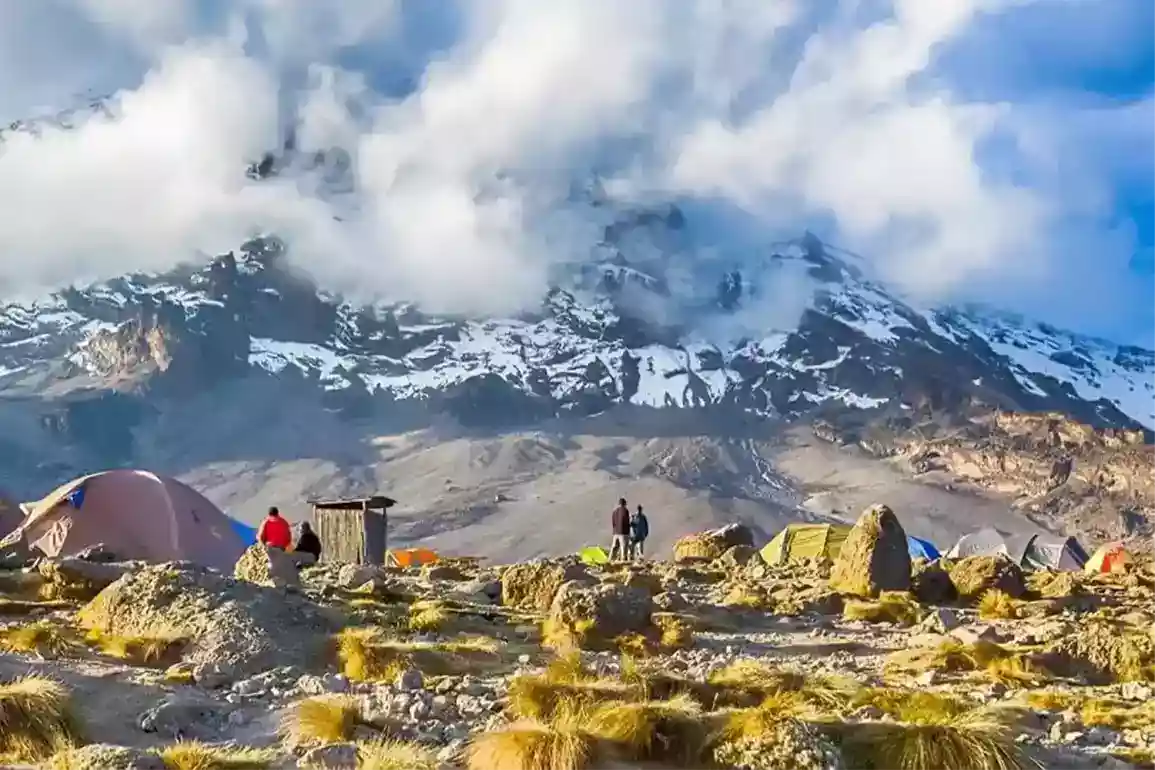
Should You Climb Kilimanjaro After the Marathon?
It is a big ask, and it suits some runners better than others. Climbing Kilimanjaro is slow walking, pole pole as the guides say, so it uses your legs very differently from a race; the hard part is the altitude, not the pace. A half marathon or the 5 km leaves you fresh enough after a rest day. After a full marathon, most runners feel stiff for two or three days, and the first days on the mountain are gentle, but you should be honest with yourself about how quickly you recover.
Climb after the race, not before: a week at altitude leaves most people tired and lighter, which is no way to start a hilly marathon. The race itself, at the foot of the mountain, does nothing to acclimatize you; the 7-day Machame does that with its gradual profile and the climb-high, sleep-low day at Lava Tower. Read how hard Kilimanjaro is before you decide.
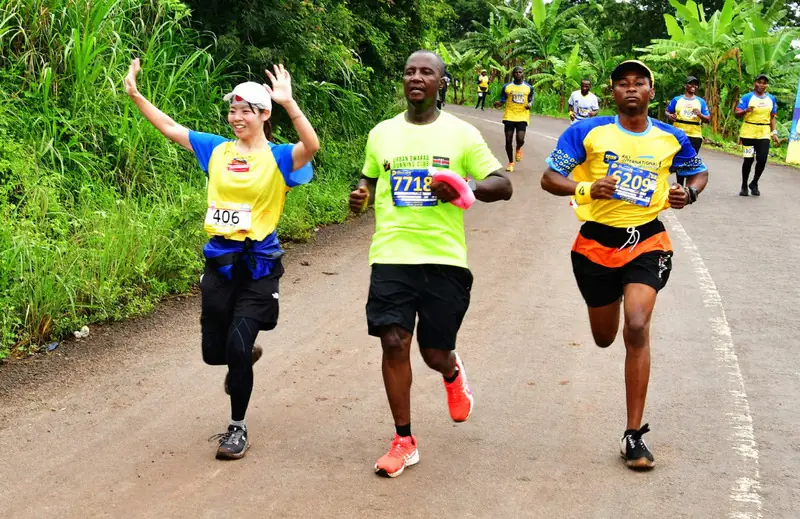
Kilimanjaro Marathon and Machame Climb Itinerary, Day by Day
Three days for the race weekend, one to rest, seven on the mountain and one to fly home. The climb follows our 7-day Machame route, with the extra night at Karanga that makes the summit day easier:
-
Day 1: Friday, February 5: arrival, race number
Airport pickup and the drive of about an hour to Moshi; in the afternoon your driver takes you to collect your race number at the MoCU Stadium.
Stay: B&B Hotel (budget), Lamama Hotel or Weru Weru River Lodge (mid-range), or Kilimanjaro Wonders Hotel (luxury), or similar, four nights before the climb and one after.
Airport pickupRace numberMoshi -
Day 2: Saturday, February 6: rest
A short shake-out run and an easy day before the race.
RestMoshiBreakfast -
Day 3: Sunday, February 7: race day
To the start and back with our driver; the afternoon is for rest, stretching and food.
RaceMoCU StadiumBreakfast -
Day 4: Monday, February 8: rest and gear check
A full rest day. In the evening your mountain guide visits the hotel for the climb briefing and checks your gear, and you can rent anything missing in Moshi.
Rest and briefingMoshiBreakfast -
Day 5: Tuesday, February 9: Machame Gate to Machame Camp
The climb begins with a walk through the rainforest on the mountain's southern slopes to the first camp at the edge of the forest. Your crew carries the bags and pitches the tents.
RainforestMachame routeBreakfast, lunch, dinner -
Day 6: Wednesday, February 10: up to the Shira Plateau
Out of the forest onto moorland and up to the Shira Plateau, with the first wide views of the summit.
MoorlandShira CampBreakfast, lunch, dinner -
Day 7: Thursday, February 11: Lava Tower, down to Barranco
The key acclimatization day: up to Lava Tower, about 15,100 ft (4,600 m), then down to sleep in the Barranco Valley.
Climb high, sleep lowBarranco CampBreakfast, lunch, dinner -
Day 8: Friday, February 12: the Barranco Wall to Karanga
A morning scramble up the Barranco Wall, using your hands in places, then a short day to Karanga Camp, the extra night that makes the 7-day route easier than the 6-day.
Barranco WallKaranga CampBreakfast, lunch, dinner -
Day 9: Saturday, February 13: to Barafu, the summit base
A short, steady climb to Barafu Camp, an early dinner and a few hours' sleep before the summit attempt.
Base campBarafu CampBreakfast, lunch, dinner -
Day 10: Sunday, February 14: summit night to Uhuru Peak
Around midnight you set off by headlamp, reaching Stella Point on the crater rim near dawn and Uhuru Peak, 19,341 ft (5,895 m), soon after, then descend to Mweka Camp. Exactly one week after the race, you are standing on the roof of Africa.
SummitUhuru Peak, Mweka CampBreakfast, lunch, dinner -
Day 11: Monday, February 15: down to Mweka Gate and Moshi
A last walk down through the forest to Mweka Gate, where you receive your summit certificate, then back to your Moshi hotel for a long shower.
CertificatesMweka Gate, MoshiBreakfast, lunch -
Day 12: Tuesday, February 16: departure
Transfer to Kilimanjaro International Airport, with two medals in your bag.
Airport transferMoshiBreakfast
How Much Does the Kili Marathon and Machame Climb Cost?
From US$2,560 per person for two at mid-range level, US$2,125 at budget level and US$2,915 at luxury level; the levels refer to the Moshi hotels, as the climb itself is the same.
| Travelers | Budget | Mid-range | Luxury |
|---|---|---|---|
| 1 | US$2,315 | US$2,785 | US$3,265 |
| 2 | US$2,125 | US$2,560 | US$2,915 |
| 3 | US$2,105 | US$2,605 | US$2,855 |
| 4 | US$2,065 | US$2,500 | US$2,855 |
| 5 | US$2,065 | US$2,540 | US$2,830 |
| 6 | US$2,045 | US$2,480 | US$2,835 |
The climb part includes the Kilimanjaro National Park fees, your guides, cook and porters, tents and mountain meals; see our 7-day Machame route page for the full details of the climb. Race entry is not included: every runner registers in their own name on the official race website (US$80 for the full or half marathon, US$20 for the 5 km for international runners) before entries close at midnight on December 15, 2026.
What the Kilimanjaro Marathon and Climb Package Includes
The price covers the race weekend, every night in Moshi and the whole climb with a full mountain crew:
- Airport pickup and drop-off at Kilimanjaro International Airport
- Five nights in Moshi with breakfast
- A driver for race-number collection and race morning
- The 7-day Machame climb: park fees, guides, cook, porters, tents and all meals on the mountain, and transfers to Machame Gate and from Mweka Gate
- Summit certificates
Not Included in the Marathon and Climb Price
Budget separately for:
- Race entry, paid on the official race website
- International flights and visas (US$100 for US citizens)
- Tanzania's mandatory inbound travel insurance (US$44 per adult), and travel insurance that covers trekking to 19,700 ft (6,000 m) and helicopter evacuation
- Tips for the mountain crew, rental gear, meals in Moshi other than breakfast, drinks and personal items
Preparing to Climb Kilimanjaro After the Marathon
Your race training has given you the fitness; on the mountain, what matters is how well you have recovered and how your body copes with altitude. This is the advice our guides give runners:
- Use the rest day well: sleep, eat properly and walk gently around Moshi on Monday rather than resting completely.
- Walk slowly from the first hour: pole pole, slowly, slowly, is the rule on Kilimanjaro, and a runner's instinct to push the pace is the biggest mistake to avoid.
- Tell your guide about any soreness: at the briefing on Monday evening, mention any injury or pain from the race so the guide can watch it on the first days.
- Bring broken-in hiking boots: running shoes are not enough on the upper mountain; boots can be rented in Moshi if needed.
- Check your insurance: it must cover trekking to 19,700 ft (6,000 m) and helicopter evacuation.
How to Book the Kilimanjaro Marathon and Machame Climb
Send your race distance, flight times, number of climbers and any previous altitude experience through the form, on WhatsApp +255 678 992 599 or at jaynevytours@gmail.com. A 30% deposit confirms the booking, the balance is paid on arrival, and refunds follow our booking terms. Race entries are handled by the organizers and are not refundable.
Common Questions About the Kili Marathon and Kilimanjaro Climb
Can I climb Kilimanjaro two days after a marathon?
Many runners can, especially after the half marathon or the 5 km. The first two climbing days are gentle walks; full-marathon runners should be sure they recover quickly, and we can add a second rest day.
Should I climb before or after the race?
After. A week at altitude leaves most people tired, and the race does not help you acclimatize, so climbing first only makes the marathon harder.
Is February a good time to climb Kilimanjaro?
Yes. January and February are one of the mountain's two good climbing seasons, between the short rains and the long rains.
Is the race entry included?
No. Each runner registers on the official race website before December 15, 2026.
Can I choose another route?
Yes. The 6-day Marangu, with huts, or the 8-day Lemosho, which is more gradual, can replace the Machame; ask us for the price.
Should You Book the 12-Day Kilimanjaro Marathon and Machame Climb?
Book it if you are a strong runner, especially over the half marathon or the 5 km, who recovers quickly and wants to stand on Uhuru Peak a week after racing below it. It costs from US$2,560 per person, with the race weekend, a rest day and the full 7-day Machame climb.
If you are running your first full marathon, or are unsure how your legs will feel, the race weekend or the marathon and Zanzibar holiday is the safer choice, and the mountain will still be there next year. Race details are in our marathon travel guide.