What You Need to Know: The 2027 Kilimanjaro Marathon is on Sunday, February 7, 2027, starting and finishing at the MoCU Stadium in Moshi, Tanzania. There are three races: the full marathon (42.2 km) at 6:30 am, the half marathon (21.1 km) at 7:00 am and a 5 km fun run at 7:30 am. International runners pay US$80 for the full or half marathon and US$20 for the fun run, and entries close at midnight on December 15, 2026, or earlier if the race fills. Race numbers are collected in Moshi from February 4 to 6, not on race day. Plan to arrive by February 5, and book your Moshi hotel early. Jaynevy Tours is an independent tour operator in Moshi, not the race organizer.
What Is the Kilimanjaro Marathon?
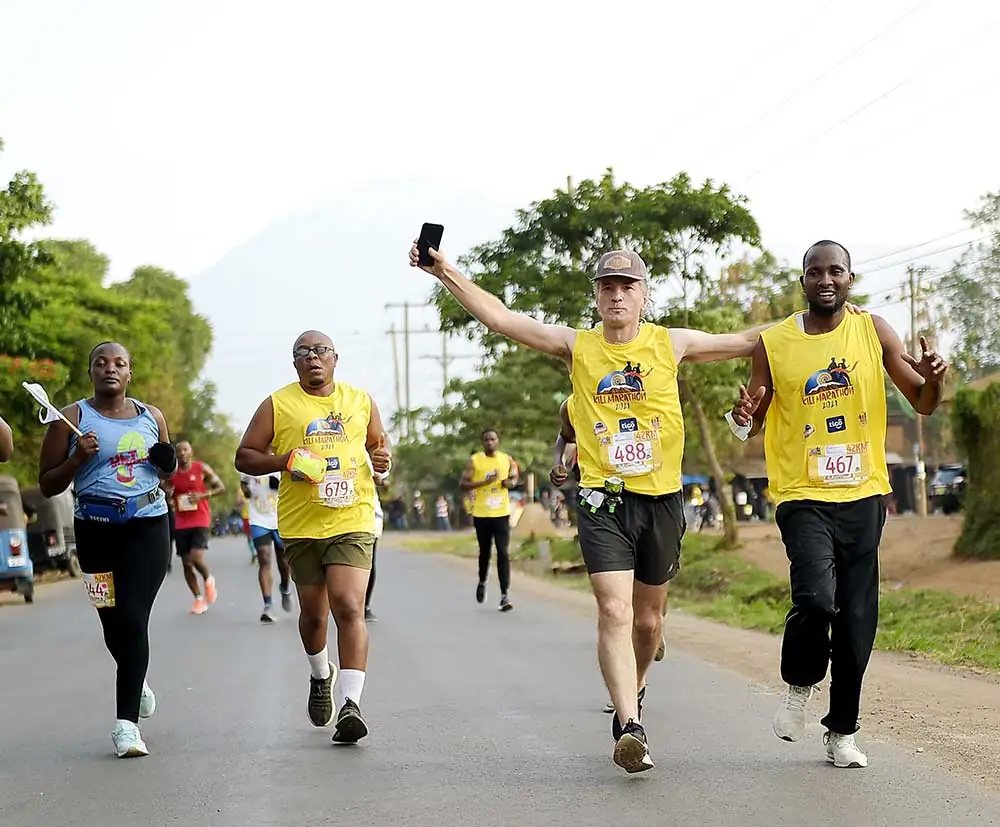
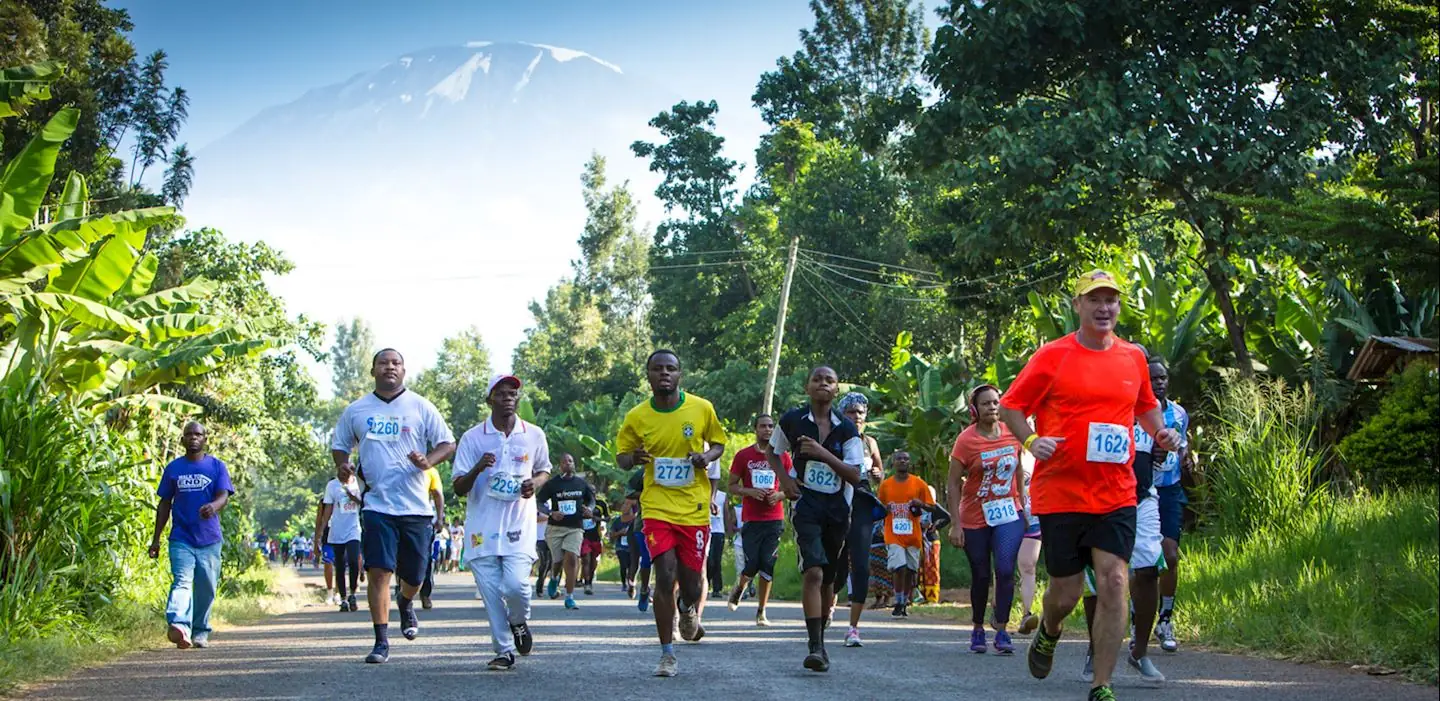
The Kilimanjaro Marathon, often shortened to the Kili Marathon, is a road race held every year in Moshi, the town at the foot of Mount Kilimanjaro in northern Tanzania. It started in 2003 and has grown into one of the biggest running events in East Africa, with three races on the same morning: a full marathon, a half marathon and a 5 km fun run. On a clear morning, Kilimanjaro's snow-capped summit rises above the course.
It is a community event as much as a race. Elite Tanzanian and East African athletes run for fast times and prize places, while local families, schools, company teams and visitors from abroad run, jog or walk for the experience. The streets of Moshi fill with spectators, and the whole town is busy over race weekend.
| Kilimanjaro Marathon | Facts |
|---|---|
| Also known as | Kili Marathon, Kilimanjaro International Marathon |
| Where | Moshi, Kilimanjaro Region, Tanzania; start and finish at the MoCU Stadium |
| First held | 2003 |
| Races | Full marathon (42.2 km), half marathon (21.1 km), 5 km fun run |
| Size | Some 12,000 entrants in 2025, from up to 45 nationalities |
| 2027 race | The 25th edition, on Sunday, February 7, 2027 |
| Qualifier | An official qualifier for South Africa's Comrades Marathon |
A Short History of the Kili Marathon
The idea came in 2002 from Wild Frontiers, a South African events company, as a way of drawing visitors to Tanzania with a race named after Africa's highest mountain; the company still organizes the race today. The first Kilimanjaro Marathon, in 2003, had only about 300 to 400 runners across a full marathon, a half marathon and a 10 km race. Times were taken by hand with stopwatches, part of the course was dirt road, and villagers and children came out to watch and run alongside.
Since then the race has grown many times over. The 10 km has given way to a 5 km fun run for families and newcomers, and the 2025 race drew some 12,000 entrants. It has also become a proving ground for Tanzania's best young runners, some of whom have gone on to the international circuit and the Olympics. For its 25th edition the organizers moved the race to early February 2027, earlier than the March date of 2026.
Who Runs the Kilimanjaro Marathon, and Why?
The field is a mix you rarely see at one race. These are the main groups of runners on the start line:
- Elite athletes: Tanzanian and East African runners chasing fast times and prize places in the full and half marathon.
- East African club runners: runners from Tanzania, Kenya, Uganda and neighboring countries, many traveling by road for the weekend.
- International runners: visitors from up to 45 countries, many combining the race with a safari, a Kilimanjaro climb or Zanzibar.
- Families, schools and company teams: mostly in the 5 km fun run, which children from 10 can run on their own, and younger ones with an adult.
For runners from abroad, the appeal is simple: a race at the foot of Africa's highest mountain, warm support from the crowds along the way, and some of the world's best wildlife and beaches within a day's travel. The rest of this guide explains how to make it happen.
The 2027 Kilimanjaro Marathon at a Glance
The organizers moved the 2027 race earlier than in recent years, from March to the first Sunday in February. These are the three races, with their start times and the minimum age for each:
| Race | Start time | Minimum age |
|---|---|---|
| Full marathon, 42.2 km (26.2 mi) | 6:30 am | 20 |
| Half marathon, 21.1 km (13.1 mi) | 7:00 am | 18 |
| 5 km fun run (3.1 mi) | 7:30 am | 10; younger children with one adult each |
The full marathon starts and finishes at the MoCU Stadium; the half marathon starts at the MoCU gate on Sokoine Road and the fun run on Uru Road below the stadium, and both finish inside it.
The final cut-off for the full and half marathon is 12:30 pm, which gives full-marathon runners six hours. Everyone who finishes by then receives a finisher's medal. MoCU is the Moshi Co-operative University, on the north side of town.
Kilimanjaro Marathon 2027 Entry Fees and How to Register
Runners register and pay on the official race website, by credit card; card payments are processed in South African rand. Entries opened on October 19, 2026.
| Category | Full or half | 5 km |
|---|---|---|
| International runners | US$80 | US$20 |
| Residents of Tanzania or East Africa, and SADC citizens | US$55 | US$17 |
| Tanzanian and East African citizens | TSh 55,000 | TSh 20,000 |
- Deadline: midnight on December 15, 2026, or earlier if capacity is reached. There are no late entries.
- Refunds: entry fees are not refundable.
- Changes: substitutions, upgrades and downgrades are possible only before entries close, for a small fee (US$5).
- Groups: group bookings are for 20 or more runners, with a 10% handling fee.
Race entry is not included in our travel packages, because the organizers require each runner to register in their own name. If you need help with the form, send us a message and we walk you through it.
Full, Half or 5 km: Which Kili Marathon Distance Should You Run?
The three races suit very different runners, and the Moshi course makes the choice matter more than at a flat city marathon: the full and the half both climb toward the mountain first, and February mornings warm up quickly.
- Full marathon (42.2 km): for experienced marathoners who have trained on hills. You have six hours, and the second half includes a long dirt section and the hottest part of the morning.
- Half marathon (21.1 km): a challenging but realistic goal for most regular runners: the same climb in the first 8 km, then a long run downhill to the stadium.
- 5 km fun run: for supporters, families with children from 10 (younger children run with one adult each), and anyone who simply wants to be part of the day.
If you plan to climb Kilimanjaro or Mount Meru after the race, the half marathon or the 5 km leaves you fresher for the mountain.
Collecting Your Kili Marathon Race Number
Numbers are not handed out on race day, so this decides when you need to arrive. Bring proof of payment or your entry reference, and your passport.
| Where | Dates | Times |
|---|---|---|
| Moshi, MoCU Stadium | Thursday, February 4 to Saturday, February 6, 2027 | Thu 12:00–5:00 pm; Fri 10:00 am–6:00 pm; Sat 9:00 am–5:00 pm |
| Arusha, Kibo Palace Hotel | Tuesday, February 2 and Wednesday, February 3 | 2:00–7:00 pm |
| Dar es Salaam, Mlimani City Mall | Friday, January 29 to Sunday, January 31 | Afternoons and daytime; see the official site |
For most international runners the Moshi collection on Friday, February 5 is the easiest: land on Thursday or Friday morning, collect your number, and rest on Saturday.
What the Kilimanjaro Marathon Course Is Like
Most first-time runners in Moshi underestimate the course. This is what to expect, based on the organizers' route descriptions:
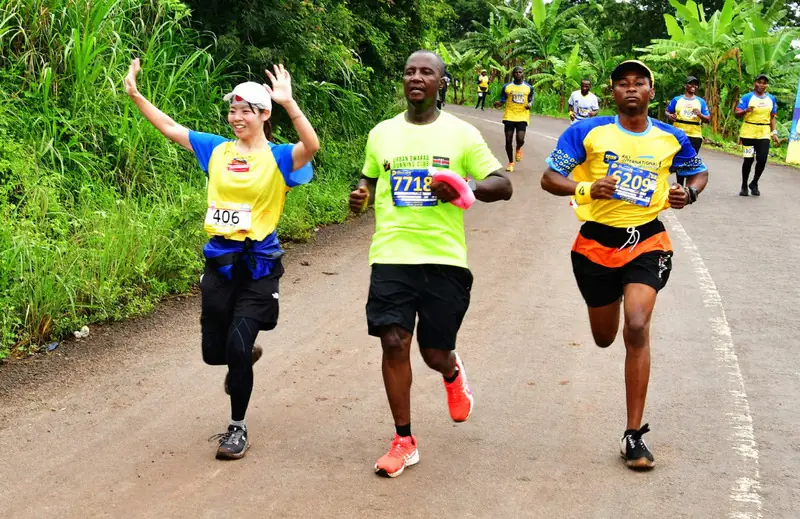
This is not a flat, fast city marathon. Both the full and the half start by climbing toward the mountain, about 290 m (950 ft) of ascent in the first 8 km, before a long run back downhill to the stadium. The half marathon includes about 2 km on a dirt road through farms and schools before joining Lema Road. The full marathon follows the half until about 19 km, then branches off past the Moshi Club and over the Old German Bridge, with a long dirt section that is graded and watered before race day; the organizers list the 2027 full-marathon route as still to be confirmed, so check the official route map closer to the date.
- Heat: February is warm in Moshi, and race reports describe hot, hilly days. The early start helps; plan to slow down after sunrise.
- Water: water points are roughly every 4 km, some with Coke as well. Carry your own gels or electrolyte drinks if you rely on a particular brand.
- Pacing: go easy on the climb; the second half is where the time is made.
Getting to Moshi for the Marathon and Where to Stay
Fly into Kilimanjaro International Airport (JRO), between Moshi and Arusha; the drive to Moshi takes about an hour. US citizens need a Tanzania visa (US$100), and every adult needs Tanzania's mandatory inbound travel insurance (US$44), which we help you buy; see our visa service.
Moshi is a small town, and race weekend brings thousands of runners, so book your hotel as early as possible. A hotel on the MoCU side of town keeps race morning simple, as the start is at 6:30 am. Our packages include a hotel in Moshi and a driver for race-number collection and race morning; see our marathon travel packages.
A Sensible Kili Marathon Race-Week Schedule
Because race numbers are not issued on race day, your arrival date shapes the whole week. This is the schedule we suggest to the runners who travel with us:
| Day | Date | Plan |
|---|---|---|
| Thursday | February 4 | Arrive at Kilimanjaro airport, transfer to Moshi |
| Friday | February 5 | Collect your race number at MoCU; a short shake-out run |
| Saturday | February 6 | Rest, eat well, lay out your kit |
| Sunday | February 7 | Race day; afternoon rest |
| Monday | February 8 | Recovery: a swim at the Chemka hot springs |
| Tuesday onward | From February 9 | Fly home, or go on safari, climb Kilimanjaro or head to Zanzibar |
After the Kilimanjaro Marathon: Safari, Climb or Beach
Having come this far, most runners stay on. February is a very good month for it:
- A safari: sitting in a vehicle is the perfect recovery. In February the wildebeest herds are calving on the plains around Ndutu; our 10-day marathon and calving season safari combines the race with Tarangire, Ndutu, the Serengeti and the Ngorongoro Crater.
- Climbing Kilimanjaro: January and February are one of the two good climbing seasons. After a rest day, our 12-day marathon and Machame climb takes you to the summit by the 7-day Machame route.
- Short trips from Moshi: the Chemka hot springs for tired legs, the Materuni waterfall and coffee tour, or a Kilimanjaro day hike.
- Zanzibar: January and February are hot and mostly dry on the coast. Our 8-day marathon and Zanzibar beach holiday flies you there the day after the race, and more ideas are on our Zanzibar holidays page.

About Jaynevy Tours, Your Travel Planner in Moshi
Jaynevy Tours is a licensed tour operator (TALA licence 014271) based in Moshi, the race town. We are not the race organizer and have no connection with the Kilimanjaro Marathon's organizers or sponsors; we arrange runners' travel, hotels, transfers, safaris and climbs around the race. For anything about the race itself, the official race website is the source to trust.
Common Questions About the Kilimanjaro Marathon 2027
What is the Kilimanjaro Marathon?
An annual road race in Moshi, Tanzania, at the foot of Mount Kilimanjaro, held since 2003. It has a full marathon, a half marathon and a 5 km fun run, drew some 12,000 entrants in 2025, and the 2027 race on February 7 is its 25th edition.
When is the Kilimanjaro Marathon 2027?
Sunday, February 7, 2027, in Moshi, Tanzania. The full marathon starts at 6:30 am, the half marathon at 7:00 am and the 5 km fun run at 7:30 am.
How much is the entry fee for international runners?
US$80 for the full or half marathon and US$20 for the 5 km fun run, paid on the official race website. Entries close at midnight on December 15, 2026, or earlier if the race fills.
Can I collect my race number on race day?
No. In Moshi, numbers are collected at the MoCU Stadium from February 4 to 6, 2027; there are also collections in Arusha and Dar es Salaam earlier in the week.
Is the Kilimanjaro Marathon course hard?
It is hilly: the full and half marathon climb about 290 m (950 ft) in the first 8 km, then run mostly downhill, and the day is usually warm.
What is the minimum age?
20 for the full marathon, 18 for the half marathon and 10 for the 5 km fun run; younger children can run the fun run with one adult each.
Is the race entry included in your packages?
No. Every runner registers in their own name on the official site; our packages cover the travel, hotels, transfers and trips around the race.
Can I climb Kilimanjaro after the marathon?
Yes, after a rest day. January and February are a good climbing season; see our 12-day marathon and Machame climb.
Bottom Line: How to Plan Your Kili Marathon 2027 Trip
Plan in this order: register on the official race website before December 15, 2026; book your Moshi hotel straight away; arrive by Friday, February 5 to collect your race number; and treat the course with respect, a climb and then a long descent, in the heat. Then decide how to recover: a hot-spring day, a safari, a climb or the beach.
When you are ready, our Kilimanjaro Marathon 2027 packages cover everything around the race. Send your distance, travel dates and hotel level through the form, on WhatsApp or by email, and our team in Moshi will reply with a written quotation.