
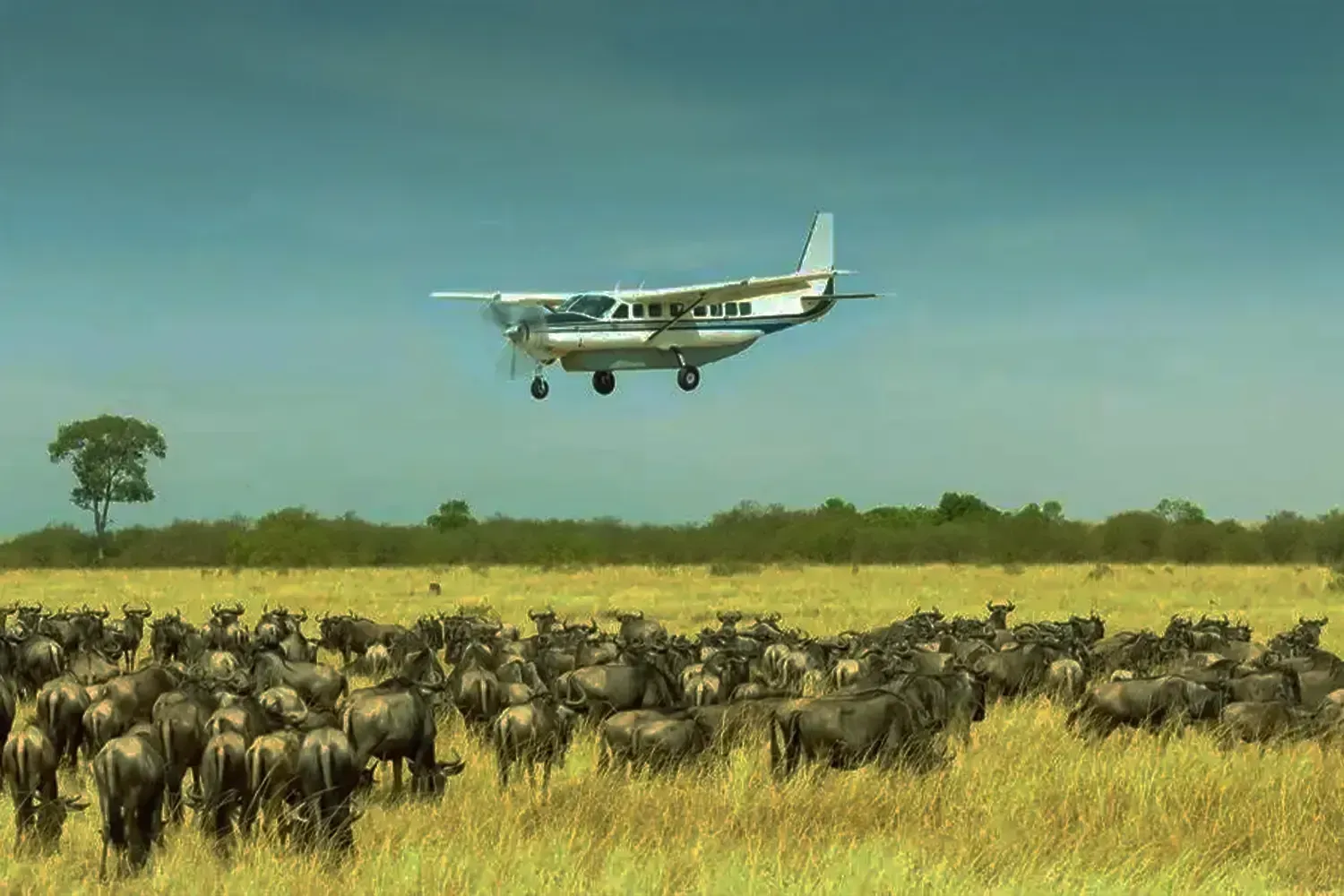
Quick Answer: Is Two Days Enough for a Serengeti Fly-In Safari?
Yes, two days can be worthwhile, but it is a compact safari rather than a complete Serengeti tour. A well-timed itinerary normally gives you an afternoon game drive on day one and an early-morning drive on day two. From Arusha, a favourable schedule can produce roughly 8–11 hours of wildlife viewing. From Zanzibar, the longer flight often reduces that to about 6–9 hours. These are planning estimates, not guarantees; intermediate stops, weather and the distance between your airstrip and lodge can change the result.
- Best all-year base: Central Serengeti via Seronera Airstrip.
- Best for calving season: Ndutu or Kusini area, usually January to March.
- Best for northern river-crossing season: Kogatende or another northern airstrip, usually July to October.
- Best departure point for maximum game time: Arusha, when an early direct service is available.
- Best beach-and-bush combination: Zanzibar, provided you accept a longer flying day.
2-Day Serengeti Fly-In Safari at a Glance
| Planning question | Realistic answer |
|---|---|
| How many nights? | 1 night inside or immediately beside the Serengeti ecosystem |
| How many game drives? | Usually 2 substantial drives, sometimes split into 3 shorter periods |
| Typical total wildlife-viewing time | About 6–11 hours, depending on origin, schedule and lodge location |
| Most practical airstrip | Seronera for year-round central Serengeti wildlife |
| Best trip style | Private or lodge-based shared vehicle with airstrip transfers included |
| Planning price | Roughly US$1,250–US$1,900 per person mid-range; luxury can exceed US$2,500 |
| Main limitation | Little buffer for delayed flights, distant wildlife or seasonal herd movement |
What Does a 2-Day Fly-In Safari Actually Include?
The usual format is one outbound bush flight, one night in a lodge or tented camp, guided game drives, meals, park or concession fees, airstrip transfers and a return flight. The exact structure matters more than the package name. A safari described as “two days” may provide very different wildlife time depending on when the aircraft lands and whether the lodge is 15 minutes or 90 minutes from the airstrip.
Before comparing quotations, ask for the flight numbers or provisional departure times, named airstrips, accommodation, vehicle arrangement and every included fee. The broader Tanzania safari packages with flights page helps compare fly-in formats, while the national park fees guide explains why two similar-looking itineraries can have different totals.
Flights to the Serengeti: How Long Do They Take?
Small scheduled aircraft connect the Serengeti with Arusha Airport, Kilimanjaro International Airport and Zanzibar. They may stop at other airstrips to collect passengers, so the same route can take different amounts of time on different dates. Coastal Aviation currently publishes several useful timetable examples; operators can revise these schedules, so your ticket and final confirmation remain the source of truth.
| Published route example | Published time | What it means for a 2-day safari |
|---|---|---|
| Arusha to Serengeti | 07:45–08:55 | Strong option: arrival early enough for a long first-day game drive |
| Arusha to Serengeti | 10:15–12:15 | Less efficient: useful game viewing begins around lunch |
| Kilimanjaro to Serengeti | 10:50–12:15 | Convenient after a JRO stay, but shorter first afternoon |
| Zanzibar to Serengeti | 08:00–10:50 | Practical beach-to-bush link, but nearly three published hours in transit |
| Serengeti to Arusha | 10:45–11:45 | Usually permits a short dawn drive before airstrip check-in |
| Serengeti to Zanzibar | 11:00–12:50 | Returns you to the island around midday on the published example |
Do not treat timetable minutes as guaranteed game-drive minutes. Add time for check-in, possible intermediate stops, luggage handling, airstrip formalities and the transfer to your lodge. Travellers beginning on the island can compare logistics in the Serengeti safari from Zanzibar guide.
Choose the Airstrip by Season, Not Only by Price
The Serengeti ecosystem is enormous. UNESCO describes the park as about 1.5 million hectares of savannah, and the wider migration crosses a much larger landscape. Landing at the wrong end of the ecosystem can waste much of a two-day trip. A short safari should be designed around the wildlife region first and the lodge second.
| Safari region | Common airstrip choice | Best use | Typical seasonal focus |
|---|---|---|---|
| Central Serengeti | Seronera | Reliable resident wildlife, big cats and year-round access | All year |
| Southern plains | Ndutu or Kusini | Short-grass plains, calving and predator activity | December–March, depending on rain |
| Western corridor | Grumeti-area airstrips | Westward-moving herds and Grumeti region | May–July, variable |
| Northern Serengeti | Kogatende or northern alternatives | Mara River region and northern plains | July–October, variable |
Airstrip availability, camp opening dates and route frequency change seasonally. For a two-day trip, avoid a plan that lands in Seronera and promises a quick drive to Kogatende or Ndutu; those are separate safari regions. Read the best time to visit Serengeti for the migration before choosing a seasonal camp.
How Much Game-Drive Time Will You Really Get?
A realistic itinerary should count wildlife time from the moment the vehicle leaves the airstrip—not from hotel pickup at the departure city. The estimates below assume normal daytime operations, a lodge reasonably close to the chosen airstrip and no major disruption.
| Origin and schedule style | Day 1 estimate | Day 2 estimate | Likely total |
|---|---|---|---|
| Early Arusha departure | About 5.5–7.5 hours | About 2.5–3.5 hours | About 8–11 hours |
| Late Arusha or JRO departure | About 3.5–5.5 hours | About 2.5–3.5 hours | About 6–9 hours |
| Zanzibar departure | About 3.5–5.5 hours | About 2.5–3.5 hours | About 6–9 hours |
| Distant lodge or seasonal airstrip mismatch | Can lose 1–3 hours to transfers | May require an earlier airstrip return | Often poor value |
Wildlife does not follow a timetable. Even in a productive area, the guide may spend time locating a pride, cheetah, leopard or migrating herd. Two days gives a genuine Serengeti experience, but a 3-day Serengeti fly-in safari adds a full middle day and is more forgiving.
Best Months for a 2-Day Serengeti Fly-In Safari
There is no single “best month” for every traveller. Central Serengeti offers strong resident wildlife throughout the year. Migration-focused travellers must match the flight and camp to the expected herd location, while photographers may prefer green-season light and fewer vehicles.
| Months | Best area for a short safari | Main advantage | Main trade-off |
|---|---|---|---|
| January–March | Ndutu, Kusini or southern plains | Calving season, large herds and intense predator activity | Premium demand in February; movement depends on rain |
| April–May | Central, south-central or western transition | Green landscapes, fewer vehicles and possible lodge value | Long rains, muddy tracks and some seasonal camp closures |
| June | Central to western corridor | Drying conditions and herds moving north-west | Exact herd position can shift substantially |
| July–October | North for river region; central for reliable resident game | Dry-season viewing and possible Mara River action | Highest demand; crossings are never guaranteed |
| November–December | Central and eastern/southern transition | Fresh grass, returning herds, birding and attractive scenery | Short rains can alter roads and herd location |
UNESCO describes a roughly 1,000 km annual circular migration involving more than one million wildebeest and hundreds of thousands of other grazers. That scale is exactly why a two-day itinerary cannot “chase the migration” across the ecosystem. Use the month-by-month guidance, then confirm recent field reports shortly before travel. The best time to see animals in Serengeti guide separates migration goals from general wildlife viewing.
Two Realistic 2-Day Fly-In Itineraries
Option 1: Central Serengeti for Reliable Year-Round Wildlife
Day 1: Fly from Arusha, Kilimanjaro or Zanzibar to Seronera. Meet the guide at the airstrip and begin a game drive through the Seronera Valley, kopjes and nearby river systems. Stop for a picnic or lodge lunch, continue viewing through the afternoon and reach the camp before dark.
Day 2: Leave early for a sunrise game drive when temperatures are cooler and predators may still be active. Return for breakfast or carry a packed meal, then transfer to Seronera in time for check-in and the return flight.
This is usually the safest choice for first-time visitors because central Serengeti holds resident lions, elephants, giraffes, buffalo, hippos, hyenas and other wildlife even when the main migration is elsewhere.
Option 2: Seasonal Migration-Focused Fly-In Safari
Day 1: Fly directly to the airstrip serving the expected herd region—such as Ndutu/Kusini in the south or Kogatende in the north. Start viewing immediately, focusing on the seasonal plains or river region rather than attempting to cover central Serengeti as well.
Day 2: Take an early drive in the same region and return to the nearby airstrip. The itinerary should remain geographically tight. In only one night, adding a distant second region usually reduces the chance of meaningful sightings.
For river crossings, a longer itinerary is more sensible because crossings can happen before arrival, after departure or not at all on a particular day. Travellers whose main goal is the migration should consider a longer Great Migration itinerary or at least three to four nights in the target region.
How Much Does a 2-Day Serengeti Fly-In Safari Cost in 2026/2027?
Published 2026 market examples show substantial variation. Current two-day packages from Zanzibar commonly appear around US$1,400–US$1,900 per person for mid-range or entry-luxury arrangements, while premium camps can exceed US$2,500 per person. Arusha-based packages can be cheaper because the flight is shorter, but the saving depends on lodge category, vehicle sharing and the chosen airstrip.
| Trip style | Useful planning range per person | Typical assumptions |
|---|---|---|
| Arusha fly-in, mid-range | US$1,250–US$1,700 | 2 travellers sharing, one night, return flights and shared or private game drives |
| Zanzibar fly-in, mid-range | US$1,400–US$1,900 | 2 travellers sharing, longer flights, one night and standard camp |
| Luxury fly-in | US$1,900–US$2,800+ | Premium camp, private vehicle or high-season dates |
| Single traveller | Often materially higher | Single-room supplement and fewer people sharing the vehicle cost |
These are research-based planning ranges, not fixed Jaynevy Tours prices. Exact totals depend on live airfares, room availability, seasonal supplements, park and concession fees, taxes, vehicle arrangement and whether airport transfers are included. TANAPA's public tariff page currently displays FY2023/2024 figures, including a listed non-resident Serengeti entry fee of US$70.80; do not use that single number as a complete 2026/2027 safari fee calculation. Request a dated written quote.
What Should Be Included in the Price?
| Item | What to confirm in writing |
|---|---|
| Flights | Origin, destination airstrip, taxes, baggage allowance and whether the route is direct |
| Accommodation | Named lodge/camp, room category, meal plan and seasonal supplement |
| Game drives | Private or shared vehicle, open-sided or pop-up-roof 4x4, and expected schedule |
| Fees | Park entry, concession/camping fees, airstrip or service charges and VAT treatment |
| Transfers | Hotel-to-airport transfer at origin and all Serengeti airstrip transfers |
| Meals and drinks | Lunches, dinner, breakfast, drinking water and excluded beverages |
| Not included | Tips, insurance, visas, premium drinks, optional balloon safari and excess baggage |
Safari-Flight Baggage Rules: Pack for the Airline You Book
Baggage rules are stricter than on most international flights because bush aircraft have small holds and weight limits. Coastal Aviation publishes a maximum of 15 kg per person including hand luggage and recommends a flexible soft bag. Auric Air currently publishes 20 kg total per person, also including hand luggage, cameras and personal items, and recommends soft-sided luggage.
- Use a soft duffel rather than a large rigid suitcase.
- Count camera bodies, lenses and daypacks within the airline's total allowance.
- Confirm the rule printed on your specific ticket; partner-operated sectors may differ.
- Arrange luggage storage in Arusha, Moshi or Zanzibar before the safari if necessary.
- Do not assume you can pay for unlimited excess weight at the airstrip.
The Tanzania safari packing list is useful for reducing one-night luggage without forgetting medicine, documents, sun protection or camera essentials.
Who Should Book a 2-Day Serengeti Fly-In Safari?
It is a good fit when:
- You have only one free night but Serengeti is a priority.
- You are staying in Zanzibar and want a serious safari rather than a mainland day trip.
- You prefer flying to a 6–8 hour road approach from Arusha.
- You accept that sightings are natural and cannot be guaranteed.
- You can afford to choose the correct seasonal airstrip and a well-located camp.
Choose three or more days when:
- The Great Migration or a river crossing is your main reason for travelling.
- You want both central Serengeti and a seasonal northern or southern region.
- You are a serious photographer who needs repeated sunrise and sunset opportunities.
- You are travelling with young children or prefer a slower pace.
- Your flight arrives after midday or departs early on day two.
First-time travellers should also read what to expect on a first Tanzania safari before deciding whether a compressed itinerary suits them.
Common Planning Mistakes
- Booking a central Serengeti lodge while expecting northern Mara River crossings.
- Counting flight time as game-drive time.
- Choosing the cheapest camp without checking its distance from the airstrip.
- Assuming “direct flight” means no intermediate airstrip stop.
- Comparing quotes without checking park fees, concession fees and VAT.
- Using a hard international suitcase for a small safari aircraft.
- Scheduling the return bush flight immediately before an international departure.
- Expecting all of the Big Five or a river crossing within one night.
Better Alternatives When Two Days Feel Too Short
A 3-day luxury Serengeti fly-in safari provides a full middle day and two nights in the park. A 4-day fly-in safari can combine central wildlife with a seasonal region more comfortably. Travellers comparing flight and road options can review the exact 2-day fly-in and fly-out choices from Arusha or Zanzibar.
For travellers who want a broader northern-circuit experience rather than Serengeti alone, adding Ngorongoro and Tarangire by road may offer more landscape variety, but it requires additional days. The best itinerary is the one that protects wildlife-viewing time rather than collecting the most destination names.
Booking Checklist for 2026/2027
- Choose your wildlife goal: resident game, calving, western movement or northern river region.
- Select the nearest practical airstrip and confirm it operates on your dates.
- Request provisional outbound and return times before paying.
- Check whether the lodge is inside the park, in a concession or outside a gate.
- Confirm private versus shared vehicle arrangements.
- Ask for a full inclusion and exclusion list with all taxes and conservation fees.
- Verify baggage weight and bag dimensions directly with the ticketed airline.
- Keep a connection buffer before any international flight.
- Confirm cancellation rules for weather or operational schedule changes.
- Recheck recent herd reports if the migration is your priority.
Research Notes and Source Transparency
This guide distinguishes fixed published facts from variable planning estimates. Airline schedules, airstrip stops, park fees, camp rates and migration positions can change. Always use the final ticket and dated safari quotation for your travel decision.
- Coastal Aviation Serengeti timetable
- Coastal Aviation Zanzibar timetable
- Coastal Aviation luggage policy
- Auric Air published timetable period
- Auric Air baggage policy
- TANAPA Serengeti National Park
- TANAPA tariff portal
- UNESCO Serengeti World Heritage information
Plan Your 2-Day Serengeti Fly-In Safari With Jaynevy Tours
Jaynevy Tours can match the flight, airstrip, camp and game-drive plan to your exact 2026/2027 dates. A useful quotation should show the named airline or provisional flight, the selected Serengeti region, baggage limit, accommodation, vehicle arrangement, fees and realistic game-drive windows. For more time in the park, compare the 3-day fly-in option; for a beach departure, begin with the Zanzibar-to-Serengeti planning guide.
Frequently Asked Questions
Is a 2-day Serengeti fly-in safari worth it?
Yes, it can be worth it for travellers with limited time who choose a suitable airstrip and a nearby camp. Expect a compact experience with an afternoon game drive and an early-morning drive rather than a complete tour of the Serengeti.
How long is the flight from Arusha to Serengeti?
Coastal Aviation publishes examples ranging from about 1 hour 10 minutes to 2 hours, depending on the service and routing. Intermediate airstrip stops can change the actual travel time.
How long is the flight from Zanzibar to Serengeti?
A current Coastal Aviation timetable example shows Zanzibar to Serengeti from 08:00 to 10:50, about 2 hours 50 minutes. The route may include stops and must be reconfirmed for the exact travel date.
How many game-drive hours are realistic in two days?
Roughly 6–11 hours across the trip is a sensible planning range. Early Arusha flights usually provide more wildlife time than longer Zanzibar services, while distant camps reduce it.
Which Serengeti airstrip is best for a 2-day safari?
Seronera is the most practical year-round choice because central Serengeti has dependable resident wildlife. Ndutu or Kusini suits the southern calving season, while Kogatende is better for the northern region in the dry season.
What are the best months for a short Serengeti safari?
Central Serengeti works throughout the year. January to March is strong in the southern plains, July to October suits the north, and April to May can offer green scenery and fewer visitors with a higher rain risk.
Can a 2-day safari guarantee the Great Migration?
No. The herds respond to rainfall and grass, and river crossings are especially unpredictable. The best approach is to fly to the expected region and treat any crossing as a possibility rather than a promise.
How much does a 2-day Serengeti fly-in safari cost?
A useful 2026/2027 planning range is about US$1,250–US$1,900 per person for many mid-range arrangements based on two people sharing. Luxury camps, single occupancy and peak dates can take the price above US$2,500.
How much luggage can I take?
The ticketed airline decides. Coastal Aviation currently publishes 15 kg total per person, including hand luggage, while Auric Air publishes 20 kg total. Soft bags are recommended for small aircraft.
Should I book two days or three days?
Choose two days when time is fixed and the itinerary is geographically focused. Choose three days when migration viewing, photography, a slower pace or protection from schedule changes matters more.
Can I fly from Serengeti directly back to Zanzibar?
Yes, scheduled services operate between Serengeti airstrips and Zanzibar on published routes. Confirm the exact airstrip, stops, arrival time and luggage policy before booking an onward hotel or international connection.