
What You Need to Know: The Rongai Route is our recommendation for climbing in the shoulder and rainy months, because the north side is the driest part of Kilimanjaro. It costs from US$1,845 per person for 6 days or US$2,090 for 7 days (2 climbers, mid-range hotels). Choose 7 days: the extra night helps you acclimatize before Kibo Hut. In the dry season, the 7-day Machame or 8-day Lemosho have more varied scenery.
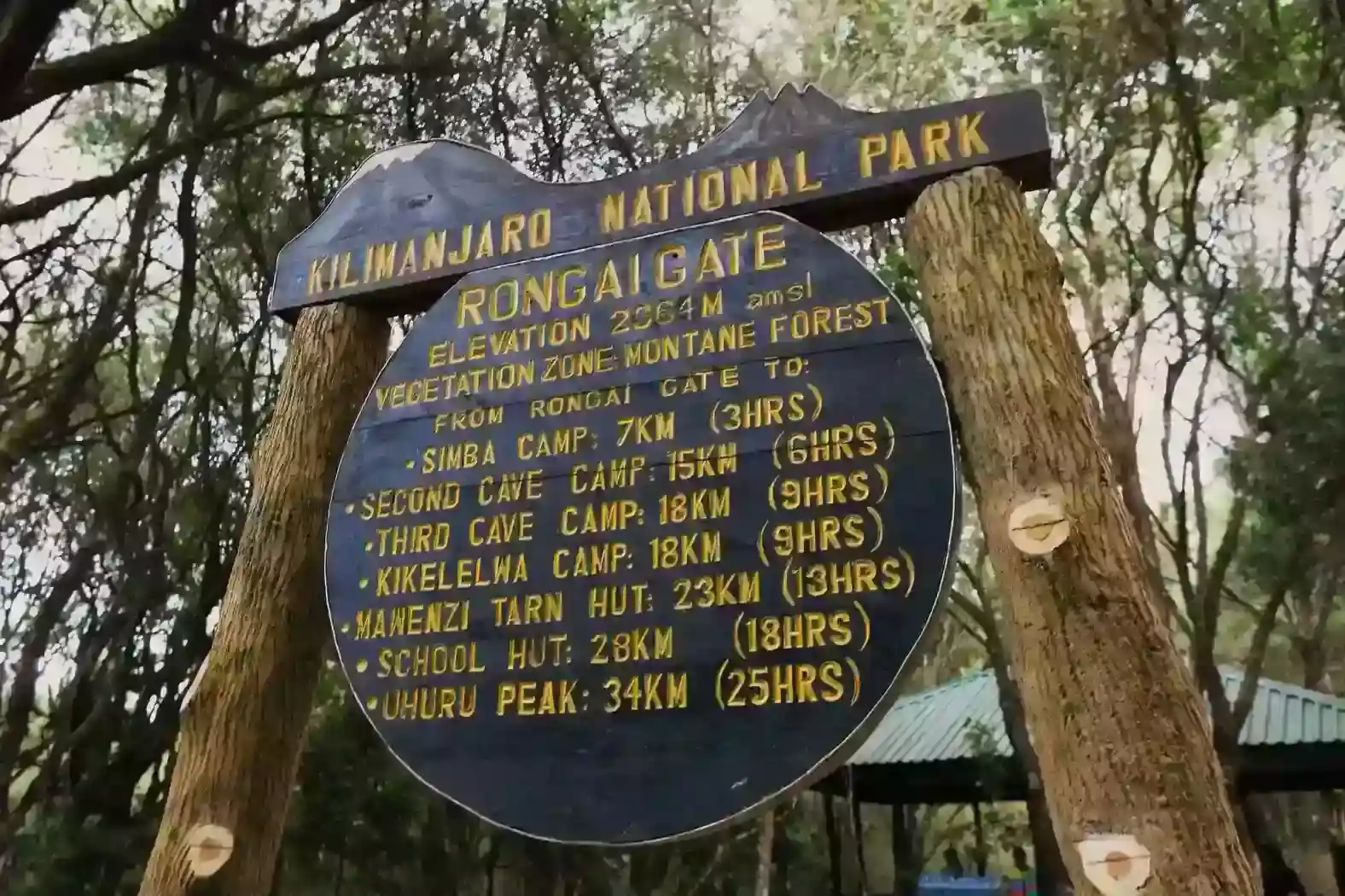
Is the Rongai Route Climb Right for You?
Rongai suits climbers who want a quieter trail, a gradual climb and the best chance of dry weather, including in the shoulder months. It is less suited to climbers who want the most dramatic scenery in the first days, which Machame and Lemosho have.
The northern slopes are in the mountain's rain shadow, so they are drier than the southern routes. The ascent is steady, with no steep scramble like the Barranco Wall.
| The 7-day Rongai suits you if… | Consider another climb if… |
|---|---|
| You are climbing in April, May or November | You are climbing in the dry season and want varied scenery: the 7-day Machame |
| You want a quiet trail | You want huts instead of tents: the 6-day Marangu |
| You prefer a steady ascent with no scramble | You want the most gradual ascent: the 8-day Lemosho |
| You'd like to see both sides of the mountain | You want the most time and the fewest people: the 9-day Northern Circuit |
Six Days or Seven on the Rongai Route?
Choose seven if you can. On the 7-day climb you spend a night at Second Cave before Kikelewa Caves, which spreads the height gain; the 6-day version goes from Simba Camp straight to Kikelewa Caves.
Both versions include the night at Mawenzi Tarn (about 14,200 ft / 4,330 m), below the jagged spires of Mawenzi, which works as a high acclimatization stop before you cross the saddle to Kibo Hut. The extra day costs US$245 per person on our prices.
Kilimanjaro National Park records from the early 2000s showed 44% of climbers reaching the summit on 6-day climbs and 64% on 7-day climbs, across all routes. Today's rates are higher, but the pattern holds.
The Rongai Route at a Glance
Rongai Gate – Simba Camp – Second Cave – Kikelewa Caves – Mawenzi Tarn – Kibo Hut – Gilman's Point – Uhuru Peak – Horombo Hut – Marangu Gate.
You go up the north side and come down the Marangu Route on the south-east. On the 6-day version you skip Second Cave.
| Day | Sleep at | Altitude | Walking time |
|---|---|---|---|
| 1 | Simba Camp | About 8,500 ft (2,600 m) | 3–4 hours |
| 2 | Second Cave | About 11,300 ft (3,450 m) | 5–6 hours |
| 3 | Kikelewa Caves | About 11,800 ft (3,600 m) | 3–4 hours |
| 4 | Mawenzi Tarn | About 14,200 ft (4,330 m) | 3–4 hours |
| 5 | Kibo Hut | About 15,400 ft (4,700 m) | 4–5 hours |
| 6 | Horombo Hut (via Uhuru Peak, 19,341 ft / 5,895 m) | About 12,200 ft (3,720 m) | 11–15 hours |
| 7 | Hotel in Moshi (via Marangu Gate) | — | 5–6 hours |
Rongai Route Itinerary: Why Each Day Matters
Three days take you through forest and moorland to Kikelewa Caves, then Mawenzi Tarn under the Mawenzi peak, Kibo Hut, the summit and the descent down the Marangu side. This is the 7-day plan.
-
Day 1: Rongai Gate (about 6,400 ft / 1,950 m) to Simba Camp (about 8,500 ft / 2,600 m)
The drive round to the northern side takes longer than to the southern gates. After registration you walk through pine plantation and forest edge to the first camp, with views back over the plains towards Kenya.
The forest on this side is drier and thinner than on the south, so the first day is usually less muddy.
Purpose: an easy startForest edgeLunch, dinner -
Day 2: Simba Camp to Second Cave (about 11,300 ft / 3,450 m)
A steady climb into moorland, with Kibo ahead and the plains behind. The gradient is gentle and even, which is the character of this route.
Purpose: gain height steadilyHeath and moorlandBreakfast, lunch, dinner -
Day 3: Second Cave to Kikelewa Caves (about 11,800 ft / 3,600 m)
A shorter day across the moorland towards Mawenzi, with only a small height gain. On the 6-day climb you walk from Simba Camp straight to Kikelewa.
Purpose: a short day to adjustMoorlandBreakfast, lunch, dinner -
Day 4: Kikelewa Caves to Mawenzi Tarn (about 14,200 ft / 4,330 m)
A steep, short climb to a small lake below the spires of Mawenzi, Kilimanjaro's second summit. The afternoon is for rest or a short acclimatization walk higher up with your guide.
Mawenzi Tarn is one of the most striking camps on the mountain, and the high night prepares you for Kibo Hut.
Purpose: a high acclimatization nightAlpine desertBreakfast, lunch, dinner -
Day 5: Mawenzi Tarn to Kibo Hut (about 15,400 ft / 4,700 m)
Across the alpine-desert saddle between Mawenzi and Kibo to the summit base camp. Early dinner, the summit briefing, a health check and a gear check, then a few hours' rest.
Purpose: reach the summit base; prepareAlpine desertBreakfast, lunch, dinner -
Day 6: Summit, then down to Horombo Hut (about 12,200 ft / 3,720 m)
A midnight start to Gilman's Point on the crater rim, then Uhuru Peak (19,341 ft / 5,895 m). You descend past Kibo Hut to Horombo on the Marangu Route. The next section explains the night step by step.
Purpose: the summitArctic summit zoneSnacks, lunch, dinner -
Day 7: Horombo Hut to Marangu Gate, drive to Moshi
Down through moorland and rainforest to Marangu Gate, where you sign out, receive your summit certificate and usually tip the crew, and we drive you back to your hotel in Moshi.
Purpose: descend; certificatesMoorland and rainforestBreakfast, lunch
Summit Night on the Rongai Route, Step by Step
Summit night on the Rongai Route starts from Kibo Hut, the same as on Marangu: about 3,900 ft (1,200 m) of climbing in the dark and cold to Gilman's Point on the crater rim and on to Uhuru Peak. It is the hardest part of the climb.
How Hard Is the Rongai Route Climb?
The Rongai Route is more gradual than Machame and has no scramble, but the summit night from Kibo Hut is just as hard.
| Challenge | What it means for you |
|---|---|
| Altitude | Spread more gently on 7 days than on 6 |
| Summit night | 6–8 hours up loose scree in the dark and cold, then down to Horombo |
| Long descent | Summit day and the last day both descend a long way on the Marangu side |
| Camping | Six nights in tents on the 7-day climb |
How Much Does the Rongai Route Climb Cost?
The Rongai climb costs from US$1,845 per person for 6 days and US$2,090 for 7 days, for 2 climbers with mid-range hotels in Moshi. The price is for a private climb on your own dates; budget, mid-range or luxury changes only your two hotel nights in Moshi.
6 days
| Climbers | Budget | Mid-range | Luxury |
|---|---|---|---|
| 1 | US$1,700 | US$1,890 | US$2,080 |
| 2 | US$1,675 | US$1,845 | US$1,990 |
| 3 | US$1,680 | US$1,880 | US$1,980 |
| 4 | US$1,675 | US$1,845 | US$1,990 |
| 5 | US$1,675 | US$1,865 | US$1,985 |
| 6 | US$1,675 | US$1,845 | US$1,990 |
7 days
| Climbers | Budget | Mid-range | Luxury |
|---|---|---|---|
| 1 | US$1,945 | US$2,130 | US$2,325 |
| 2 | US$1,915 | US$2,090 | US$2,235 |
| 3 | US$1,925 | US$2,125 | US$2,225 |
| 4 | US$1,915 | US$2,090 | US$2,235 |
| 5 | US$1,920 | US$2,110 | US$2,230 |
| 6 | US$1,915 | US$2,090 | US$2,235 |
Where the money goes
| Park fee (per climber) | Rate | 7-day Rongai |
|---|---|---|
| Conservation fee | US$70 per day | US$490 |
| Camping fee | US$50 per night | US$300 |
| Rescue fee | US$20 per climb | US$20 |
| VAT | 18% | US$146 |
| Total park fees | About US$956 |
What the Rongai Route Price Includes, and What It Doesn't
Included
- Kilimanjaro National Park fees, VAT and trekking permits
- A crew of seven per climber: mountain guide, cook and five porters
- Tents, sleeping mats, mess tent with table and chairs, and a private portable toilet tent
- All meals on the mountain, drinking water and hot drinks
- First-aid kit, emergency oxygen, pulse oximeter and stretcher
- Return airport transfers, and transfers to Rongai Gate and from Marangu Gate
- One hotel night in Moshi before and one after the climb
Not included
- International and domestic flights, and visa fees (US$100 for US citizens)
- Tanzania's mandatory inbound travel insurance, US$44 per adult from October 1, 2026 (we can help you buy it)
- Travel insurance that covers trekking up to 19,700 ft (6,000 m) and helicopter evacuation
- Personal climbing gear (rental available in Moshi)
- Tips for the mountain crew (tipping guide)
- Meals and activities in Moshi, drinks, laundry and personal items
- The card-processing fee when you pay the deposit online
Tips to budget for
When Is the Best Time for the Rongai Route?
Late May to October and January to March, like the other routes, and Rongai is also our choice for the shoulder weeks, because the north side is the driest part of the mountain. We still don't recommend April, early May, November or the late-December holiday period on any route, but if those are your only dates, Rongai is where we would send you.
| Months | Our advice |
|---|---|
| January – March | Recommended: warmer, quieter |
| April – early May | Not recommended: long rains |
| Late May – October | Recommended: dry season, busiest months |
| November | Not recommended: short rains |
| Late December | Not recommended: holiday crowds |
Rongai Compared with Marangu and Machame
Rongai shares its summit night and descent with Marangu, and its length with Machame.
| 7-day Rongai | 6-day Marangu | 7-day Machame | |
|---|---|---|---|
| Side of the mountain | North (drier) | South-east | South-west |
| Sleep in | Tents | Huts | Tents |
| Scramble | No | No | Barranco Wall |
| Best for | Rainy months, quiet trails | Huts | Most first-timers |
| Price from (2 climbers, mid-range) | US$2,090 | US$1,845 | US$2,090 |
Full itineraries: the 6-day Marangu and the 7-day Machame.
What Else to Read Before You Book
This page covers what is particular to the Kilimanjaro Rongai Route. The parts that work the same way on our other trips are explained once, in these guides:
- Kilimanjaro acclimatization: altitude sickness symptoms and how our guides check you at every camp.
- Safety on Kilimanjaro: our crew, oxygen, pulse oximeters and evacuation plan.
- Kilimanjaro climbing FAQs: food, water, toilets and daily routine on the mountain.
- Kilimanjaro packing list: everything to bring, layer by layer.
- Rental gear in Moshi: what you can rent and the price for the whole climb.
- Where to sleep before and after the climb: hotels in Moshi and the nights included.
- Kilimanjaro booking and refund terms: deposit, balance and cancellation.
- Tipping your Kilimanjaro crew: suggested amounts per climber and how the crew shares them.
Common Questions About the Rongai Route Climb
Is the Rongai Route easier than Machame?
It is more gradual and has no scramble, but the summit night from Kibo Hut is just as hard.
Do you go up and down the same way on Rongai?
No. You climb from the north and come down the Marangu Route on the south side.
Is the Rongai Route good in the rainy season?
It is the driest route, so it is our choice if you must climb in the shoulder or rainy months.
The Bottom Line
If you are climbing in the shoulder or rainy months, or want a quiet, steady route with no scramble, choose the 7-day Rongai. In the dry season, most first-timers will enjoy the 7-day Machame or 8-day Lemosho more for their scenery.
To plan your climb, send us your preferred dates, the number of climbers and your hotel level (budget, mid-range or luxury) through the booking form, on WhatsApp +255 678 992 599 or by email to jaynevytours@gmail.com. Our sales team in Moshi will confirm availability and send your written quotation.