
Quick answer: what is the best well-paced 8-day northern circuit route?
The strongest all-round route is Arusha National Park, Tarangire, Lake Manyara, three nights in Serengeti and one night beside Ngorongoro before an early crater descent. It gives first-time visitors four different ecosystems without taking time away from Serengeti, which is the largest and most time-hungry destination on the circuit.
| Planning point | Recommended answer |
|---|---|
| Safari length | 8 days / 7 nights |
| Best Serengeti allocation | 3 nights, giving two full days plus arrival and departure game viewing |
| Main parks | Arusha, Tarangire, Lake Manyara, Serengeti and Ngorongoro |
| Best for | First-time visitors, couples, families, photographers and travellers who dislike rushed four-park safaris |
| Typical tour-only budget | About US$2,000–US$4,800 per person for budget to private mid-range; luxury commonly starts around US$5,200 |
| Longest transfer | Karatu to Central Serengeti, normally 4.5–6 hours before optional game-viewing stops |
This route can begin in Arusha or Moshi. Travellers landing late should keep a separate arrival night rather than counting a long-haul flight day as Safari Day 1.
Is eight days enough for Tanzania's northern circuit?
Yes. Eight days is long enough to see the northern circuit properly, provided you avoid adding every possible destination. The mistake is not the number of days; it is trying to force Tarangire, Manyara, Serengeti, Ngorongoro, Lake Eyasi, Lake Natron and cultural stops into the same week.
A well-paced eight-day itinerary should protect three things:
- At least three Serengeti nights, because the park is vast and wildlife is not concentrated around one gate.
- An overnight close to Ngorongoro, so the crater day starts near the 06:00 opening rather than after a long morning drive.
- No more than one major road transfer on the same day, except where the road itself runs through wildlife areas.
Travellers comparing trip lengths can also review the 7-day Tanzania safari itinerary and the dedicated 8-day Tanzania wildlife safari.
Eight-day itinerary at a glance
| Day | Route and focus | Suggested night | Pacing |
|---|---|---|---|
| 1 | Arusha National Park: forest, Momella Lakes and Mount Meru scenery | Arusha | Gentle opening day |
| 2 | Arusha to Tarangire; afternoon game drive | Tarangire area or Karatu | Moderate |
| 3 | Lake Manyara and Rift Valley scenery | Karatu | Relaxed |
| 4 | Karatu through Ngorongoro to Central Serengeti | Central Serengeti | Long transfer plus game viewing |
| 5 | Full-day Central Serengeti game drive | Central Serengeti | Full wildlife day |
| 6 | Second Serengeti day or seasonal zone excursion | Central or seasonal Serengeti | Flexible |
| 7 | Morning Serengeti drive, Naabi Hill and Ngorongoro highlands | Crater rim or Karatu | Scenic transfer |
| 8 | Early Ngorongoro Crater game drive; return to Arusha or Moshi | End of safari | Early start, substantial return drive |
Detailed 8-day Tanzania wildlife safari itinerary
Day 1: Arusha National Park for a gentle wildlife introduction
Begin with Arusha National Park rather than immediately spending five or six hours on the road. Its forest, Momella Lakes and Mount Meru setting are different from the open plains later in the safari. Giraffe, buffalo, zebra, blue monkeys, black-and-white colobus monkeys and waterbirds are realistic targets, while large-cat sightings are less reliable than in Serengeti.
This day works especially well after an international arrival because game-drive routes are close to Arusha. Guests starting in Moshi should expect additional road time. A walking safari or canoe activity can be included only when booked and permitted.
Day 2: Arusha to Tarangire National Park
Leave after breakfast for Tarangire. The road journey from Arusha commonly takes about 2.5–3 hours, depending on traffic and the gate used. Enter before lunch when possible and spend the afternoon along the Tarangire River, Silale Swamp approaches and baobab woodland.
Tarangire is not simply a shorter version of Serengeti. TANAPA describes a protected area of more than 2,850 km², with more than 2,500 elephants and over 550 baobabs. Wildlife spreads more widely in wetter months, while the river system attracts dense concentrations during the dry season. Explore the dedicated Tarangire safari guide for more detail.
Day 3: Lake Manyara and an unhurried Karatu evening
Drive to Lake Manyara for a half- or full-day game drive, then continue to Karatu. Manyara gives the itinerary groundwater forest, Rift Valley escarpment views, hippo pools and strong birding. TANAPA lists the park at 648.7 km² and reports more than 400 bird species across forest, wetland and woodland habitats.
Tree-climbing lions are possible, not guaranteed. Flamingo numbers also change with water level, food conditions and season. The value of this day is habitat variety and a shorter driving schedule before the long Serengeti transfer. Travellers deciding whether to include it should read is Lake Manyara worth visiting?
Day 4: Karatu to Central Serengeti through Ngorongoro
This is the longest transfer of the itinerary, but much of the route passes through protected landscapes. Enter the Ngorongoro Conservation Area, cross the highlands, descend toward the short-grass plains and continue through Naabi Hill Gate into Serengeti.
Allow roughly 4.5–6 hours of point-to-point travel before substantial wildlife stops. A rushed programme promises a full morning game drive in one park and a full afternoon drive deep inside Serengeti; a realistic programme treats the journey itself as a scenic transfer with opportunistic sightings.
Arrive in Central Serengeti in time for a late-afternoon drive when road and gate conditions allow. Sleep inside the park or immediately beside the central wildlife area to protect the next two mornings.
Day 5: Full-day Central Serengeti game drive
Start early around Seronera, river valleys, kopjes and open plains. Central Serengeti supports resident wildlife throughout the year, including lion, leopard, cheetah, elephant, buffalo, giraffe, zebra and numerous antelope species. The Great Migration may be elsewhere, but the central region remains productive because of permanent water and varied habitat.
Choose between a full-day drive with picnic lunch and separate morning-and-afternoon drives. The second option gives a lodge break but works best when accommodation is centrally located. A remote camp can add 60–90 minutes of transit before the real game drive begins.
Day 6: A second Serengeti day matched to the season
The third Serengeti night is what makes this itinerary genuinely well-paced. Use Day 6 for a second Central Serengeti circuit, a photography-focused drive, or a seasonal extension:
- December to March: consider Ndutu and the southern plains, especially when calving herds are concentrated there.
- April to May: remain flexible because rains can shift herd distribution and road conditions.
- June: western and central zones can be productive as herds move north-west.
- July to October: northern Serengeti may suit migration-focused trips, but moving from central to north requires different camp planning.
- November: short rains often begin drawing animals south, but timing varies.
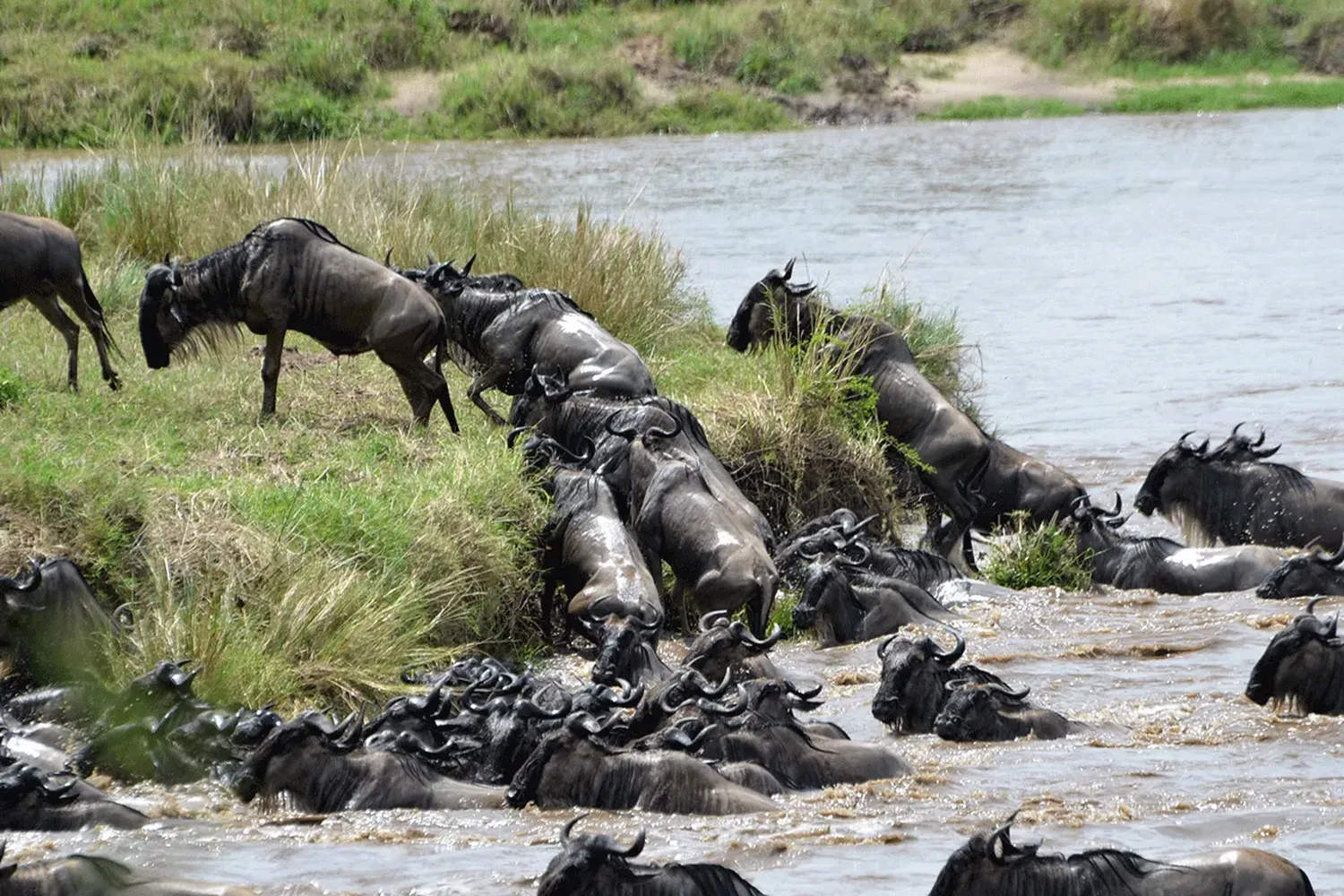
Migration routes respond to rainfall and grazing conditions, so no responsible operator can guarantee a river crossing on a particular date. Use the best time for a Tanzania safari guide when choosing dates.
Day 7: Serengeti to Ngorongoro highlands
Take a final morning game drive before leaving through Naabi Hill. Continue across the conservation area and stop at authorised viewpoints or Olduvai Gorge if time, permits and interests allow. The point of Day 7 is not to race into the crater late; it is to position the vehicle near the descent road for the following morning.
NCAA states that conservation-area gates operate from 06:00 to 18:00, while crater access opens from 06:00 to 16:00. Sleeping on the rim offers the shortest morning approach, but Karatu usually provides better-value lodges and warmer evenings. Compare options in the Ngorongoro lodge guide.
Day 8: Ngorongoro Crater and return
Descend as early as practical. UNESCO identifies Ngorongoro as the world's largest unbroken caldera and reports around 25,000 large animals in the wider conservation area, plus about 500 bird species. The crater floor offers a strong chance of seeing lion, buffalo, zebra, wildebeest, hippo, hyena and, with luck, black rhino.
A typical crater visit lasts roughly five to six hours before the vehicle climbs out. Continue to Arusha in approximately 3.5–4.5 hours, or to Moshi in roughly 5–6 hours, depending on traffic, stops and road conditions. Avoid booking an international departure too close to the expected return; a final hotel night is safer.
Why three Serengeti nights are the right balance
Serengeti covers about 1.5 million hectares according to UNESCO. It cannot be experienced properly in one hurried afternoon and one morning. Three nights usually create:
- an arrival-day game drive after the Ngorongoro crossing;
- two substantial full days for different habitats;
- a final morning drive before leaving for Ngorongoro;
- enough flexibility to respond to sightings, weather and seasonal movement.
Two nights can work on a shorter or cheaper safari, but the first and last days are partly consumed by transfers. Four nights are better for migration specialists, serious photographers or travellers splitting Central and Northern Serengeti. See the Serengeti accommodation guide for first-time visitors.
What makes this route genuinely well-paced?
| Design choice | Why it improves the safari |
|---|---|
| Arusha National Park first | A gentle first day avoids a long transfer immediately after arrival. |
| Two nights around Karatu/Tarangire | Shortens the Manyara day and positions you for the Serengeti road. |
| Three consecutive Serengeti nights | Reduces packing and gives two complete wildlife days. |
| Ngorongoro overnight before descent | Protects the early crater window and avoids a pre-dawn drive from Serengeti. |
| No Lake Natron or Eyasi | Prevents detours that turn eight days into a transfer-heavy checklist. |
Wildlife and landscape facts behind the route
| Destination | Verified numerical context | Why it belongs |
|---|---|---|
| Tarangire | 2,850+ km²; TANAPA reports 2,500+ elephants and 550+ baobabs | Elephants, dry-country scenery and seasonal river concentrations |
| Lake Manyara | 648.7 km²; 400+ recorded bird species | Forest, wetland, Rift Valley scenery and compact game viewing |
| Serengeti | About 1.5 million hectares; UNESCO describes a roughly 1,000 km annual migration circuit | Largest time allocation, predators, plains and year-round resident wildlife |
| Ngorongoro | 809,440 hectares in the conservation area; around 25,000 large animals and 500 bird species | High wildlife density, caldera landscape and black-rhino possibility |
These figures describe protected areas and ecosystems, not a promise that every species will be seen. Wildlife remains free-ranging, and sightings depend on season, weather, guide decisions and luck.
Realistic road times for the northern circuit
| Route | Planning time | Important note |
|---|---|---|
| Arusha to Arusha National Park | 45–75 minutes | Traffic and chosen gate affect timing |
| Moshi to Arusha National Park | 1.5–2.5 hours | Allow more time in morning traffic |
| Arusha to Tarangire | 2.5–3 hours | Mostly surfaced road before the park |
| Tarangire to Karatu | 1.5–2.5 hours | Depends on lodge location and gate exit |
| Karatu to Central Serengeti | 4.5–6 hours | Excludes long wildlife stops and gate queues |
| Central Serengeti to Ngorongoro rim | 3.5–5 hours | Usually combined with a morning game drive |
| Ngorongoro to Arusha | 3.5–4.5 hours | Can be longer in traffic |
| Ngorongoro to Moshi | 5–6 hours | Do not schedule a tight same-day flight |
These are operator planning windows, not fixed timetable promises. Rain, road works, wildlife on the track, gate procedures and photography stops can change the day.
Best months for this eight-day itinerary
| Period | Wildlife and weather | Route adjustment | Crowd and price pattern |
|---|---|---|---|
| January–March | Green landscapes; southern Serengeti and Ndutu calving season | Move one or more Serengeti nights south | High demand around calving camps |
| April–May | Long rains, dramatic skies and excellent value; some roads slower | Keep camps central and avoid unnecessary remote transfers | Lowest lodge prices and fewer vehicles |
| June | Drying conditions and migration movement west/north-west | Central or western Serengeti depending on current reports | Shoulder to high season |
| July–October | Dry season, strong general wildlife and possible northern crossings | Use Northern Serengeti only with suitable flights or extra transfer time | Highest crowds and prices in popular zones |
| November–December | Short rains, fresh grass and changing herd distribution | Central/southern flexibility is valuable | Good value outside festive dates |
No month is perfect for every traveller. Dry season offers easier viewing around water, while green season brings lower prices, fewer vehicles, young animals, birdlife and dramatic landscapes.
Expected cost of an 8-day Tanzania safari in 2026/2027
Safari prices are not standardised. Vehicle occupancy, accommodation, season, park nights, flights and crater fees all matter. The ranges below are realistic planning estimates per person, normally based on two people sharing unless stated otherwise.
| Safari style | Typical 8-day planning range | What usually changes the price |
|---|---|---|
| Joining / camping | US$2,000–US$2,800 pp | Shared vehicle, basic camps or simple lodges, fixed departure |
| Private budget / basic lodge | US$2,700–US$3,700 pp | Private vehicle but simpler accommodation outside premium zones |
| Private mid-range | US$3,200–US$4,800 pp | En-suite lodges or tented camps, stronger locations and flexible schedule |
| Luxury | US$5,200–US$9,600 pp | High-end camps, park locations, private services and premium meals |
| Ultra-luxury / fly-out | US$9,600–US$20,000+ pp | Top camps, bush flights, suites, private activities and peak dates |
TANAPA's online tariff page currently displays reference non-resident adult conservation fees of US$70.80 for Serengeti and US$53.10 for Tarangire and Lake Manyara, inclusive of VAT where applicable. However, its page is labelled with an earlier financial year, and NCAA states its tariffs can change without prior notice. Treat online figures as a checking reference, not a final 2026/2027 quotation. Use an itemised quote and review the Tanzania national park fee guide.
What should be included in the safari price?
- Private or shared 4x4 safari vehicle with pop-up roof.
- Professional driver-guide, fuel and guide expenses.
- Park, conservation, vehicle and crater fees stated in the itinerary.
- Seven nights of accommodation and meals listed in the quote.
- Drinking water during game drives.
- Airport or hotel transfers when specifically stated.
- Government taxes applicable to the package.
International flights, visas, travel insurance, tips, alcohol, laundry, balloon safaris and optional cultural activities are normally excluded. Confirm payment milestones using the Tanzania safari payment options page.
Where should you sleep each night?
| Night | Best area | Reason |
|---|---|---|
| 1 | Arusha | Easy recovery after arrival and fast access to Arusha National Park |
| 2 | Tarangire boundary or Karatu | Choose Tarangire for atmosphere; Karatu for route efficiency and lodge choice |
| 3 | Karatu | Comfortable base after Manyara and before the Serengeti crossing |
| 4–6 | Central or seasonally selected Serengeti | Three consecutive nights minimise packing and protect dawn game drives |
| 7 | Ngorongoro rim or Karatu | Rim saves time; Karatu often gives better value |
Location matters more than a lodge's marketing label. A cheaper camp two hours from the intended game-drive zone can cost more wildlife time than it saves in money. Browse northern Tanzania safari camps and lodges before accepting substitutions.
Private safari, joining safari or fly-out?
Private road safari
This is the best match for a well-paced itinerary. Departure times, lunch stops and game-drive length can be adapted to the group. Couples and families pay more per person because fewer guests share the vehicle.
Joining safari
Joining departures reduce cost but use fixed routes and accommodation. Confirm that the advertised eight days are actual safari days, not six park days plus airport transfers. Room standards and single supplements should be clear.
Fly out of Serengeti
A flight from Serengeti to Arusha, Kilimanjaro or Zanzibar saves a long road return, but it changes the route. To retain Ngorongoro, either visit the crater before Serengeti and fly out at the end, or use a road itinerary like the one above. Compare with an 8-day Serengeti and Ngorongoro luxury circuit.
How to adapt the itinerary for different travellers
Families with young children
Use private transport, shorten full-day drives, select lodges with family rooms and pools, and keep all three Serengeti nights in one camp. Avoid late arrivals after dark.
Older travellers or guests with limited mobility
Choose easy vehicle access, low-step rooms, nearby dining and private bathroom facilities. Crater-rim temperatures can be cold, and some tented camps have long pathways.
Photographers
Skip Arusha National Park or Lake Manyara and add a fourth Serengeti night. Request a vehicle with one photographer per row, charging facilities and permission to stay with a sighting rather than follow a fixed circuit.
Migration-focused travellers
Place camps where current seasonal patterns are most likely, not where a generic annual itinerary says the herds “must” be. A split stay can work, but long north–central road transfers should be counted honestly.
Common mistakes that make eight days feel rushed
- Counting arrival day as a full safari day. International delays and fatigue make this unreliable.
- Booking only two Serengeti nights. Transfer time leaves less wildlife time than the night count suggests.
- Adding Lake Natron and Eyasi. Both are worthwhile, but not together with four core parks in a relaxed eight-day route.
- Sleeping far outside the wildlife zone. Cheap rooms can create expensive daily transfers.
- Using exact migration promises. Rainfall changes herd movement every year.
- Scheduling a flight immediately after Ngorongoro. Road delays can turn a saving into a missed departure.
- Comparing quotes only by total price. Check park nights, room category, vehicle type, taxes and excluded fees.
Booking checklist for a reliable 8-day safari
- Confirm exact pickup and drop-off cities.
- List all seven accommodations by name, room type and board basis.
- Verify three Serengeti nights and the specific region used.
- Ask whether the vehicle is private or shared and how many window seats are guaranteed.
- Confirm all park, conservation, crater, vehicle and concession fees.
- Request realistic drive times rather than “short transfer” descriptions.
- Check luggage rules if any bush flight is included.
- Confirm cancellation, deposit and balance-payment terms.
- Buy suitable travel insurance and keep one buffer night before the international flight.
- Use the Tanzania safari packing list for clothing, binoculars and essential documents.
Final recommendation
An eight-day northern circuit safari is long enough to feel complete when you protect three Serengeti nights and resist unnecessary detours. The recommended route—Arusha National Park, Tarangire, Lake Manyara, Central or seasonal Serengeti, then Ngorongoro—balances wildlife density, landscape variety and manageable transfers.
Travellers who value depth over park count should remove Arusha National Park or Lake Manyara and add a fourth Serengeti night. Travellers who value variety should keep the itinerary as written. For a private version, compare the 8-day private Tanzania safari and the broader Tanzania safari packages.
Frequently asked questions
Is an 8-day Tanzania safari long enough?
Yes. Eight days is enough for Arusha National Park, Tarangire, Lake Manyara, three Serengeti nights and Ngorongoro, provided you do not add major detours such as Lake Natron and Lake Eyasi.
How many nights should I spend in Serengeti?
Three nights are best for most first-time visitors. They provide two full game-drive days plus useful arrival and departure viewing.
Should I visit Tarangire or Lake Manyara?
Tarangire usually offers stronger big-game value, especially in the dry season. Lake Manyara adds forest, wetland, birds and Rift Valley scenery. Eight days allow both.
Can I start the safari from Moshi?
Yes. Moshi adds road time compared with Arusha, especially on Day 1 and after Ngorongoro. A separate arrival and final hotel night are sensible.
What is the longest drive?
Karatu to Central Serengeti is usually the longest planned transfer at roughly 4.5–6 hours before extended wildlife stops.
What is the best season for this route?
June to October offers dry-season wildlife viewing, January to March suits southern Serengeti calving trips, and April–May provides lower prices and fewer vehicles.
How much does an 8-day safari cost?
Plan roughly US$2,000–US$2,800 per person for joining or camping, US$3,200–US$4,800 for private mid-range and US$5,200–US$9,600 for luxury. Final prices depend on season, group size and lodge location.
Is Ngorongoro Crater a full-day visit?
Most crater visits last about five to six hours. The day can still be long because of descent, ascent and the return drive to Arusha or Moshi.
Should I sleep on the crater rim?
Rim accommodation saves morning time and provides views, but Karatu often gives better value and more lodge choice. Both can work when departure is early.
Can I see the Big Five?
The route offers realistic chances for lion, elephant, buffalo and leopard, while black rhino is most likely in Ngorongoro. No operator can guarantee all five.
Do I need a private safari?
No, but private transport improves pacing, photography and family flexibility. Joining safaris cost less but follow fixed schedules.
Should I include a balloon safari?
A Serengeti balloon flight can be added on Day 5 or 6. It increases cost and requires a very early start, so confirm the cancellation and weather policy.
Research and planning sources
This guide was reviewed on 29 July 2026. It combines route-planning experience with official protected-area and Google Search guidance. Fees, road conditions, lodge prices and migration locations can change, so verify them before payment.
- Tanzania National Parks: Tarangire National Park
- Tanzania National Parks: Lake Manyara facts
- Tanzania National Parks: official tariff portal
- Ngorongoro Conservation Area Authority: gates and visitor information
- Ngorongoro Conservation Area Authority: tariffs
- UNESCO: Serengeti National Park
- UNESCO: Ngorongoro Conservation Area
- Google Search Central: helpful, reliable, people-first content
- Google Search Central: generative AI search guidance