
What You Need to Know: Yes, almost: on our Kilimanjaro climbs the porters carry your duffel, the tents, the food and the kitchen, and you carry only a daypack of about 30 liters. With three to four liters of water, layers and snacks, that usually means 14 to 19 lb (6 to 9 kg). A separate porter for your daypack is not part of our standard crew, so ask before you book if you need one. Even then, keep water, a warm layer, medication and your documents within reach.
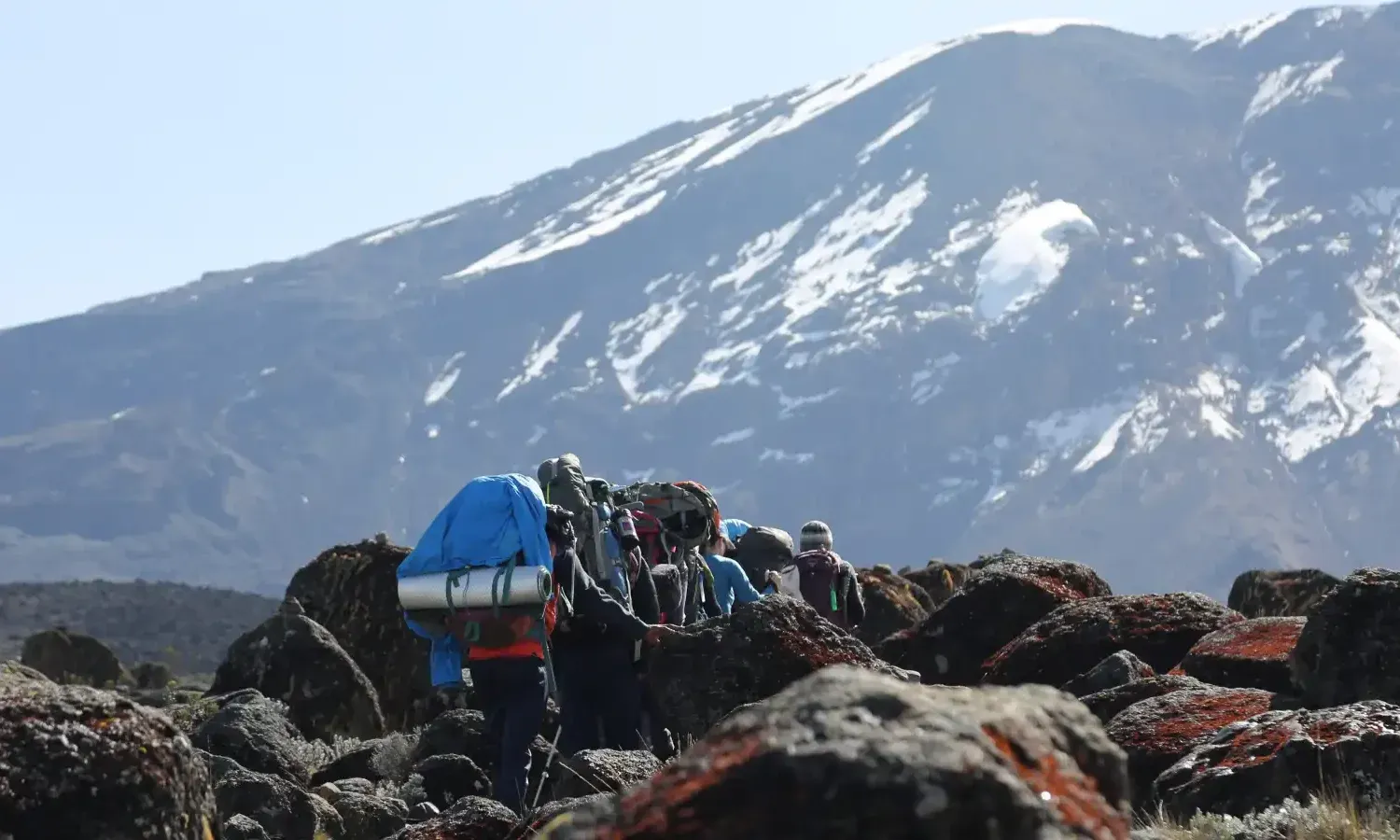
Who Carries What on Kilimanjaro?
Two bags belong to you, and only one of them is on your back. Everything that makes the camp belongs to the crew.
| Load | Who carries it | When you see it again |
|---|---|---|
| Daypack: water, layers, snacks, documents, medication | You | All day |
| Duffel: sleeping bag, spare clothes, summit kit | A porter | In your tent when you reach camp |
| Tents, mess tent, table and chairs, private toilet tent | Porters | At camp, already set up |
| Food, cooking gear and drinking water | Porters and cook | At meals |
| Oxygen, first-aid kit and oximeter | The guide and crew | When needed |
| Suitcase and travel clothes | Nobody: they stay at your Moshi hotel | After the climb |
On the Marangu Route you sleep in park huts, so there are no tents to carry, but your duffel and the food still travel with the porters.
How Heavy Is a Kilimanjaro Daypack?
Water is most of it. A liter weighs one kilogram, so the same pack is lighter by lunch and far lighter at the end of the day.
| What is in it | Weight, roughly |
|---|---|
| 3 to 4 liters of water | 6.6–8.8 lb (3–4 kg) |
| The empty pack, about 30 liters, with rain cover | 2–3 lb (1–1.4 kg) |
| Rain jacket and pants | 1.5–2.5 lb (0.7–1.1 kg) |
| Fleece or warm layer, hat and gloves | 1.5–2 lb (0.7–0.9 kg) |
| Snacks, sunscreen, small first-aid kit, phone, documents | 2–3 lb (0.9–1.4 kg) |
| Total at the start of the day | About 14–19 lb (6–9 kg) |
Weigh yours at home, filled. If it is over 19 lb (9 kg) before you add a camera, something can go in the duffel. The weights for gear are typical, so check your own.
What Your Daypack Needs, Day by Day
You do not need the same pack in the forest as on summit night. This is how it changes on a camping route:
| Part of the climb | Keep in the daypack | Leave in the duffel |
|---|---|---|
| Forest, day 1 | Rain jacket, water, snacks, sunscreen | Down jacket, summit gloves |
| Moorland, days 2 and 3 | Rain layers, fleece, hat, sunglasses | Spare clothes, summit kit |
| High desert and the last camp | Fleece, windproof, warm hat, gloves, more water | What you do not need before dinner |
| Summit night | Insulated bottles, snacks, spare batteries, sunscreen and sunglasses; you wear most of the rest | Everything else, in your tent |
| The way down | Rain jacket, water, poles in your hands | The warm layers you have taken off |
What must never go in the duffel
Passport, money, insurance papers, daily medication, phone and one warm, dry layer. Porters walk ahead at their own speed, so you will not see the duffel until camp, and the weather can change long before that.
How to Make Your Daypack Lighter
Before paying anyone to carry it, take out what should not be there. Most heavy daypacks are heavy for the same five reasons.
- Two cameras, or one big one. A phone is enough for most people; carry a spare battery in an inside pocket.
- Too much food. Three cooked meals a day are included. Bring snacks, not lunches.
- A full toiletry bag. Hand sanitizer, lip balm and sunscreen are enough for the day.
- Cotton. It is heavy, and heavier wet.
- The wrong pack. A hip belt puts the weight on your hips; without one, 15 lb feels like 25.
Do not save weight on water. If you do not own a good pack, sleeping bag or poles, rent them in Moshi: a sleeping bag is US$25 and hiking poles US$15 for the climb.
Can You Hire a Porter for Your Daypack?
It is a fair question for anyone with a sore back, an old knee injury or a long gap since their last walk. It is not a standard part of our crew, and we do not publish a price.
Tell us when you ask for a quotation, with the reason if you like. Any extra help we can arrange, and its price, will be in your written quotation. Do not leave it for the gate: the crew is organized before you arrive, and an extra porter also means an extra tip.
Can a guide carry your water or your pack?
Do not plan on it. The guide's hands and pack are for your safety: oxygen, first aid and watching how you walk. If you are struggling, the guide will help, and will also ask whether you should be going higher. Needing your daypack carried because you are unwell is a symptom to report, not only a comfort to arrange.
What if you cannot walk the route at all?
That is a different trip with a different crew. We have an accessible Rongai climb with a wheelchair, US$3,200 per person, which includes the chair and extra porters. No wheelchair summit has been completed with us yet, and we say so before anyone books.
Porter Limits: Why Your Duffel Has to Be Light
Every pound you pack is carried by a person at altitude. Our porters carry no more than 18 kg (40 lb) each, everything included.
That limit is why one climber needs five porters. We have been a partner of KPAP, the Kilimanjaro Porters Assistance Project, since 2023; it checks partner companies for fair pay, equipment and loads. Use a soft duffel, pack once, take a third out, and leave the rest at your hotel. Suggested tips are US$5–10 a day for each porter: see tipping on Kilimanjaro.
How to Train for the Pack You Will Carry
A daypack is light on a sidewalk and heavy on the sixth hour of a climb, so train with the weight you will really have.
| When | What to do |
|---|---|
| 12 to 8 weeks before | Walk hills with an empty pack, then 5 lb (2 kg) |
| 8 to 4 weeks before | Add water until you reach 11 lb (5 kg); long walks on two days in a row |
| 4 to 2 weeks before | Two or three long hill walks with your full pack, 14–19 lb (6–9 kg) |
| Last 2 weeks | Short, easy walks; mend, weigh and repack |
Stop and change something if your shoulders go numb or your lower back aches: it is usually the fit. The 12-week training plan has the rest of the week, and a doctor should clear you if the pain is old.
Common Questions About Carrying a Pack on Kilimanjaro
Short answers about bags, weights and porters:
Do porters carry everything on Kilimanjaro?
Nearly everything: your duffel, tents, food, kitchen and the private toilet tent. You carry a daypack with water, layers, snacks, medication and documents.
How big should my daypack be?
About 30 liters, with a hip belt and a rain cover. It should hold 3 to 4 liters of water and your layers without anything tied to the outside.
Can a guide carry my water?
Do not plan on it. Guides carry safety equipment and watch how you are walking. If you need help because you feel ill, tell the guide straight away.
How much does a personal daypack porter cost?
We do not publish a price, because it is not part of our standard crew. Ask when you request a quotation, and we will answer in writing.
How heavy can my duffel be?
As light as you can make it. Porters carry no more than 18 kg (40 lb) each in total, and your duffel is only part of that load.
What happens to my suitcase?
It stays at your hotel in Moshi during the climb. Bring a soft duffel for the mountain, or rent one for US$25.
Should You Arrange a Porter for Your Daypack?
Try first without: pack to about 15 lb (7 kg), train with it and see. If your back or knees still complain, ask us about extra help before you book rather than at the gate. If the pack is fine and the worry is the climb itself, more days will help you more than fewer pounds. Write to jaynevytours@gmail.com or message +255 678 992 599, and we will tell you what can be arranged.