What You Need to Know: Our 8-day accessible Kilimanjaro climb follows the Rongai Route and costs US$3,200 per person with mid-range Moshi hotels. You sit in a Joëlette-style all-terrain chair while your crew of one guide, one cook and ten porters moves it, the porters taking turns of about 30 minutes. The goal is Uhuru Peak (19,341 ft / 5,895 m); if conditions on summit night make that unsafe, your guide sets Gilman's Point or Stella Point on the crater rim as the summit. A doctor's medical assessment is required before the climb.
Who Is the Accessible Kilimanjaro Climb For?
This climb is for travelers who use a wheelchair or can't walk long distances, and who want to reach Kilimanjaro's summit with their own eyes, not only see it from the air. You don't push the chair yourself: you sit, strapped in, while your porters guide it. What you need is your doctor's approval for high altitude and the will to spend eight days in the cold, thin air of the mountain.
| This climb suits you if… | Consider another trip if… |
|---|---|
| You use a wheelchair or have limited mobility and want to stand on the roof of Africa, in your own way | Your doctor advises against high altitude: the scenic helicopter flight reaches the glaciers in an hour |
| You can sit securely in a supported chair for several hours a day | You'd rather see wildlife from a vehicle: our wheelchair-accessible safaris |
| You want a quiet route with a steady gradient and no scrambles | You walk without help and want a shorter climb: the 7-day Rongai |
Why We Use the Rongai Route
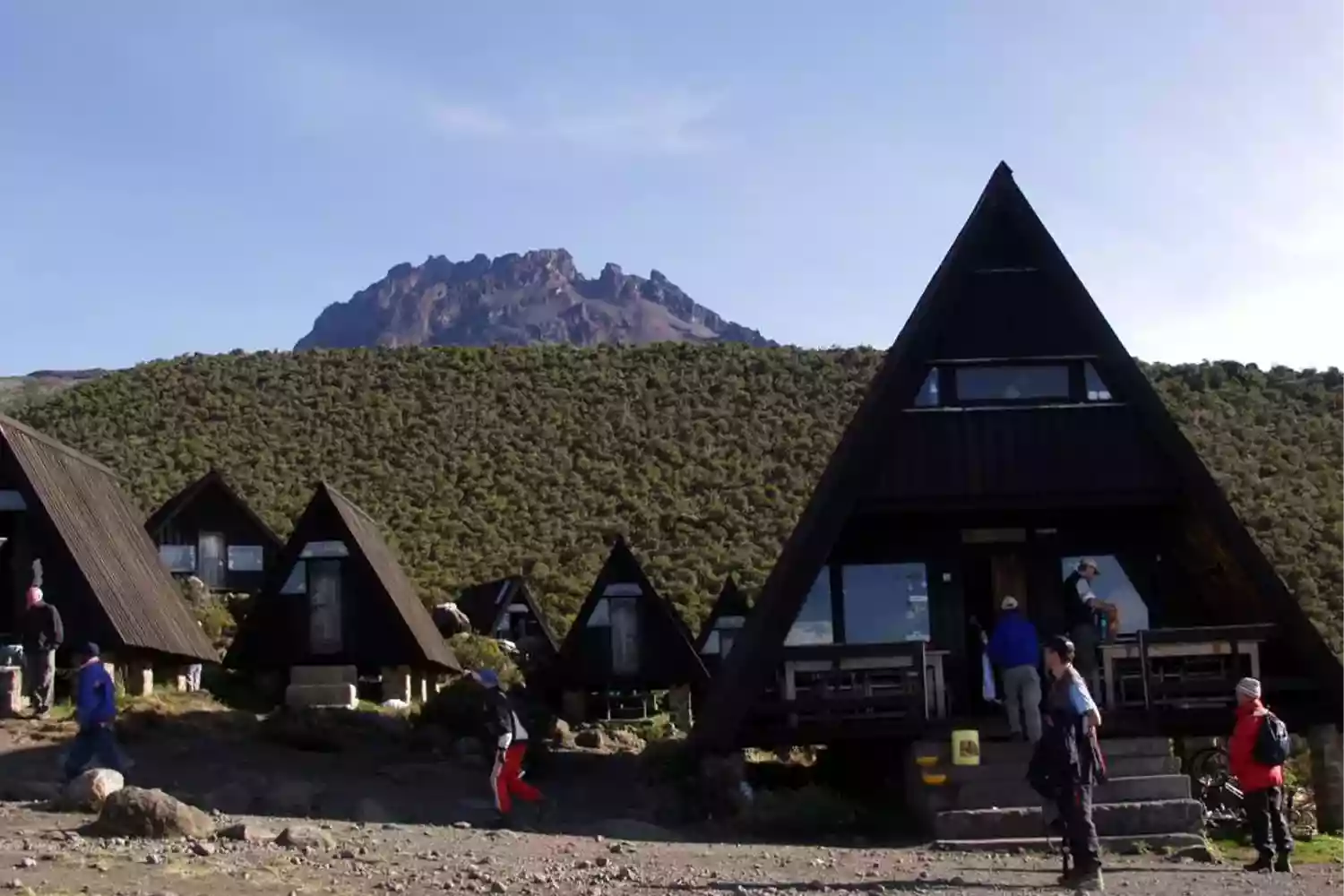
Rongai climbs Kilimanjaro's north side at a steady gradient, with none of the scrambles found on the southern routes, such as the Barranco Wall on Machame and Lemosho. That makes it the most practical way up for a chair moved by hand. It is also the drier side of the mountain and one of the quietest trails, so your crew has room to work. You come down the Marangu Route on the south-east, a wide, well-used path, and see both sides of the mountain. Our Rongai Route guide has the camps, distances and history.
The Joëlette-Style Chair and How Your Crew Moves It
A Joëlette-style chair is a light all-terrain seat on a single wheel with long handles at the front and back, built for mountain trails. You sit in a supported seat with a harness and footrest; the porters at the front pull and steer, those behind keep it balanced, and over rocks, roots and steep steps they lift it together. We own around 30 of these chairs.
| Your crew | What they do |
|---|---|
| 1 mountain guide | Leads the climb, checks your oxygen level and pulse every morning and evening, and decides the pace and the summit plan |
| 10 porters | Move and lift your chair in teams, swapping about every 30 minutes so the people on the chair are always fresh, and carry the camp |
| 1 cook | Prepares three hot meals a day and snacks for the trail |
Your team trained in adaptive assistance as part of their university studies, and they climb Kilimanjaro regularly. You also have a private toilet tent, separate from the crew's.
8-Day Accessible Rongai Route Itinerary
A hotel night in Moshi comes before day 1 and after day 8. The days follow our 7-day Rongai climb with an extra rest day at Mawenzi Tarn, because moving a chair takes longer than walking and you need the same time to adjust to the altitude as any climber:
-
Day 1: Rongai Gate to Simba Camp (about 8,500 ft / 2,600 m)
After the drive round to the north side, a briefing and registration at the gate, your crew settles you in the chair and you climb through pine plantation and forest edge to Simba Camp, with views over the plains toward Kenya. The first day is a chance to find the rhythm between you and your porters.
ForestMountain campLunch, dinner -
Day 2: Simba Camp to Second Cave (about 11,300 ft / 3,450 m)
A steady climb into the moorland, with Kibo ahead and the plains behind. The trail is rougher here, and you will feel the porters lift the chair over the rockier sections.
MoorlandMountain campAll meals -
Day 3: Second Cave to Kikelewa Caves (about 11,800 ft / 3,600 m)
A short day across the moorland toward Mawenzi, gaining little height, which gives your body time to adjust.
MoorlandMountain campAll meals -
Day 4: Kikelewa Caves to Mawenzi Tarn (about 14,200 ft / 4,330 m)
A short but steep climb to a small lake below the spires of Mawenzi, one of the most beautiful camps on the mountain.
Alpine desertMountain campAll meals -
Day 5: Rest and acclimatization day at Mawenzi Tarn
The extra day of this climb. You stay at Mawenzi Tarn, and your guide takes you a little higher and back, which helps your body adapt before the high camp. It is also a rest day for you and the crew.
Alpine desertMountain campAll meals -
Day 6: Mawenzi Tarn to Kibo Hut (about 15,400 ft / 4,700 m)
Across the open alpine desert of the saddle between Mawenzi and Kibo to the high camp. An early dinner, a health check, the summit briefing and a few hours' rest.
Alpine desertMountain campAll meals -
Day 7: Summit night, then down to Horombo (about 12,200 ft / 3,720 m)
You leave around midnight, wrapped against the cold, for the long scree climb to Gilman's Point (18,652 ft / 5,685 m) on the crater rim, then along the rim past Stella Point to Uhuru Peak, 19,341 ft (5,895 m). Your guide watches your condition, the weather and the crew all night, and turns at Gilman's or Stella Point if going further would not be safe. You then come down past Kibo Hut to Horombo.
SummitMountain campAll meals -
Day 8: Horombo to Marangu Gate, back to Moshi
Down through moorland and rainforest on the wide Marangu path to the gate, where you sign out and receive your summit certificate, then the drive back to your Moshi hotel.
RainforestMoshi hotelBreakfast, lunch
Kilimanjaro National Park issues certificates at the exit gate: one for reaching the crater rim at Gilman's Point or Stella Point, and one for Uhuru Peak. See summit night explained for what the night is like.
Uhuru Peak, Gilman's Point or Stella Point: How the Summit Is Decided
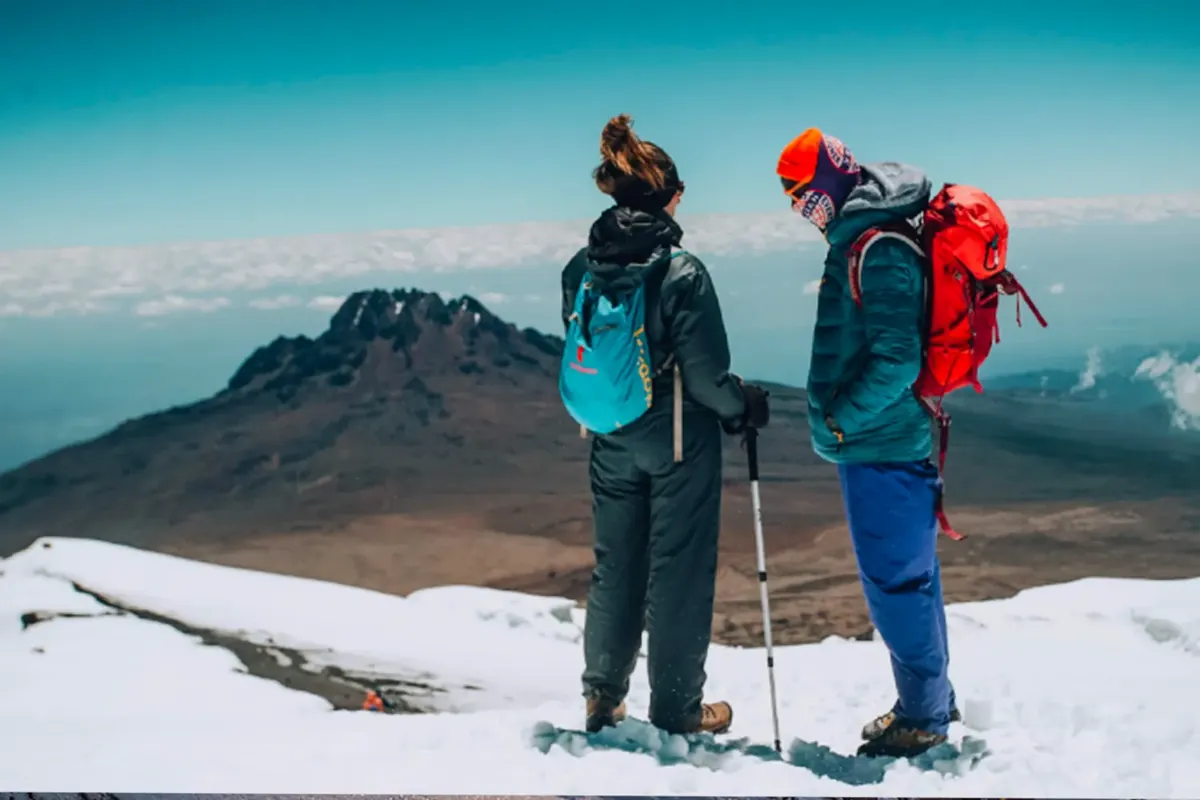
Uhuru Peak is the goal of every accessible climb we plan. The last stretch, from Kibo Hut up the scree to the crater rim and along it to Uhuru, is the steepest and loosest ground on the route and the coldest part of the trip. Your guide decides on the night, based on your health checks, the weather, the state of the trail and the crew. If continuing would put you or the team at risk, Gilman's Point or Stella Point on the crater rim becomes your summit. Both are above 18,600 ft (5,680 m), and reaching the rim earns the park's certificate.
How Much Does the Accessible Kilimanjaro Climb Cost?
The 8-day accessible Rongai climb costs US$3,200 per person with mid-range Moshi hotels before and after the climb. The price covers the extra porters and the chair, as well as everything in our standard climb. Friends or family who want to walk alongside you are welcome; they are quoted separately, as standard climbers on the same 8-day route. Prices are for 2026 and 2027; your written quotation confirms the price for your dates.
What the Accessible Climb Includes
The price includes:
- Every park fee for eight days and seven nights on the mountain, the rescue fee and VAT
- The use of a Joëlette-style all-terrain chair
- A mountain guide, a cook and ten porters for the wheelchair climber, with three meals a day and drinking water
- Sleeping tents, mats, a mess tent and a private toilet tent for you, separate from the crew's
- Oxygen and pulse checks morning and evening, emergency oxygen, first aid and a stretcher
- Airport pickup, the transfer to Rongai Gate and from Marangu Gate, and a mid-range Moshi hotel night before and after
- Emergency evacuation cover with AMREF Flying Doctors for your climb: air ambulance or medical transport to Moshi or Nairobi when medically authorized, and a 24/7 medical helpline
Not included in the accessible climb price
Budget separately for:
- International flights, and a Tanzanian visa (US$50; US$100 for US citizens)
- Tanzania's mandatory inbound travel insurance, US$44 per adult
- Your own travel insurance for medical treatment, cancellation and lost gear, covering trekking to 6,000 m (19,700 ft); our AMREF cover is for emergency evacuation only
- Your doctor's medical assessment before the climb
- Personal gear (you can rent it in Moshi), drinks and laundry
- Tips for your mountain crew (see how tipping works)
Medical Assessment and Safety on the Mountain
A medical assessment by your doctor is required before the climb, and we ask you to share the result with us when you book. Altitude affects everyone, whether they walk or ride, so you follow the same acclimatization and health checks as any of our climbers. Topics worth raising with your doctor:
- How your body handles cold: you sit still for long hours while others walk, so you lose heat faster
- Pressure care and skin checks during long days in the chair
- Breathing, heart and circulation at high altitude, and whether altitude medication suits you
- Your medicines and daily care routine on the mountain
On the mountain your guide checks your oxygen level and pulse every morning and evening, and carries emergency oxygen, a first-aid kit and a stretcher. Whenever medical attention is needed, the guide calls for help at once: every climb includes emergency evacuation cover with AMREF Flying Doctors and its 24/7 medical helpline, and the guide's decision to descend is final. Kilimanjaro National Park allows wheelchair and adaptive climbs, and we arrange the permits. Our Kilimanjaro safety guide explains how evacuations work.
Our Experience With Wheelchair Travelers
We would rather be open with you. Our guides and porters climb Kilimanjaro all year, and the team trained in adaptive assistance at university. We already plan safaris for wheelchair users. The accessible climb is a new program, and we haven't yet taken a wheelchair climber to the summit; you would be among the first. That is why we plan every climb with you and your doctor, and keep the summit decision in the hands of an experienced guide.
What to Bring for a Wheelchair Climb
Pack as any climber would, with extra warmth, because you move less than the people around you:
- A sleeping bag rated to about 14 °F (−10 °C), and insulated jacket and trousers
- Warm gloves, a hat and a buff; hand and foot warmers for summit night
- Your own pressure-relief cushion, if you use one
- Waterproof outer layers and a waterproof cover for your lap
- Your medicines and a copy of your medical assessment
Our full Kilimanjaro packing list covers the rest.
When to Do the Accessible Climb
The dry months, January to early March and late June to October, give firmer, drier trails, which matters even more with a chair. Rongai's north side is drier than the south, so it is also the best choice at the edges of the rains. We avoid April, May and November. See the best time to climb Kilimanjaro month by month.
How to Book the Accessible Kilimanjaro Climb
Send us your preferred month, a short description of your mobility and any equipment you use, and who is climbing with you. We reply with questions, a written itinerary and a quotation. Book early, so there is time for your medical assessment and for us to plan the climb with you. A 30% deposit holds your dates and the balance is paid when you arrive; cancellations follow our Kilimanjaro refund policy.
Common Questions About the Accessible Kilimanjaro Climb
Short answers to what wheelchair users ask us most about climbing Kilimanjaro:
Can you climb Kilimanjaro in a wheelchair?
Yes. On our 8-day accessible climb you ride a Joëlette-style all-terrain chair up the Rongai Route, moved by a crew of ten porters, with a guide and a cook. It costs US$3,200 per person, mid-range.
Which route do you use for wheelchair climbs?
The Rongai Route, which climbs the north side at a steady gradient with no scrambles. You come down the wide Marangu path.
Will I reach Uhuru Peak?
Uhuru Peak is the goal. If conditions on summit night make it unsafe, your guide sets Gilman's Point or Stella Point on the crater rim as your summit; both earn the park's certificate.
How many people are in the crew?
Twelve per wheelchair climber: one guide, one cook and ten porters, who take turns of about 30 minutes moving the chair.
Do I need a medical assessment?
Yes. A medical assessment by your doctor is required before the climb, and we ask you to share it with us when you book.
Is there a toilet for me on the mountain?
Yes. You have a private toilet tent, separate from the crew's.
Have you guided a wheelchair climb before?
This is a new program. Our team trained in adaptive assistance and climbs Kilimanjaro regularly, and we already plan wheelchair-accessible safaris.
Can friends or family climb with me?
Yes. Friends or family can walk alongside you on the same 8-day route; they are quoted separately, as standard climbers.
Should You Book the Accessible Kilimanjaro Climb?
If your doctor is happy for you to go high and you want to see Africa's highest summit from the crater rim, not from a window, this climb gives you the route, the chair and the crew to try it, for US$3,200 per person. If altitude is not for you, the scenic helicopter flight shows you the glaciers in an hour. Send us your month and your needs through the contact form, on WhatsApp +255 678 992 599 or by email to jaynevytours@gmail.com, and we will start planning with you. Our guide to climbing Kilimanjaro in a wheelchair answers the wider questions.