
What You Need to Know: Lake Turkana is in the far north of Kenya, two long days by road from Nairobi or a few hours by charter flight. It is known for its jade-colored water, Sibiloi National Park's fossil sites, Central Island's crocodiles and the Lake Turkana Festival. It is remote, so we plan it as a tailor-made trip.
Why Visit Lake Turkana?
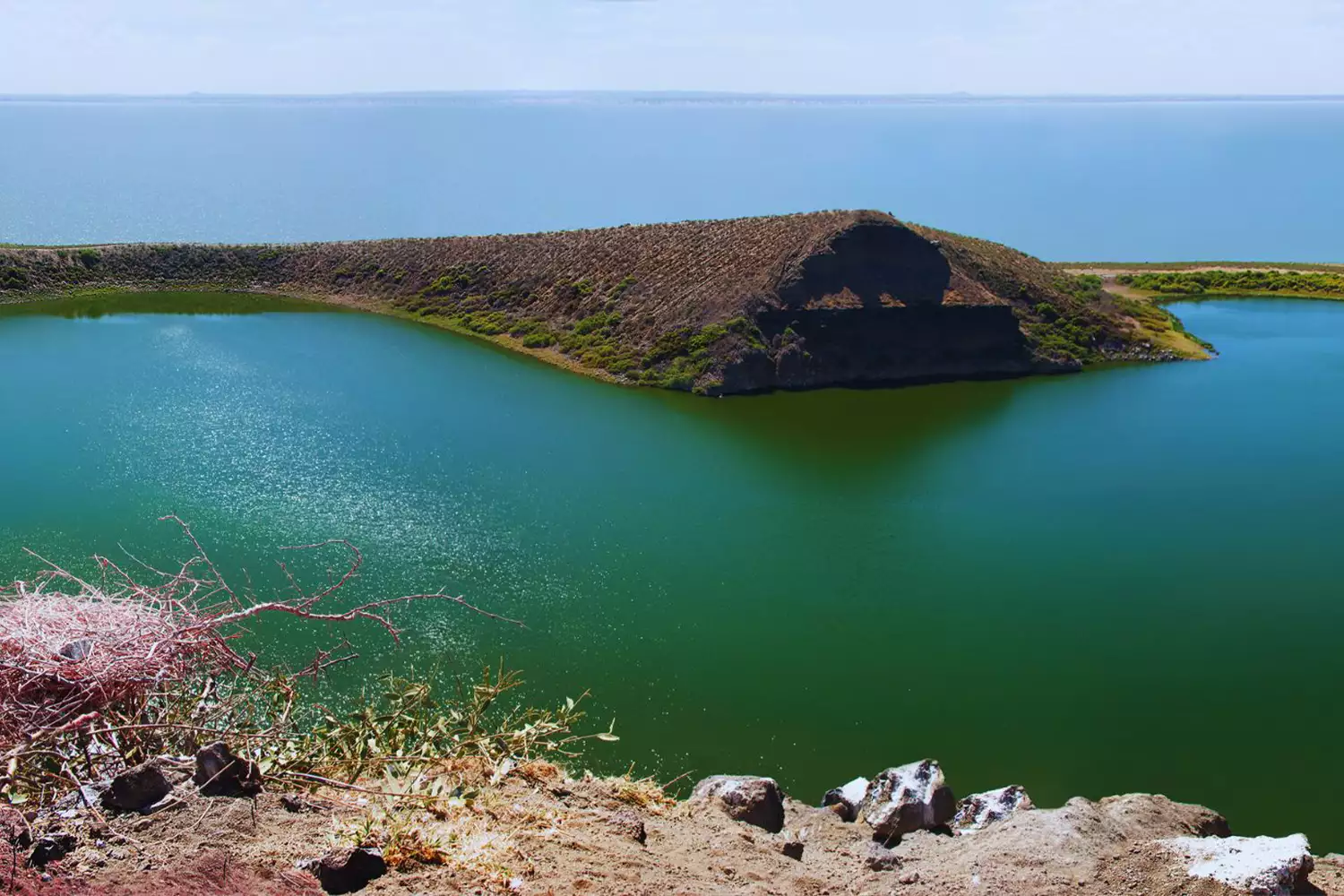
The lake is about 180 miles (290 km) long, in a desert landscape of lava and wind. The Lake Turkana National Parks, including Sibiloi and Central and South Islands, are a UNESCO World Heritage Site; Koobi Fora in Sibiloi has yielded some of the most important early human fossils ever found.
The trip is an expedition: hot, dusty and far from other visitors, with the people and the landscapes as the main reasons to go.
Things to Do at Lake Turkana
- Sibiloi National Park and the Koobi Fora fossil sites
- Boat trips to Central Island's crater lakes and crocodiles
- Visits to Turkana and El Molo villages
- The Lake Turkana Festival at Loiyangalani, when it runs
How to Get to Lake Turkana
Most visitors fly by charter to Loiyangalani or Lodwar; by road the journey takes two long days via Samburu country.
| From | How | Time |
|---|---|---|
| Nairobi | Charter flight | 3–4 hours |
| Nairobi | By road via Maralal or Marsabit | Two long days |
Lake Turkana is far from the main safari circuit, in the dry north of Kenya near the borders with Ethiopia and South Sudan. The overland journey from Nairobi takes two long days, through Samburu country and over volcanic desert, and needs a reliable 4x4 and an experienced driver. Charter flights reach Loiyangalani, Lodwar and the lake's airstrips in a few hours.
Because of the distances and the remoteness, Lake Turkana trips are planned as tailor-made expeditions, usually of four to six days. We plan the route, the accommodation and the flights with our Kenya partners, following current travel advice for the region.
The reward is one of Africa's most extraordinary landscapes: a jade-green lake in a desert of lava, with fossil sites and traditional communities that few travelers ever see.
When Is the Best Time to Visit Lake Turkana?
June to September is slightly cooler; it is hot all year.
Lake Turkana Entry Fees
| Fee | 2026 rate (non-resident adult) |
|---|---|
| Lake Turkana National Parks (Kenya Wildlife Service) | Kenya Wildlife Service daily fee, confirmed in your quotation |
Fees are paid through Kenya's eCitizen system or at the gate and are included in our quotations. Every visitor to Kenya needs an Electronic Travel Authorization (eTA), about US$30–35, applied for at etakenya.go.ke at least 3 days before you fly. Kenya is on the yellow fever list, so carry your certificate if you continue to Tanzania, Uganda or Rwanda.
How Many Days Do You Need for Lake Turkana?
Four to six days, including travel.
How to Add Lake Turkana to a Kenya Safari
No fixed itinerary includes Lake Turkana: it is remote, so we plan it as a tailor-made trip with our Kenya partners, usually with flights. Tell us your dates and interests and we send a quotation.
Our Kenya trips are planned by us and run on the ground by trusted local partner operators: you get one written quotation and one point of contact, and a private vehicle with a driver-guide for your group only. In Kenya that is a 4x4 Toyota Land Cruiser with a pop-up roof, sliding windows, a fridge and binoculars.
What to Combine with Lake Turkana
- Samburu: on the road north; see our Samburu guide
Where to Stay at Lake Turkana, and Tips for Your Visit
Accommodation is simple: a few camps and guesthouses at Loiyangalani and near Lodwar, and camping elsewhere; the trip is planned around them.
- Pack for heat and wind: light long sleeves, a scarf and plenty of sunscreen
- Travel with a reliable 4x4 and an experienced driver, or fly
- Bring cash for village visits and small purchases: there are few banks
- Plan the dates around the Lake Turkana Festival if you want to see it
The Cradle of Humankind
The shores of Lake Turkana, especially at Koobi Fora in Sibiloi National Park, have produced some of the most important fossils of early humans and their ancestors, found by researchers since the 1960s. A visit to the sites and the small museum shows why the area is called a cradle of humankind.
The People of the Lake
- The Turkana, pastoralists famous for their beadwork and resilience in a harsh land
- The El Molo, a small community of fishermen on the south-east shore
- The Samburu, Rendille and Gabbra in the surrounding desert
Wildlife and Birds
Lake Turkana is not a classic safari destination, but it has its own wildlife. Central Island holds one of the world's largest breeding populations of Nile crocodiles, and the lake supports flamingos, pelicans and many migratory birds. Sibiloi National Park, on the east shore, has zebras, gazelles, oryx and occasionally lions, in a dramatic desert setting.
Common Questions About Lake Turkana
Why is it called the Jade Sea?
Algae in the water give it a green-blue color, especially from the air.
Is Lake Turkana safe to visit?
Parts of the north can be unsettled; we only plan trips on our partners' current advice and usually fly.
How hot is Lake Turkana?
Very hot: daytime temperatures are high all year, and strong winds blow across the lake.
Can I visit Lake Turkana on a short trip?
Only by charter flight; overland, plan at least four to six days.
Is there accommodation at Lake Turkana?
Simple camps and guesthouses at Loiyangalani and near Lodwar.
When is the Lake Turkana Festival?
It has been held in some years at Loiyangalani; dates vary, so ask us before you plan around it.
The Bottom Line
Lake Turkana is an expedition rather than a safari: remote, hot and unforgettable. Plan it with us as a tailor-made trip.
Tell us your dates, the number of travelers and what you want to see, through the booking form, on WhatsApp +255 678 992 599 or by email to jaynevytours@gmail.com, and we will send a written quotation and itinerary.