
Quick Answer: The Extra Day Is Worth It for Most Climbers
Choose the 8-day Lemosho Route when your schedule and budget allow it. The extra day normally gives your body another night to adjust, creates shorter stages on the Shira Plateau or before Barafu Camp and reduces the pressure to combine two major sections.
Choose seven days when you have a genuine time constraint, relevant trekking experience and a clearly written itinerary that shows exactly which camps are retained. Eight days improves the schedule; it does not guarantee the summit or make altitude symptoms safe to ignore.
7-Day vs 8-Day Lemosho Route at a Glance
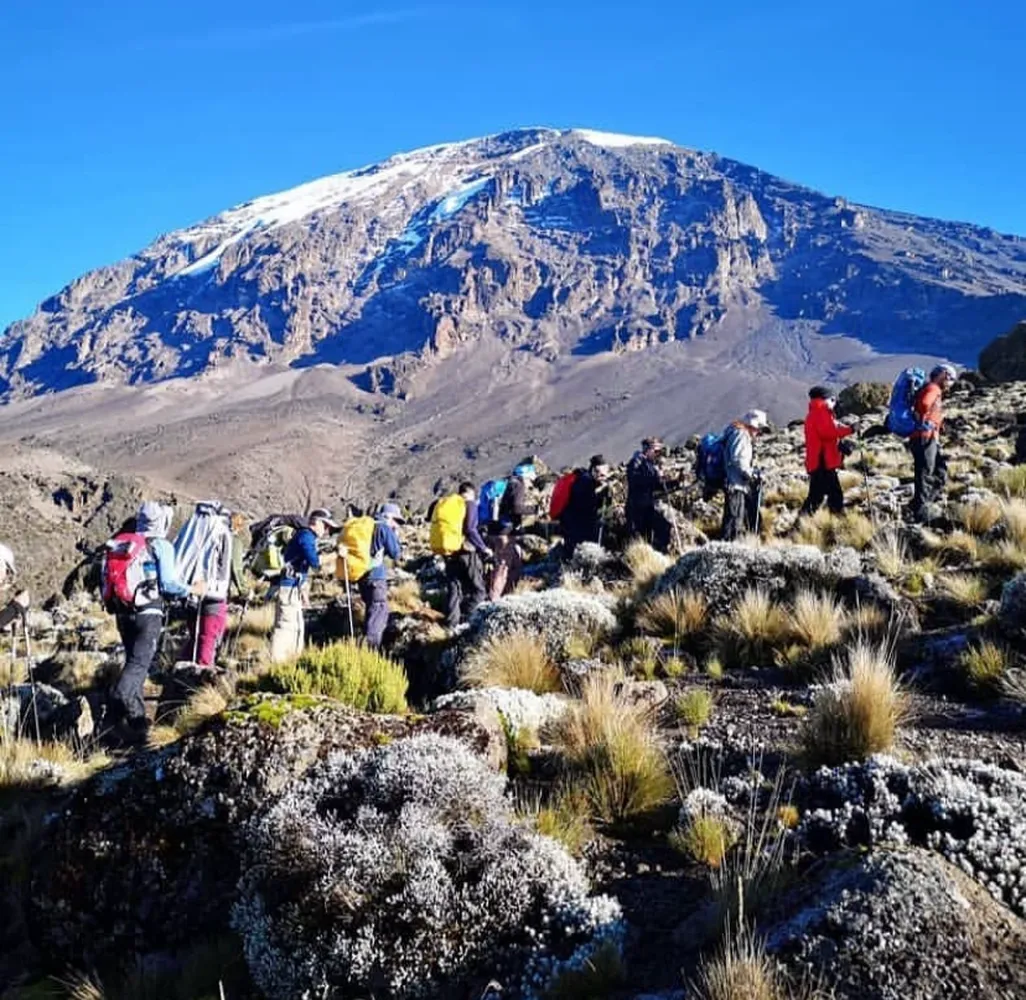
Both options use the scenic Mount Kilimanjaro Lemosho Route, crossing rainforest, the Shira Plateau, Lava Tower, Barranco Wall and the southern circuit before the summit attempt from Barafu. The extra day changes pacing rather than scenery.
| Factor | 7-Day Lemosho | 8-Day Lemosho |
|---|---|---|
| Mountain days | 7 | 8 |
| Summit | Uhuru Peak, 5,895 m | Uhuru Peak, 5,895 m |
| Trail | Broadly the same western and southern trail | Broadly the same western and southern trail |
| Where time is saved | One pair of stages is combined; the exact pair varies by operator | More camps are retained as separate overnight stages |
| Acclimatization time | Good when well designed, but more compressed | Better default because it adds another mountain night |
| Work before summit night | May include a longer Shira day or Barranco-to-Barafu push | Usually shorter, more evenly divided stages |
| Cost | Usually lower | Usually higher due to one extra operational day |
| Best suited to | Experienced or time-limited trekkers with a sensible camp plan | Beginners, sea-level residents and cautious planners |
| General recommendation | Acceptable for the right person and itinerary | Recommended for most climbers |
First Check the Camps: “7-Day Lemosho” Is Not One Universal Itinerary
The biggest planning mistake is comparing only the number of days. Operators shorten Lemosho in different places. One seven-day itinerary may combine Mti Mkubwa to Shira 2 and skip a Shira 1 overnight. Another may keep the western plateau stages but continue from Barranco through Karanga to Barafu in one day.
Ask for the Written Camp Sequence Before Paying
A useful quotation should show every mountain night, including Mti Mkubwa, Shira 1 or Shira 2, Barranco, Karanga, Barafu and Mweka. Two packages called “7-day Lemosho” can place very different demands on your body.
Jaynevy’s published 7-day Lemosho package currently uses the western plateau and Moir Hut, then combines Barranco, Karanga and Barafu into one longer stage. The published 8-day Lemosho package protects a separate Karanga overnight before the short walk to Barafu. That is the comparison used in the detailed schedule below.
Where Does the Eighth Day Add Value?
1. It Separates Barranco–Karanga from Karanga–Barafu
On the compressed version, climbers ascend Barranco Wall, cross Karanga Valley and continue to Barafu Camp in the same day. On the eight-day version, they sleep at Karanga and walk to Barafu the next day. The total trail is similar, but the effort is distributed more evenly.
2. It Adds Another Night Near 4,000 Metres
Karanga Camp is commonly listed around 3,995–4,035 metres. Sleeping there does not eliminate altitude risk, but it gives the body more time in the acute acclimatization period before moving to Barafu, commonly listed around 4,550–4,673 metres.
3. It Creates a Shorter Day Before Summit Night
Karanga to Barafu is commonly about 4 km and 3–4 hours. Reaching summit camp after this shorter stage can leave more time to eat, hydrate, organize layers and rest before the midnight departure. The benefit is mainly pacing and recovery—not extra sightseeing.
Day-by-Day Comparison of the Two Schedules
Distances, camp elevations and walking times vary slightly by campsite position, GPS device, weather and trail access. The rounded figures below are planning estimates, not survey measurements.
| Stage | 7-Day Lemosho | 8-Day Lemosho | Planning Meaning |
|---|---|---|---|
| Western forest | Londorossi/Lemosho start to Mti Mkubwa, roughly 6 km | Same general stage | A moderate first trek through rainforest. |
| Shira Plateau entry | Mti Mkubwa to Shira 1, roughly 8 km | Same general stage | Sleeping altitude rises substantially above the forest. |
| High western plateau | Shira 1 via Shira 2 to Moir Hut, around 14 km on Jaynevy’s published seven-day plan | Shira 1 to Shira 2 as a separate, shorter stage | The eight-day schedule can distribute western plateau mileage more gently. |
| Lava Tower day | Moir Hut to Barranco via Lava Tower | Shira 2 to Barranco via Lava Tower | Both plans gain high exposure near 4,600 m and descend to sleep lower. |
| After Barranco | Barranco through Karanga to Barafu, commonly 7–9 hours on the published plan | Barranco to Karanga, commonly 4–6 hours | This is the major compression point in Jaynevy’s current comparison. |
| Pre-summit day | Already at Barafu after the longer previous stage | Karanga to Barafu, roughly 4 km and 3–4 hours | Eight-day climbers approach summit camp after a shorter walk. |
| Summit and descent | Barafu to Uhuru Peak, then descend toward Mweka | Same general summit and descent stage | The final ascent remains demanding on either schedule. |
| Exit | Mweka Camp to Mweka Gate | Mweka Camp to Mweka Gate | The lower forest descent is broadly the same. |
Why One Additional Night Can Matter at Kilimanjaro Altitude
The CDC describes the first 3–5 days after ascent as a crucial period of acute acclimatization. Above 3,000 metres, general guidance recommends limiting sleeping-altitude gain to about 500 metres per night and adding an acclimatization night for every additional 1,000 metres gained. Fixed Kilimanjaro camps and commercial schedules do not always fit these conservative limits.
Both Lemosho options use useful “climb high, sleep lower” exposure around Lava Tower. The eight-day itinerary then preserves more time before the highest camp. Read Jaynevy’s detailed Kilimanjaro acclimatization guide alongside the Mount Kilimanjaro safety guide before selecting a schedule.
Fitness still matters for walking, but it is not a shield against altitude illness. CDC guidance states that training and physical fitness do not determine a person’s susceptibility. A strong runner can become ill while a slower walker acclimatizes well.
What Published Kilimanjaro Research Actually Shows
No independent study provides a universal, audited “7-day Lemosho versus 8-day Lemosho success rate.” Operators use different routes, camp sequences, client profiles and summit definitions. The most defensible evidence supports the broader conclusion that altitude illness is common and that additional ascent days can improve summit outcomes.
Research Numbers Worth Using
- A prospective cohort included 1,237 recreational Kilimanjaro hikers. In that group, 87.9% reached Uhuru Peak, 8.6% developed severe altitude-illness symptoms and 1.1% were hospitalized. Climbing in more days predicted summit success.
- The CDC reports acute mountain sickness prevalence of 75–77% in studies of rapid four- and five-day Kilimanjaro ascents and advises adding at least 1–2 days to the planned ascent.
- An observational study of 112 Finnish trekkers reported 75% acute mountain sickness; 53% reached Gillman’s Point or Uhuru Peak on the rapid schedule studied.
- Uhuru Peak is approximately 5,895 m, while the inspired oxygen pressure around 3,050 m is already about 69% of sea-level value according to CDC guidance.
Correct interpretation: these figures support slower ascent and symptom-aware decision-making. They do not justify advertising a guaranteed 90%, 95% or 98% summit rate for every eight-day Lemosho departure. A company-specific percentage is meaningful only when the operator explains the sample size, years measured, summit definition and whether every starting climber was counted.
Is the Extra Day Worth the Additional Cost?
The eighth day adds park and camping logistics, guide and crew wages, food, fuel and operational support. That makes it more expensive, but the correct comparison is not simply “one more hotel night.” It is one more supported day for an entire mountain team.
For a once-in-a-lifetime climb, the extra cost is usually justified when it protects a better schedule. The seven-day option becomes better value only when the exact itinerary remains sensible and the traveller genuinely cannot allocate eight days. Compare inclusions carefully using the Kilimanjaro climbing cost guide and the wider budget-to-luxury Kilimanjaro packages.
Who Should Choose the 7-Day Lemosho Route?
Seven days can work well, but it should be selected for the right reasons. It may suit you when most of these statements are true:
- Your total travel window cannot accommodate an eighth mountain day.
- You have completed several consecutive trekking days with sustained climbs and descents.
- You have recent experience sleeping or trekking around 2,750–3,500 metres or higher.
- The written itinerary shows exactly which stages are combined.
- You accept a longer Shira stage or a longer Barranco-to-Barafu day, depending on the route plan.
- You understand that previous altitude success is informative but never a guarantee.
- You will report symptoms honestly and follow a guide’s decision to stop or descend.
Who Should Choose the 8-Day Lemosho Route?
Eight days is the stronger default when any of these points apply:
- This is your first high-altitude expedition.
- You live near sea level and arrive shortly before the climb.
- You do not know how your body responds above 4,000 metres.
- You want a separate Karanga night and a shorter approach to Barafu.
- You prefer more even walking days instead of maximizing distance per day.
- You are travelling far and want to avoid saving one day at the expense of the itinerary.
- You want more time to observe symptoms before the summit attempt.
Decision Table: Which Lemosho Itinerary Fits You?
| Your Situation | Better Starting Choice | Reason |
|---|---|---|
| First trek above 4,000 m | 8 days | More time and less compression before summit night. |
| Living near sea level | 8 days | No home-altitude advantage and unknown response. |
| Recent successful high-altitude trek | 7 or 8 days | Seven may be reasonable after itinerary review; eight remains gentler. |
| Very fit but no altitude history | 8 days | Fitness does not predict altitude susceptibility. |
| Strict travel deadline | 7 days | Only when the camp sequence is transparent and the risk trade-off is accepted. |
| Photography and slower travel preference | 8 days | More breathing room on the scenic plateau and southern circuit. |
| Choosing mainly by lowest price | Reconsider | The itinerary should be chosen by pacing and safety, not headline price alone. |
How to Improve Either Itinerary
- Arrive rested. Keep at least one full pre-climb night for briefing, gear checks and sleep.
- Build back-to-back endurance. Train for several consecutive walking days rather than one heroic weekend hike.
- Use suitable equipment. Work through the complete Kilimanjaro packing list before departure.
- Walk slowly from day one. “Pole pole” is not only a summit-night instruction.
- Eat and drink consistently. Do not wait until appetite and thirst fall at higher camps.
- Report symptoms early. Review the common Kilimanjaro climbing challenges before the trek.
- Accept descent when necessary. A summit is optional; safe return is not.
Should You Compare Lemosho with Another Route?
Eight-day Lemosho is not automatically the only good option. Climbers may also compare the Northern Circuit for a longer itinerary, Machame for a popular southern route or Rongai for a northern approach. Start with Jaynevy’s Kilimanjaro routes comparison. The separate Machame versus Lemosho guide is useful when scenery, crowds and western access matter as much as trip length.
Final Verdict: Choose 8 Days for the Better Default Schedule
The extra Lemosho day is worth it for most climbers because it protects a more gradual camp sequence, another night at altitude and a shorter approach to Barafu. Seven days can still be a responsible choice for an experienced or time-limited trekker, but only after comparing the actual camps and combined stages.
Best overall choice: 8-day Lemosho.
Best shorter option: a clearly structured 7-day Lemosho for the right climber.
Wrong reason to choose seven days: assuming fitness makes acclimatization unnecessary.
Frequently Asked Questions
Is the extra day on the 8-day Lemosho Route worth it?
For most first-time high-altitude climbers, yes. The extra day usually creates a more gradual schedule, adds another night for acclimatization and reduces the need to combine two important stages. It improves pacing but cannot guarantee reaching Uhuru Peak.
What is the main difference between 7-day and 8-day Lemosho itineraries?
The trail is broadly the same, but one stage is compressed on the seven-day schedule. Depending on the operator, this may mean skipping an overnight stop on the Shira Plateau or continuing from Barranco through Karanga to Barafu in one day. Always compare the actual camps, not only the itinerary name.
Which Lemosho itinerary is better for beginners?
The eight-day Lemosho Route is the better default for most beginners, sea-level residents and climbers who have never slept above 3,500 metres because it provides a less compressed approach to summit night.
Does the 8-day Lemosho Route guarantee summit success?
No. More time supports acclimatization, but summit outcomes also depend on individual physiology, symptoms, weather, guide decisions, health, sleep and other factors.
Is seven days enough for the Lemosho Route?
Seven mountain days can be a reasonable itinerary for fit trekkers with relevant experience, especially when the exact camp schedule is well designed. It is still faster than the eight-day option and should not be selected only to save money.
How high is Uhuru Peak?
Uhuru Peak is 5,895 metres, or approximately 19,341 feet, above sea level.
Does being very fit prevent altitude sickness?
No. Fitness helps with walking, recovery and fatigue, but CDC guidance states that physical fitness does not determine susceptibility to altitude illness.
Where is the extra day normally added on Lemosho?
Many eight-day itineraries add a separate Shira 1 to Shira 2 stage or preserve an overnight stay at Karanga. Seven-day itineraries vary, so the correct answer depends on the camps shown in the operator's written itinerary.
How much more does the 8-day Lemosho Route cost?
The eight-day option normally costs more because it adds park and camping logistics, meals, fuel and crew wages for another day. The exact difference depends on group size, season and service level and should be confirmed in a written quotation.
Should I take altitude medication for Kilimanjaro?
Discuss medication with a qualified clinician who knows your health history and high-altitude travel. Medication should not replace a sensible itinerary, honest symptom reporting or descent when required.
Research and Planning Sources
This guide was reviewed on 6 August 2026. Camp elevations and distances are rounded because operator itineraries, campsite positions and GPS measurements vary. Medical information is general and does not replace advice from a qualified clinician.
- CDC Yellow Book: High-Altitude Travel and Altitude Illness
- CDC Yellow Book: African Safaris and Climbing Expeditions
- Prospective cohort of 1,237 recreational Kilimanjaro hikers
- Observational study of 112 Finnish Kilimanjaro trekkers
- Jaynevy Tours: published 7-day Lemosho itinerary
- Jaynevy Tours: published 8-day Lemosho itinerary