
7-Day Serengeti Wildebeest Migration Safari
This 7-day Serengeti wildebeest migration safari is a northern Tanzania journey through Tarangire, Lake Manyara, Serengeti and Ngorongoro Crater, built around seasonal Great Migration game viewing in the Serengeti. We arrange your airport transfers, safari vehicle and driver-guide, accommodation, meals, park and conservation logistics, and scheduled game drives throughout the route. The price of this 7-day Serengeti wildebeest migration safari starts from USD 4,431 per person. Migration locations, river crossings and wildlife sightings depend on rainfall and herd movement, so the Serengeti area used for your game drives is matched to your travel dates and specific sightings cannot be guaranteed. The final package price and confirmed inclusions are provided in your written quotation.
- Overview
- Pricing and Inclusions
- Itinerary
- Best Time to Go
- Wildlife You May See
- Safety and Requirements
- What to Pack
- Private and Shared Options
- Who This Safari Suits
- FAQs
7-Day Serengeti Migration Safari Overview
This route combines four major northern Tanzania wildlife areas in seven days, with the Serengeti as the migration-focused core. You start with Tarangire and Lake Manyara, continue into Serengeti for two nights and several game-drive sessions, then finish with a Ngorongoro Crater descent before returning to Arusha.
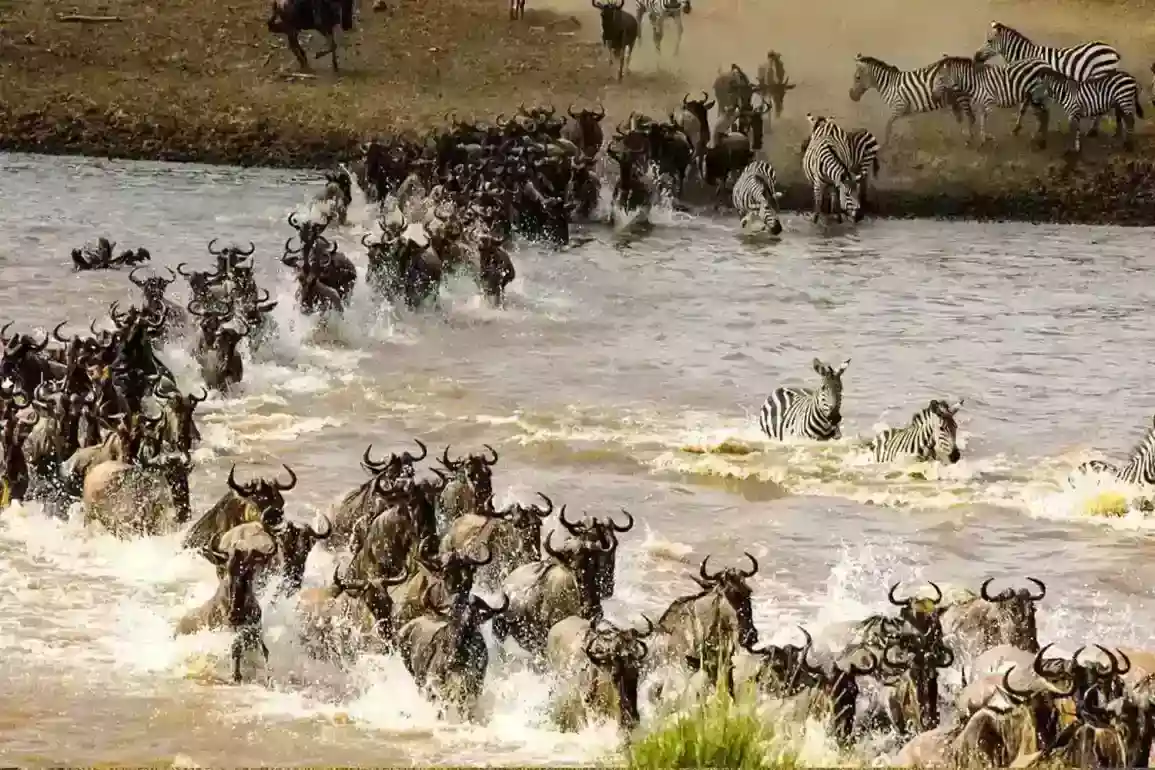
The Great Migration is a year-round movement across the wider Serengeti ecosystem rather than one fixed event in one place. We use your travel month to decide which Serengeti sector gives the most practical access to the herds. For month-by-month planning, see our Serengeti Great Migration by month guide.
| Day | Route | Main focus |
|---|---|---|
| 1 | Kilimanjaro International Airport to Arusha | Arrival, transfer and safari briefing |
| 2 | Arusha to Tarangire National Park | Elephants, baobabs and river habitat |
| 3 | Lake Manyara National Park | Rift Valley scenery, woodland and lakeshore wildlife |
| 4–5 | Serengeti National Park | Migration-focused and resident-wildlife game drives |
| 6 | Serengeti to Ngorongoro Conservation Area | Morning game drive and scenic transfer |
| 7 | Ngorongoro Crater to Arusha | Crater game drive and return transfer |
This is a road-based safari with several long driving days. It suits travelers who want variety across four wildlife areas; if your main priority is maximizing time with the migration, we can also discuss a version with fewer parks and more Serengeti nights.
How Much Does the 7-Day Serengeti Migration Safari Cost?
The price of this 7-day Serengeti wildebeest migration safari starts from USD 4,431 per person. The final amount depends on your travel dates, number of travelers, private or shared transport setup, accommodation category, park and conservation charges, pickup arrangements and any optional services. Your written quotation is the final confirmation of the price and inclusions for your departure.
What's Included in Your Safari Package
- Airport pickup and drop-off as confirmed in your itinerary
- Safari vehicle and professional driver-guide for the scheduled safari days
- Accommodation stated in your confirmed itinerary
- Park and conservation entry arrangements for the listed itinerary
- Ngorongoro Crater game-drive arrangements on Day 7
- Meals and drinking water stated in your quotation
- Scheduled game drives in Tarangire, Lake Manyara, Serengeti and Ngorongoro
What's Not Included
- International flights and visas
- Travel insurance and personal medical expenses
- Tips and gratuities
- Personal purchases and drinks not included with your booked meal plan
- Optional activities not listed in the confirmed itinerary, including hot air balloon safaris
Once you are comfortable with the package scope and price, the next step is to review how the seven days operate in practice.
7-Day Serengeti Wildebeest Migration Safari Itinerary
The itinerary uses Day 1 for arrival in Arusha, four road-safari days through Tarangire, Lake Manyara and Serengeti, a final Serengeti-to-Ngorongoro transfer day, and a Ngorongoro Crater game drive on Day 7. Exact departure times can change with road conditions, park procedures, wildlife activity and the location of your confirmed accommodation.
Day 1: Kilimanjaro International Airport to Arusha
We meet you at Kilimanjaro International Airport and transfer you to your accommodation in Arusha. After check-in, we confirm the safari plan, expected departure time and any dietary or practical requirements for the days ahead. You overnight in Arusha before the road safari begins.
Day 2: Arusha to Tarangire National Park
After breakfast, you drive from Arusha to Tarangire National Park, normally around two to three hours depending on traffic and your pickup point. The day is spent on game drives through baobab woodland, open savanna and the Tarangire River system. Elephants are frequently seen in the park, while other sightings depend on season and wildlife movement. After the game drive, we take you to your confirmed lodge outside the park for dinner and overnight.
Day 3: Lake Manyara National Park
You leave with your lunch and drive to Lake Manyara National Park. The park combines groundwater forest, acacia woodland, Rift Valley escarpment scenery and lakeshore habitat. Baboons, giraffes, elephants, antelope and many bird species may be seen, but no individual species is guaranteed. You return to your confirmed lodge outside the park after the game drive.
Day 4: Travel to Serengeti National Park
After breakfast, you begin the longer drive toward Serengeti National Park. The transfer usually takes several hours and includes changing road surfaces, park entry procedures and possible wildlife stops. After entering Serengeti, your driver-guide begins the first migration-focused game drive while working toward the area selected for your travel season. You overnight inside Serengeti.
Day 5: Full-Day Serengeti Migration Game Drive
This is the main Serengeti game-drive day. We use recent wildlife information and your seasonal location to decide where to concentrate the search. Depending on the month, this may mean southern plains and Ndutu-area access, central Serengeti, the western corridor or northern Serengeti. Large wildebeest and zebra herds may be encountered, alongside resident predators and other wildlife, but herd position and river crossings remain unpredictable. You return to your Serengeti accommodation for dinner and overnight.
Day 6: Serengeti to Ngorongoro Conservation Area
You start with a morning Serengeti game drive before turning toward Ngorongoro Conservation Area. The route can include wildlife stops and scenic viewpoints, so arrival time depends on conditions during the day. You overnight in the Ngorongoro area, positioning you for the crater descent the following morning.
Day 7: Ngorongoro Crater Game Drive and Return to Arusha
After breakfast, you descend into Ngorongoro Crater for a game drive across grassland, woodland and wetland habitats. Lions, buffalo, elephants, hyenas, hippos and many antelope species may be seen, and black rhino sightings are possible but never guaranteed. After the crater visit, you ascend and drive back to Arusha, where the scheduled safari ends. Your exact drop-off point is confirmed before departure.
With the daily route clear, the next planning decision is choosing travel dates that match the migration stage you most want to experience.
Best Time for a 7-Day Serengeti Migration Safari
The best time depends on the migration experience you want rather than one single “best month.” The herds move across the wider Serengeti ecosystem in response to rainfall and fresh grazing, so the most useful accommodation area changes during the year.
| Typical period | Likely focus area | What travelers plan for |
|---|---|---|
| January to March | Southern Serengeti and Ndutu area | Calving-season herds, open plains and predator activity |
| April to May | Southern and central transition zones | Green-season scenery and moving herds; rain can affect roads |
| June to July | Central, western corridor and northbound areas | Long moving columns and seasonal concentration around western and northern routes |
| July to October | Northern Serengeti | Mara River region and large northern herds; crossings remain unpredictable |
| November to December | Central, eastern and southbound areas | Return movement toward short-grass plains as seasonal rains develop |
These are planning windows, not fixed wildlife appointments. Rainfall can shift the herds by days or weeks, so we confirm the practical Serengeti sector when we know your dates. See our Great Serengeti Wildebeest Migration guide for broader background.
Wildlife You May See on This Safari
This itinerary combines migration species with year-round resident wildlife across four different habitats. Wildebeest and zebra are the signature focus in Serengeti, while Tarangire, Lake Manyara and Ngorongoro add different landscapes and animal communities.
- Serengeti: wildebeest, zebra, gazelles, lions, cheetahs, hyenas, elephants and other resident wildlife may be encountered.
- Tarangire: elephants, giraffes, antelope, predators and diverse birdlife are possible around riverine and woodland habitats.
- Lake Manyara: baboons, elephants, giraffes, antelope and a wide range of birds may be seen depending on water levels and season.
- Ngorongoro Crater: buffalo, lions, hyenas, hippos, elephants, antelope and possible black rhino sightings are among the main interests.
No wildlife sighting is guaranteed. A good migration safari depends on realistic expectations, flexible game-drive decisions and enough time for your guide to respond to current conditions.
Serengeti Safari Safety and Participation Requirements
This is a vehicle-based wildlife safari and does not require technical trekking ability, but it involves long periods of driving, rough roads, dust, changing temperatures and early starts. We coordinate your road transport, park logistics and driver-guide; park rules and safety instructions from your guide must be followed throughout the trip.
- Remain inside the vehicle in wildlife areas unless your guide confirms that getting out is permitted.
- Keep a safe distance from wildlife and never encourage the driver to crowd animals or block their movement.
- Tell us before booking about mobility limitations, medical needs, allergies or dietary requirements that may affect the itinerary.
- Carry personal travel insurance appropriate for your trip and medical needs.
- For Mara River viewing, vehicles must follow the designated crossing-point rules and instructions used by Serengeti National Park.
Families, older travelers and guests with specific mobility needs should discuss comfort and vehicle-entry requirements with us before confirming the safari so we can advise on the most practical setup.
What to Pack for a Serengeti Migration Safari
Pack for warm daytime conditions, cooler mornings and evenings, dust, sun and long game-drive hours. Soft luggage is usually easier to handle in safari vehicles than rigid oversized cases, especially when several travelers share one vehicle.
- Lightweight neutral-colored clothing and a warm layer for early mornings
- Comfortable closed shoes and sandals or light shoes for lodges
- Sun hat, sunglasses and high-SPF sunscreen
- Binoculars and camera equipment with spare batteries or power bank
- Reusable water bottle and small day bag
- Personal medicines, insect repellent and basic travel-health supplies
- Dust protection for cameras and electronics during dry months
If you will connect to a domestic flight before or after the safari, ask us about baggage limits before packing because small-aircraft allowances can be more restrictive than international airline limits.
Private and Shared Serengeti Safari Options
A private safari gives your booking its own vehicle and more flexibility around daily pacing, while a shared departure can reduce fixed transport costs when a suitable scheduled group is available. Shared trips may use fixed departure dates, routing and accommodation, so they are less flexible for highly seasonal migration positioning.
| Option | Best for | Main trade-off |
|---|---|---|
| Private safari | Families, couples, photographers and travelers wanting schedule flexibility | Higher per-person fixed transport cost for small groups |
| Shared safari | Travelers comfortable joining others on selected departures | Less control over route, stops, accommodation and departure timing |
Tell us which setup you prefer when enquiring. We will confirm whether a shared departure is available for your dates and whether it follows this exact seven-day route.
Who This 7-Day Migration Safari Suits
This package suits travelers who want a broad northern Tanzania safari with the Great Migration as the main Serengeti theme while still visiting Tarangire, Lake Manyara and Ngorongoro. It works well for first-time safari guests who value destination variety and are comfortable with several road-transfer days.
It may be less suitable if your only goal is to spend as much time as possible with the migration. In that case, reducing the number of parks or adding Serengeti nights usually gives your guide more flexibility to follow current herd locations. We can adjust the route before confirmation rather than forcing every traveler into the same schedule.
Frequently Asked Questions About the 7-Day Serengeti Migration Safari
How much does the 7-day Serengeti wildebeest migration safari cost?
The price of this 7-day Serengeti wildebeest migration safari starts from USD 4,431 per person. The final quotation depends on travel dates, group size, accommodation category, transport setup and any optional services.
When is the best time for this Serengeti migration safari?
The best time depends on which stage of the Great Migration you want to target. Southern Serengeti and Ndutu are commonly used for the calving period early in the year, while northern Serengeti is commonly used for Mara River season from roughly July to October. Rainfall can move herd locations earlier or later.
Is a Mara River crossing guaranteed on this safari?
No. Mara River crossings are natural events controlled by herd movement, rainfall and conditions on the day. We position the Serengeti part of the itinerary for the most suitable seasonal area, but no specific crossing or wildlife sighting can be guaranteed.
How many nights does this itinerary spend in Serengeti?
This itinerary normally uses two nights inside Serengeti, with an arrival game drive on Day 4, a full Serengeti day on Day 5 and additional game viewing on the morning of Day 6 before continuing toward Ngorongoro.
Can the Serengeti area change with the season?
Yes. The most useful Serengeti sector changes during the year, so we may adjust the migration-focused game-drive area and accommodation location to match your travel dates, road conditions and the most recent herd information.
Can I book this safari as a private or shared trip?
Private safaris can be arranged, and shared departures may be available on selected dates. Shared trips can have fixed routing, accommodation and departure conditions, so the confirmed setup is stated in your written quotation.
Is a hot air balloon safari included?
No. A Serengeti hot air balloon safari is an optional activity unless it is specifically added to your written quotation. Availability, location, pickup arrangements and supplier conditions depend on your travel date and Serengeti sector.
How do I book this 7-day migration safari?
Send us your preferred travel dates, number of adults and children, accommodation preference and whether you prefer a private or shared setup. We will confirm the route, availability, price and inclusions in writing before you pay.
When you are ready, complete the booking form with your dates and traveler numbers. We will review the route for the season and send the confirmed arrangements in writing.