
What You Need to Know: Kilimanjaro is higher and steeper but shorter: you reach 19,341 ft (5,895 m) at Uhuru Peak in 6 to 8 days, with a hard summit night. The Everest Base Camp trek tops out at about 17,598 ft (5,364 m) at base camp, or 18,519 ft (5,644 m) on Kala Patthar, over about 12 to 14 days from Lukla, sleeping in teahouses. Kilimanjaro can be climbed most of the year; Everest Base Camp is best from March to May and October to November.
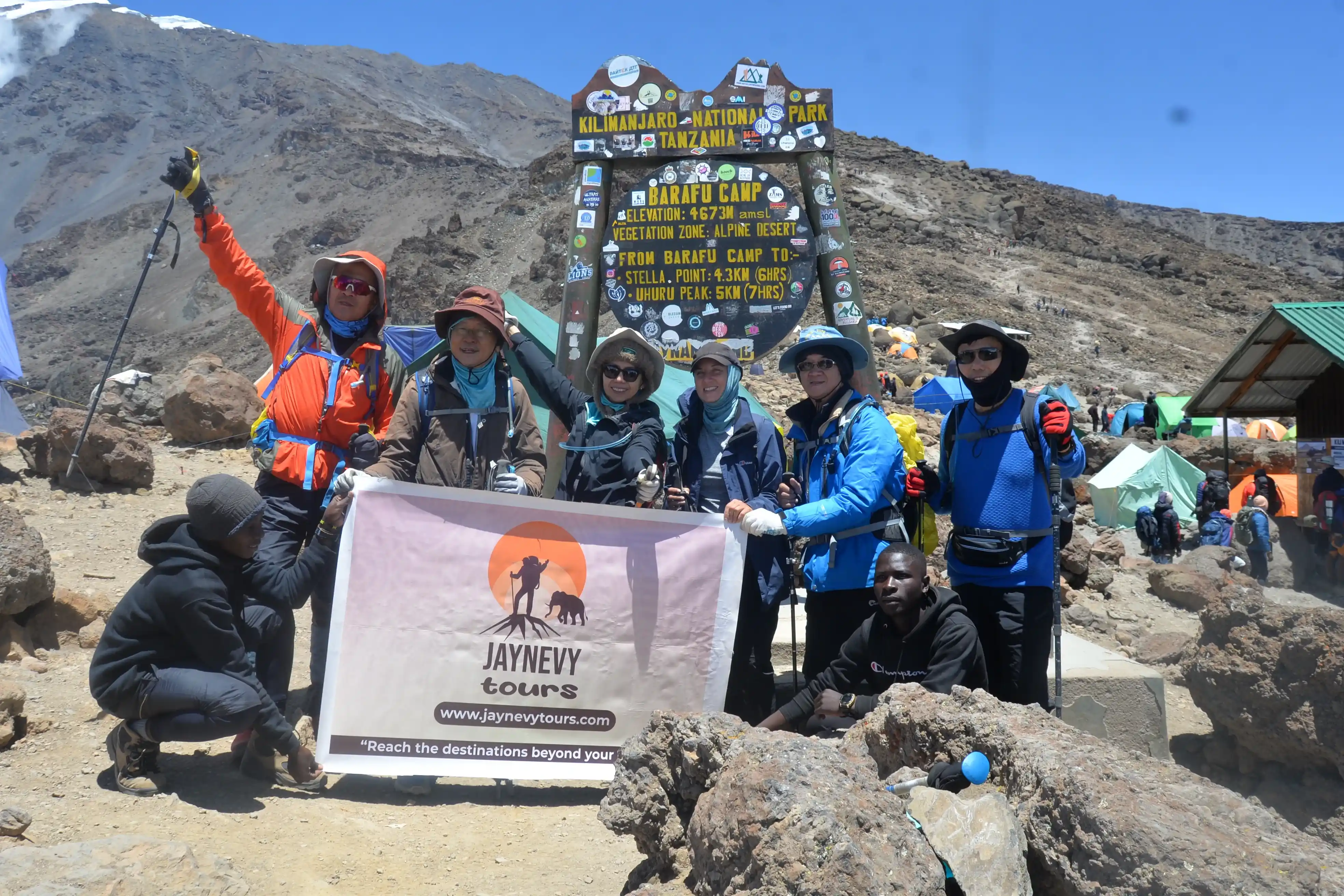
Kilimanjaro and Everest Base Camp at a Glance
The main differences side by side:
| Kilimanjaro | Everest Base Camp | |
|---|---|---|
| Highest point | Uhuru Peak, 19,341 ft (5,895 m) | Kala Patthar, about 18,519 ft (5,644 m); base camp about 17,598 ft (5,364 m) |
| Days on foot | 6 to 9 | About 12 to 14, from Lukla and back |
| Hardest day | Summit night: 11 to 15 hours | Long days near the top, at altitude for longer |
| Where you sleep | Tents (huts on Marangu) | Teahouses (lodges) in villages |
| Getting there | Fly to Kilimanjaro Airport, drive to Moshi | Fly to Kathmandu, then a small plane to Lukla |
| Best months | January to March, June to October | March to May, October to November |
| Permits | Park fees paid by your operator | Sagarmatha National Park permit and a local area permit |
Which Is Harder, Kilimanjaro or Everest Base Camp?
Most people who have done both find Kilimanjaro harder, because it gains height faster and the summit night is long, steep and very cold. Everest Base Camp is longer and keeps you at high altitude for more days, but the daily walking is gentler and you sleep in heated lodges. On both, altitude is the real challenge, not the terrain: neither needs ropes or climbing skills. Our guide to how hard Kilimanjaro is goes into more detail.
Altitude and Acclimatization Compared
Kilimanjaro climbs from about 6,000 ft (1,800 m) at the gate to 19,341 ft (5,895 m) in under a week, so the route you choose matters a great deal: in park figures from the early 2000s, summit success was about 64% on 7-day climbs and 85% on 8-day climbs. Everest Base Camp builds in rest days at Namche Bazaar and Dingboche and climbs more gradually, but you spend about a week above 13,000 ft (4,000 m). On both, walking slowly and drinking plenty is what gets you to the top; see our acclimatization tips.
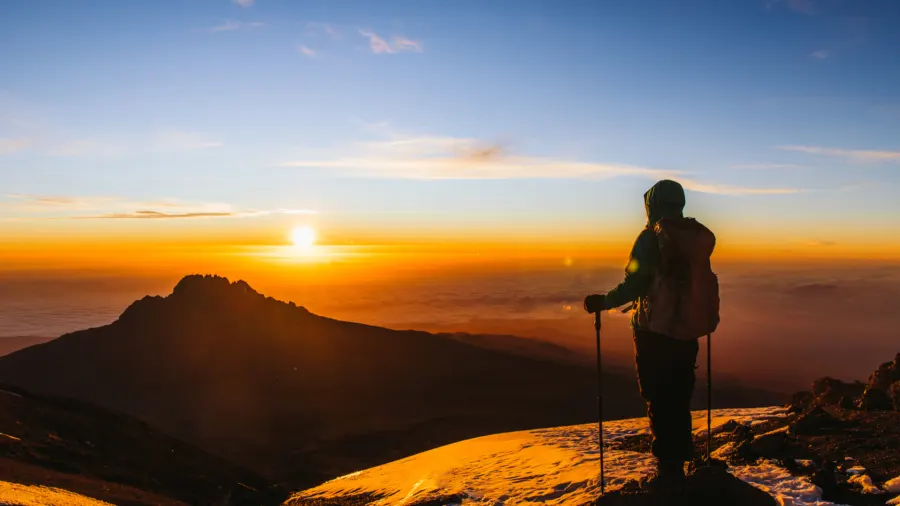
What Each Trek Is Like
Kilimanjaro takes you through five climate zones in a few days, from rainforest with monkeys to moorland, alpine desert and the glaciers of the summit, with a private crew who carry your gear, cook and pitch your camp. It ends with a true summit, the highest point in Africa. The Everest trek is a journey through Sherpa villages, monasteries and suspension bridges, with Everest, Lhotse and Ama Dablam around you; you see Everest rather than climb a summit, and you share the trail and lodges with many trekkers.
Time and Travel
A Kilimanjaro climb, with a night in Moshi before and after, fits into about 9 to 10 days door to door from the US, and it is easy to add a safari or a beach: see our 11-day climb and safari or climb and Zanzibar holiday. The Everest Base Camp trek needs about 16 to 18 days from home, including days in Kathmandu and spare days for weather delays on the flights to Lukla.
When to Go
Kilimanjaro is best in the dry seasons, January to March and June to October, and can be climbed most of the year; see the best time to climb Kilimanjaro. Everest Base Camp is best before and after the monsoon, from March to May and October to November, when the skies are clearest.
Cost
A private Kilimanjaro climb with us costs from US$1,845 per person for 6 days to US$2,335 for the 8-day Lemosho, for two climbers with a mid-range Moshi hotel, including all park fees, the crew, food, tents, transfers and two hotel nights. Everest Base Camp prices vary widely with the operator, the lodges and the flights to Lukla; compare like for like, including guides, porters, permits and flights. More in how much it costs to climb Kilimanjaro and Kilimanjaro park fees.
Should You Do Kilimanjaro or Everest Base Camp First?
Choose Kilimanjaro if you want a real summit, have about 10 days and would like to add a safari or beach. Choose Everest Base Camp if you have more time, love village culture and mountain scenery and prefer lodges to camping. Many trekkers do Kilimanjaro first: it is shorter, and it shows you how your body handles altitude before a longer trip.
Common Questions About Kilimanjaro vs Everest Base Camp
Short answers to the questions our guests ask us most often:
Is Kilimanjaro harder than Everest Base Camp?
Most people find it harder, because it is higher, gains height faster and has a long, cold summit night; Everest Base Camp is longer but gentler day to day.
Is Kilimanjaro higher than Everest Base Camp?
Yes. Uhuru Peak is 19,341 ft (5,895 m); Everest Base Camp is about 17,598 ft (5,364 m) and Kala Patthar about 18,519 ft (5,644 m).
How long does each trek take?
Kilimanjaro takes 6 to 9 days on the mountain; Everest Base Camp about 12 to 14 days from Lukla.
Do you need climbing experience for either?
No. Both are high-altitude hikes on trails; fitness and slow acclimatization matter more than experience.
Which is better for a first high-altitude trek?
Kilimanjaro, on a route of 7 or 8 days, is a good first trek because it is shorter and fully supported.
Bottom Line: Kilimanjaro or Everest Base Camp?
Kilimanjaro gives you a true summit, higher than Everest Base Camp, in about a week, with a safari or beach next door. Everest Base Camp gives you two weeks among the world's highest peaks. If a summit is your goal, start with the 8-day Lemosho or 7-day Machame, and follow our training plan.