
By Sharifa Lema, Manager and Chief of Staff, Jaynevy Tours, Moshi · Updated October 2026
What You Need to Know: Climbing Kilimanjaro on your honeymoon works best on a private climb of 6–8 days. We run three honeymoon climbs: the 8-day Lemosho (from US$2,335 per person), the 7-day Machame (from US$2,090) and the 6-day Marangu hut route (from US$1,845), with a shared tent or a private hut room, a guide for each of you, and a Just Married banner, cake and champagne included. For two, budget roughly US$4,350–6,200 for the climb and crew tips, before flights. Climb late May to October or January to March, and climb first, then add the safari and beach.
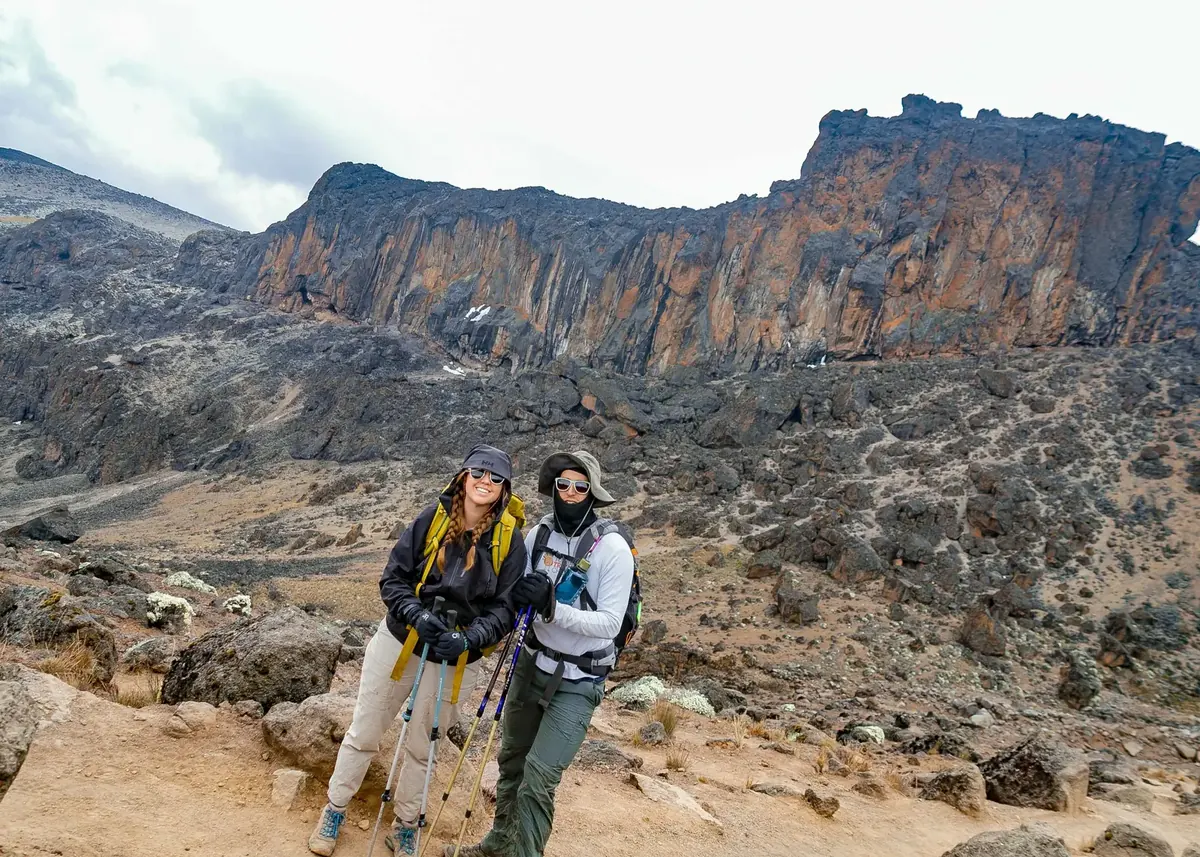
Is Climbing Kilimanjaro a Good Idea for Your Honeymoon?
For the right couple, it is one of the best honeymoons there is: a real shared goal, days without phones or work, and a crew that looks after you from the gate to the summit and back. For the wrong couple, it is a cold, tiring week that one of you agreed to for the other's sake. Be honest with each other before you book.
| A Kilimanjaro honeymoon suits you if… | Think twice if… |
|---|---|
| You both want the climb, not just one of you | One of you is going along only to please the other |
| You enjoy hiking, even if you have never been to altitude | You want a honeymoon of rest and comfort from day one |
| You can give it 6–8 days plus travel and recovery | You have a week in total for everything |
| You like the idea of a hard challenge followed by a reward | Long walking days and simple camp comforts sound miserable |
| You will train together in the months before | There is no time to train before the wedding |
You don't need climbing experience. Kilimanjaro is a trek, not a technical climb, and the summit, Uhuru Peak at 19,341 ft (5,895 m), is reached on foot. What you need is fitness for several long walking days and enough days on the mountain for your bodies to adjust to the altitude.
Which Kilimanjaro Route Is Best for a Honeymoon?
Choose by three things: how many days you have, whether you want a tent or a hut, and how much you mind other groups. Those are the questions behind the three routes our honeymoon couples choose most.
| 8-day Lemosho | 7-day Machame | 6-day Marangu | |
|---|---|---|---|
| Best for | The best chance of both summiting, and quiet first days | A classic week with the most varied scenery | Couples who would rather not camp |
| You sleep in | A shared two-person tent | A shared two-person tent | A private room in the park huts |
| Toilet | Your own toilet tent | Your own toilet tent | Shared, in the huts |
| Crowds | Quiet until Lava Tower | The busiest route | Busy huts in the dry season |
| From, per person (2 climbers) | US$2,335 | US$2,090 | US$1,845 |
Why not the others? The 5-day Marangu and 6-day Machame climb fast, which lowers your chances of both reaching the top; Umbwe is steep and best left to experienced climbers. The quiet Rongai and the 9-day Northern Circuit are good climbs too; if one of them suits your dates, ask us. For every route compared, see our guide to choosing a Kilimanjaro route.
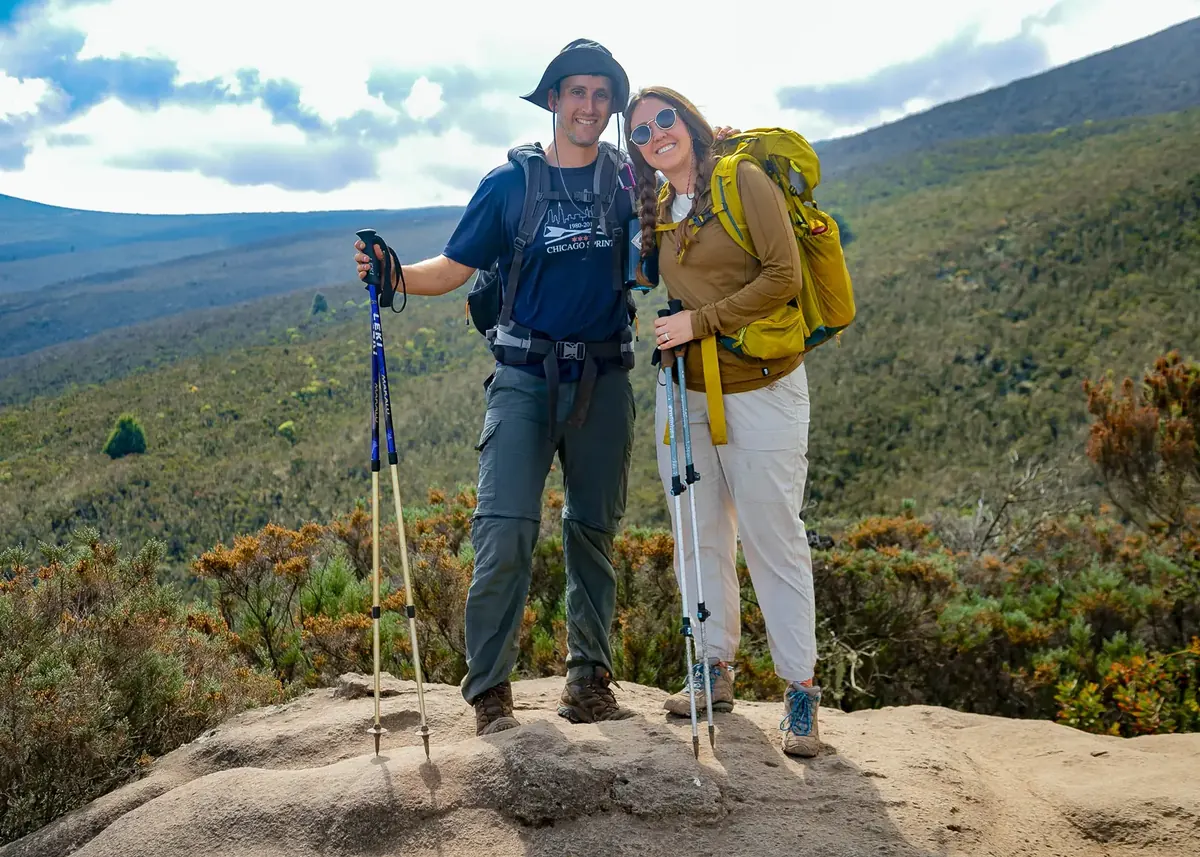
8-Day Honeymoon Climb, Lemosho
Quiet western start and the most time to acclimatize
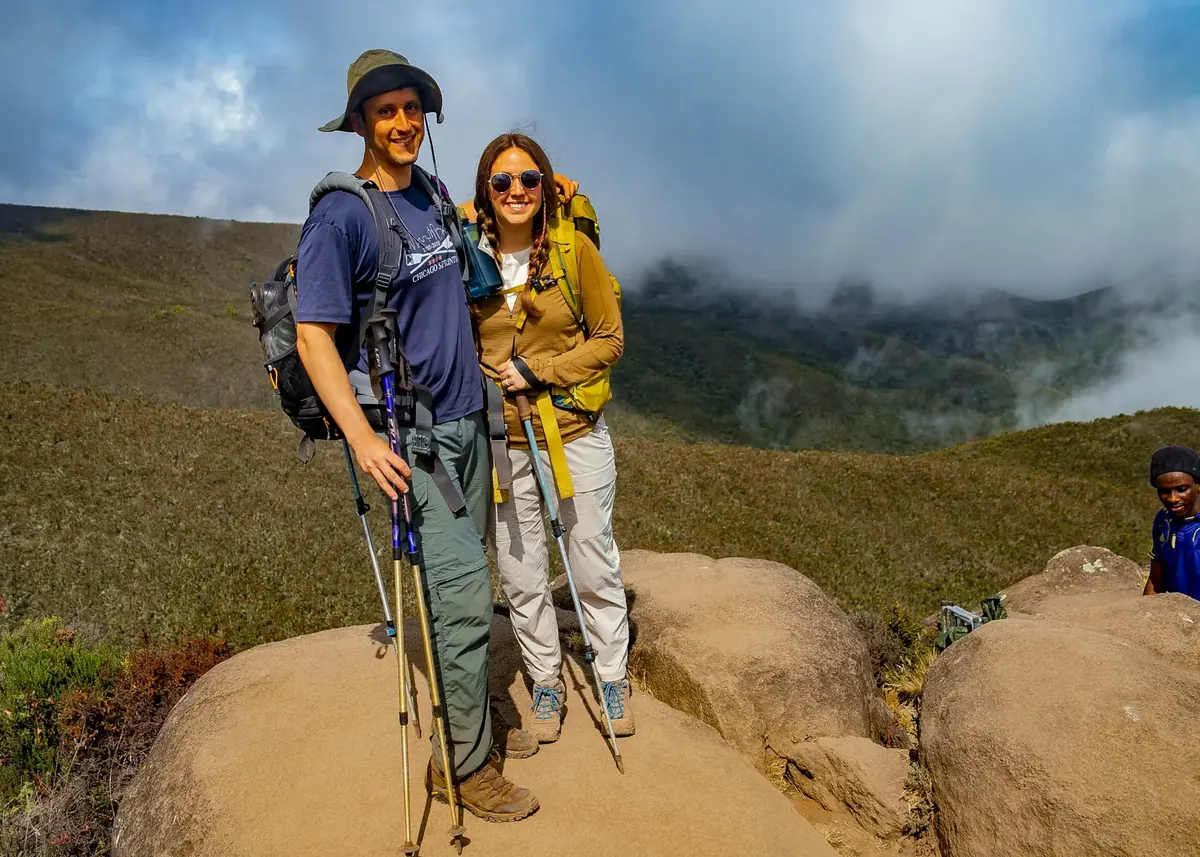
7-Day Honeymoon Climb, Machame
The classic week, with the most varied scenery
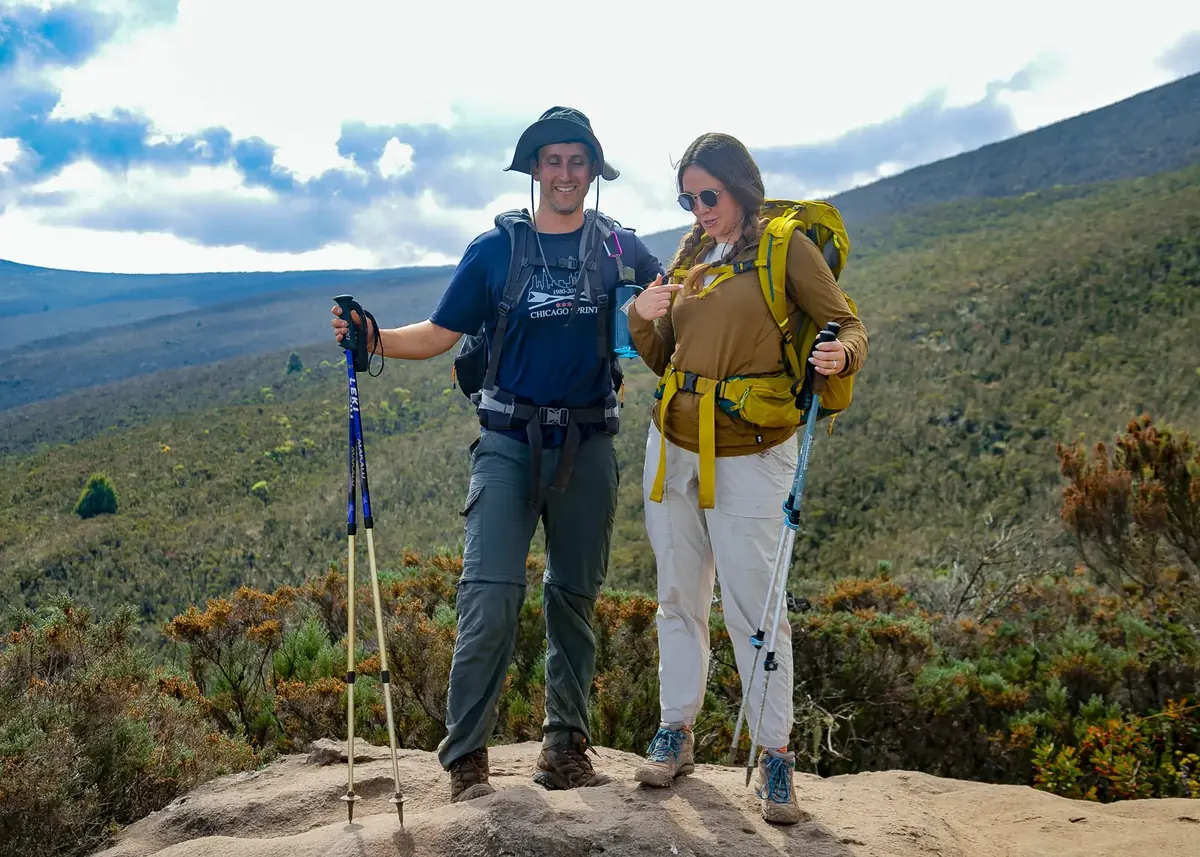
6-Day Honeymoon Climb, Marangu
Huts instead of tents, with a private room for two
Prices are per person, 2 climbers, with mid-range hotels before and after the climb.
When to Climb: Planning Around Your Wedding Date
The mountain's seasons decide more than your wedding date does. The good months are late May to October and January to March; the long rains of April and early May and the short rains of November make the trails muddy and the summit cloudy, and the late-December holidays are the busiest time of year.
| If your wedding is in… | A good time to climb |
|---|---|
| Spring (March to May) | June to October: dry, clear and busy, so book 9–12 months ahead |
| Summer (June to August) | July to October, straight after the wedding season |
| Fall (September to November) | January to March, or the following summer |
| Winter (December to February) | January to March: warmer on the mountain and quieter |
Leave a few calm days between the wedding and the climb: the long flight, the time change and the wedding itself all leave you tired, and you want to start the climb rested. Our honeymoon climbs begin with a hotel night after you land, so you meet your guide, check your gear and sleep before the drive to the gate. Month-by-month detail is in the best time to climb Kilimanjaro.
Climb First, Then Safari, Then the Beach
If Kilimanjaro is part of a longer honeymoon, put it first. You arrive fresh and fit from home, the safari that follows is the gentlest way to recover, with days spent sitting in a vehicle watching wildlife, and the beach at the end is pure rest. Climbing after a week of beach holidays rarely goes as well.
| Honeymoon plan | Length | What it includes |
|---|---|---|
| Climb only | 8–10 days | One of our three honeymoon climbs, with hotel nights before and after |
| Climb and a short safari | About 12 days | The climb, then a few days in Tarangire, the Ngorongoro Crater or the Serengeti |
| Climb, safari and Zanzibar | 19 days | Our 19-day adventure honeymoon: the 7-day Machame, a private safari from special lodges and four nights on Zanzibar, from US$19,150 per person |
More ideas for after the mountain are on our honeymoon safaris page and our guide to Kilimanjaro, safari and Zanzibar in one trip.
Climbing at Different Speeds: Altitude and the Two of You
Couples are often surprised by this: altitude affects people differently, and fitness doesn't predict it. One of you may feel fine at 15,000 ft while the other has a pounding headache, and it can be the stronger hiker who struggles. Talk about it before the climb, not on summit night.
- You each have a guide. On our climbs every climber has a guide, so a couple climbs with two. If one of you needs to go down, a guide goes down with them and the other is not forced to turn back.
- Agree your plan in advance. Decide at home what you will do if only one of you can continue: carry on for both of you, or turn back together. There is no wrong answer, only an unplanned one.
- Be honest at the health checks. Your guides check blood-oxygen and pulse with a pulse oximeter every day and ask how each of you feels. Never hide a headache to keep up with your partner; your guides can only help with what they know.
- Know the warning signs. A mild headache, poor sleep and less appetite are normal. Vomiting, confusion, loss of balance or breathlessness at rest mean going down, whatever the time.
- Ask your doctor. Talk to your doctor before the trip about acetazolamide (Diamox) and any health conditions, and get travel insurance that covers trekking to 19,700 ft (6,000 m) and helicopter evacuation.
The single best thing you can do for both of you is give the mountain more days. That is why the 8-day Lemosho is our first suggestion for honeymooners. More on how we manage altitude: Kilimanjaro acclimatization tips.
Privacy on the Mountain: Tents, Huts and Toilets
Privacy is the question most couples are too shy to ask, so here are the plain answers.
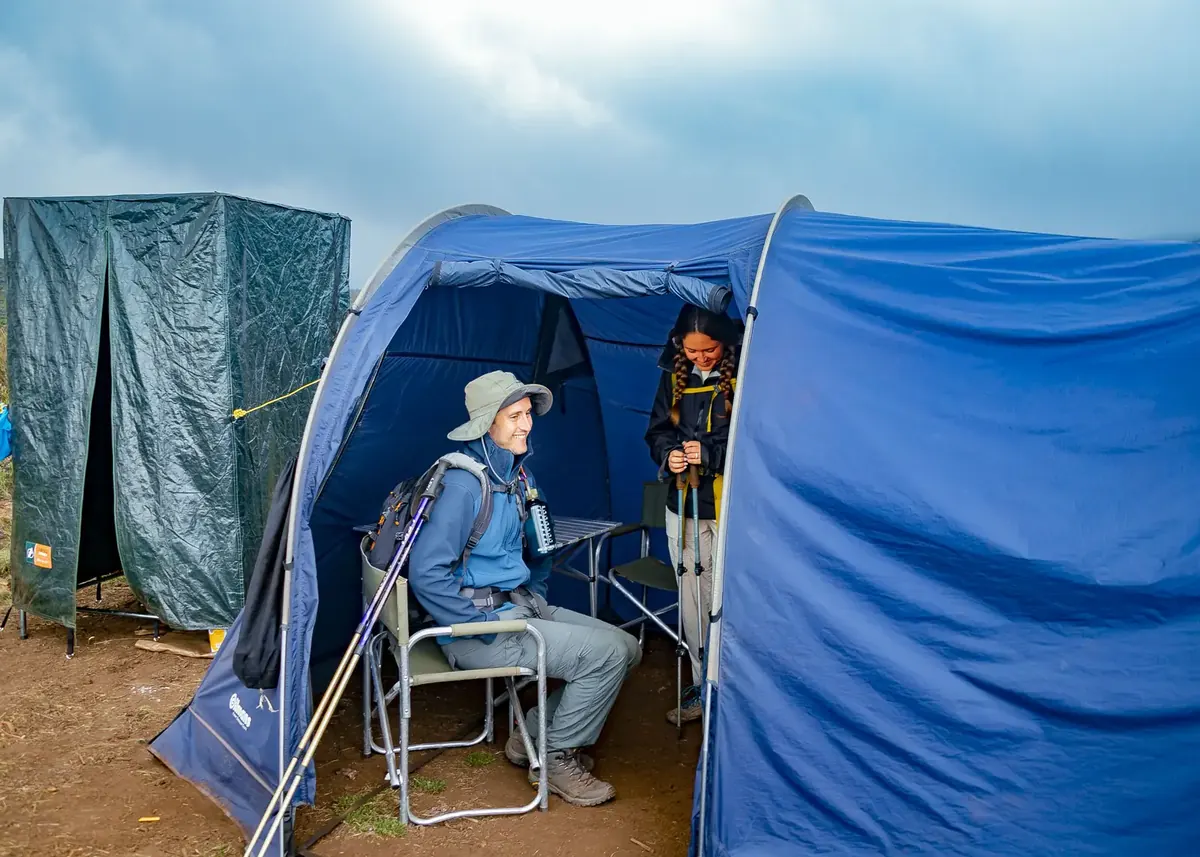
- On the camping routes (Lemosho and Machame) you share one two-person sleeping tent. You eat in your own mess tent at a table with chairs, and you have a private portable toilet tent, so you never use the public toilets at the campsites.
- On the Marangu route you sleep in the park's huts. Most climbers there share bunk rooms; for honeymoon couples we book a private room at each hut. The toilets in the huts are shared.
- On a private climb there is no one else in your group. The campsites and huts are shared with other groups, especially from July to September, but your tent, table and evenings are your own.
The Honeymoon Touches We Add
On our honeymoon climbs these are included in the price, whichever route you choose:
- A shared two-person tent, or a private room in the Marangu huts
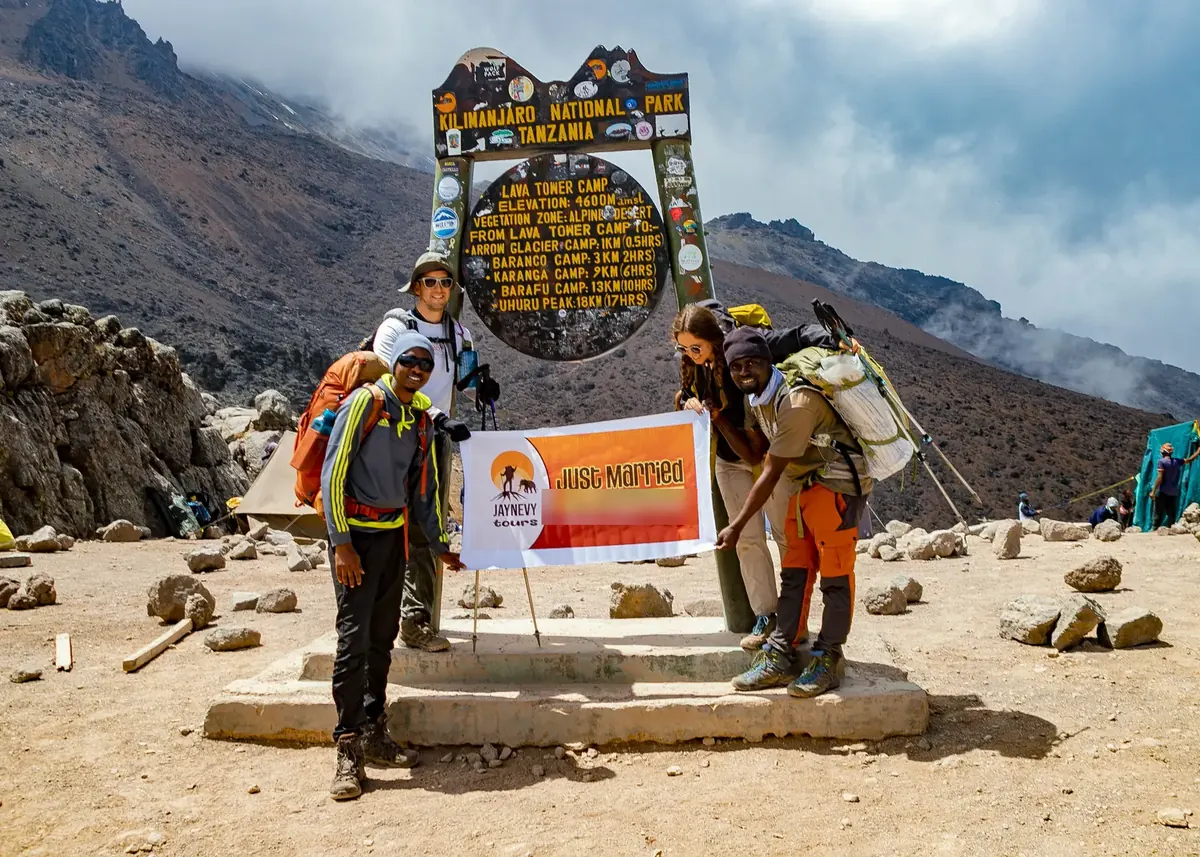
- A Just Married banner for your photos at the camp signs and on the summit
- A celebration cake, baked by your cook on the mountain
- A song and celebration with your crew
- Your climbing certificates, presented when you sign out of the park
- A simple decorated outdoor setup with champagne after you come down
How Much Does a Kilimanjaro Honeymoon Cost for Two?
The climb for two costs from US$3,690 on the 6-day Marangu to US$4,670 on the 8-day Lemosho, with mid-range hotels and the honeymoon touches included. Crew tips are the biggest extra. Here is a realistic budget for the two of you, before international flights:
| Route | Climb for two | Crew tips for two | Climb and tips |
|---|---|---|---|
| 6-day Marangu | US$3,690 | US$660–1,140 | US$4,350–4,830 |
| 7-day Machame | US$4,180 | US$770–1,330 | US$4,950–5,510 |
| 8-day Lemosho | US$4,670 | US$880–1,520 | US$5,550–6,190 |
Tips follow the ranges in our tipping guide: about US$55–95 per climber per day for a crew of seven. Then add, for each of you:
- Tanzania visa: US$100 for US citizens
- Tanzania's mandatory inbound travel insurance: US$44, plus your own trekking and evacuation cover
- Gear rental, if you need it: for example US$25 for a sleeping bag and US$20 for a down jacket, for the whole climb (full rental list)
- A luxury lodge before and after: Legendary Lodge in Arusha, or similar, raises the climb to US$3,070–3,555 per person, depending on the route
About half of every climb price is Kilimanjaro National Park fees, which all operators pay at the same rate; our Kilimanjaro cost guide explains the rest.
Training Together Before the Wedding
Training is the part of the honeymoon you can start now, and doing it together tells you a lot about how you will walk as a pair. Start two or three months before the climb:
- Hike hills on weekends with loaded daypacks, building up to two long days of 5–6 hours back to back
- Climb stairs or use a stair machine during the week
- Wear in the boots you will climb in; new boots on Kilimanjaro mean blisters
- Walk at the slower partner's pace; that is the pace your guides will set on the mountain anyway
More detail in our guide to how hard Kilimanjaro is and how to train.
Packing for Two
Each of you needs your own warm sleeping bag, boots, layers, headlamp, water bottles and daypack; those aren't things to share. Shared items save weight and space:
| Each of you | Share between you |
|---|---|
| Sleeping bag rated to about 14 °F (−10 °C) | Sunscreen and lip balm with SPF |
| Broken-in boots, gaiters and warm socks | A small first-aid and blister kit |
| Base layers, fleece, down jacket, waterproofs | A power bank and charging cables |
| Warm hat, thick gloves, headlamp | Wet wipes and hand sanitizer |
| Insulated bottles for 3 liters of water | Snacks you both like |
A practical tip for newlyweds: fingers often swell at altitude and in the cold, so a new wedding ring can get tight. Some climbers wear a silicone band on the mountain, or keep the ring on a chain around the neck. The full list is in our Kilimanjaro packing list.
A Recent Honeymoon Climb in Photos
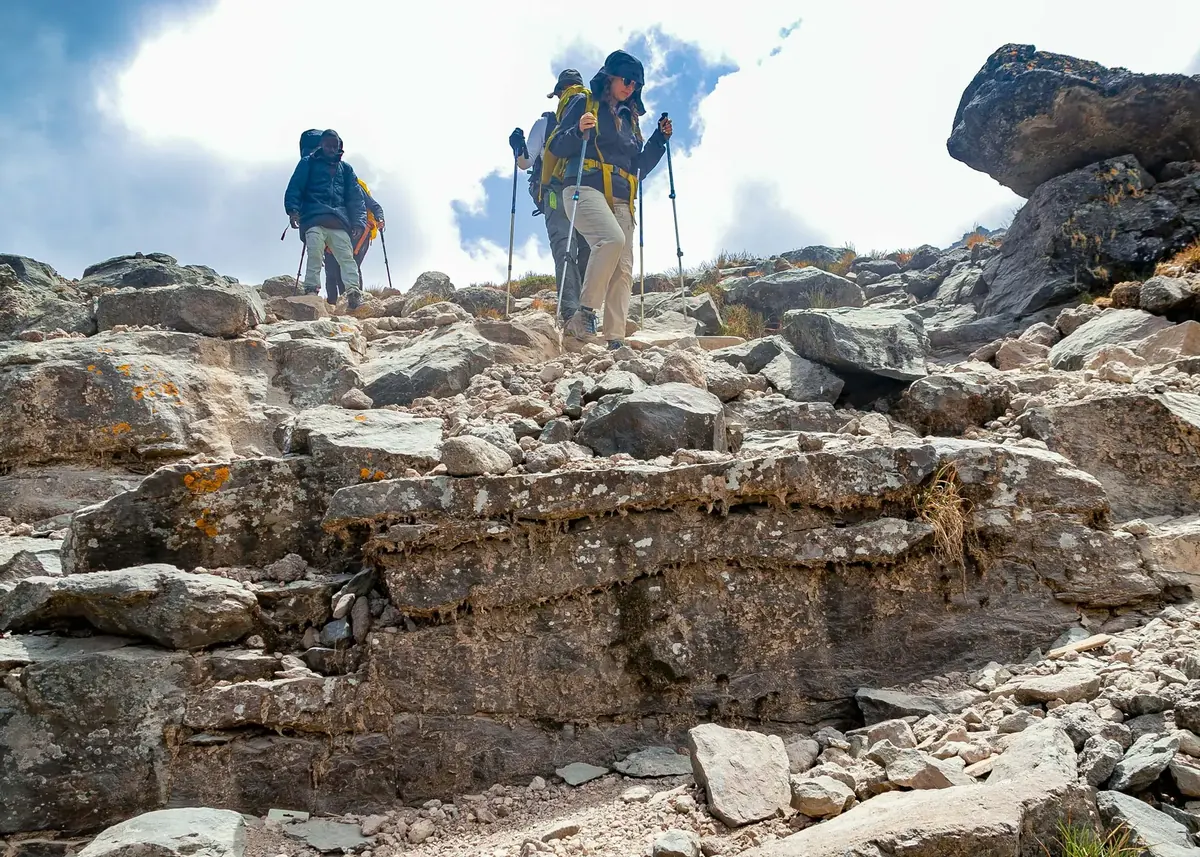
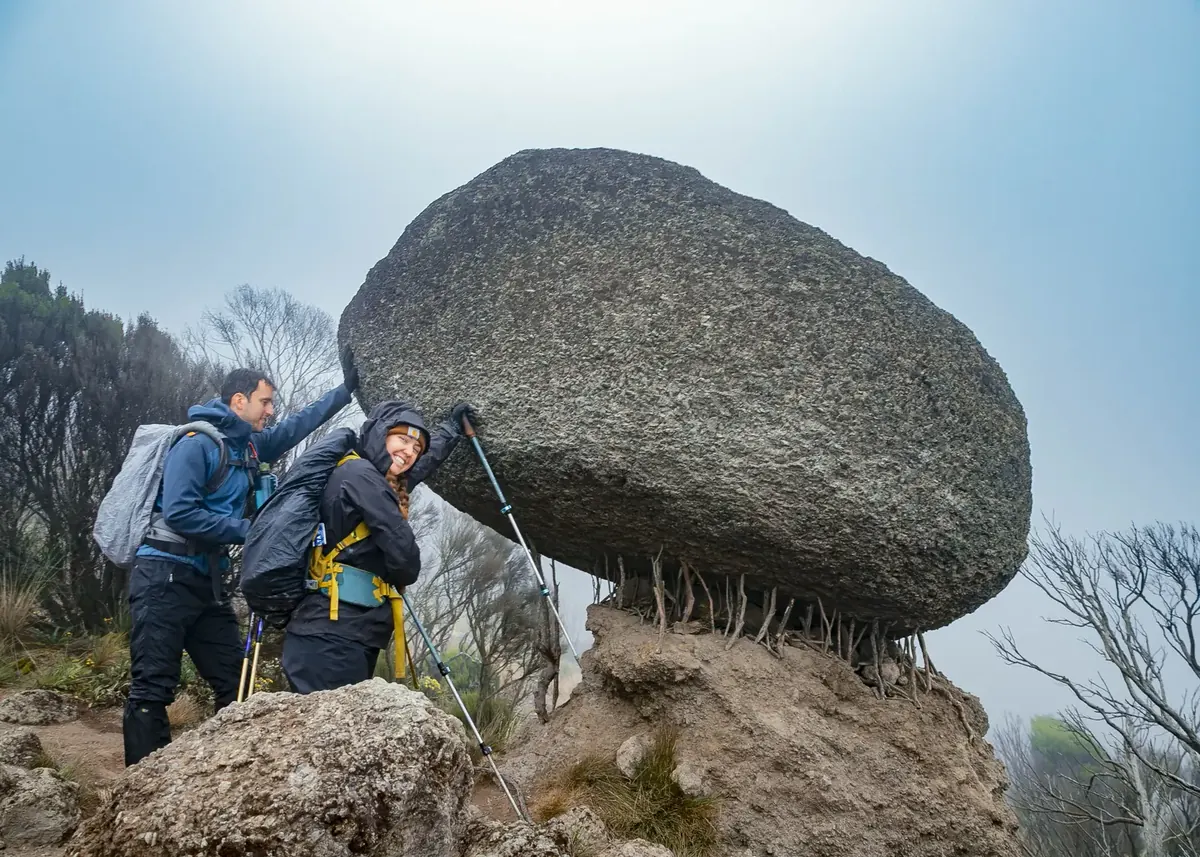
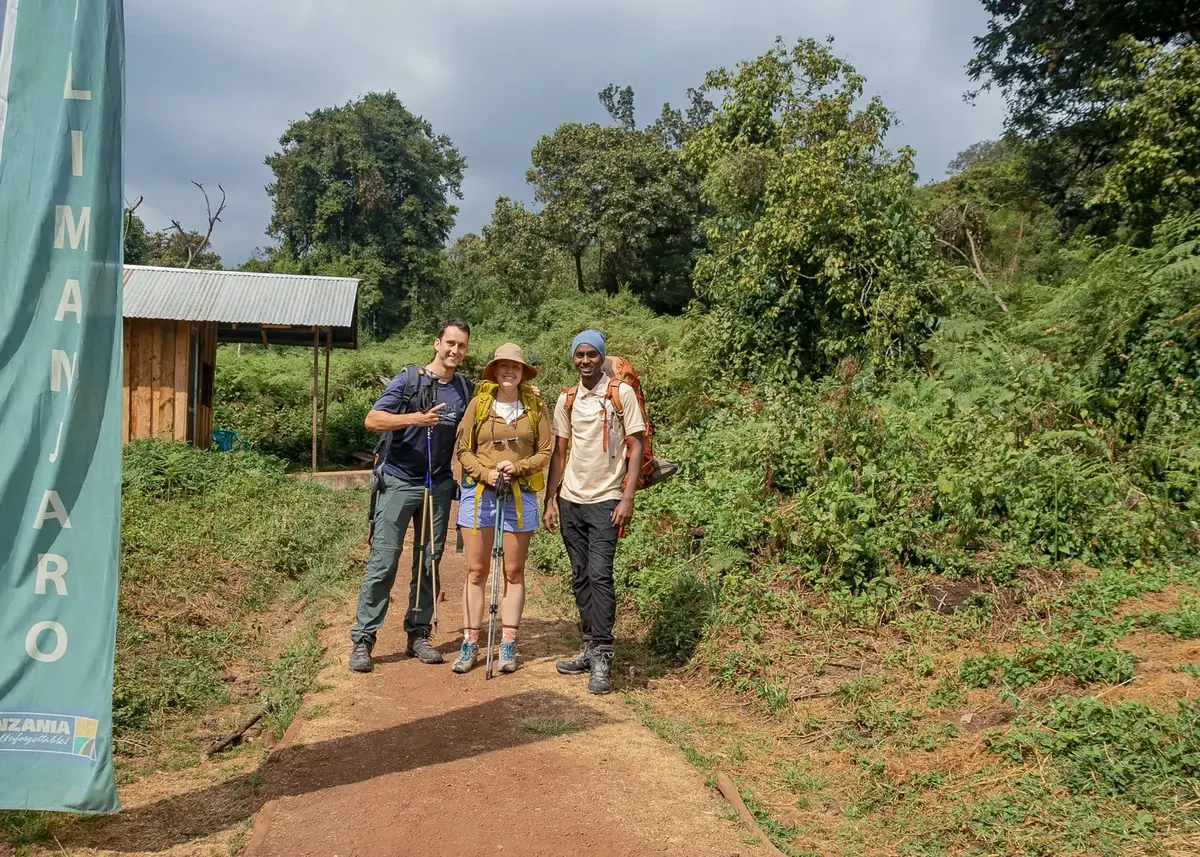
The photos in this guide come from a recent honeymoon couple who climbed with us on the Lemosho route. Their crew saw them off before the drive to the mountain; they posed at the camp signs from Lemosho Gate and Mti Mkubwa to Shira 2 and Barranco, ate lunch at a table with views of Kibo's glaciers, and held up their Just Married banner at Lava Tower, Karanga and Barafu.
Our Tips for a Kilimanjaro Honeymoon
- Choose more days over a lower price: the extra night is what gets both of you to the top
- Book 9–12 months ahead for July to October
- Tell us your wedding date when you book
- Agree your summit-night plan before you leave home
- Be honest about symptoms at every health check, even if it means slowing your partner down
- Put the climb first in a longer trip, and the beach last
- Bring a small surprise for your partner for the summit, a note or a photo, and keep it in your jacket
Common Questions About a Kilimanjaro Honeymoon
Is climbing Kilimanjaro a good idea for a honeymoon?
Yes, if you both want it. It is a week of hard walking, simple meals and cold nights, so it suits couples who love the outdoors and want a shared challenge; most then add a safari or beach to rest afterwards.
What is the best Kilimanjaro route for a honeymoon?
The 8-day Lemosho for the quietest start and the best chance of both reaching the top; the 7-day Machame if you have a week; the 6-day Marangu if you would rather sleep in huts than tents.
How much does a Kilimanjaro honeymoon cost for two?
The climb costs from US$3,690 for two on the 6-day Marangu, US$4,180 on the 7-day Machame and US$4,670 on the 8-day Lemosho, with mid-range hotels. Add crew tips, visas, insurance and flights.
Can couples share a tent on Kilimanjaro?
Yes. On our camping honeymoon climbs you share one two-person sleeping tent, with your own mess tent and private toilet tent.
Can couples get a private room in the Marangu huts?
Yes. For honeymoon couples we book a private room at Mandara, Horombo and Kibo huts; the hut toilets are shared.
What happens if only one of us reaches the summit?
Each climber has a guide, so the one who has to descend goes down with a guide and the other can carry on or turn back. Agree before summit night what you will do.
How soon after our wedding should we climb?
Give yourselves a few quiet days after the wedding and the long flight. Our climbs start with a hotel night after you land, and training before the wedding pays off more than anything you do in the last week.
Do we need climbing experience?
No. Kilimanjaro is a trek, not a technical climb; you need fitness for long walking days and time to adjust to the altitude.
Should we climb before or after the safari and beach?
Before. Climb while you are fresh, recover on safari, and finish on the beach.
What is the best month for a Kilimanjaro honeymoon?
Late May to October and January to March. July to September has the clearest skies and the busiest trails; January to March is warmer and quieter.
The Bottom Line
A Kilimanjaro honeymoon suits couples who both want the challenge. Give the mountain 6–8 days on a private climb: the 8-day Lemosho for the best chance of both reaching the top, the 7-day Machame for a classic week, or the 6-day Marangu for huts with a private room. Budget roughly US$4,350–6,200 for two with tips, climb late May to October or January to March, train together, and put the safari and beach after the mountain.
Tell us your wedding date, your travel dates and which route appeals through the booking form, on WhatsApp +255 678 992 599 or by email to jaynevytours@gmail.com, and our team in Moshi will send a written quotation.