
What You Need to Know: Our 8-day honeymoon climb follows the Lemosho route from the quiet western forest to Uhuru Peak (19,341 ft / 5,895 m), from US$2,335 per person for the two of you. It is a private climb on your own dates: you share a two-person tent, each of you has your own guide, and the crew brings a mess tent and a private toilet tent. The honeymoon touches are included: a Just Married banner, a celebration cake at camp, a song with your crew, your climbing certificates and a decorated champagne setup after the descent. The best months are late May to October and January to March.
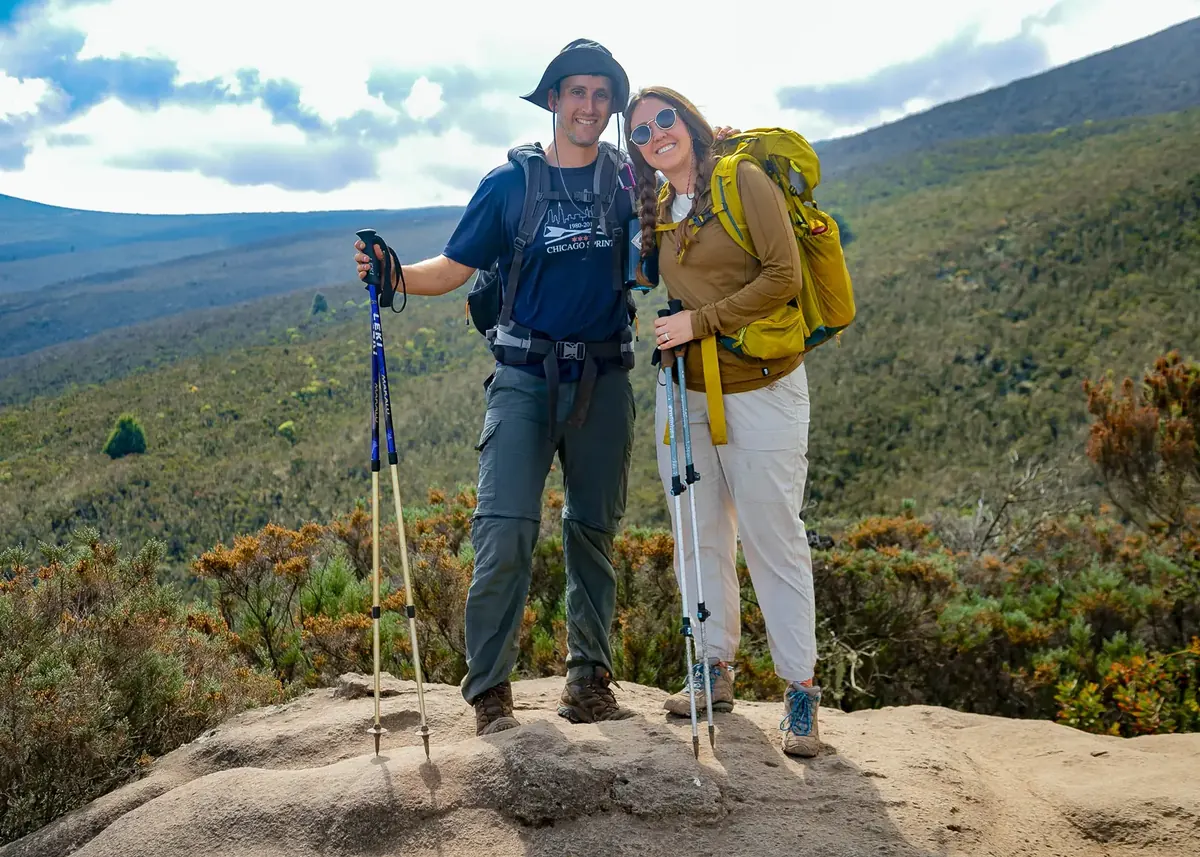
Why Is the Lemosho Route Good for a Honeymoon Climb?
Because it gives the two of you the best chance of reaching the top together, and the quietest days on the way. Altitude, not fitness, is what stops most climbers, and with seven nights on the mountain the 8-day Lemosho is the most gradual climb we run. The first three days are in the far west, where few groups start, so your first camps feel like your own; the route joins the busier southern circuit only at Lava Tower.
The three routes our honeymoon couples ask about most compare like this:
| 8-day Lemosho (this climb) | 7-day Machame | 6-day Marangu | |
|---|---|---|---|
| Where you sleep | A shared two-person tent | A shared two-person tent | A private room in the park huts |
| Crowds | Quiet start, busier from Lava Tower | The busiest route | Busy; hut toilets are shared |
| Nights on the mountain | 7 | 6 | 5 |
| Acclimatization | The most gradual we run | Good | Least time to adjust |
| Price from, per person (2 climbers) | US$2,335 | US$2,090 | US$1,845 |
Short on time? Our 7-day honeymoon climb on the Machame route works well too. If tents are a deal-breaker, our 6-day honeymoon climb on Marangu puts you in a private hut room, though the hut toilets are shared. The full trail detail for this climb is on our 8-day Lemosho route page, and our guide to choosing a Kilimanjaro route compares all six routes. Planning the whole trip? Our Kilimanjaro honeymoon guide for couples covers timing, costs for two and packing.
What Makes It a Honeymoon Climb?
The trail is the same for every climber; what changes for honeymooners is how we look after you. These touches are included on every honeymoon climb:
- A Just Married banner to hold up for your photos at the camp signs and on the summit
- A celebration cake, baked by your cook at camp on the mountain
- A song and celebration with your crew, who sing and celebrate with you on the mountain
- Your climbing certificates, presented when you sign out at Mweka Gate
- A champagne celebration after you come down: a simple decorated outdoor setup, a toast and time to take it all in
- One shared two-person tent for the two of you at every camp
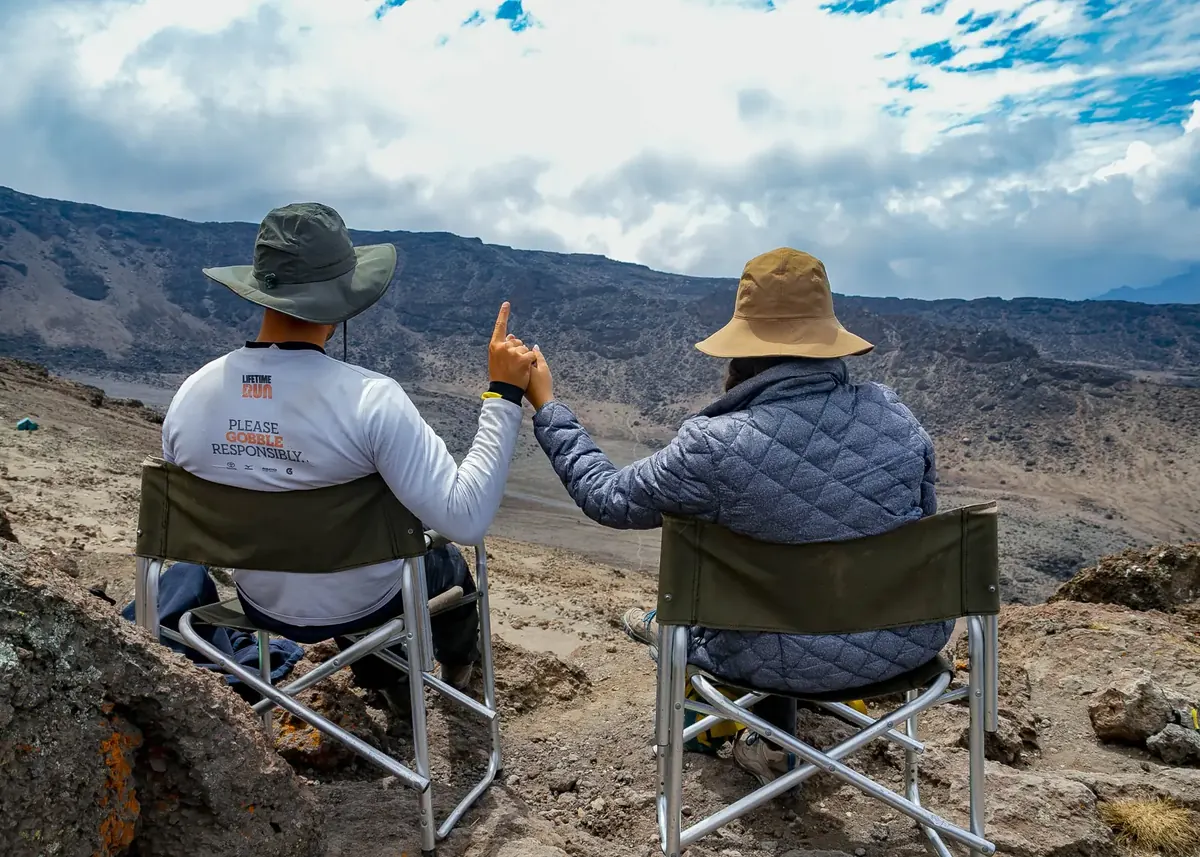
Tell us your wedding date when you book; if there is something else you would like to mark on the mountain, ask, and we will tell you honestly what our crew can do.
8-Day Honeymoon Climb Itinerary, Day by Day
You walk up the quiet western side and come down the south-east on the Mweka trail. The photos below are from a recent honeymoon couple who climbed the Lemosho route with us; walking times are our guides' planning times, and your pace and the weather decide the rest.
-
Day 1: Into the Western Forest: Lemosho Gate to Mti Mkubwa, about 8,700 ft (2,650 m)
After breakfast we drive you west to Londorossi Gate to register, then on to the Lemosho trailhead. Your first walk, a 4-mile (6 km) stroll of 3–4 hours, follows a forest trail, often with colobus monkeys in the trees, and it is the quietest start on the mountain: few climbers begin here.
When you reach Mti Mkubwa, 'big tree' in Swahili, your tent is already up under the forest canopy. It is your first night sharing a tent on the mountain, and a short day on purpose.
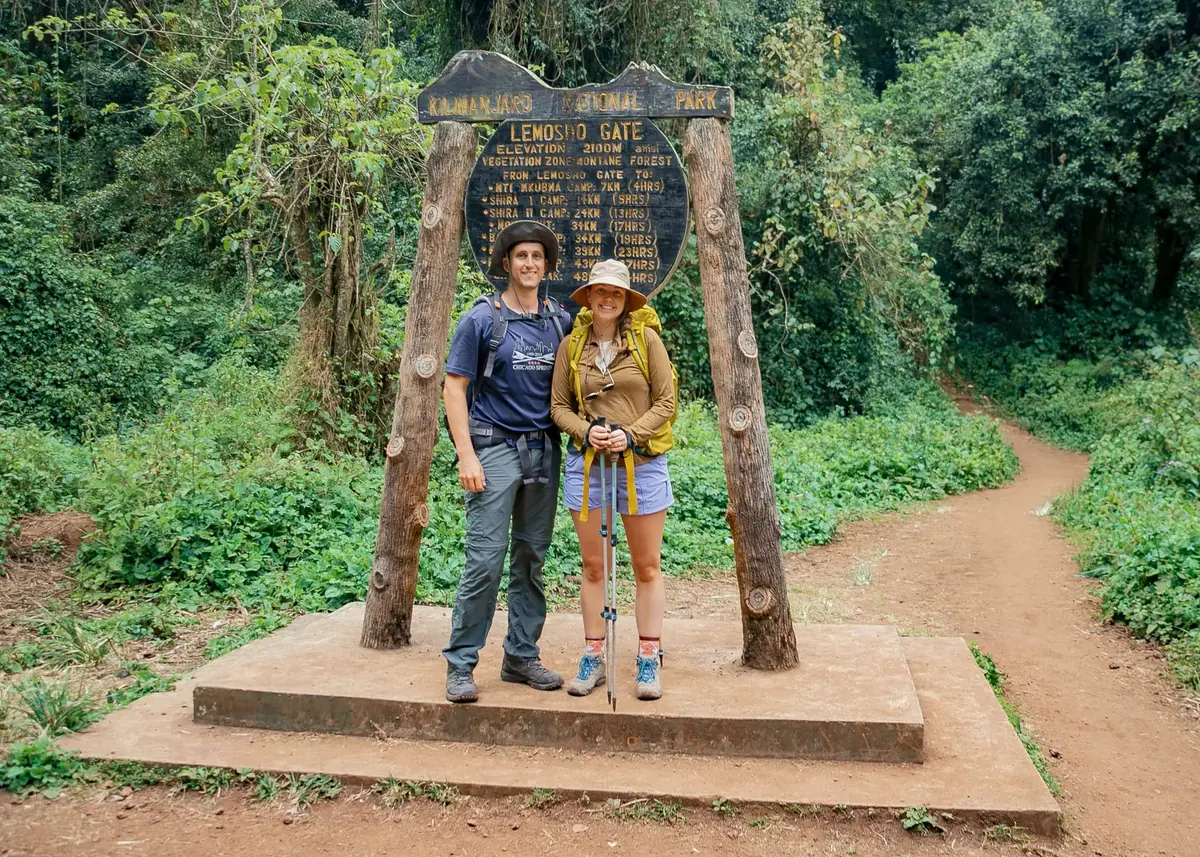 Quiet forest startFirst night in your shared tent
-
Day 2: Up Through the Giant Heather to Shira 1, 11,500 ft (3,500 m)
A 5-mile (8 km) day of 5–6 hours. You leave the forest for giant heather and moorland and climb onto the western rim of the Shira Plateau, where Kibo, the summit cone, comes into view for the first time.
Walk side by side at the guide's slow pace and drink more than you think you need: this is the day many climbers first feel the height.
First views of KiboMoorland -
Day 3: Across the Plateau to a Quiet High Camp at Moir Hut, 13,800 ft (4,200 m)
A 6–7-mile (10–12 km) crossing of the open plateau, 5–7 hours, past Shira 2 and round to Moir Hut below Kibo's north-western face. The camp is off the main trail, so it is usually one of the quietest nights of the climb.
This high night is the one the 7-day climbs don't have, and it makes the next day easier.
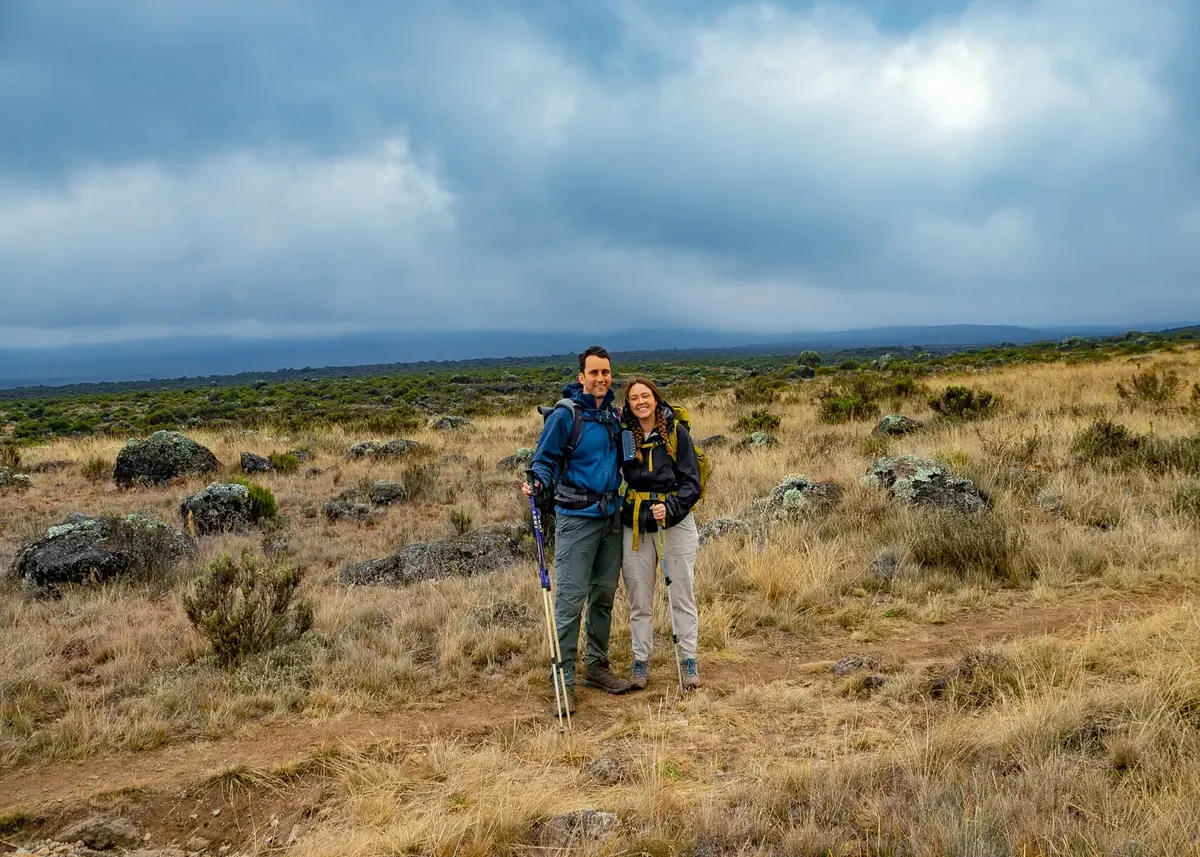 The extra high nightShira Plateau
-
Day 4: Lunch by Lava Tower, Then Down into the Barranco Valley, about 13,000 ft (3,960 m)
The longest walk before the summit: 6 miles (10 km), 6–8 hours. Lava Tower stands at about 15,100 ft (4,600 m), and you usually eat lunch in its shelter before dropping some 2,100 ft (640 m) to camp among the giant groundsels.
Expect a headache near Lava Tower; that is what the day is for. Tell your guide how you both feel at the evening check.
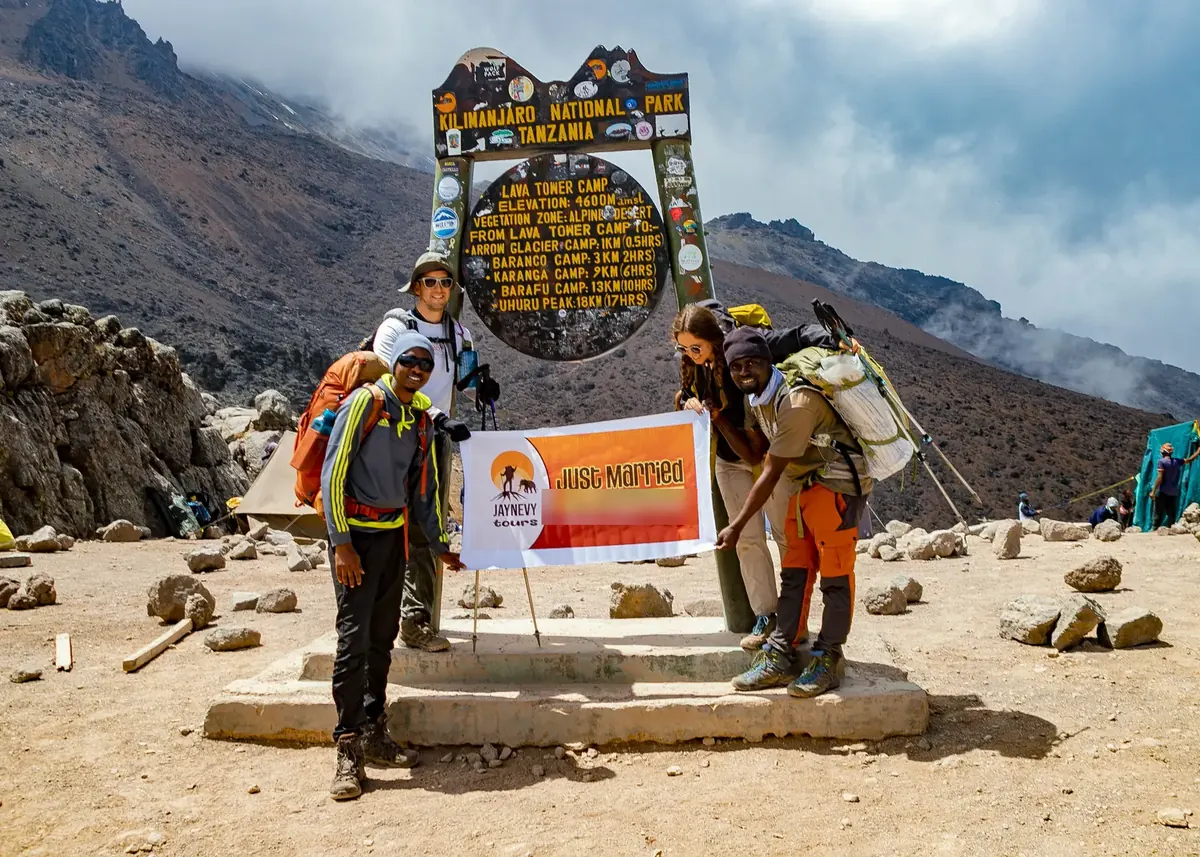 High point 15,100 ftBanner photos at Lava Tower
-
Day 5: Scramble Up the Barranco Wall, Rest at Karanga, 13,238 ft (4,035 m)
A 3-mile (5 km) day of 4–5 hours that opens with the Barranco Wall: some 820 ft (250 m) of rock steps where you sometimes need your hands; it is easier than it looks, and your guides show you each step.
You reach Karanga around lunchtime with the southern glaciers above you, and the afternoon is yours to rest.
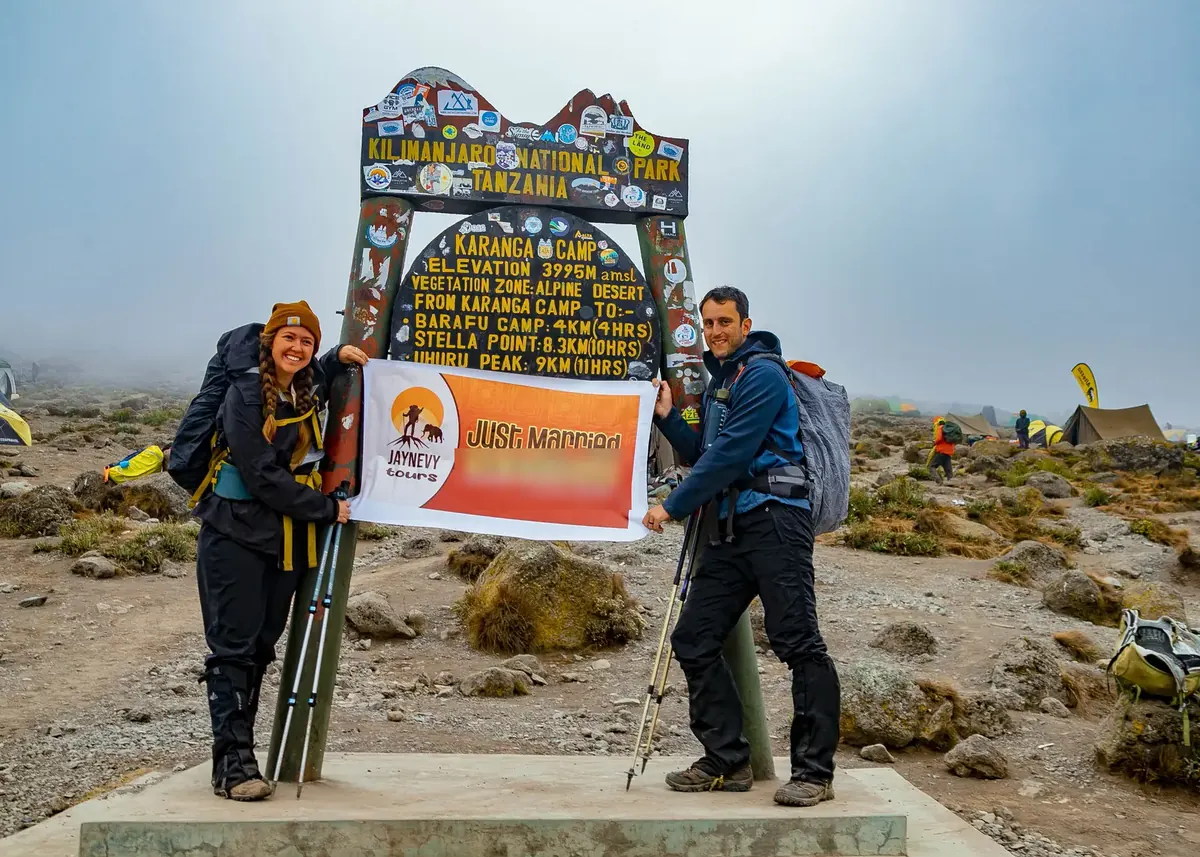 Barranco WallA free afternoon
-
Day 6: To Barafu, the Summit Base Camp, 15,354 ft (4,680 m)
Just 2.5 miles (4 km), 3–4 hours, on a stony ridge. In the afternoon your guides give the summit briefing, check your blood-oxygen and pulse, and help you lay out your layers.
Dinner is early, and you try to sleep for a few hours before a wake-up call at about 11 pm.
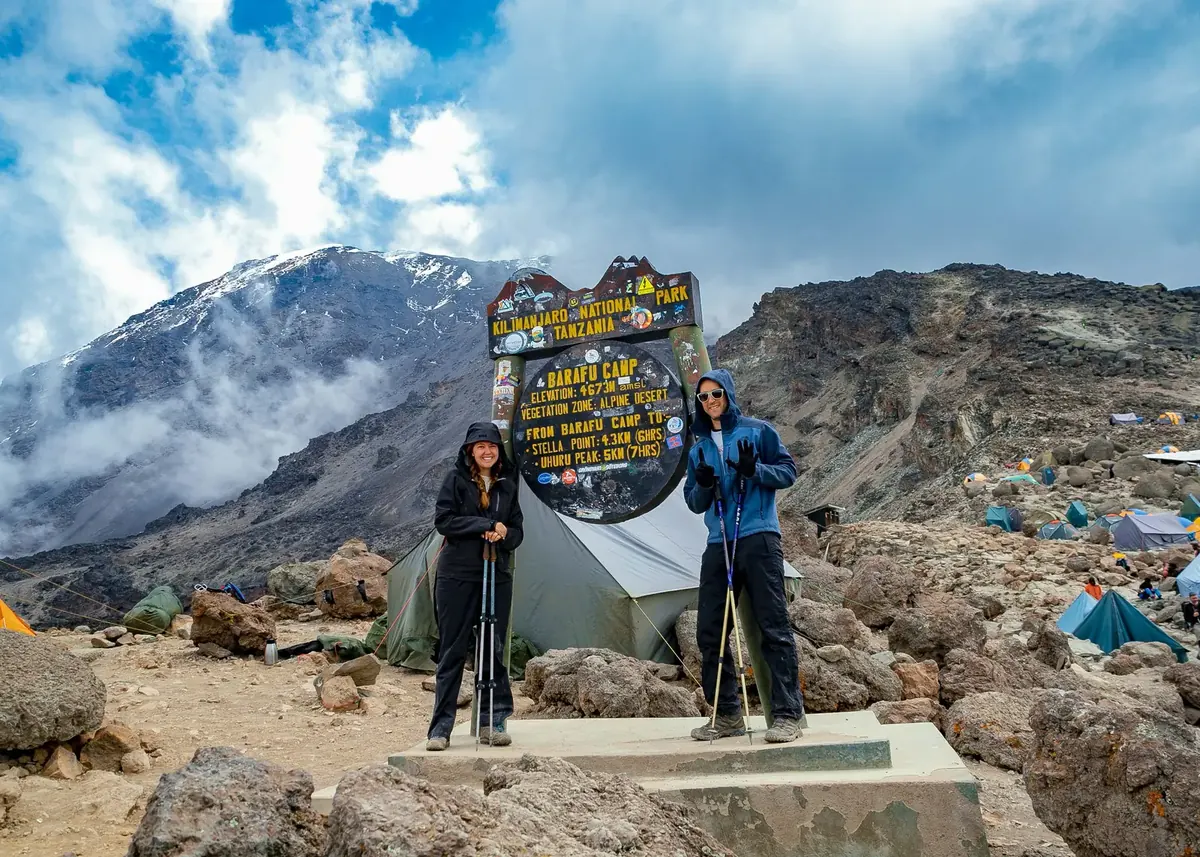 Summit briefingEarly dinner
-
Day 7: Summit Night: Together on Uhuru Peak, 19,341 ft (5,895 m)
You leave Barafu around midnight by headlamp, climb steep zigzags to Stella Point on the crater rim, often at sunrise, then walk about an hour along the rim to Uhuru Peak, the highest point in Africa. Take your summit photo together, then start down.
Plan on 10–14 hours and 11 miles (17 km) in all: the summit, a rest and a meal back at Barafu, then the long walk down to sleep at Mweka Camp, 10,138 ft (3,090 m), where the air feels thick again.
Sunrise on the crater rimSummit photo together -
Day 8: Down to Mweka Gate, Certificates and Champagne
A 6-mile (10 km) descent of 3–4 hours through the forest to Mweka Gate, 5,512 ft (1,680 m). There you sign out of the park, collect your climbing certificates and say goodbye to your crew.
Then the honeymoon part: after you come down, we celebrate with you at a simple decorated outdoor setup with champagne, before a hot shower and a proper bed at your hotel.
Climbing certificatesChampagne celebration
Climbing Kilimanjaro as a Couple: What to Expect
Couples ask us the same practical questions, so here are the honest answers.
Sharing a tent and privacy
You share one two-person sleeping tent at every camp, and the crew sets it up before you arrive. You eat in your own mess tent with a table and chairs, and you have a private portable toilet tent, so you never queue at the public toilets. With a private climb there are no other climbers in your group: just the two of you and your crew.
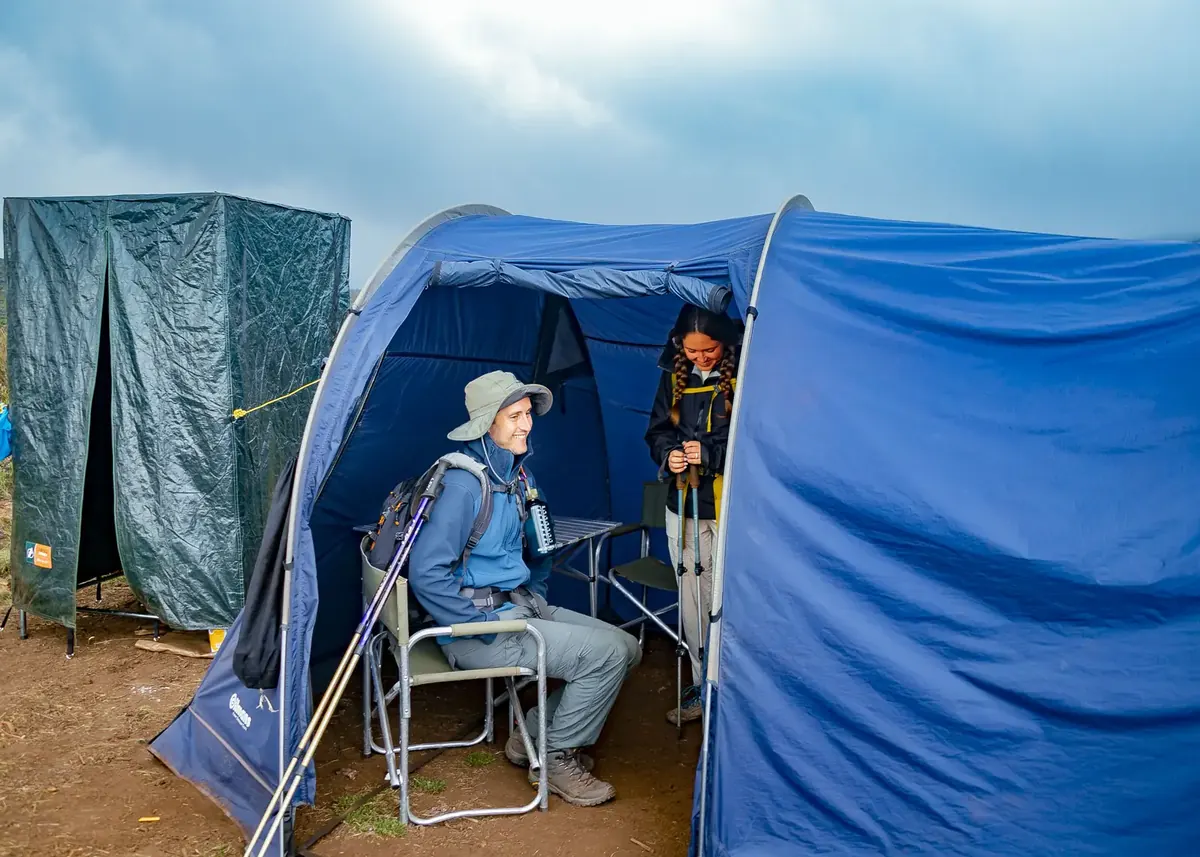
If one of you feels the altitude more
It happens often: one partner adjusts faster than the other. Every climber has a guide, so on a honeymoon climb you have two. Your guides check your blood-oxygen and pulse with a pulse oximeter at every camp and ask each of you how you feel. If one of you has to go down, a guide goes down with them, and the other can carry on or turn back too: you decide together, unless your guide says it is not safe to go on. Emergency oxygen, a first-aid kit and a stretcher come on every climb.
Your crew and food
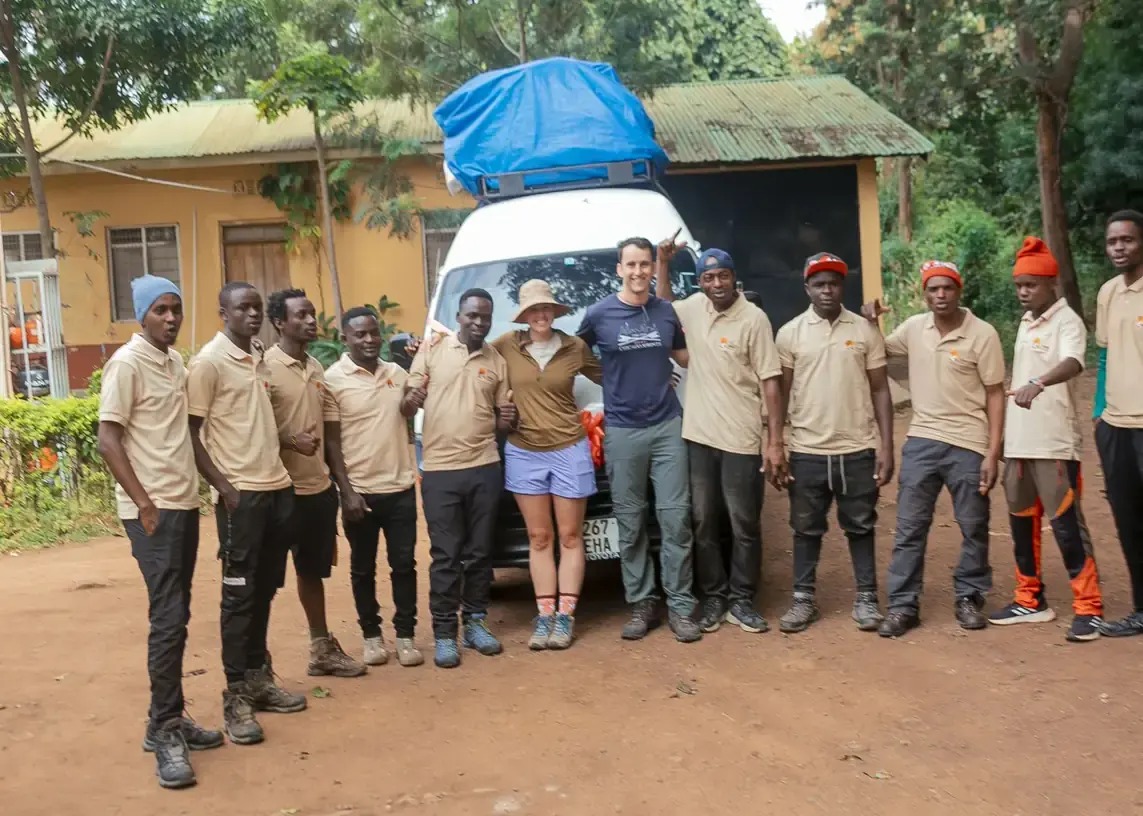
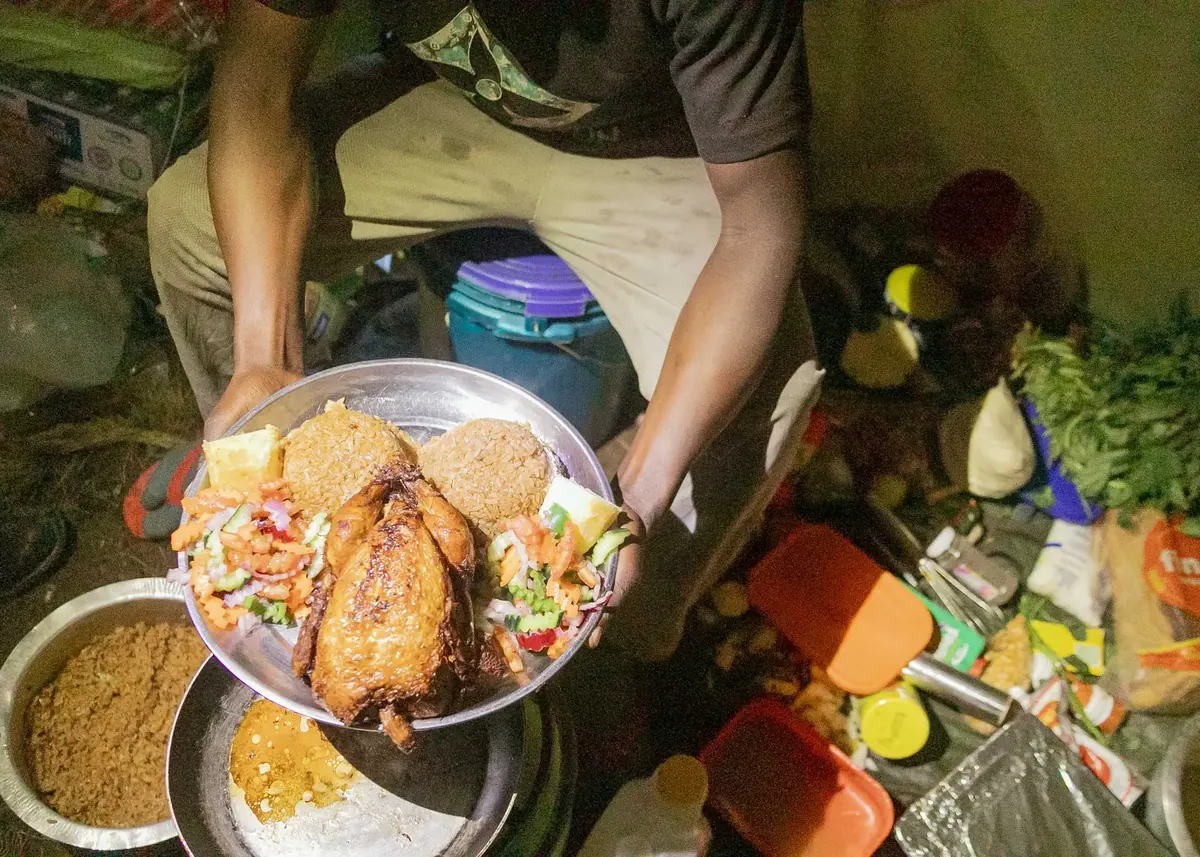
For two climbers your crew is 14: two mountain guides, two cooks and ten porters. They carry the tents, food, water and safety kit, so you each carry only a daypack. Every guide on our team holds a Tanzanian university certificate, a Kilimanjaro National Park license and at least three years on the mountain. Your cook doesn't repeat a meal during the climb, starts every lunch and dinner with a soup and follows any dietary needs you tell us about.
How fit do you both need to be?
You need no climbing experience, but you do need to walk for 5–7 hours a day, several days in a row, and handle one very long summit day. Train together: two or three months out, start hiking hills (or climbing stairs) with daypacks on, and work up to back-to-back weekend hikes of five or six hours in the boots you will wear on the mountain. Our guide to how hard Kilimanjaro is has a full plan.
Gear for two
No need to buy expensive cold-weather gear for one trip: rent it in Moshi, and our guide checks every item with you on arrival day. A sleeping bag is US$25 and a down or synthetic jacket US$20 each for the whole climb. See the Kilimanjaro packing list and our gear rental prices.
How Much Does a Honeymoon Kilimanjaro Climb Cost?
The 8-day honeymoon climb costs from US$2,335 per person for the two of you, with a mid-range hotel in Moshi before and after the climb. The climb, the crew and the honeymoon touches are the same at every level; only your two hotel nights change.
| Before and after the climb | Price per person (2 climbers) |
|---|---|
| A mid-range hotel in Moshi, such as Weru Weru River Lodge, or similar | US$2,335 |
| A luxury hotel in Moshi, such as The Maridadi Hotel, or similar | US$2,480 |
| A luxury lodge: Legendary Lodge in Arusha, or similar | US$3,555 |
Prices are per person, for a private climb for two on your own dates, and confirmed in a written quotation. Roughly half of what you pay goes to Kilimanjaro National Park, at the same fee rates for every operator; our Kilimanjaro cost guide explains the rest.
What the Honeymoon Climb Includes
Included
- All park fees, permits and VAT for both of you
- Your crew of 14: two guides, two cooks and ten porters
- Your shared two-person tent, sleeping mats, your own mess tent and a private toilet tent
- Three meals a day on the climb, with safe drinking water, tea and coffee
- Pulse-oximeter checks, emergency oxygen, a first-aid kit and a stretcher
- The honeymoon touches: Just Married banner, celebration cake, crew celebration, climbing certificates and the champagne setup after the descent
- Return airport transfers, and transfers to the start and from Mweka Gate
- One hotel night before and one after the climb, at the level you choose
Not included
- International flights and visas (US$100 for US citizens)
- Tanzania's compulsory inbound insurance (US$44 each) and travel insurance that covers you up to 6,000 m (19,700 ft), including helicopter evacuation
- Your own climbing gear; we rent it in Moshi
- Tips for your crew (tipping guide), other drinks, laundry and personal items
When Is the Best Time for a Honeymoon Climb?
Late May to October and January to March. Skies are clearest, and trails busiest, from July to September; January to March is warmer and calmer on the trail. Avoid April, early May and November, when rain turns the western forest trail to mud, and the late-December holidays, when the camps are busiest. Spring and early-summer weddings fit the dry season well; winter weddings fit January to March. Book 9–12 months ahead for July to October, and see the best time to climb Kilimanjaro month by month.
After the Climb: Safari, Zanzibar or Both
Most honeymoon couples don't fly home straight from the mountain. A safari is the perfect recovery, with days spent sitting down and watching wildlife, and Zanzibar's beaches are the perfect end.
- Everything in one trip: our 19-day Kilimanjaro, safari and Zanzibar honeymoon; we can build it around this Lemosho climb instead of Machame
- Safari and beach ideas: our honeymoon safaris and the 14-day honeymoon safari and Zanzibar
- A shorter add-on: Kilimanjaro, safari and Zanzibar in one trip
How to Book Your Honeymoon Climb
Send us your dates and your wedding date through the booking form, on WhatsApp +255 678 992 599 or by email to jaynevytours@gmail.com, and our team in Moshi will reply with a written quotation. A 30% deposit confirms the climb and the balance is paid on arrival; you can pay by card or mobile money through Pesapal, or by US-dollar bank transfer.
Cancel 60 days or more before arrival and you get a full refund; the shorter-notice refunds are on our refund policy page.
Common Questions About a Honeymoon Kilimanjaro Climb
Can we climb Kilimanjaro on our honeymoon?
Yes. Most healthy couples who walk regularly can; you need no climbing experience. It is a long trek at altitude, not a technical climb, and eight days gives your bodies the most time to adjust.
Which Kilimanjaro route is best for a honeymoon?
The 8-day Lemosho, if you have the time: a quiet western start, a shared tent at every camp and the most gradual climb we run. The 7-day Machame suits couples with a day less; the 6-day Marangu suits couples who would rather sleep in huts.
Do couples share a tent on Kilimanjaro?
Yes. On our honeymoon climbs you share one two-person sleeping tent, with your own mess tent and a private toilet tent at every camp.
What happens if only one of us reaches the summit?
Each of you has your own guide. If one of you has to go down, a guide goes down with them, and the other can carry on or turn back too; you decide together, and you meet again lower down.
How much does a honeymoon Kilimanjaro climb cost?
From US$2,335 per person for the two of you on the 8-day Lemosho, with mid-range hotels in Moshi and the honeymoon touches. With a luxury lodge before and after the climb it is US$3,555 per person.
What honeymoon extras are included?
A Just Married banner for your photos, a celebration cake baked at camp, a song and celebration with your crew, your climbing certificates, and a decorated outdoor setup with champagne after you come down.
Can we add a safari or Zanzibar after the climb?
Yes, and most couples do. Climb first, then recover on safari and finish on the beach; our 19-day adventure honeymoon shows the whole plan.
When is the best time for a honeymoon climb?
Late May to October and January to March. Avoid April, early May and November, the rainy months, and the late-December holidays.
The Bottom Line
For a honeymoon on Kilimanjaro, give the mountain eight days on the Lemosho route: quiet first days, the most gradual climb we run and the best chance of reaching Uhuru Peak together. From US$2,335 per person for two, with your own tent, guides and crew, a cake at camp and champagne when you come down. Plan for late May to October or January to March, and tell us your wedding date.